Ciri dan struktur
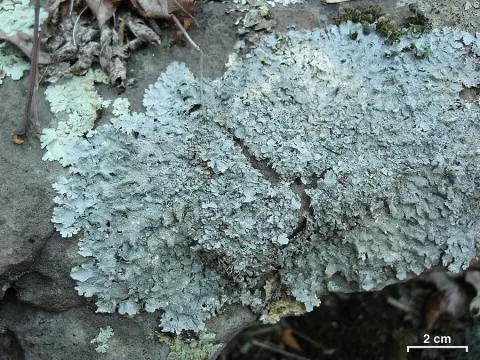
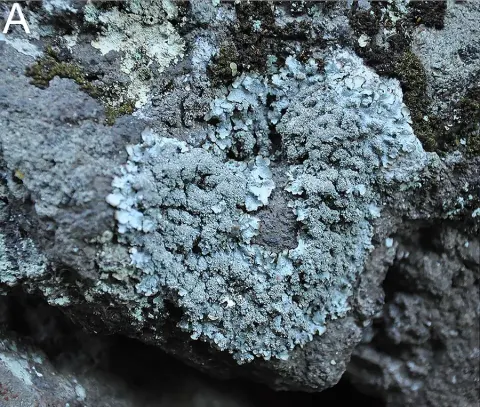
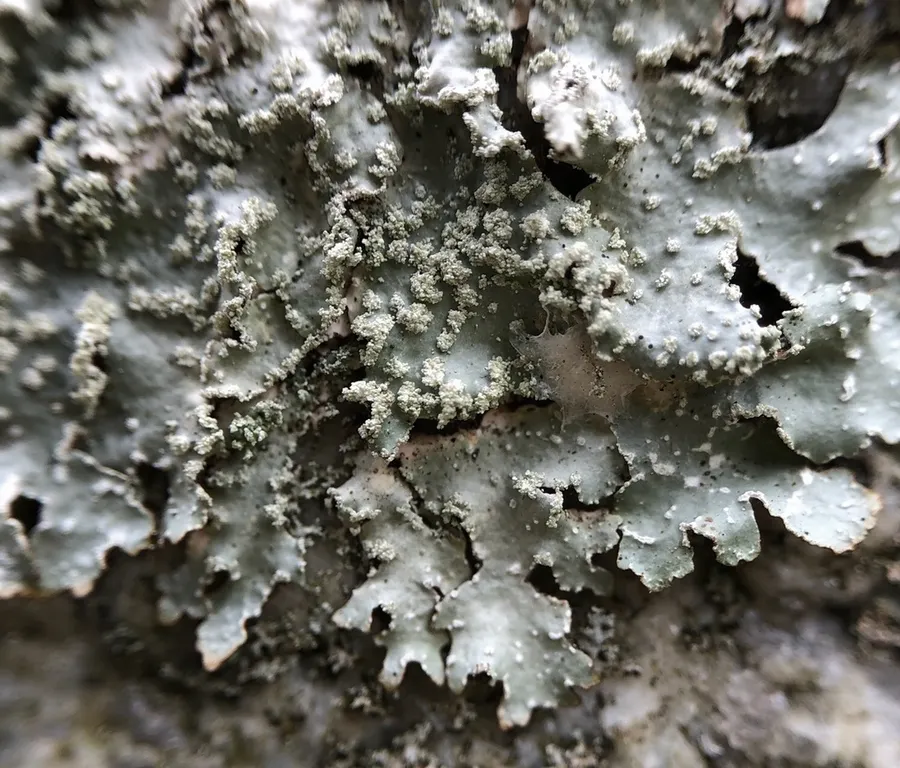
The color of the upper surface of the thallus of Punctelia caseana is grey-blue, while the undersurface is pale to off-white, sometimes light brown. The size of the thallus is quite variable, depending largely on the microhabitat conditions. There are many soralia, which are mostly located along the margins of the lobes. The soredia are coarse and large. Ascospores produced by the lichen are hyaline, measuring 14–17 by 10–12 μm. It contains the secondary compounds atranorin, chloroatroanorin, and lecanoric acid. The standard lichen spot test results are K+ (yellow), C−, KC−, P−, and UV− in the upper cortex; in the medulla they are K−, KC+ (red), C+ (red), P−, and UV−. Punctelia caseana can be readily distinguished from the common North American species Punctelia rudecta because the latter has isidia rather than soredia. Two lookalikes, Punctelia perrituculata and P. subrudecta, both produce medullary gyrophoric acid and have a pale lower surface, like Punctelia caseana. However, they have short conidia, and P. perrituculata has a surface texture covered with small round pits or grooves (scrobiculae).
Habitat dan peran ekologis
It is found in the eastern United States on many types of hardwood trees, as well as conifers, and occasionally on rotting logs. Its distribution in the eastern US is similar to that of Punctelia subrudecta. The range of Punctelia caseana was later extended to include eastern and central Mexico.
- Habitat atau konteks temuan
- Informasi belum tersedia pada sumber rilis ini.
- Substrat
- kayu
- Peran atau konteks
- Pembentuk liken
Reproduksi
The color of the upper surface of the thallus of Punctelia caseana is grey-blue, while the undersurface is pale to off-white, sometimes light brown. The size of the thallus is quite variable, depending largely on the microhabitat conditions. There are many soralia, which are mostly located along the margins of the lobes. The soredia are coarse and large. Ascospores produced by the lichen are hyaline, measuring 14–17 by 10–12 μm. It contains the secondary compounds atranorin, chloroatroanorin, and lecanoric acid. The standard lichen spot test results are K+ (yellow), C−, KC−, P−, and UV− in the upper cortex; in the medulla they are K−, KC+ (red), C+ (red), P−, and UV−. Punctelia caseana can be readily distinguished from the common North American species Punctelia rudecta because the latter has isidia rather than soredia.
Catatan identitas dan cakupan
- Nama diterima mengikuti Catalogue of Life Base2026-09-11; uraian mempertahankan konsep dan nama sumber aslinya.
- Original geographic, specimen and life-cycle scope retained; source import awaits individual editorial review.
- Impor dan terjemahan otomatis belum diperiksa editorial per profil. Struktur reproduktif yang disebutkan tidak membuktikan seluruh siklus hidup diketahui.
- Pengukuran pada uraian mengikuti spesimen, kultur, dan metode sumber; angka tidak diperluas ke semua populasi.
Catatan distribusi dalam narasi mengikuti sumbernya. Dokumentasi spesimen atau foto mengikuti catatan sumber. Bukti wilayah Indonesia dan penilaian konservasi tidak disimpulkan dari gambar.
Melihat dengan konteks
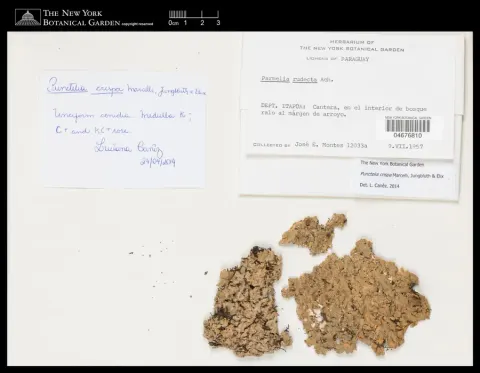
Dokumentasi Punctelia caseana menurut asosiasi foto pada record takson iNaturalist. Kredit: Nova Patch. Identitas mengikuti sumber; bukan penentuan spesimen independen.
- Jenis
- Fotografi
- Kredit
- (c) Nova Patch, some rights reserved (CC BY-SA), uploaded by Nova Patch
- Lisensi
- CC BY-SA 4.0
- Sumber media
- Buka entri sumber
Dokumentasi tambahan
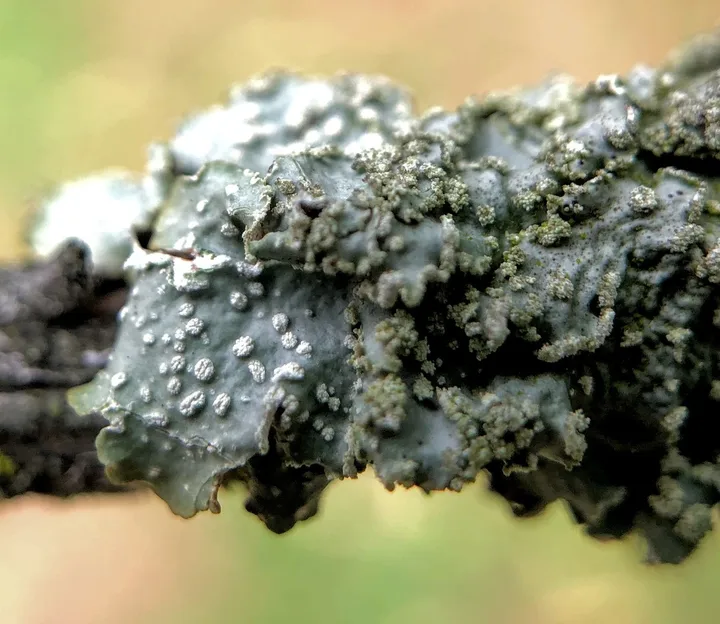
Foto yang diasosiasikan dengan Punctelia caseana pada iNaturalist. Identifikasi mengikuti sumber; bukan penentuan spesimen independen.
Kredit dan penggunaan
(c) Nova Patch, some rights reserved (CC BY-SA), uploaded by Nova Patch
Ukuran dan format gambar disesuaikan tanpa pemotongan, retus, atau penambahan skala. Lisensi sumber dipertahankan.
Sumber profil
- [1] Punctelia caseana — Wikipedia (en)
- [2] Catalogue of Life Base2026-09-11 — Punctelia caseana
- [3] Dokumentasi visual — Punctelia caseana
- [4] Dokumentasi visual — Punctelia caseana
Rujukan halaman ini
Fungi. Punctelia caseana. Rilis data fungi-2026-10-12-expansion-2. https://fungi-atlas.mgadib.chatgpt.site/jamur/punctelia-caseana/.
Status: impor sumber; pemeriksaan editorial per profil belum selesai. Untuk klaim biologis, gunakan rujukan pada bagian terkait dan periksa konteks sumber aslinya.