Ciri dan struktur
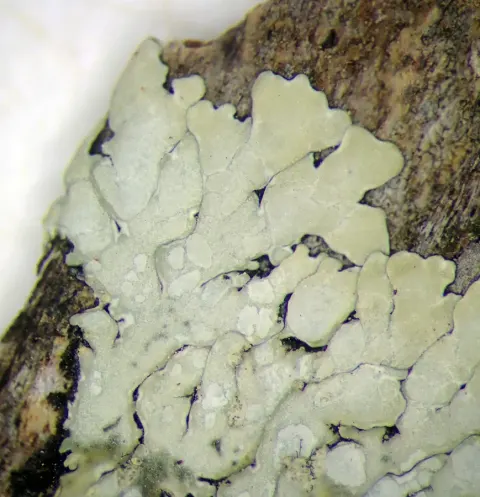
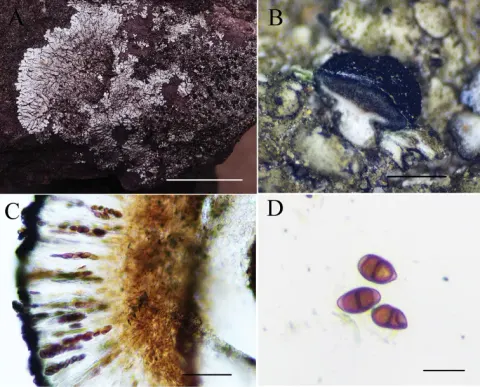
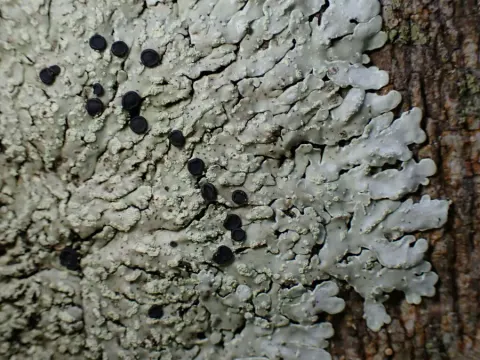
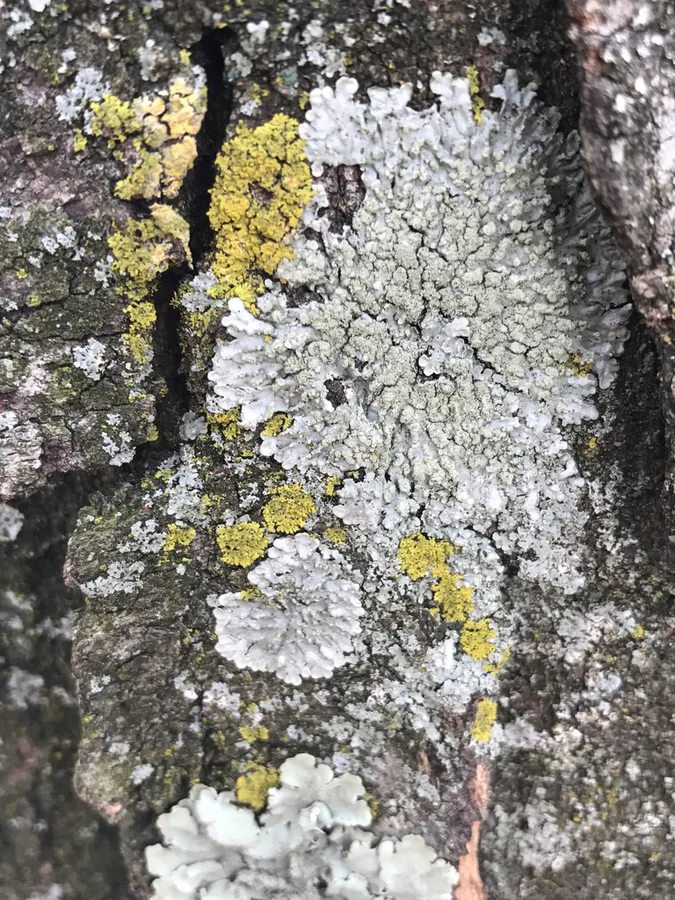
Pyxine sorediata has a foliose thallus that ranges in colour from dull bluish-grey to green-gray. The lobes comprising the thallus measure 1–2.5 mm wide, and are pruinose at the tips; they are in close contact, often overlapping. The lobe margins also have white pseudocyphellae, that contrast with the lobe; they are concentrated on the lobe margins and are rarely on the lamina. The medulla is light yellow to yellow, and this colour is sometimes present in the soralia. The underside of the thallus is black to greyish black; it has small rhizines that help attach it to its substrate. Structures called soralia are on the margins of the lobes, but sometimes form round patches on the lamina. The soredia (reproductive structures) are coarse and grainy with a dark grey colour; they tend to impart a grey colour to the central part of the thallus. Apothecia are quite rare in this species. The ascospores measure 12–17 by 6–8 μm. Pyxine sorediata is the largest species of Pyxine. It does not have any reaction to the standard lichen spot tests. Secondary chemicals reported from the species include atranorin and unidentified triterpenes.
Habitat dan peran ekologis
The lichen is widely distributed in northeastern North America. It grows on bark, on acidic rocks, and on moss. In Europe, where it is generally rare, Pyxine sorediata is typically collected from mossy rocks. It has been recorded in the Pyrenees, the Caucasus, in the Uholka-Shyrokyi Luh primeval beech forest in the Ukrainian Carpathians, and from the eastern coast of Lake Baikal in Siberia. Its northernmost European record is from the Bavarian-Bohemian Forest. In Australia, it occurs in areas with uniform tropical environments, subtropics, and warm temperate areas. Specimens from Queensland have been collected from elevations up to 1000 m. Pyxine sorediata is also known from East Africa, Japan, South Korea, and China.
- Habitat atau konteks temuan
- hutan
- Substrat
- kulit kayu
- Peran atau konteks
- Pembentuk liken
Reproduksi
Pyxine sorediata has a foliose thallus that ranges in colour from dull bluish-grey to green-gray. The lobes comprising the thallus measure 1–2.5 mm wide, and are pruinose at the tips; they are in close contact, often overlapping. The lobe margins also have white pseudocyphellae, that contrast with the lobe; they are concentrated on the lobe margins and are rarely on the lamina. The medulla is light yellow to yellow, and this colour is sometimes present in the soralia. The underside of the thallus is black to greyish black; it has small rhizines that help attach it to its substrate. Structures called soralia are on the margins of the lobes, but sometimes form round patches on the lamina. The soredia (reproductive structures) are coarse and grainy with a dark grey colour; they tend to impart a grey colour to the central part of the thallus.
Catatan identitas dan cakupan
- Nama diterima mengikuti Catalogue of Life Base2026-09-11; uraian mempertahankan konsep dan nama sumber aslinya.
- Original geographic, specimen and life-cycle scope retained; source import awaits individual editorial review.
- Impor dan terjemahan otomatis belum diperiksa editorial per profil. Struktur reproduktif yang disebutkan tidak membuktikan seluruh siklus hidup diketahui.
- Pengukuran pada uraian mengikuti spesimen, kultur, dan metode sumber; angka tidak diperluas ke semua populasi.
Catatan distribusi dalam narasi mengikuti sumbernya. Dokumentasi spesimen atau foto mengikuti catatan sumber. Bukti wilayah Indonesia dan penilaian konservasi tidak disimpulkan dari gambar.
Melihat dengan konteks
Dokumentasi Pyxine sorediata menurut asosiasi foto pada record takson iNaturalist. Kredit: John Fones. Identitas mengikuti sumber; bukan penentuan spesimen independen.
- Jenis
- Fotografi
- Kredit
- no rights reserved, uploaded by John Fones
- Lisensi
- CC0 1.0
- Sumber media
- Buka entri sumber
Dokumentasi tambahan
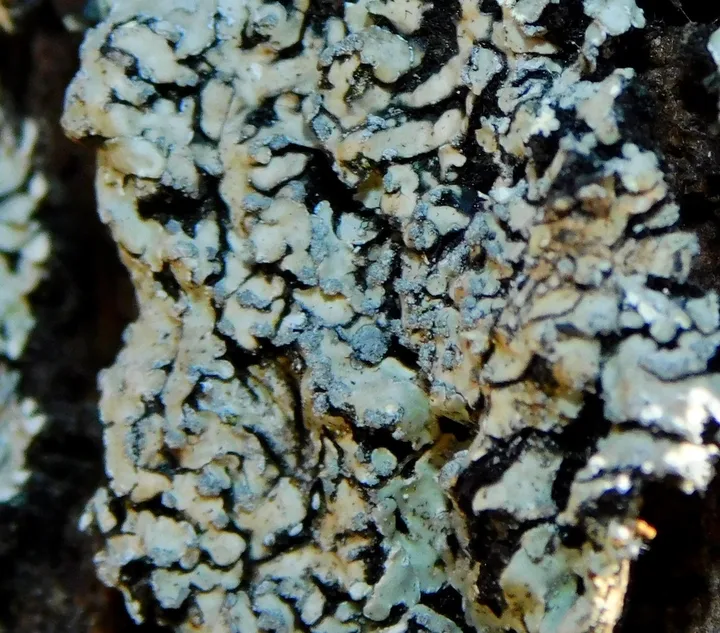
Foto yang diasosiasikan dengan Pyxine sorediata pada iNaturalist. Identifikasi mengikuti sumber; bukan penentuan spesimen independen.
Kredit dan penggunaan
(c) Michael J. Papay, some rights reserved (CC BY), uploaded by Michael J. Papay
Ukuran dan format gambar disesuaikan tanpa pemotongan, retus, atau penambahan skala. Lisensi sumber dipertahankan.
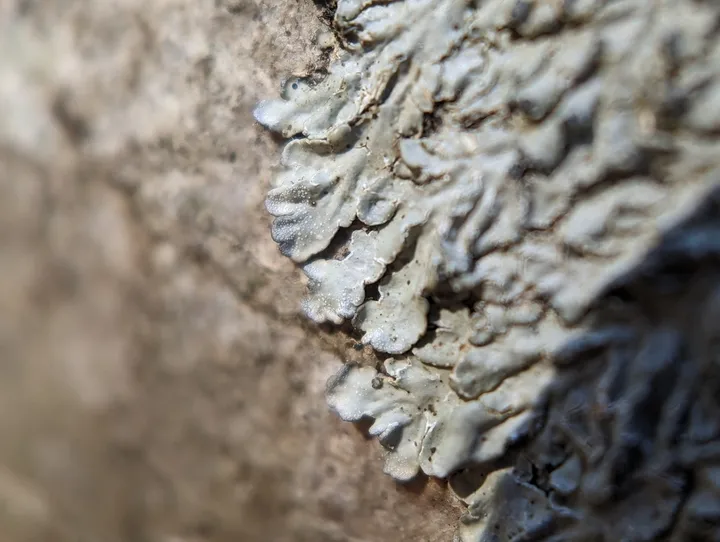
Foto yang diasosiasikan dengan Pyxine sorediata pada iNaturalist. Identifikasi mengikuti sumber; bukan penentuan spesimen independen.
Kredit dan penggunaan
(c) Elias, some rights reserved (CC BY), uploaded by Elias
Ukuran dan format gambar disesuaikan tanpa pemotongan, retus, atau penambahan skala. Lisensi sumber dipertahankan.
Sumber profil
- [1] Pyxine sorediata — Wikipedia (en)
- [2] Catalogue of Life Base2026-09-11 — Pyxine sorediata
- [3] Dokumentasi visual — Pyxine sorediata
- [4] Dokumentasi visual — Pyxine sorediata
- [5] Dokumentasi visual — Pyxine sorediata
Rujukan halaman ini
Fungi. Pyxine sorediata. Rilis data fungi-2026-10-12-expansion-2. https://fungi-atlas.mgadib.chatgpt.site/jamur/pyxine-sorediata/.
Status: impor sumber; pemeriksaan editorial per profil belum selesai. Untuk klaim biologis, gunakan rujukan pada bagian terkait dan periksa konteks sumber aslinya.