Ciri dan struktur
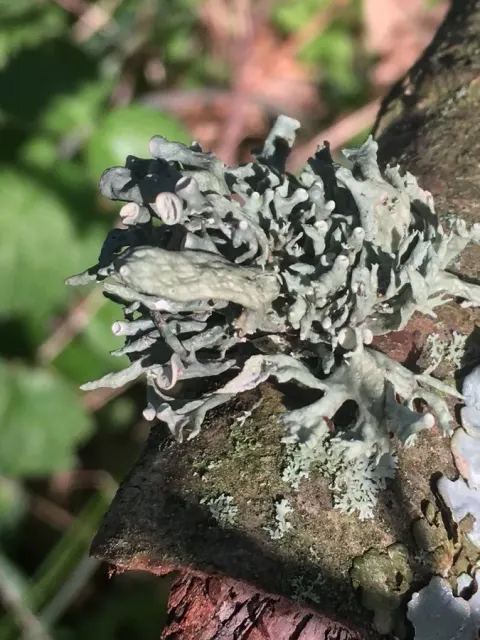
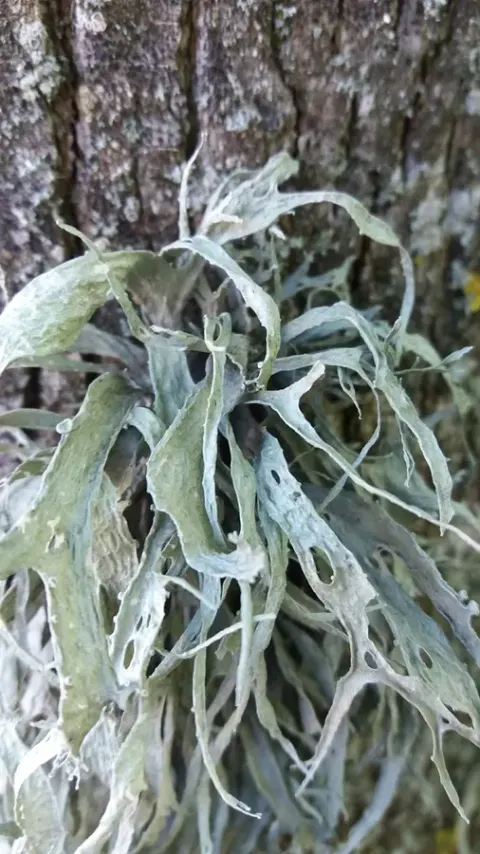
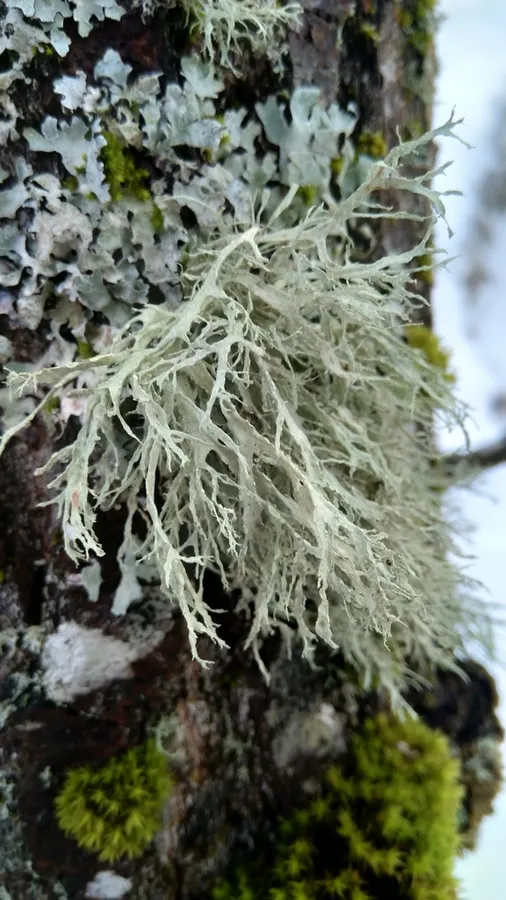
Ramalina farinacea typically grows 3–6 cm long, though it can reach up to 10 cm in some specimens. It forms tufted, hanging structures that originate from a clearly defined holdfast (attachment point). The lichen often divides into numerous flattened measuring up to 3 mm in width, which may occasionally appear slightly concave. Its colour ranges from yellow-green to dark grey-green. The surface of Ramalina farinacea is and smooth, with a firm texture. Internally, it possesses a solid medulla (inner tissue layer) and a subcortex (supportive layer beneath the outer surface). A distinctive feature of this lichen is its numerous soralia—specialised structures for asexual reproduction—which are located along the margins of the branches. These soralia are discrete, circular to elliptical, saucer-shaped when young, and become flat with maturity. They produce fine, powdery soredia (reproductive propagules) measuring 20–30 μm in diameter that are pale yellow-green in colour. Sexual reproductive structures called apothecia are rarely observed and, when present, develop laterally on the branches. The (spores produced in sacs called asci) are broadly ellipsoidal and measure 8–15 by 5–7 μm. Chemically, Ramalina farinacea has four distinct chemotypes (chemical variants), all containing usnic acid in the medulla and soralia. These chemotypes can be distinguished by their chemical reactions: some show orange-brown or orange-red reactions with chemical tests (containing protocetraric acid), others display yellow-red or yellow-orange reactions (containing salazinic acid, sometimes with norstictic acid), some fluoresce blue-white under ultraviolet light (containing hypoprotocetraric acid), while others show no distinctive chemical reactions.
Habitat dan peran ekologis
Ramalina farinacea occupies a diverse range of habitats and substrates. It commonly grows on trunks and twigs within shaded deciduous woodlands, but also thrives on sun-exposed, wind-swept isolated trees, hedgerows, and scrub. The species can colonise wooden posts and is occasionally found free-living on sand dunes, though it very rarely occurs on rock surfaces. In North America, it is most abundant along coastal regions from approximately 30–60°N latitude, with several races extending inland. The species shows a strong preference for oceanic climates along both the Atlantic and Pacific coasts. In the United Kingdom, it is found throughout Britain, Ireland, and Wales. In Europe, R. farinacea ranges from the boreal north through the mountains of central and southern Europe into xeric Mediterranean areas, occurring on a variety of shrubs and trees and often in oak forests. The morphology of Ramalina farinacea shows distinct variation in response to environmental conditions. In air-polluted environments, specimens often develop as dark green, tufted forms with short, decumbent (lying flat), contorted or recurved branches. By contrast, in deeply shaded woodland settings, the lichen typically grows more elongated and pale in colour, with sparse, narrow branching patterns.
- Habitat atau konteks temuan
- hutan
- Substrat
- Informasi belum tersedia pada sumber rilis ini.
- Peran atau konteks
- Pembentuk liken
Reproduksi
The surface of Ramalina farinacea is and smooth, with a firm texture. Internally, it possesses a solid medulla (inner tissue layer) and a subcortex (supportive layer beneath the outer surface). A distinctive feature of this lichen is its numerous soralia—specialised structures for asexual reproduction—which are located along the margins of the branches. These soralia are discrete, circular to elliptical, saucer-shaped when young, and become flat with maturity. They produce fine, powdery soredia (reproductive propagules) measuring 20–30 μm in diameter that are pale yellow-green in colour. Sexual reproductive structures called apothecia are rarely observed and, when present, develop laterally on the branches.
Catatan identitas dan cakupan
- Nama diterima mengikuti Catalogue of Life Base2026-09-11; uraian mempertahankan konsep dan nama sumber aslinya.
- Original geographic, specimen and life-cycle scope retained; source import awaits individual editorial review.
- Impor dan terjemahan otomatis belum diperiksa editorial per profil. Struktur reproduktif yang disebutkan tidak membuktikan seluruh siklus hidup diketahui.
- Pengukuran pada uraian mengikuti spesimen, kultur, dan metode sumber; angka tidak diperluas ke semua populasi.
Catatan distribusi dalam narasi mengikuti sumbernya. Dokumentasi spesimen atau foto mengikuti catatan sumber. Bukti wilayah Indonesia dan penilaian konservasi tidak disimpulkan dari gambar.
Melihat dengan konteks
Dokumentasi Ramalina farinacea menurut asosiasi foto pada record takson iNaturalist. Kredit: Mikko Heikkinen. Identitas mengikuti sumber; bukan penentuan spesimen independen.
- Jenis
- Fotografi
- Kredit
- (c) Mikko Heikkinen, some rights reserved (CC BY), uploaded by Mikko Heikkinen
- Lisensi
- CC BY 4.0
- Sumber media
- Buka entri sumber
Dokumentasi tambahan
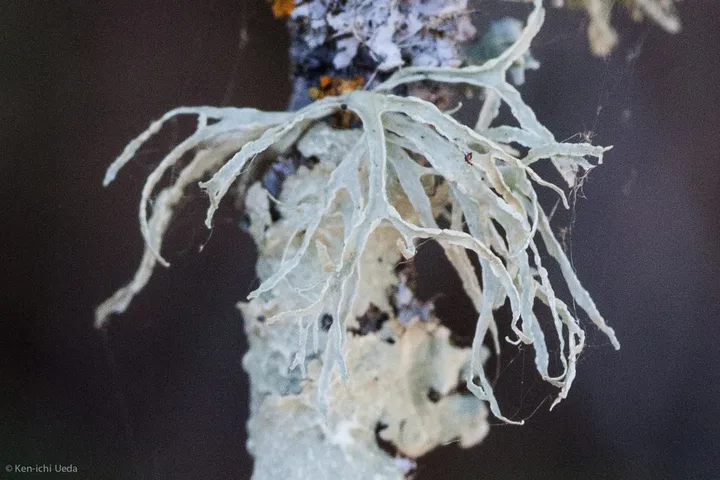
Foto yang diasosiasikan dengan Ramalina farinacea pada iNaturalist. Identifikasi mengikuti sumber; bukan penentuan spesimen independen.
Kredit dan penggunaan
(c) Ken-ichi Ueda, some rights reserved (CC BY), uploaded by Ken-ichi Ueda
Ukuran dan format gambar disesuaikan tanpa pemotongan, retus, atau penambahan skala. Lisensi sumber dipertahankan.
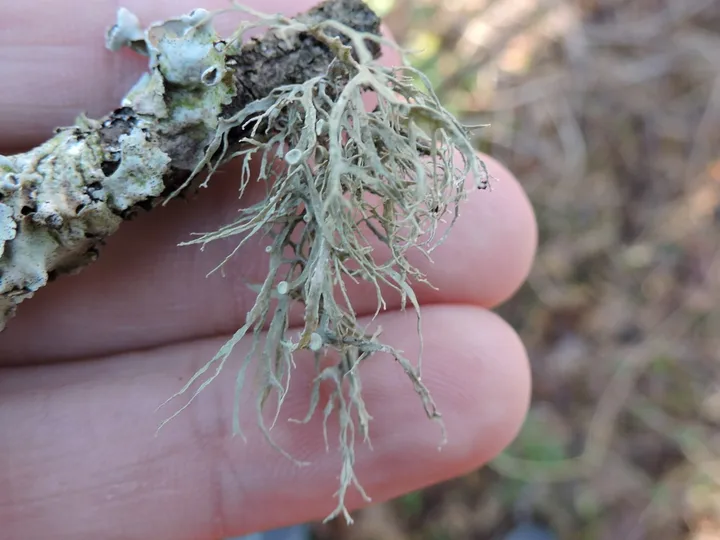
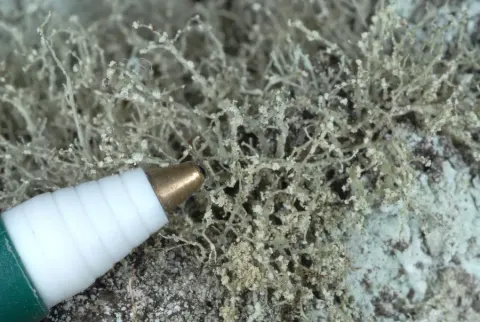
Foto yang diasosiasikan dengan Ramalina farinacea pada iNaturalist. Identifikasi mengikuti sumber; bukan penentuan spesimen independen.
Kredit dan penggunaan
(c) Sam Kieschnick, some rights reserved (CC BY), uploaded by Sam Kieschnick
Ukuran dan format gambar disesuaikan tanpa pemotongan, retus, atau penambahan skala. Lisensi sumber dipertahankan.
Sumber profil
- [1] Ramalina farinacea — Wikipedia (en)
- [2] Catalogue of Life Base2026-09-11 — Ramalina farinacea
- [3] Dokumentasi visual — Ramalina farinacea
- [4] Dokumentasi visual — Ramalina farinacea
- [5] Dokumentasi visual — Ramalina farinacea
Rujukan halaman ini
Fungi. Ramalina farinacea. Rilis data fungi-2026-10-12-expansion-2. https://fungi-atlas.mgadib.chatgpt.site/jamur/ramalina-farinacea/.
Status: impor sumber; pemeriksaan editorial per profil belum selesai. Untuk klaim biologis, gunakan rujukan pada bagian terkait dan periksa konteks sumber aslinya.