Ciri dan struktur
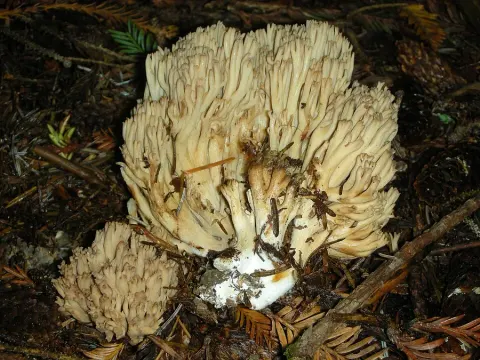
The color of the fruit body is brownish to yellow, becoming paler toward extremities. It bruises light reddish brown. The basidiocarp has a leathery texture when fresh, but becomes brittle when dry. Growing from a whitish base, the stipe is branched up to 8 times, the branches all upright and nearly parallel, each ending in 4 to 5 thornlike tips. Overall, the fruit body appears bushy, and is medium-sized, up to 10 by 7 cm. The stipe is single or branching from the base, with white mycelium and rhizomorphs radiating from the base. The odor is of anise and the taste is bitter. The spore print is dark yellow. The spores are roughly elliptical, dotted with low cyanophilous warts, and measure 7–10 by 3.5–5.5 μm. The basidia have basal clamps, are mostly four-spored, and sometimes have cyanophilous granular contents.
Habitat dan peran ekologis
Ramaria stricta has a cosmopolitan distribution, and is a fairly common species. The fungus is lignicolous, common in late summer and fall in coniferous forests of the Pacific Coast and Rocky Mountains. The fungus grows on dead wood, stumps, trunks, and branches of both leafy and coniferous trees. The form that grows on deciduous wood tends to be more orange and less bushy than those which grow on coniferous wood. The fruit bodies can form in "log lines" where decaying wood is buried underground near the surface or is in an advanced state of decomposition.
- Habitat atau konteks temuan
- hutan
- Substrat
- kayu
- Peran atau konteks
- Belum dikategorikan pada rilis ini.
Reproduksi
The color of the fruit body is brownish to yellow, becoming paler toward extremities. It bruises light reddish brown. The basidiocarp has a leathery texture when fresh, but becomes brittle when dry. Growing from a whitish base, the stipe is branched up to 8 times, the branches all upright and nearly parallel, each ending in 4 to 5 thornlike tips. Overall, the fruit body appears bushy, and is medium-sized, up to 10 by 7 cm. The stipe is single or branching from the base, with white mycelium and rhizomorphs radiating from the base. The odor is of anise and the taste is bitter. The spore print is dark yellow. The spores are roughly elliptical, dotted with low cyanophilous warts, and measure 7–10 by 3.5–5.5 μm.
Catatan identitas dan cakupan
- Nama diterima mengikuti Catalogue of Life Base2026-09-11; uraian mempertahankan konsep dan nama sumber aslinya.
- Original geographic, specimen and life-cycle scope retained; source import awaits individual editorial review.
- Impor dan terjemahan otomatis belum diperiksa editorial per profil. Struktur reproduktif yang disebutkan tidak membuktikan seluruh siklus hidup diketahui.
- Pengukuran pada uraian mengikuti spesimen, kultur, dan metode sumber; angka tidak diperluas ke semua populasi.
Catatan distribusi dalam narasi mengikuti sumbernya. Dokumentasi spesimen atau foto mengikuti catatan sumber. Bukti wilayah Indonesia dan penilaian konservasi tidak disimpulkan dari gambar.
Melihat dengan konteks
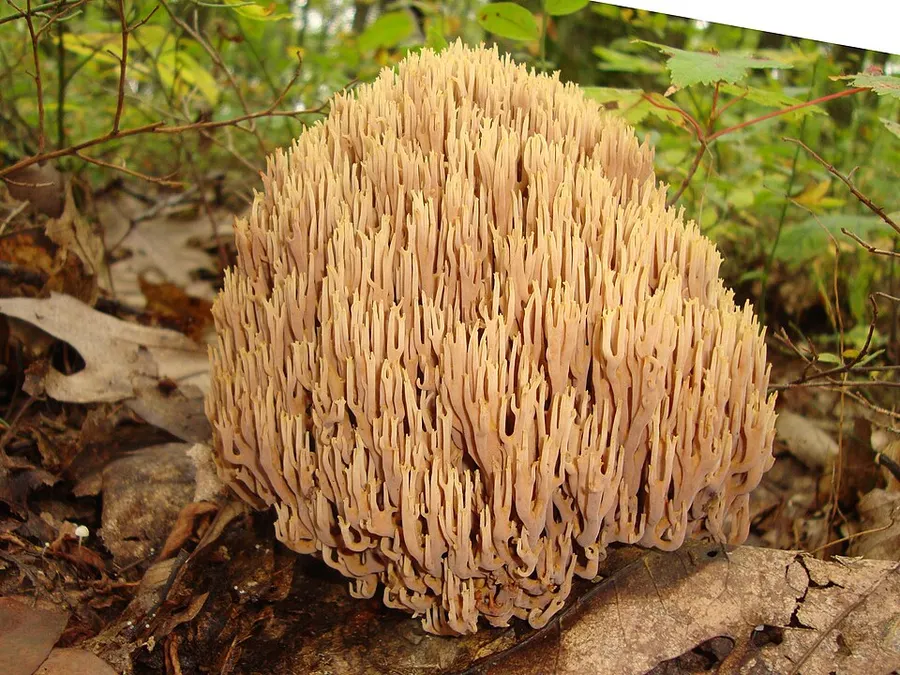
Dokumentasi Ramaria stricta dari Wikimedia Commons. A fruit body of the coral fungus Ramaria stricta (Pers.) Quél. Photographed by Martin Livezey in Camp Sequanota, Somerset County, Pennsylvania, USA. Identifikasi mengikuti record berkas sumber.
- Jenis
- Fotografi
- Kredit
- This image was created by user Martin Livezey (MLivezey) at Mushroom Observer , a source for mycological images. You can contact this user here .
- Lisensi
- CC BY-SA 3.0
- Sumber media
- Buka entri sumber
Sumber profil
- [1] Ramaria stricta — Wikipedia (en)
- [2] Catalogue of Life Base2026-09-11 — Ramaria stricta
- [3] Dokumentasi visual — Ramaria stricta
Rujukan halaman ini
Fungi. Ramaria stricta. Rilis data fungi-2026-10-12-expansion-2. https://fungi-atlas.mgadib.chatgpt.site/jamur/ramaria-stricta/.
Status: impor sumber; pemeriksaan editorial per profil belum selesai. Untuk klaim biologis, gunakan rujukan pada bagian terkait dan periksa konteks sumber aslinya.