01 / Morfologi

Ciri dan struktur

The thallus of Reichlingia leopoldii forms greyish green, more or less rounded patches. These are usually continuous and clearly delimited, though neighbouring patches may coalesce where they meet. Individual thalli are 0.5–2 mm thick and typically 1–5 cm in diameter, with exceptionally larger patches up to about 40 cm across; the margin is not, or only indistinctly, lobed. The thallus rests on a whitish of loose hyphae, best developed on the lower surface, which anchors it to the substrate. When visible, the lower surface is smooth, pale to ochraceous and rather even, resembling that of Lepraria crassissima. In young and well-developed thalli the upper surface can appear finely granular. Coarse granules about 0.2–0.3 mm across soon break down into smaller soredia (30–60 μm) or composite (75–125 μm), giving the surface a powdery aspect with little or no projecting hyphae. In older thalli these soredia disintegrate or disappear, leaving a more or less (cottony) thallus with a very loose upper surface composed largely of free, whitish hyphae. The hyphae are colourless, 2–4 μm in diameter and often bear minute surface granules. The photobiont is trentepohlioid, consisting of yellowish, roundish or short-elongate algal cells, often joined in chains, that are densely enveloped by fungal hyphae. Sexual reproductive structures are unknown and ascomata have not been observed. Instead, the fungus reproduces asexually by conidia produced on the upper thallus surface, away from the margin, in irregular -like conidiomata. These conidiomata are reddish to dark chocolate brown, irregular in outline, 0.1–0.4 mm in diameter and may coalesce into larger patches.

Sebagian uraian ditampilkan dalam bahasa sumber; terjemahannya belum tersedia atau belum lolos pemeriksaan.

Rujukan: [1]

Pengukuran mengikuti objek, spesimen atau kultur, dan metode yang disebutkan sumber. Baca uraian asli untuk konteks lengkap.

02 / Kehidupan

Habitat dan peran ekologis

Reichlingia leopoldii grows on hard siliceous rock, particularly basalt and conglomerate cliffs. It is often found on steep or overhanging faces, including relatively dry crevices in underhangs, where it may occur with other lichens such as Sparria endlicheri, Dirina massiliensis and Dendrographa latebrarum. In Britain it is currently known from eastern Scotland, with records from Angus, eastern Inverness-shire and East Lothian. Within Europe its known range is relatively small and it is rare even there, with scattered records from Luxembourg and Switzerland (including the type area), Germany (Baden-Württemberg, the Eifel and Lower Saxony), Poland, Lithuania, Austria, France (Brittany), Belgium, Great Britain and the Netherlands. In lowland sites the species is mostly on old oaks, whereas the British and some Belgian records are from rock faces. In continental lowland Europe it is regarded as characteristic of long-established woodland and is largely confined to the bark near the bases of veteran oaks, where it often grows together with other rare epiphytic lichens on old trees. In the Netherlands it was first recorded in the forest reserve Lieftinghsbroek in Groningen, where a substantial population occurs on the foot of an old oak in a mixed deciduous forest interpreted as long-established woodland.

Sebagian uraian ditampilkan dalam bahasa sumber; terjemahannya belum tersedia atau belum lolos pemeriksaan.

Rujukan: [1]

Habitat atau konteks temuan
hutan
Substrat
Informasi belum tersedia pada sumber rilis ini.
Peran atau konteks
Pembentuk liken
Temukan hubungan serupa
03 / Siklus hidup

Reproduksi

In young and well-developed thalli the upper surface can appear finely granular. Coarse granules about 0.2–0.3 mm across soon break down into smaller soredia (30–60 μm) or composite (75–125 μm), giving the surface a powdery aspect with little or no projecting hyphae. In older thalli these soredia disintegrate or disappear, leaving a more or less (cottony) thallus with a very loose upper surface composed largely of free, whitish hyphae. The hyphae are colourless, 2–4 μm in diameter and often bear minute surface granules. The photobiont is trentepohlioid, consisting of yellowish, roundish or short-elongate algal cells, often joined in chains, that are densely enveloped by fungal hyphae. Sexual reproductive structures are unknown and ascomata have not been observed.

Sebagian uraian ditampilkan dalam bahasa sumber; terjemahannya belum tersedia atau belum lolos pemeriksaan.

Rujukan: [1]

04 / Batas informasi

Catatan identitas dan cakupan

  • Nama diterima mengikuti Catalogue of Life Base2026-09-11; uraian mempertahankan konsep dan nama sumber aslinya.
  • Original geographic, specimen and life-cycle scope retained; source import awaits individual editorial review.
  • Impor dan terjemahan otomatis belum diperiksa editorial per profil. Struktur reproduktif yang disebutkan tidak membuktikan seluruh siklus hidup diketahui.
  • Pengukuran pada uraian mengikuti spesimen, kultur, dan metode sumber; angka tidak diperluas ke semua populasi.

Catatan distribusi dalam narasi mengikuti sumbernya. Dokumentasi spesimen atau foto mengikuti catatan sumber. Bukti wilayah Indonesia dan penilaian konservasi tidak disimpulkan dari gambar.

05 / Dokumentasi

Melihat dengan konteks

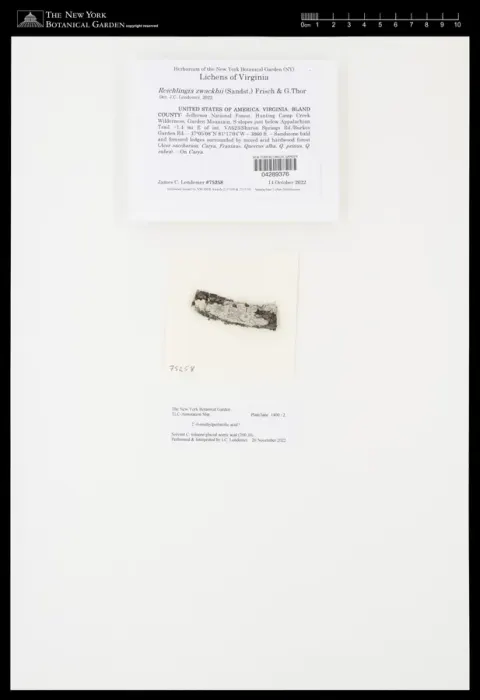
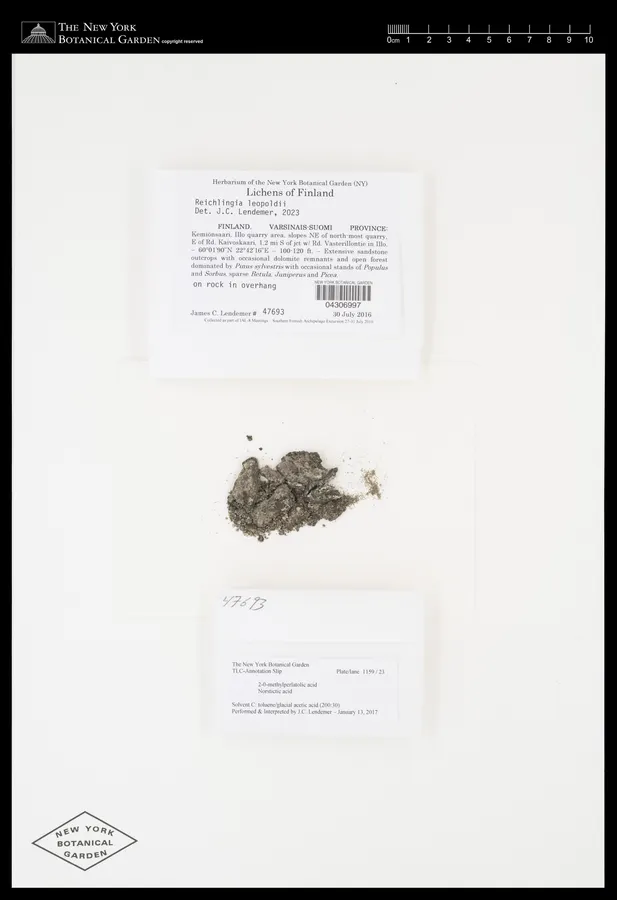
Voucher herbarium Reichlingia leopoldii (04306997), The New York Botanical Garden. Identifikasi mengikuti record spesimen sumber. Foto bahan, kemasan, atau label herbarium sebagaimana tersedia pada record institusi; bukan foto lapangan atau penentuan spesimen independen.

Jenis
Voucher herbarium
Kredit
The New York Botanical Garden
Lisensi
CC BY 4.0
Sumber media
Buka entri sumber

Gambar menunjukkan objek menurut identifikasi sumber, bukan verifikasi independen spesimen oleh Fungi. Tidak ada skala baru yang ditambahkan.

06 / Rujukan

Sumber profil

  1. [1] Reichlingia leopoldii — Wikipedia (en)Bagian sumber: Frozen revision 1326857118
    Tanggal penghimpunan sumber: 2026-10-12
    Teks sumber: CC BY-SA4.0 · Wikipedia contributors
  2. [2] Catalogue of Life Base2026-09-11 — Reichlingia leopoldiiBagian sumber: ColDP NameUsage.tsv ID 4RQL9; accepted species; source 2073
    Tanggal penghimpunan sumber: 2026-10-12
  3. [3] Dokumentasi visual — Reichlingia leopoldiiBagian sumber: Individual media record; identification follows the source, not independent determination
    Tanggal penghimpunan sumber: 2026-10-12
    Media sumber: CC BY 4.0 · The New York Botanical Garden

Adaptasi teks: CC BY-SA 4.0. Wikipedia contributors — Reichlingia leopoldii — Wikipedia (en)

Uraian asli dan riwayat sumber

Riwayat atau halaman sumber

Ringkasan sumber

Reichlingia leopoldii is a species of lichen-forming fungus (a lichenised hyphomycete) in the family Arthoniaceae. It forms greyish-green patches up to several centimetres across on hard siliceous rocks such as basalt, often in sheltered overhangs and crevices. The fungus reproduces asexually through distinctive chocolate-brown, branched spores that develop on the thallus surface, and no sexual reproductive structures are known. In continental Europe the species is rare and scattered, occurring mainly on the bark of veteran oaks in long-established woodlands from the Netherlands and Belgium eastward to Poland, Lithuania and Russia.

Revisi sumber

Morfologi sumber

The thallus of Reichlingia leopoldii forms greyish green, more or less rounded patches. These are usually continuous and clearly delimited, though neighbouring patches may coalesce where they meet. Individual thalli are 0.5–2 mm thick and typically 1–5 cm in diameter, with exceptionally larger patches up to about 40 cm across; the margin is not, or only indistinctly, lobed. The thallus rests on a whitish of loose hyphae, best developed on the lower surface, which anchors it to the substrate. When visible, the lower surface is smooth, pale to ochraceous and rather even, resembling that of Lepraria crassissima. In young and well-developed thalli the upper surface can appear finely granular. Coarse granules about 0.2–0.3 mm across soon break down into smaller soredia (30–60 μm) or composite (75–125 μm), giving the surface a powdery aspect with little or no projecting hyphae. In older thalli these soredia disintegrate or disappear, leaving a more or less (cottony) thallus with a very loose upper surface composed largely of free, whitish hyphae. The hyphae are colourless, 2–4 μm in diameter and often bear minute surface granules. The photobiont is trentepohlioid, consisting of yellowish, roundish or short-elongate algal cells, often joined in chains, that are densely enveloped by fungal hyphae. Sexual reproductive structures are unknown and ascomata have not been observed. Instead, the fungus reproduces asexually by conidia produced on the upper thallus surface, away from the margin, in irregular -like conidiomata. These conidiomata are reddish to dark chocolate brown, irregular in outline, 0.1–0.4 mm in diameter and may coalesce into larger patches.

Revisi sumber

Ekologi sumber

Reichlingia leopoldii grows on hard siliceous rock, particularly basalt and conglomerate cliffs. It is often found on steep or overhanging faces, including relatively dry crevices in underhangs, where it may occur with other lichens such as Sparria endlicheri, Dirina massiliensis and Dendrographa latebrarum. In Britain it is currently known from eastern Scotland, with records from Angus, eastern Inverness-shire and East Lothian. Within Europe its known range is relatively small and it is rare even there, with scattered records from Luxembourg and Switzerland (including the type area), Germany (Baden-Württemberg, the Eifel and Lower Saxony), Poland, Lithuania, Austria, France (Brittany), Belgium, Great Britain and the Netherlands. In lowland sites the species is mostly on old oaks, whereas the British and some Belgian records are from rock faces. In continental lowland Europe it is regarded as characteristic of long-established woodland and is largely confined to the bark near the bases of veteran oaks, where it often grows together with other rare epiphytic lichens on old trees. In the Netherlands it was first recorded in the forest reserve Lieftinghsbroek in Groningen, where a substantial population occurs on the foot of an old oak in a mixed deciduous forest interpreted as long-established woodland.

Revisi sumber

Struktur reproduksi sumber

In young and well-developed thalli the upper surface can appear finely granular. Coarse granules about 0.2–0.3 mm across soon break down into smaller soredia (30–60 μm) or composite (75–125 μm), giving the surface a powdery aspect with little or no projecting hyphae. In older thalli these soredia disintegrate or disappear, leaving a more or less (cottony) thallus with a very loose upper surface composed largely of free, whitish hyphae. The hyphae are colourless, 2–4 μm in diameter and often bear minute surface granules. The photobiont is trentepohlioid, consisting of yellowish, roundish or short-elongate algal cells, often joined in chains, that are densely enveloped by fungal hyphae. Sexual reproductive structures are unknown and ascomata have not been observed.

Revisi sumber

Rujukan halaman ini

Fungi. Reichlingia leopoldii. Rilis data fungi-2026-10-12-expansion-2. https://fungi-atlas.mgadib.chatgpt.site/jamur/reichlingia-leopoldii/.

Status: impor sumber; pemeriksaan editorial per profil belum selesai. Untuk klaim biologis, gunakan rujukan pada bagian terkait dan periksa konteks sumber aslinya.