01 / Morfologi

Ciri dan struktur

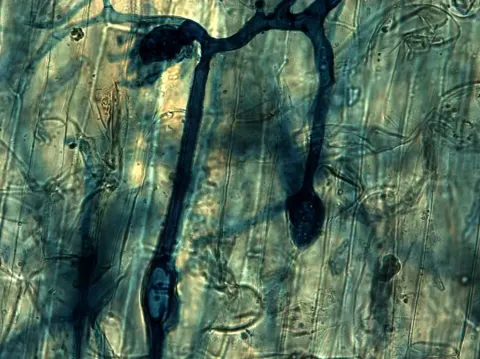
G. aggregatum has sporocarps containing spores which are not closely grouped. Spores are usually pear-shaped or spherical and measure between 40 and 85 μm in diameter, whereas sporocarps can be 200-1800 μm X 200-1400 μm in diameter. Spore color ranges from pale yellow to a darker yellow-brown or orange-brown. Spores can be contained in either one or two cell walls, but if there are two, the outer wall is always thicker. A second type of spore wall thickening has been observed in G. aggregatum spores wherein the wall undergoes localized thickening in one hemisphere or a smaller space. This can happen in multiple locations on a single spore and can contribute to the spore having a pear-like shape. The attached hypha can be blocked from the pore by this thickening. As is the case for all species in this genus, the mycorrhizal structure of G. aggregatum proliferates in straight lines along the cortex, branching dichotomously at cell junctions as it penetrates deeper into the root and extending in two directions at once. The mycorrhizal hyphae stain dark. Arbuscules that breach into root cells are thick and intricately branched into compact hyphal bunches.

Sebagian uraian ditampilkan dalam bahasa sumber; terjemahannya belum tersedia atau belum lolos pemeriksaan.

Rujukan: [1]

Pengukuran mengikuti objek, spesimen atau kultur, dan metode yang disebutkan sumber. Baca uraian asli untuk konteks lengkap.

02 / Kehidupan

Habitat dan peran ekologis

Glomus aggregatum is an arbuscular mycorrhizal fungus used as a soil inoculant in agriculture and horticulture. Like other species in this phylum it forms obligate symbioses with plant roots, where it obtains carbon (photosynthate) from the host plant in exchange for nutrients and other benefits. G. aggregatum has sporocarps containing spores which are not closely grouped. Spores are usually pear-shaped or spherical and measure between 40 and 85 μm in diameter, whereas sporocarps can be 200-1800 μm X 200-1400 μm in diameter. Spore color ranges from pale yellow to a darker yellow-brown or orange-brown. Spores can be contained in either one or two cell walls, but if there are two, the outer wall is always thicker. A second type of spore wall thickening has been observed in G. aggregatum spores wherein the wall undergoes localized thickening in one hemisphere or a smaller space. This can happen in multiple locations on a single spore and can contribute to the spore having a pear-like shape. The attached hypha can be blocked from the pore by this thickening. As is the case for all species in this genus, the mycorrhizal structure of G. aggregatum proliferates in straight lines along the cortex, branching dichotomously at cell junctions as it penetrates deeper into the root and extending in two directions at once.

Sebagian uraian ditampilkan dalam bahasa sumber; terjemahannya belum tersedia atau belum lolos pemeriksaan.

Rujukan: [1]

Habitat atau konteks temuan
Informasi belum tersedia pada sumber rilis ini.
Substrat
Informasi belum tersedia pada sumber rilis ini.
Peran atau konteks
Mitra tumbuhan
Temukan hubungan serupa
03 / Siklus hidup

Reproduksi

G. aggregatum has sporocarps containing spores which are not closely grouped. Spores are usually pear-shaped or spherical and measure between 40 and 85 μm in diameter, whereas sporocarps can be 200-1800 μm X 200-1400 μm in diameter. Spore color ranges from pale yellow to a darker yellow-brown or orange-brown. Spores can be contained in either one or two cell walls, but if there are two, the outer wall is always thicker. A second type of spore wall thickening has been observed in G. aggregatum spores wherein the wall undergoes localized thickening in one hemisphere or a smaller space. This can happen in multiple locations on a single spore and can contribute to the spore having a pear-like shape.

Sebagian uraian ditampilkan dalam bahasa sumber; terjemahannya belum tersedia atau belum lolos pemeriksaan.

Rujukan: [1]

Sinonim menurut acuan taksonomi rilis: Glomus aggregatum; Rhizoglomus aggregatum
04 / Batas informasi

Catatan identitas dan cakupan

  • Nama diterima mengikuti Catalogue of Life Base2026-09-11; uraian mempertahankan konsep dan nama sumber aslinya.
  • Original geographic, specimen and life-cycle scope retained; source import awaits individual editorial review.
  • Impor dan terjemahan otomatis belum diperiksa editorial per profil. Struktur reproduktif yang disebutkan tidak membuktikan seluruh siklus hidup diketahui.
  • Pengukuran pada uraian mengikuti spesimen, kultur, dan metode sumber; angka tidak diperluas ke semua populasi.

Catatan distribusi dalam narasi mengikuti sumbernya. Dokumentasi spesimen atau foto mengikuti catatan sumber. Bukti wilayah Indonesia dan penilaian konservasi tidak disimpulkan dari gambar.

05 / Dokumentasi

Melihat dengan konteks

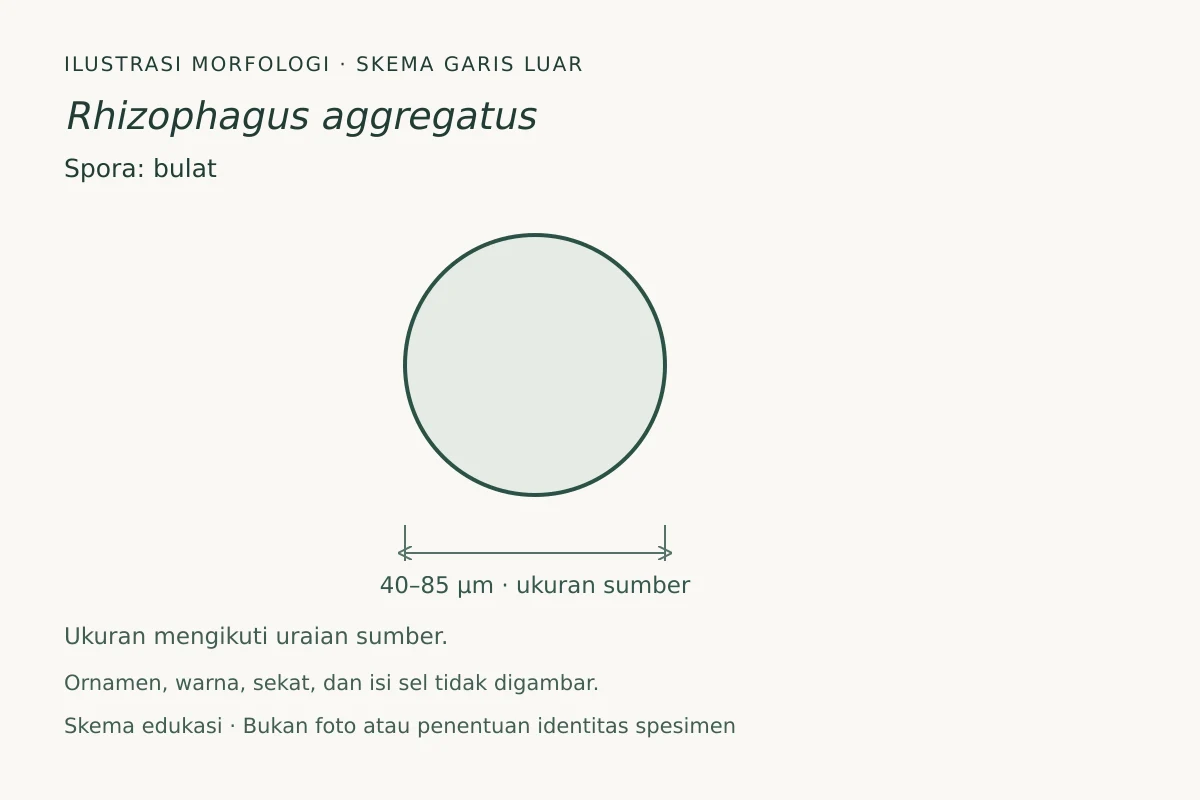
Ilustrasi skematis garis luar spora Rhizophagus aggregatus, berdasarkan uraian sumber; ukuran yang dilaporkan 40–85 µm. Proporsi disederhanakan, bukan salinan satu spesimen. Ornamen permukaan, warna, sekat, dan isi sel tidak direkonstruksi. Skema memilih bentuk spora bulat dari alternatif bentuk pir atau bulat dalam sumber, berdiameter 40–85 µm. Hanya garis luar badan spora; hubungan dengan hifa tidak direkonstruksi.

Jenis
Ilustrasi skematis
Kredit
Fungi, ilustrasi orisinal (2026); fakta morfologi berdasarkan Wikipedia contributors
Sumber media
Buka entri sumber

Gambar menunjukkan objek menurut identifikasi sumber, bukan verifikasi independen spesimen oleh Fungi. Tidak ada skala baru yang ditambahkan.

06 / Rujukan

Sumber profil

  1. [1] Glomus aggregatum — Wikipedia (en)Bagian sumber: Frozen revision 1324461301
    Tanggal penghimpunan sumber: 2026-10-12
    Media sumber: CC BY-SA4.0 · Wikipedia contributors
  2. [2] Catalogue of Life Base2026-09-11 — Rhizophagus aggregatusBagian sumber: ColDP NameUsage.tsv ID 4SCSR; accepted species; source 2073
    Tanggal penghimpunan sumber: 2026-10-12

Adaptasi teks: CC BY-SA 4.0. Wikipedia contributors — Glomus aggregatum — Wikipedia (en)

Uraian asli dan riwayat sumber

Riwayat atau halaman sumber

Ringkasan sumber

G. aggregatum has sporocarps containing spores which are not closely grouped. Spores are usually pear-shaped or spherical and measure between 40 and 85 μm in diameter, whereas sporocarps can be 200-1800 μm X 200-1400 μm in diameter. Spore color ranges from pale yellow to a darker yellow-brown or orange-brown. Spores can be contained in either one or two cell walls, but if there are two, the outer wall is always thicker. A second type of spore wall thickening has been observed in G. aggregatum spores wherein the wall undergoes localized thickening in one hemisphere or a smaller space.

Revisi sumber

Morfologi sumber

G. aggregatum has sporocarps containing spores which are not closely grouped. Spores are usually pear-shaped or spherical and measure between 40 and 85 μm in diameter, whereas sporocarps can be 200-1800 μm X 200-1400 μm in diameter. Spore color ranges from pale yellow to a darker yellow-brown or orange-brown. Spores can be contained in either one or two cell walls, but if there are two, the outer wall is always thicker. A second type of spore wall thickening has been observed in G. aggregatum spores wherein the wall undergoes localized thickening in one hemisphere or a smaller space. This can happen in multiple locations on a single spore and can contribute to the spore having a pear-like shape. The attached hypha can be blocked from the pore by this thickening. As is the case for all species in this genus, the mycorrhizal structure of G. aggregatum proliferates in straight lines along the cortex, branching dichotomously at cell junctions as it penetrates deeper into the root and extending in two directions at once. The mycorrhizal hyphae stain dark. Arbuscules that breach into root cells are thick and intricately branched into compact hyphal bunches.

Revisi sumber

Ekologi sumber

Glomus aggregatum is an arbuscular mycorrhizal fungus used as a soil inoculant in agriculture and horticulture. Like other species in this phylum it forms obligate symbioses with plant roots, where it obtains carbon (photosynthate) from the host plant in exchange for nutrients and other benefits. G. aggregatum has sporocarps containing spores which are not closely grouped. Spores are usually pear-shaped or spherical and measure between 40 and 85 μm in diameter, whereas sporocarps can be 200-1800 μm X 200-1400 μm in diameter. Spore color ranges from pale yellow to a darker yellow-brown or orange-brown. Spores can be contained in either one or two cell walls, but if there are two, the outer wall is always thicker. A second type of spore wall thickening has been observed in G. aggregatum spores wherein the wall undergoes localized thickening in one hemisphere or a smaller space. This can happen in multiple locations on a single spore and can contribute to the spore having a pear-like shape. The attached hypha can be blocked from the pore by this thickening. As is the case for all species in this genus, the mycorrhizal structure of G. aggregatum proliferates in straight lines along the cortex, branching dichotomously at cell junctions as it penetrates deeper into the root and extending in two directions at once.

Revisi sumber

Struktur reproduksi sumber

G. aggregatum has sporocarps containing spores which are not closely grouped. Spores are usually pear-shaped or spherical and measure between 40 and 85 μm in diameter, whereas sporocarps can be 200-1800 μm X 200-1400 μm in diameter. Spore color ranges from pale yellow to a darker yellow-brown or orange-brown. Spores can be contained in either one or two cell walls, but if there are two, the outer wall is always thicker. A second type of spore wall thickening has been observed in G. aggregatum spores wherein the wall undergoes localized thickening in one hemisphere or a smaller space. This can happen in multiple locations on a single spore and can contribute to the spore having a pear-like shape.

Revisi sumber

Rujukan halaman ini

Fungi. Rhizophagus aggregatus. Rilis data fungi-2026-10-12-expansion-2. https://fungi-atlas.mgadib.chatgpt.site/jamur/rhizophagus-aggregatus/.

Status: impor sumber; pemeriksaan editorial per profil belum selesai. Untuk klaim biologis, gunakan rujukan pada bagian terkait dan periksa konteks sumber aslinya.