01 / Morfologi

Ciri dan struktur

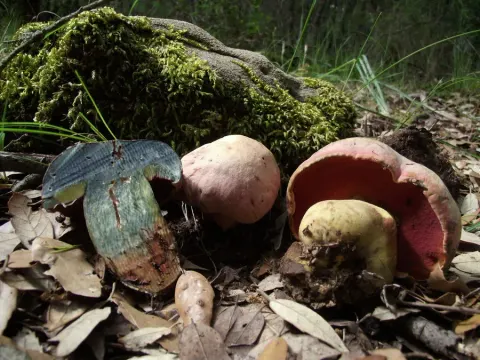
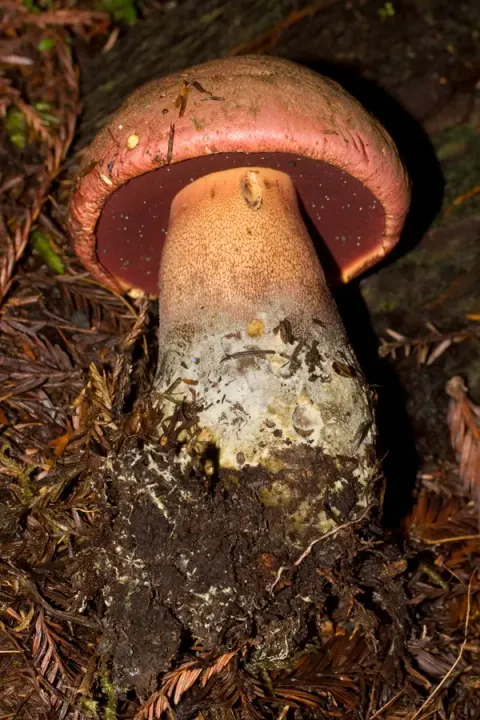
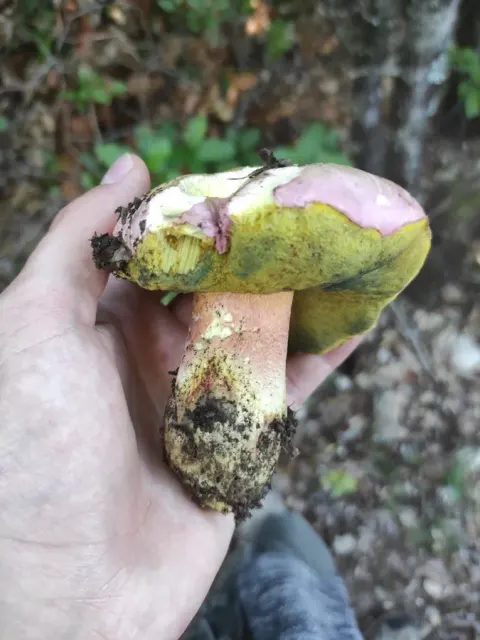
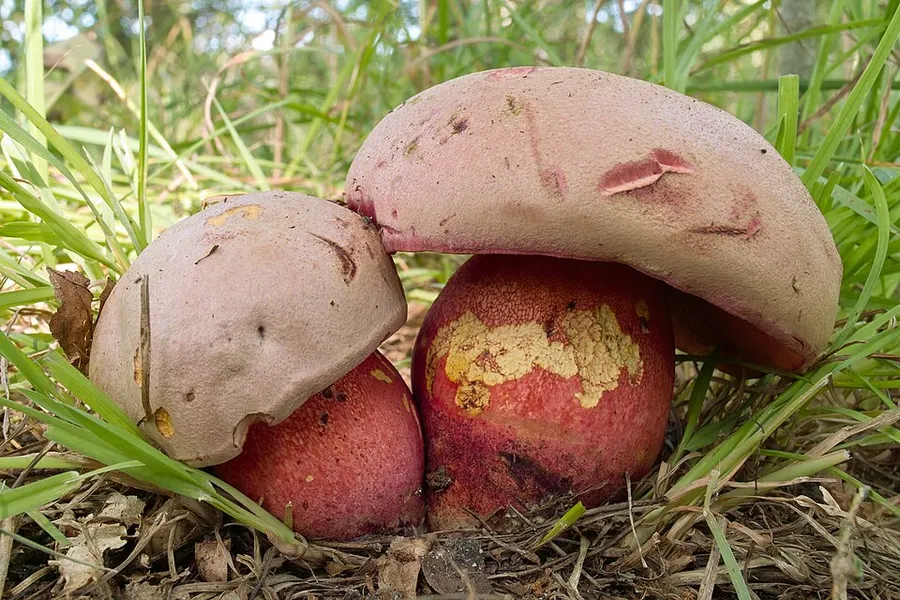
The cap is initially off-white, or coffee-coloured at the button stage. In mid life it often (but not always) turns a pale mouse grey. In old age the cap turns reddish, or what has been described as 'old rose'. It may reach 14 cm in diameter. The stipe is stocky, with a narrow red reticulation (net pattern) on an orange ground at the apex. This orange ground colour fades gradually towards the midsection, making the red reticulation more pronounced. At the base the reticulation is absent, and the stipe turns dark vinaceous. Sometimes the stipe detail can be faint, or even absent when covered with earth or leaf litter. The pores are initially red, but have an overall orange colour when mature, and they bruise blue. The flesh turns pale blue on cutting / dark vinaceous in the stipe base. Often this blueing process is very slow, sometimes taking a minute or so for the flesh to turn a light blue. In other situations, blueing is near-instant. The flesh is said to smell of chicory.

Sebagian uraian ditampilkan dalam bahasa sumber; terjemahannya belum tersedia atau belum lolos pemeriksaan.

Rujukan: [1]

Pengukuran mengikuti objek, spesimen atau kultur, dan metode yang disebutkan sumber. Baca uraian asli untuk konteks lengkap.

02 / Kehidupan

Habitat dan peran ekologis

R. legaliae adalah spesies langka di Inggris, yang biasanya terjadi di hutan terbuka atau taman dengan banyak matahari di tanah netral-ke-asam. Assessed as "R rentan" oleh JNCC, memiliki populasi sekitar 560 spesimen dewasa. An unusual morph dengan pori kuning terang telah tercatat dari Windsor Great Park, Berkshire, kadang-kadang tumbuh bersama dengan varian pori normal.

Rujukan: [1]

Habitat atau konteks temuan
hutan
Substrat
Informasi belum tersedia pada sumber rilis ini.
Peran atau konteks
Belum dikategorikan pada rilis ini.
Temukan hubungan serupa
03 / Siklus hidup

Reproduksi

Rubroboletus legaliae, previously known as Boletus splendidus, B. satanoides, and B. legaliae is a basidiomycete fungus of the family Boletaceae. It is poisonous, with predominantly gastrointestinal symptoms, and is related to Rubroboletus satanas.

Sebagian uraian ditampilkan dalam bahasa sumber; terjemahannya belum tersedia atau belum lolos pemeriksaan.

Rujukan: [1]

Sinonim menurut acuan taksonomi rilis: Boletus legaliae; Boletus legaliae f. spinarii; Boletus spinarii; Boletus splendidus subsp. moseri; Rubroboletus legaliae f. spinarii
04 / Batas informasi

Catatan identitas dan cakupan

  • Nama diterima mengikuti Catalogue of Life Base2026-09-11; uraian mempertahankan konsep dan nama sumber aslinya.
  • Original geographic, specimen and life-cycle scope retained; source import awaits individual editorial review.
  • Impor dan terjemahan otomatis belum diperiksa editorial per profil. Struktur reproduktif yang disebutkan tidak membuktikan seluruh siklus hidup diketahui.
  • Pengukuran pada uraian mengikuti spesimen, kultur, dan metode sumber; angka tidak diperluas ke semua populasi.

Catatan distribusi dalam narasi mengikuti sumbernya. Dokumentasi spesimen atau foto mengikuti catatan sumber. Bukti wilayah Indonesia dan penilaian konservasi tidak disimpulkan dari gambar.

05 / Dokumentasi

Melihat dengan konteks

Dokumentasi Rubroboletus legaliae dari Wikimedia Commons. Boletus legaliae, Luční, Czech Republic Identifikasi mengikuti record berkas sumber.

Jenis
Fotografi
Kredit
Xth-Floor
Sumber media
Buka entri sumber

Gambar menunjukkan objek menurut identifikasi sumber, bukan verifikasi independen spesimen oleh Fungi. Tidak ada skala baru yang ditambahkan.

06 / Rujukan

Sumber profil

  1. [1] Rubroboletus legaliae — Wikipedia (en)Bagian sumber: Frozen revision 1318774939
    Tanggal penghimpunan sumber: 2026-10-12
    Teks sumber: CC BY-SA4.0 · Wikipedia contributors
  2. [2] Catalogue of Life Base2026-09-11 — Rubroboletus legaliaeBagian sumber: ColDP NameUsage.tsv ID 4TJ95; accepted species; source 2073
    Tanggal penghimpunan sumber: 2026-10-12
  3. [3] Dokumentasi visual — Rubroboletus legaliaeBagian sumber: Individual media record; identification follows the source, not independent determination
    Tanggal penghimpunan sumber: 2026-10-12
    Media sumber: CC BY-SA 3.0 · Xth-Floor

Adaptasi teks: CC BY-SA 4.0. Wikipedia contributors — Rubroboletus legaliae — Wikipedia (en)

Uraian asli dan riwayat sumber

Riwayat atau halaman sumber

Ringkasan sumber

Rubroboletus legaliae, previously known as Boletus splendidus, B. satanoides, and B. legaliae is a basidiomycete fungus of the family Boletaceae. It is poisonous, with predominantly gastrointestinal symptoms, and is related to Rubroboletus satanas. It's uncommon in Southern England, and Europe, and grows with oak (Quercus) and beech (Fagus) often on neutral to acid soils. It is considered vulnerable in the Czech Republic. In Britain, all of the boletes in the Satanas group are either very rare, endangered, or extinct.

Revisi sumber

Morfologi sumber

The cap is initially off-white, or coffee-coloured at the button stage. In mid life it often (but not always) turns a pale mouse grey. In old age the cap turns reddish, or what has been described as 'old rose'. It may reach 14 cm in diameter. The stipe is stocky, with a narrow red reticulation (net pattern) on an orange ground at the apex. This orange ground colour fades gradually towards the midsection, making the red reticulation more pronounced. At the base the reticulation is absent, and the stipe turns dark vinaceous. Sometimes the stipe detail can be faint, or even absent when covered with earth or leaf litter. The pores are initially red, but have an overall orange colour when mature, and they bruise blue. The flesh turns pale blue on cutting / dark vinaceous in the stipe base. Often this blueing process is very slow, sometimes taking a minute or so for the flesh to turn a light blue. In other situations, blueing is near-instant. The flesh is said to smell of chicory.

Revisi sumber

Ekologi sumber

R. legaliae is an uncommon to rare species in the UK, commonly occurring in open woodland or parkland with plenty of sun on neutral-to-acidic soil. Assessed as 'Vulnerable' by the JNCC, it has a population of around 560 mature specimens. An unusual morph with bright yellow pores has been recorded from Windsor Great Park, Berkshire, sometimes growing alongside normal-pored variants.

Revisi sumber

Struktur reproduksi sumber

Rubroboletus legaliae, previously known as Boletus splendidus, B. satanoides, and B. legaliae is a basidiomycete fungus of the family Boletaceae. It is poisonous, with predominantly gastrointestinal symptoms, and is related to Rubroboletus satanas.

Revisi sumber

Rujukan halaman ini

Fungi. Rubroboletus legaliae. Rilis data fungi-2026-10-12-expansion-2. https://fungi-atlas.mgadib.chatgpt.site/jamur/rubroboletus-legaliae/.

Status: impor sumber; pemeriksaan editorial per profil belum selesai. Untuk klaim biologis, gunakan rujukan pada bagian terkait dan periksa konteks sumber aslinya.