01 / Morfologi

Ciri dan struktur

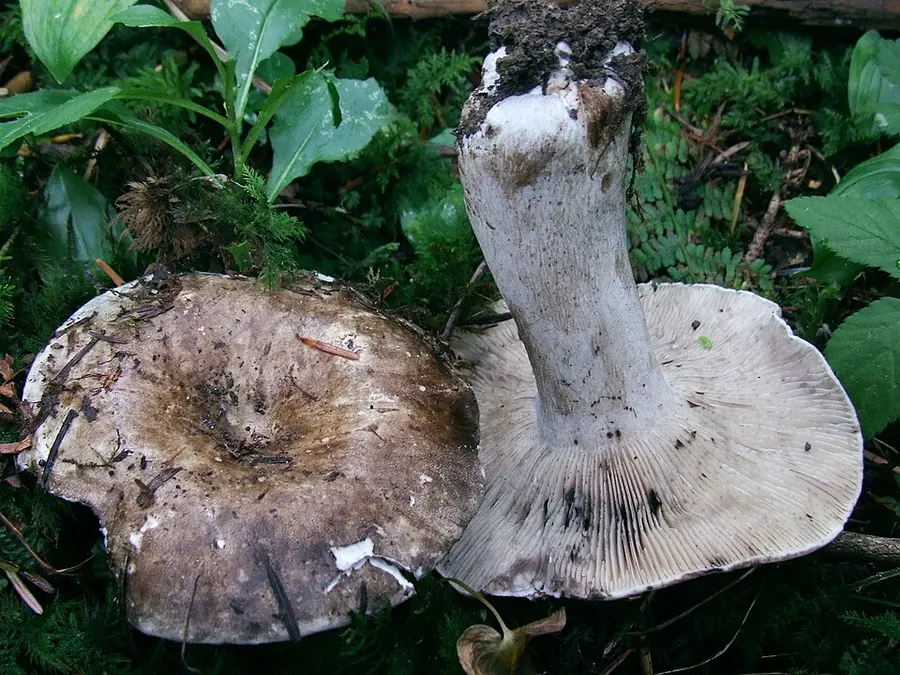
The cap, initially convex when young, becomes almost flattened, depressed, or funnel-shaped in maturity, and reaches a diameter of 4.5–14.5 cm. The smooth cap surface is sticky in moist, young specimens, but develops a polished look when dry. It is initially white before turning brownish gray and eventually blackish in age. The cap margin is curved inward throughout most of the life of the fruit body. The cap cuticle can be peeled up to one-half the radius of the cap. The flesh is white, but slowly stains reddish then grayish-black after being exposed to air. This characteristic staining reaction can be slow to develop, or may not develop at all, especially in old fruit bodies where the underlying tissue has already darkened. The flesh has no distinctive odor, and a hot, bitter taste. Gills are adnate (squarely fused) to slightly decurrent (extending a short way down the length of the stem), and interspersed with many tiers of lamellulae (short gills that do not extend fully from the cap edge to the stem). They are very crowded, with about 7–12 gills per centimeter. Initially creamy white in color, they will stain reddish then blackish where they have been injured, or sometimes develop dirty reddish stains with age. The stem measures 2–7.5 cm long by 1.2–2.5 cm thick, and is nearly equal in width throughout its length. It is solid (i.e., not hollow) and hard, initially white before aging to brownish-black, and has a smooth to slightly scaly, dry surface. Russula densifolia produces a white to pale yellow spore print. The spores are oval to elliptical to roughly spherical, hyaline (translucent), amyloid, and measure 7.6–9.5 by 6.7–7.5 μm.

Sebagian uraian ditampilkan dalam bahasa sumber; terjemahannya belum tersedia atau belum lolos pemeriksaan.

Rujukan: [1]

Pengukuran mengikuti objek, spesimen atau kultur, dan metode yang disebutkan sumber. Baca uraian asli untuk konteks lengkap.

02 / Kehidupan

Habitat dan peran ekologis

The mushrooms grow on the ground singly, scattered, or in groups in both mixed and deciduous forests, and tend to appear in the summer and autumn. In Spain, it is common in dune pine forests. Widely distributed, Russula densifolia is known from Asia (including China, India, Japan, and Thailand), Europe, and North America. In a study of the chronological sequence of ectomycorrhizal fungi communities of Pinus densiflora forests of eastern China, R. densifolia was shown to reach its peak abundance in 30-year-old stands. In another Chinese study, the species was found to be one of the six most common Russula species associated with 1- to 2-year-old seedlings of Pinus yunnanensis. In Mexico, they have been found with oak. The fungus is well-adapted to live in cold climates, as its mycelium has a relatively high tolerance to low temperatures, although repeated freezing/thawing cycles tend to slow the growth of mycelium. The lethal temperature required for 50% of the mycelium to die is -8.6 C. Russula densifolia is a mycorrhizal species. Descriptions have been published of the morphology of the ectomycorrhizae that it forms with European beech (Fagus sylvatica), and Norway spruce (Picea abies).

Sebagian uraian ditampilkan dalam bahasa sumber; terjemahannya belum tersedia atau belum lolos pemeriksaan.

Rujukan: [1]

Habitat atau konteks temuan
hutan
Substrat
tanah
Peran atau konteks
Mitra tumbuhan
Temukan hubungan serupa
03 / Siklus hidup

Reproduksi

Russula densifolia produces a white to pale yellow spore print. The spores are oval to elliptical to roughly spherical, hyaline (translucent), amyloid, and measure 7.6–9.5 by 6.7–7.5 μm. They have a rough, reticulate surface marked by ridges and low, isolated warts that are 0.2–0.5 μm high. The cystidia in the hymenium are thin-walled and hyaline, with shapes ranging from club-shaped with broad tips to somewhat fuse-shaped with short and narrow appendages at the tip; cystidia have dimensions of 30–80 by 5–10 μm. Under the hymenium, the subhymenium is starkly differentiated. There are abundant sphaerocysts (fragile, spherical cells common in the Russulaceae) present in the gill tissue, and the cap tissue has clusters of these cells.

Sebagian uraian ditampilkan dalam bahasa sumber; terjemahannya belum tersedia atau belum lolos pemeriksaan.

Rujukan: [1]

Sinonim menurut acuan taksonomi rilis: Russula densifolia f. cremeispora; Russula densifolia f. dilatoria; Russula densifolia f. fragrans; Russula densifolia f. gregata; Russula densifolia var. caucasica; Russula densifolia var. colettarum; Russula densifolia var. fumosella; Russula nigricans var. densifolia
04 / Batas informasi

Catatan identitas dan cakupan

  • Nama diterima mengikuti Catalogue of Life Base2026-09-11; uraian mempertahankan konsep dan nama sumber aslinya.
  • Original geographic, specimen and life-cycle scope retained; source import awaits individual editorial review.
  • Impor dan terjemahan otomatis belum diperiksa editorial per profil. Struktur reproduktif yang disebutkan tidak membuktikan seluruh siklus hidup diketahui.
  • Pengukuran pada uraian mengikuti spesimen, kultur, dan metode sumber; angka tidak diperluas ke semua populasi.

Catatan distribusi dalam narasi mengikuti sumbernya. Dokumentasi spesimen atau foto mengikuti catatan sumber. Bukti wilayah Indonesia dan penilaian konservasi tidak disimpulkan dari gambar.

05 / Dokumentasi

Melihat dengan konteks

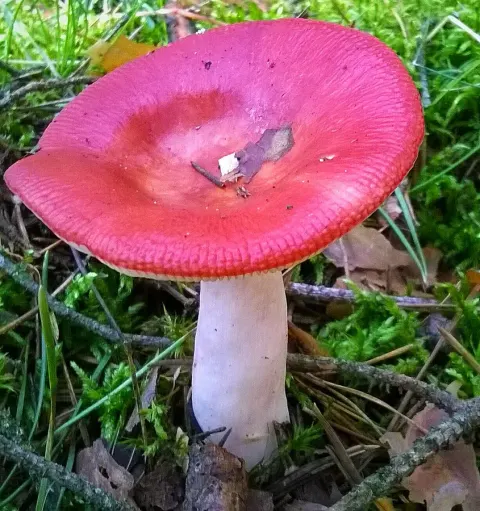
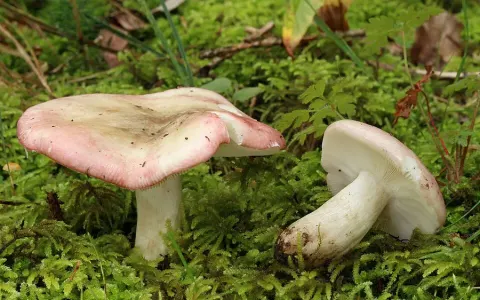
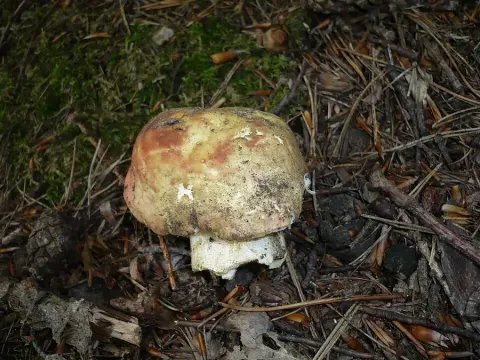
Dokumentasi Russula densifolia dari Wikimedia Commons. Russula densifolia Identifikasi mengikuti record berkas sumber.

Jenis
Fotografi
Kredit
Jerzy Opioła
Sumber media
Buka entri sumber

Gambar menunjukkan objek menurut identifikasi sumber, bukan verifikasi independen spesimen oleh Fungi. Tidak ada skala baru yang ditambahkan.

06 / Rujukan

Sumber profil

  1. [1] Russula densifolia — Wikipedia (en)Bagian sumber: Frozen revision 1321666765
    Tanggal penghimpunan sumber: 2026-10-12
    Teks sumber: CC BY-SA4.0 · Wikipedia contributors
  2. [2] Catalogue of Life Base2026-09-11 — Russula densifoliaBagian sumber: ColDP NameUsage.tsv ID 6X9GT; accepted species; source 2073
    Tanggal penghimpunan sumber: 2026-10-12
  3. [3] Dokumentasi visual — Russula densifoliaBagian sumber: Individual media record; identification follows the source, not independent determination
    Tanggal penghimpunan sumber: 2026-10-12
    Media sumber: CC BY-SA 4.0 · Jerzy Opioła

Adaptasi teks: CC BY-SA 4.0. Wikipedia contributors — Russula densifolia — Wikipedia (en)

Uraian asli dan riwayat sumber

Riwayat atau halaman sumber

Ringkasan sumber

Russula densifolia, commonly known as the crowded russula or the reddening russula, is a species of agaric fungus in the family Russulaceae. It was first described in 1833 and given its current name in 1876. The fruit bodies (mushrooms) are robust and squat, with caps up to 14.5 cm in diameter, and stems that are 2–7.5 cm long by 1.2–2.5 cm thick. The mushrooms are characterized by the red and then black color changes that occur in the flesh when it is bruised, and a relatively thick cap cuticle.

Revisi sumber

Morfologi sumber

The cap, initially convex when young, becomes almost flattened, depressed, or funnel-shaped in maturity, and reaches a diameter of 4.5–14.5 cm. The smooth cap surface is sticky in moist, young specimens, but develops a polished look when dry. It is initially white before turning brownish gray and eventually blackish in age. The cap margin is curved inward throughout most of the life of the fruit body. The cap cuticle can be peeled up to one-half the radius of the cap. The flesh is white, but slowly stains reddish then grayish-black after being exposed to air. This characteristic staining reaction can be slow to develop, or may not develop at all, especially in old fruit bodies where the underlying tissue has already darkened. The flesh has no distinctive odor, and a hot, bitter taste. Gills are adnate (squarely fused) to slightly decurrent (extending a short way down the length of the stem), and interspersed with many tiers of lamellulae (short gills that do not extend fully from the cap edge to the stem). They are very crowded, with about 7–12 gills per centimeter. Initially creamy white in color, they will stain reddish then blackish where they have been injured, or sometimes develop dirty reddish stains with age. The stem measures 2–7.5 cm long by 1.2–2.5 cm thick, and is nearly equal in width throughout its length. It is solid (i.e., not hollow) and hard, initially white before aging to brownish-black, and has a smooth to slightly scaly, dry surface. Russula densifolia produces a white to pale yellow spore print. The spores are oval to elliptical to roughly spherical, hyaline (translucent), amyloid, and measure 7.6–9.5 by 6.7–7.5 μm.

Revisi sumber

Ekologi sumber

The mushrooms grow on the ground singly, scattered, or in groups in both mixed and deciduous forests, and tend to appear in the summer and autumn. In Spain, it is common in dune pine forests. Widely distributed, Russula densifolia is known from Asia (including China, India, Japan, and Thailand), Europe, and North America. In a study of the chronological sequence of ectomycorrhizal fungi communities of Pinus densiflora forests of eastern China, R. densifolia was shown to reach its peak abundance in 30-year-old stands. In another Chinese study, the species was found to be one of the six most common Russula species associated with 1- to 2-year-old seedlings of Pinus yunnanensis. In Mexico, they have been found with oak. The fungus is well-adapted to live in cold climates, as its mycelium has a relatively high tolerance to low temperatures, although repeated freezing/thawing cycles tend to slow the growth of mycelium. The lethal temperature required for 50% of the mycelium to die is -8.6 C. Russula densifolia is a mycorrhizal species. Descriptions have been published of the morphology of the ectomycorrhizae that it forms with European beech (Fagus sylvatica), and Norway spruce (Picea abies).

Revisi sumber

Struktur reproduksi sumber

Russula densifolia produces a white to pale yellow spore print. The spores are oval to elliptical to roughly spherical, hyaline (translucent), amyloid, and measure 7.6–9.5 by 6.7–7.5 μm. They have a rough, reticulate surface marked by ridges and low, isolated warts that are 0.2–0.5 μm high. The cystidia in the hymenium are thin-walled and hyaline, with shapes ranging from club-shaped with broad tips to somewhat fuse-shaped with short and narrow appendages at the tip; cystidia have dimensions of 30–80 by 5–10 μm. Under the hymenium, the subhymenium is starkly differentiated. There are abundant sphaerocysts (fragile, spherical cells common in the Russulaceae) present in the gill tissue, and the cap tissue has clusters of these cells.

Revisi sumber

Rujukan halaman ini

Fungi. Russula densifolia. Rilis data fungi-2026-10-12-expansion-2. https://fungi-atlas.mgadib.chatgpt.site/jamur/russula-densifolia/.

Status: impor sumber; pemeriksaan editorial per profil belum selesai. Untuk klaim biologis, gunakan rujukan pada bagian terkait dan periksa konteks sumber aslinya.