01 / Morfologi

Ciri dan struktur

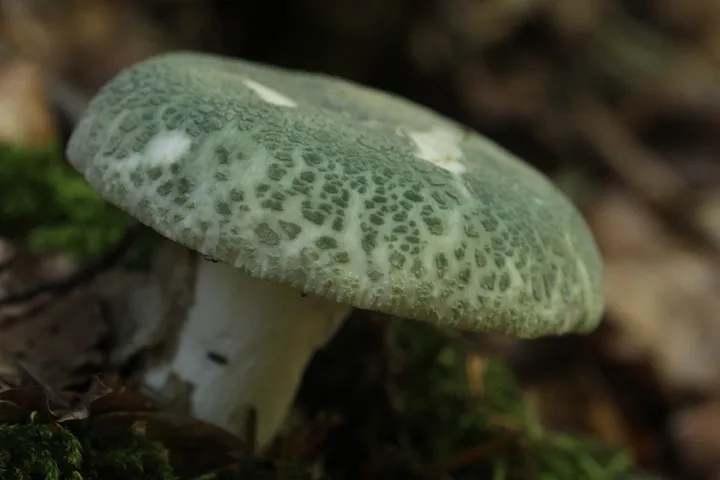
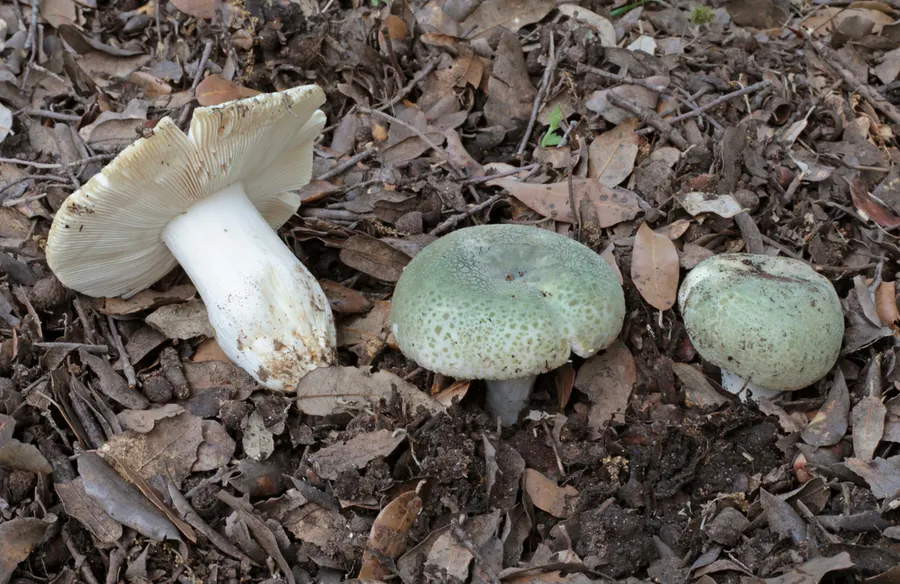
Described by mushroom enthusiast Antonio Carluccio as "not exactly nice to look at", the cap is at first dome or barrel-shaped, becoming convex and flattened with age with a diameter of up to 15 cm. The cap center is often depressed. The cuticle of the cap is green, most profoundly in the center, with patches of the same color dispersed radially around the center in an areolate pattern. The color of the cuticle is often of variable shade, ranging from gray to verdigris to grass-green. The extent of the patching of the cuticle is also variable, giving specimens with limited patches a resemblance to other green-capped species of Russula, such as R. aeruginea. The green patches of the cap lie on a white to pale green background. The cap, while frequently round, may also exhibit irregular lobes and cracks. The cap cuticle is thin, and can be readily peeled off the surface to a distance of about halfway towards the cap center. The gills are white to cream colored, and fairly crowded together; they are mostly free from attachment to the stipe. Gills are interconnected at their bases by veins. The stipe is cylindrical, white, and of variable height, up to 8 cm tall and 4 cm wide; it is roughly the same thickness at both the top and the base. The top portion of the stipe may be farinose—covered with a white, mealy powder. It may turn slightly brown with age, or when it is injured or bruised from handling. Like other mushrooms in the Russulales, the flesh is brittle, owing to the sphaerocyst cytoarchitecture—cylindrical cells that contrast with the typical fibrous, filamentous hyphae present in other orders of the basidiomycota.

Sebagian uraian ditampilkan dalam bahasa sumber; terjemahannya belum tersedia atau belum lolos pemeriksaan.

Rujukan: [1]

Pengukuran mengikuti objek, spesimen atau kultur, dan metode yang disebutkan sumber. Baca uraian asli untuk konteks lengkap.

02 / Kehidupan

Habitat dan peran ekologis

The distribution of R. virescens in North America is subject to debate, where a number of similar species such as R. parvovirescens and R. crustosa are also recognized.

Sebagian uraian ditampilkan dalam bahasa sumber; terjemahannya belum tersedia atau belum lolos pemeriksaan.

Rujukan: [1]

Habitat atau konteks temuan
Informasi belum tersedia pada sumber rilis ini.
Substrat
Informasi belum tersedia pada sumber rilis ini.
Peran atau konteks
Belum dikategorikan pada rilis ini.
Temukan hubungan serupa
03 / Siklus hidup

Reproduksi

Described by mushroom enthusiast Antonio Carluccio as "not exactly nice to look at", the cap is at first dome or barrel-shaped, becoming convex and flattened with age with a diameter of up to 15 cm. The cap center is often depressed. The cuticle of the cap is green, most profoundly in the center, with patches of the same color dispersed radially around the center in an areolate pattern. The color of the cuticle is often of variable shade, ranging from gray to verdigris to grass-green. The extent of the patching of the cuticle is also variable, giving specimens with limited patches a resemblance to other green-capped species of Russula, such as R. aeruginea. The green patches of the cap lie on a white to pale green background.

Sebagian uraian ditampilkan dalam bahasa sumber; terjemahannya belum tersedia atau belum lolos pemeriksaan.

Rujukan: [1]

Sinonim menurut acuan taksonomi rilis: Agaricus integer var. virescens; Agaricus pectinatus var. virescens; Russula virescens f. erythrocephala; Russula virescens var. alba; Russula virescens var. albidocitrina; Russula viridirubrolimbata
04 / Batas informasi

Catatan identitas dan cakupan

  • Nama diterima mengikuti Catalogue of Life Base2026-09-11; uraian mempertahankan konsep dan nama sumber aslinya.
  • Original geographic, specimen and life-cycle scope retained; source import awaits individual editorial review.
  • Impor dan terjemahan otomatis belum diperiksa editorial per profil. Struktur reproduktif yang disebutkan tidak membuktikan seluruh siklus hidup diketahui.
  • Pengukuran pada uraian mengikuti spesimen, kultur, dan metode sumber; angka tidak diperluas ke semua populasi.

Catatan distribusi dalam narasi mengikuti sumbernya. Dokumentasi spesimen atau foto mengikuti catatan sumber. Bukti wilayah Indonesia dan penilaian konservasi tidak disimpulkan dari gambar.

05 / Dokumentasi

Melihat dengan konteks

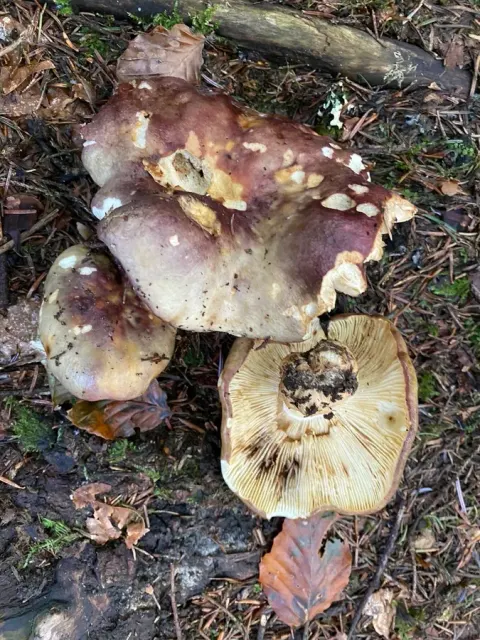
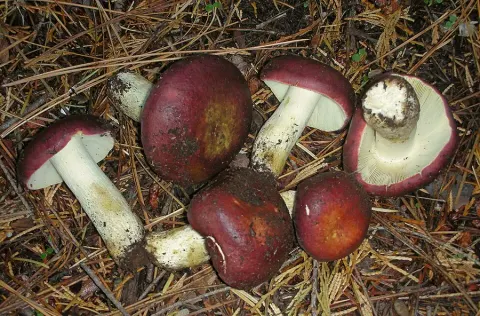
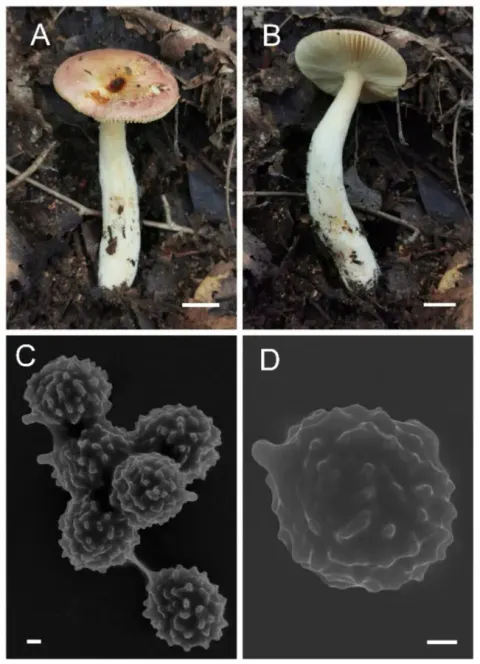
Dokumentasi Russula virescens menurut asosiasi foto pada record takson iNaturalist. Kredit: Davide Puddu. Identitas mengikuti sumber; bukan penentuan spesimen independen.

Jenis
Fotografi
Kredit
(c) Davide Puddu, some rights reserved (CC BY), uploaded by Davide Puddu
Lisensi
CC BY 4.0
Sumber media
Buka entri sumber

Gambar menunjukkan objek menurut identifikasi sumber, bukan verifikasi independen spesimen oleh Fungi. Tidak ada skala baru yang ditambahkan.

Dokumentasi tambahan

06 / Rujukan

Sumber profil

  1. [1] Russula virescens — Wikipedia (en)Bagian sumber: Frozen revision 1363030221
    Tanggal penghimpunan sumber: 2026-10-12
    Teks sumber: CC BY-SA4.0 · Wikipedia contributors
  2. [2] Catalogue of Life Base2026-09-11 — Russula virescensBagian sumber: ColDP NameUsage.tsv ID 4TSW6; accepted species; source 2073
    Tanggal penghimpunan sumber: 2026-10-12
  3. [3] Dokumentasi visual — Russula virescensBagian sumber: Identitas mengikuti sumber dokumentasi; bukan penentuan spesimen independen.
    Tanggal penghimpunan sumber: 2026-10-17
    Media sumber: CC BY 4.0 · (c) Davide Puddu, some rights reserved (CC BY), uploaded by Davide Puddu
  4. [4] Dokumentasi visual — Russula virescensBagian sumber: Identitas mengikuti sumber dokumentasi; bukan penentuan spesimen independen.
    Tanggal penghimpunan sumber: 2026-10-17
    Teks sumber: CC BY-SA 4.0 · (c) Björn Sothmann, some rights reserved (CC BY-SA), uploaded by Björn Sothmann

Adaptasi teks: CC BY-SA 4.0. Wikipedia contributors — Russula virescens — Wikipedia (en)

Uraian asli dan riwayat sumber

Riwayat atau halaman sumber

Ringkasan sumber

Russula virescens is a basidiomycete mushroom of the genus Russula, and is commonly known as the green-cracking russula, the quilted green russula, or "green brittlegill" (which usually refers to Russula aeruginea). The species was described as new to science in 1774 by Jacob Christian Schaeffer. It can be recognized by its distinctive pale green cap that measures up to 15 cm in diameter, the surface of which is covered with darker green angular patches. It has crowded white gills, and a firm, white stipe that is up to 8 cm tall and 4 cm thick.

Revisi sumber

Morfologi sumber

Described by mushroom enthusiast Antonio Carluccio as "not exactly nice to look at", the cap is at first dome or barrel-shaped, becoming convex and flattened with age with a diameter of up to 15 cm. The cap center is often depressed. The cuticle of the cap is green, most profoundly in the center, with patches of the same color dispersed radially around the center in an areolate pattern. The color of the cuticle is often of variable shade, ranging from gray to verdigris to grass-green. The extent of the patching of the cuticle is also variable, giving specimens with limited patches a resemblance to other green-capped species of Russula, such as R. aeruginea. The green patches of the cap lie on a white to pale green background. The cap, while frequently round, may also exhibit irregular lobes and cracks. The cap cuticle is thin, and can be readily peeled off the surface to a distance of about halfway towards the cap center. The gills are white to cream colored, and fairly crowded together; they are mostly free from attachment to the stipe. Gills are interconnected at their bases by veins. The stipe is cylindrical, white, and of variable height, up to 8 cm tall and 4 cm wide; it is roughly the same thickness at both the top and the base. The top portion of the stipe may be farinose—covered with a white, mealy powder. It may turn slightly brown with age, or when it is injured or bruised from handling. Like other mushrooms in the Russulales, the flesh is brittle, owing to the sphaerocyst cytoarchitecture—cylindrical cells that contrast with the typical fibrous, filamentous hyphae present in other orders of the basidiomycota.

Revisi sumber

Ekologi sumber

The distribution of R. virescens in North America is subject to debate, where a number of similar species such as R. parvovirescens and R. crustosa are also recognized.

Revisi sumber

Struktur reproduksi sumber

Described by mushroom enthusiast Antonio Carluccio as "not exactly nice to look at", the cap is at first dome or barrel-shaped, becoming convex and flattened with age with a diameter of up to 15 cm. The cap center is often depressed. The cuticle of the cap is green, most profoundly in the center, with patches of the same color dispersed radially around the center in an areolate pattern. The color of the cuticle is often of variable shade, ranging from gray to verdigris to grass-green. The extent of the patching of the cuticle is also variable, giving specimens with limited patches a resemblance to other green-capped species of Russula, such as R. aeruginea. The green patches of the cap lie on a white to pale green background.

Revisi sumber

Rujukan halaman ini

Fungi. Russula virescens. Rilis data fungi-2026-10-12-expansion-2. https://fungi-atlas.mgadib.chatgpt.site/jamur/russula-virescens/.

Status: impor sumber; pemeriksaan editorial per profil belum selesai. Untuk klaim biologis, gunakan rujukan pada bagian terkait dan periksa konteks sumber aslinya.