01 / Morfologi

Ciri dan struktur

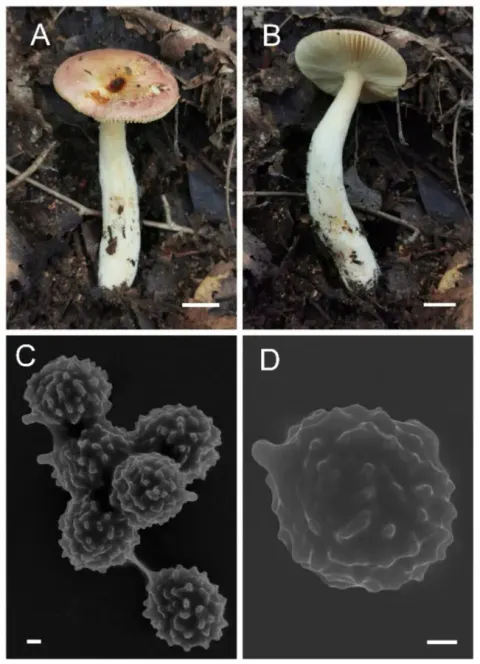
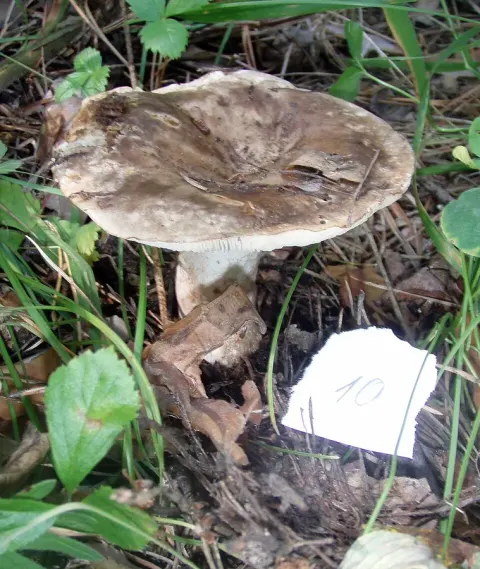
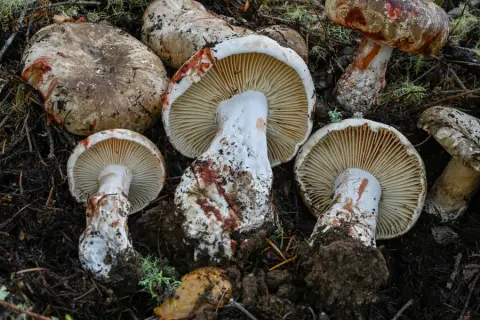
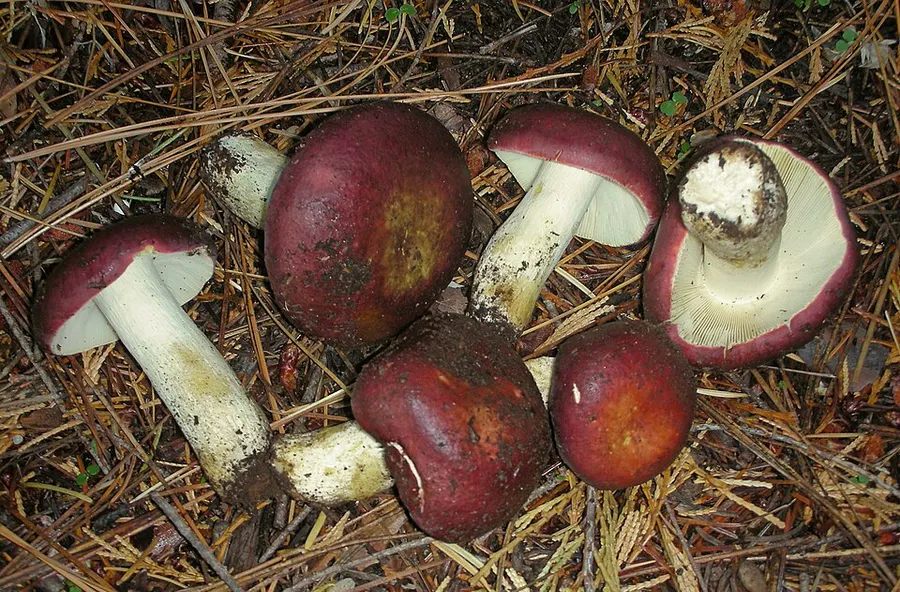
Russula xerampelina has a characteristic odour of boiled crab or shrimp. Trimethylamine and its precursor, trimethylamine N-oxide, are the source of this mushroom's distinct odour. The cap is 5 – 20 cm wide, domed, flat, or with a slightly depressed centre, and sticky. The colour is variable, most commonly purple to wine-red, or greenish, and darker towards the centre of the cap. There are fine grooves up to 1 cm long running perpendicular to the margin. The stipe is 4–12 cm long, 1.5–4 cm wide, cylindrical, white or sometimes with a reddish blush, bruising brown.

Sebagian uraian ditampilkan dalam bahasa sumber; terjemahannya belum tersedia atau belum lolos pemeriksaan.

Rujukan: [1]

Pengukuran mengikuti objek, spesimen atau kultur, dan metode yang disebutkan sumber. Baca uraian asli untuk konteks lengkap.

02 / Kehidupan

Habitat dan peran ekologis

Russula xerampelina is widely distributed; quite common in northern temperate zones, and often ranging into the Arctic Circle, it also ranges south to Costa Rica. In North America, it appears from July to October to the east and October to January in the west. and seems to have a preference for Douglas fir, or more rarely pine trees or larch.

Sebagian uraian ditampilkan dalam bahasa sumber; terjemahannya belum tersedia atau belum lolos pemeriksaan.

Rujukan: [1]

Habitat atau konteks temuan
Informasi belum tersedia pada sumber rilis ini.
Substrat
Informasi belum tersedia pada sumber rilis ini.
Peran atau konteks
Belum dikategorikan pada rilis ini.
Temukan hubungan serupa
03 / Siklus hidup

Reproduksi

Russula xerampelina, also commonly known as the shrimp russula, crab brittlegill, or shrimp mushroom, is a basidiomycete mushroom of the brittlegill genus Russula. Two subspecies are recognised. The fruiting bodies appear in coniferous woodlands in autumn in northern Europe and North America. Their caps are coloured various shades of wine-red, purple to green. Mild tasting and edible, it is one of the most highly regarded brittlegills for the table. It is also notable for smelling of shellfish or crab when fresh.

Sebagian uraian ditampilkan dalam bahasa sumber; terjemahannya belum tersedia atau belum lolos pemeriksaan.

Rujukan: [1]

Sinonim menurut acuan taksonomi rilis: Agaricus esculentus var. xerampelinus; Russula alutacea var. erythropus; Russula atrosanguinea; Russula barlae; Russula barlae var. marthae; Russula barlae var. pseudomelliolens; Russula erythropus; Russula erythropus var. atrosanguinea; Russula erythropus var. ochracea; Russula marthae; Russula vesca var. barlae; Russula xerampelina var. barlae; Russula xerampelina var. marthae; Russula xerampelina var. pseudomelliolens; Russula xerampelina var. putorina; Russula xerampelina var. quercetorum; Russula xerampelina var. semirubra; Russula xerampelina var. tenuicarnosa; Russulina xerampelina
04 / Batas informasi

Catatan identitas dan cakupan

  • Nama diterima mengikuti Catalogue of Life Base2026-09-11; uraian mempertahankan konsep dan nama sumber aslinya.
  • Original geographic, specimen and life-cycle scope retained; source import awaits individual editorial review.
  • Impor dan terjemahan otomatis belum diperiksa editorial per profil. Struktur reproduktif yang disebutkan tidak membuktikan seluruh siklus hidup diketahui.
  • Pengukuran pada uraian mengikuti spesimen, kultur, dan metode sumber; angka tidak diperluas ke semua populasi.

Catatan distribusi dalam narasi mengikuti sumbernya. Dokumentasi spesimen atau foto mengikuti catatan sumber. Bukti wilayah Indonesia dan penilaian konservasi tidak disimpulkan dari gambar.

05 / Dokumentasi

Melihat dengan konteks

Dokumentasi Russula xerampelina dari Wikimedia Commons. For more information about this, see the observation page at Mushroom Observer. Identifikasi mengikuti record berkas sumber.

Jenis
Fotografi
Kredit
This image was created by user Ron Pastorino (Ronpast) at Mushroom Observer , a source for mycological images. You can contact this user here .
Sumber media
Buka entri sumber

Gambar menunjukkan objek menurut identifikasi sumber, bukan verifikasi independen spesimen oleh Fungi. Tidak ada skala baru yang ditambahkan.

06 / Rujukan

Sumber profil

  1. [1] Russula xerampelina — Wikipedia (en)Bagian sumber: Frozen revision 1365630634
    Tanggal penghimpunan sumber: 2026-10-12
    Teks sumber: CC BY-SA4.0 · Wikipedia contributors
  2. [2] Catalogue of Life Base2026-09-11 — Russula xerampelinaBagian sumber: ColDP NameUsage.tsv ID 4TSX8; accepted species; source 2073
    Tanggal penghimpunan sumber: 2026-10-12
  3. [3] Dokumentasi visual — Russula xerampelinaBagian sumber: Individual media record; identification follows the source, not independent determination
    Tanggal penghimpunan sumber: 2026-10-12
    Media sumber: CC BY-SA 3.0 · This image was created by user Ron Pastorino (Ronpast) at Mushroom Observer , a source for mycological images. You can contact this user here .

Adaptasi teks: CC BY-SA 4.0. Wikipedia contributors — Russula xerampelina — Wikipedia (en)

Uraian asli dan riwayat sumber

Riwayat atau halaman sumber

Ringkasan sumber

Russula xerampelina, also commonly known as the shrimp russula, crab brittlegill, or shrimp mushroom, is a basidiomycete mushroom of the brittlegill genus Russula. Two subspecies are recognised. The fruiting bodies appear in coniferous woodlands in autumn in northern Europe and North America. Their caps are coloured various shades of wine-red, purple to green. Mild tasting and edible, it is one of the most highly regarded brittlegills for the table. It is also notable for smelling of shellfish or crab when fresh.

Revisi sumber

Morfologi sumber

Russula xerampelina has a characteristic odour of boiled crab or shrimp. Trimethylamine and its precursor, trimethylamine N-oxide, are the source of this mushroom's distinct odour. The cap is 5 – 20 cm wide, domed, flat, or with a slightly depressed centre, and sticky. The colour is variable, most commonly purple to wine-red, or greenish, and darker towards the centre of the cap. There are fine grooves up to 1 cm long running perpendicular to the margin. The stipe is 4–12 cm long, 1.5–4 cm wide, cylindrical, white or sometimes with a reddish blush, bruising brown.

Revisi sumber

Ekologi sumber

Russula xerampelina is widely distributed; quite common in northern temperate zones, and often ranging into the Arctic Circle, it also ranges south to Costa Rica. In North America, it appears from July to October to the east and October to January in the west. and seems to have a preference for Douglas fir, or more rarely pine trees or larch.

Revisi sumber

Struktur reproduksi sumber

Russula xerampelina, also commonly known as the shrimp russula, crab brittlegill, or shrimp mushroom, is a basidiomycete mushroom of the brittlegill genus Russula. Two subspecies are recognised. The fruiting bodies appear in coniferous woodlands in autumn in northern Europe and North America. Their caps are coloured various shades of wine-red, purple to green. Mild tasting and edible, it is one of the most highly regarded brittlegills for the table. It is also notable for smelling of shellfish or crab when fresh.

Revisi sumber

Rujukan halaman ini

Fungi. Russula xerampelina. Rilis data fungi-2026-10-12-expansion-2. https://fungi-atlas.mgadib.chatgpt.site/jamur/russula-xerampelina/.

Status: impor sumber; pemeriksaan editorial per profil belum selesai. Untuk klaim biologis, gunakan rujukan pada bagian terkait dan periksa konteks sumber aslinya.