Ciri dan struktur
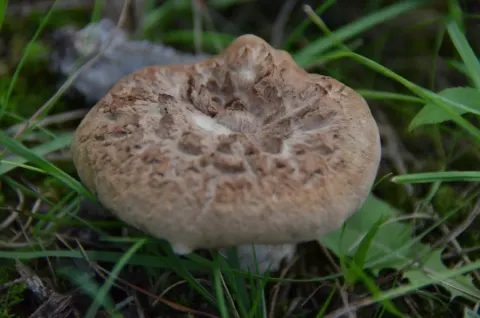
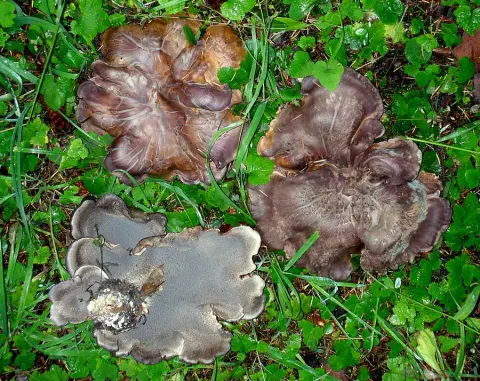
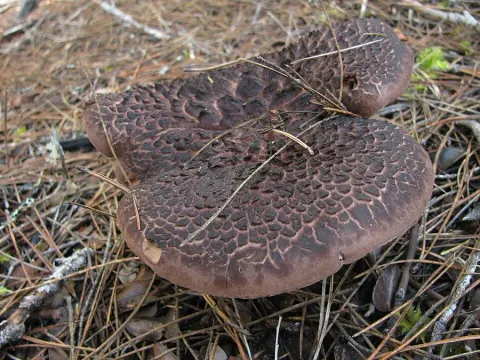
Sarcodon leucopus produces a fleshy, pale brown fruit body (basidiocarp) up to 20 cm in diameter, borne on a central or slightly off‑centre stipe. When young, the cap (pileus) is cushion‑shaped (pulvinate) before flattening out or developing a shallow central depression. Its surface is initially covered in a fine, velvety down (velutinate), soon becoming smooth (glabrous) yet remaining soft in fresh specimens. The surface of older caps later cracks to form shiny scales. Colouration ranges from medium brown to a pale purplish‑brown. On the underside, the hymenophore (spore-producing region) consists of slender spines up to 5 mm long that run down the stipe (decurrent); these begin whitish, then age through grey and brown to purplish‑brown. The stipe measures 4 – 8 cm long by 2 – 6 cm thick. The flesh (context) is white, soft and fibrous, up to 1 cm thick, and often emits a spicy odour; the taste is distinctly bitter. When cut, the context may stain greenish to pink. The stipe measures up to 7 cm tall by 2–3 cm wide, is cylindrical (sometimes slightly flattened or eccentric), and is finely felted at first before becoming fibrillose (with fibre‑like threads) or entirely smooth; it is whitish when young, often turning grey or greenish towards the base with age. Microscopically, the hyphae bear clamp connections and can reach 20 μm in width. The basidiospores are brown, coarsely angular and irregularly outlined, measuring 7–9 by 5–7 μm.
Habitat dan peran ekologis
Sarcodon leucopus forms ectomycorrhizal partnerships with pine trees (Pinus spp.), producing its fruit bodies on the soil beneath these hosts. Its range follows that of its pine associates across the circumpolar boreal forest, although it becomes rather scarce north of the Arctic Circle. The fungus is considered endangered in Switzerland.
- Habitat atau konteks temuan
- hutan
- Substrat
- Informasi belum tersedia pada sumber rilis ini.
- Peran atau konteks
- Mitra tumbuhan
Reproduksi
Sarcodon leucopus produces a fleshy, pale brown fruit body (basidiocarp) up to 20 cm in diameter, borne on a central or slightly off‑centre stipe. When young, the cap (pileus) is cushion‑shaped (pulvinate) before flattening out or developing a shallow central depression. Its surface is initially covered in a fine, velvety down (velutinate), soon becoming smooth (glabrous) yet remaining soft in fresh specimens. The surface of older caps later cracks to form shiny scales. Colouration ranges from medium brown to a pale purplish‑brown. On the underside, the hymenophore (spore-producing region) consists of slender spines up to 5 mm long that run down the stipe (decurrent); these begin whitish, then age through grey and brown to purplish‑brown.
Catatan identitas dan cakupan
- Nama diterima mengikuti Catalogue of Life Base2026-09-11; uraian mempertahankan konsep dan nama sumber aslinya.
- Original geographic, specimen and life-cycle scope retained; source import awaits individual editorial review.
- Impor dan terjemahan otomatis belum diperiksa editorial per profil. Struktur reproduktif yang disebutkan tidak membuktikan seluruh siklus hidup diketahui.
- Pengukuran pada uraian mengikuti spesimen, kultur, dan metode sumber; angka tidak diperluas ke semua populasi.
Catatan distribusi dalam narasi mengikuti sumbernya. Dokumentasi spesimen atau foto mengikuti catatan sumber. Bukti wilayah Indonesia dan penilaian konservasi tidak disimpulkan dari gambar.
Melihat dengan konteks
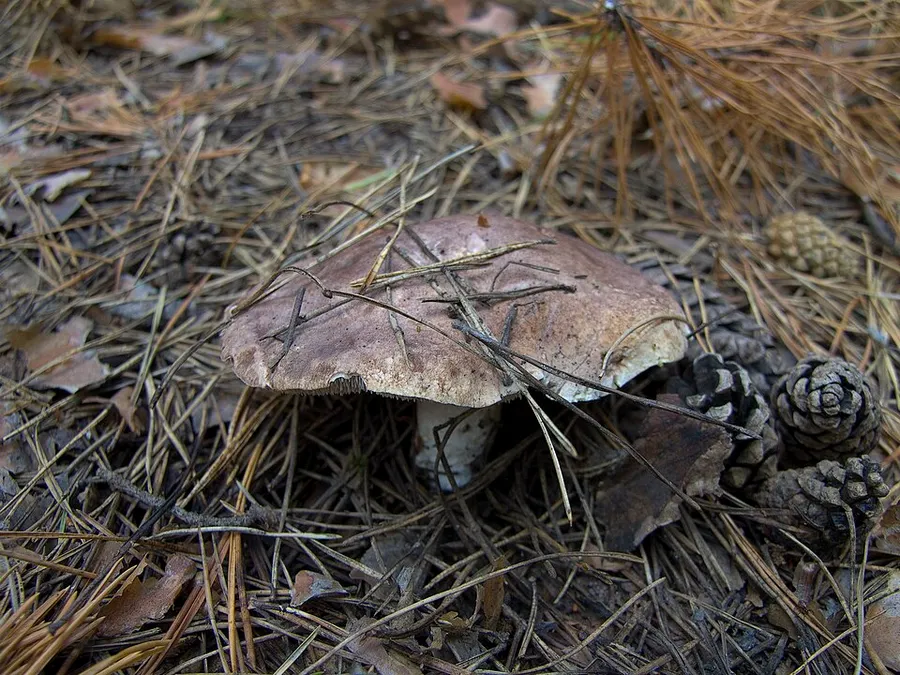
Dokumentasi Sarcodon leucopus dari Wikimedia Commons. A fruitbody of the tooth fungus Sarcodon leucopus (Pers.) Maas Geest. & Nannf.; photographed in Akademgorodok, Novosibirsk, Russia. "Notes: Single fruitbody among pine needles in well-lit pine forest with little undergrowth, standing on ancient sand dunes. Flesh showing little reaction to air, slightly bitter. Cap surface smooth, without scales." Identifikasi mengikuti record berkas sumber.
- Jenis
- Fotografi
- Kredit
- Tatiana Bulyonkova (ressaure)
- Lisensi
- CC BY-SA 3.0
- Sumber media
- Buka entri sumber
Sumber profil
- [1] Sarcodon leucopus — Wikipedia (en)
- [2] Catalogue of Life Base2026-09-11 — Sarcodon leucopus
- [3] Dokumentasi visual — Sarcodon leucopus
Rujukan halaman ini
Fungi. Sarcodon leucopus. Rilis data fungi-2026-10-12-expansion-2. https://fungi-atlas.mgadib.chatgpt.site/jamur/sarcodon-leucopus/.
Status: impor sumber; pemeriksaan editorial per profil belum selesai. Untuk klaim biologis, gunakan rujukan pada bagian terkait dan periksa konteks sumber aslinya.