01 / Morfologi

Ciri dan struktur

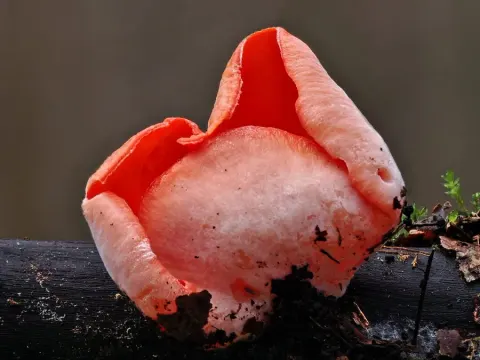
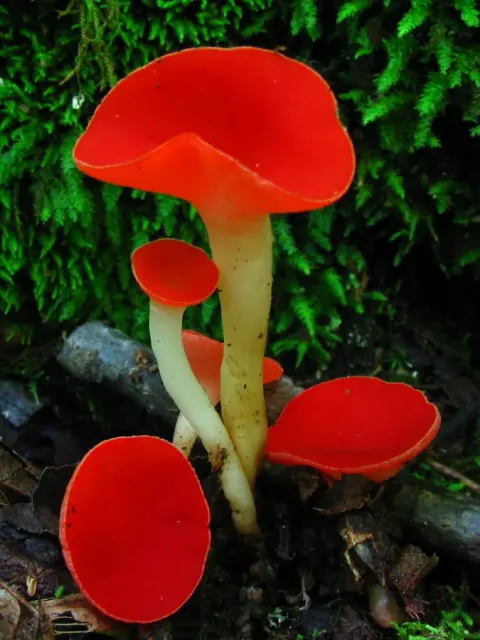
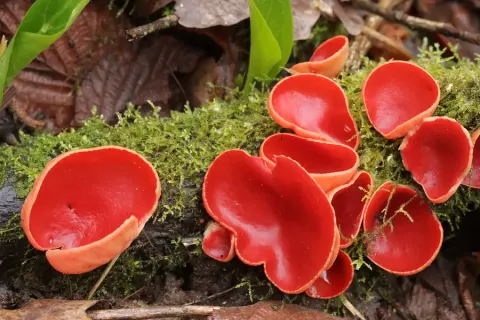
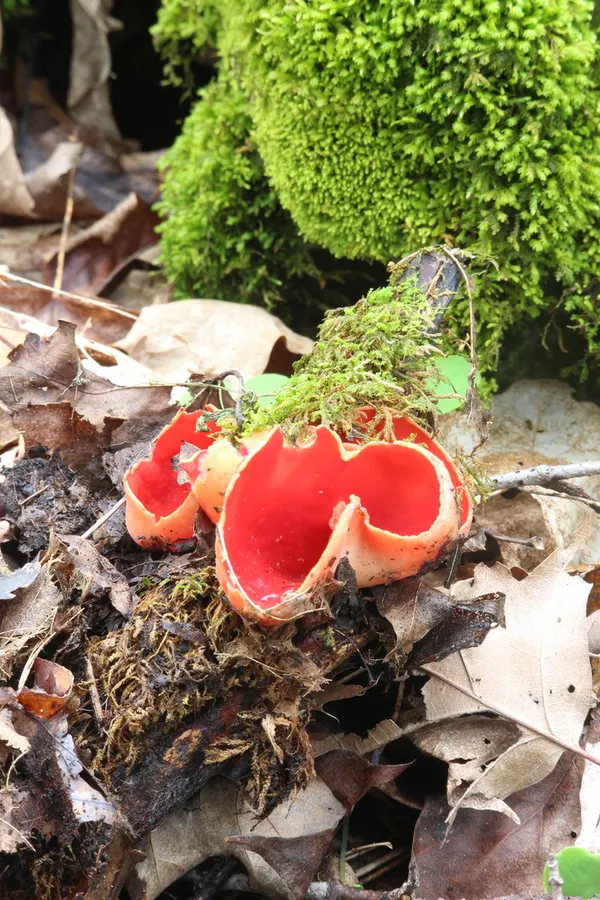
The fruit body is 2 – 6 cm broad and shallowly to deeply cup-shaped. The exterior surface of the fruit body is covered with whitish, matted "hairs", while the interior fertile surface of the cup (the hymenium) is scarlet- to orange-red. The edge of the cup (or margin) is curved inwards in young fruit bodies. The stem, if present at all, is short. The asci are 400–500 by 12–14 μm, cylindrical, and operculate. The ascospores are elliptical to cylindrical with rounded ends, uniseriate, hyaline, and measure 26–40 by 10–12 μm. They contain two large oil drops at either end; the oil drops are useful taxonomic characters that may be used to help distinguish S. dudleyi from some other Sarcoscypha species. The spores are covered with a sheath of mucilage, which typically causes the eight spores of the ascus to be ejected together. The paraphyses (sterile filamentous hyphal end cells in the hymenium) are slender, slightly enlarged above, and contain numerous red granules. The granules contain carotenoid pigments such as plectaniaxanthine or beta carotene, and give the fruit body its color.

Sebagian uraian ditampilkan dalam bahasa sumber; terjemahannya belum tersedia atau belum lolos pemeriksaan.

Rujukan: [1]

Pengukuran mengikuti objek, spesimen atau kultur, dan metode yang disebutkan sumber. Baca uraian asli untuk konteks lengkap.

02 / Kehidupan

Habitat dan peran ekologis

Sarcoscypha dudleyi adalah spesies saprobik, dan memperoleh nutrisi dengan memecah polisaharida kompleks yang tidak larut yang ditemukan dalam material kayu, seperti selulosa dan lignin. Fruit bodies ditemukan tumbuh secara individual atau dalam kelompok yang sangat kecil, dan melekat pada batang yang dikubur atau sebagian dikubur di hutan. Basswood has telah dicatat sebagai jenis kayu yang disukai untuk spesies ini. Fruit bodies typically appear during early spring, but may occasionally also in late fall. Distribusi Although the tampaknya sebagian besar terbatas pada Amerika Serikat timur, itu pernah dilaporkan di Bulgaria in 1994, mewakili pertama European collection.

Sebagian uraian ditampilkan dalam bahasa sumber; terjemahannya belum tersedia atau belum lolos pemeriksaan.

Rujukan: [1]

Habitat atau konteks temuan
hutan
Substrat
Informasi belum tersedia pada sumber rilis ini.
Peran atau konteks
Pengurai
Temukan hubungan serupa
03 / Siklus hidup

Reproduksi

The asci are 400–500 by 12–14 μm, cylindrical, and operculate. The ascospores are elliptical to cylindrical with rounded ends, uniseriate, hyaline, and measure 26–40 by 10–12 μm. They contain two large oil drops at either end; the oil drops are useful taxonomic characters that may be used to help distinguish S. dudleyi from some other Sarcoscypha species. The spores are covered with a sheath of mucilage, which typically causes the eight spores of the ascus to be ejected together. The paraphyses (sterile filamentous hyphal end cells in the hymenium) are slender, slightly enlarged above, and contain numerous red granules. The granules contain carotenoid pigments such as plectaniaxanthine or beta carotene, and give the fruit body its color.

Sebagian uraian ditampilkan dalam bahasa sumber; terjemahannya belum tersedia atau belum lolos pemeriksaan.

Rujukan: [1]

Sinonim menurut acuan taksonomi rilis: Molliardiomyces dudleyi; Peziza dudleyi
04 / Batas informasi

Catatan identitas dan cakupan

  • Nama diterima mengikuti Catalogue of Life Base2026-09-11; uraian mempertahankan konsep dan nama sumber aslinya.
  • Original geographic, specimen and life-cycle scope retained; source import awaits individual editorial review.
  • Impor dan terjemahan otomatis belum diperiksa editorial per profil. Struktur reproduktif yang disebutkan tidak membuktikan seluruh siklus hidup diketahui.
  • Pengukuran pada uraian mengikuti spesimen, kultur, dan metode sumber; angka tidak diperluas ke semua populasi.

Catatan distribusi dalam narasi mengikuti sumbernya. Dokumentasi spesimen atau foto mengikuti catatan sumber. Bukti wilayah Indonesia dan penilaian konservasi tidak disimpulkan dari gambar.

05 / Dokumentasi

Melihat dengan konteks

Dokumentasi Sarcoscypha dudleyi menurut asosiasi foto pada record takson iNaturalist. Kredit: Garrett Taylor. Identitas mengikuti sumber; bukan penentuan spesimen independen.

Jenis
Fotografi
Kredit
no rights reserved, uploaded by Garrett Taylor
Lisensi
CC0 1.0
Sumber media
Buka entri sumber

Gambar menunjukkan objek menurut identifikasi sumber, bukan verifikasi independen spesimen oleh Fungi. Tidak ada skala baru yang ditambahkan.

06 / Rujukan

Sumber profil

  1. [1] Sarcoscypha dudleyi — Wikipedia (en)Bagian sumber: Frozen revision 1224583017
    Tanggal penghimpunan sumber: 2026-10-12
    Teks sumber: CC BY-SA4.0 · Wikipedia contributors
  2. [2] Catalogue of Life Base2026-09-11 — Sarcoscypha dudleyiBagian sumber: ColDP NameUsage.tsv ID 79N7W; accepted species; source 2073
    Tanggal penghimpunan sumber: 2026-10-12
  3. [3] Dokumentasi visual — Sarcoscypha dudleyiBagian sumber: Individual media record; identification follows the source, not independent determination
    Tanggal penghimpunan sumber: 2026-10-12
    Media sumber: CC0 1.0 · no rights reserved, uploaded by Garrett Taylor

Adaptasi teks: CC BY-SA 4.0. Wikipedia contributors — Sarcoscypha dudleyi — Wikipedia (en)

Uraian asli dan riwayat sumber

Riwayat atau halaman sumber

Ringkasan sumber

Sarcoscypha dudleyi, commonly known as the crimson cup or the scarlet cup, is a species of fungus in the family Sarcoscyphaceae of the order Pezizales. It has been frequently confused with Sarcoscypha coccinea, but can be distinguished from this and other related species in Sarcoscypha by differences in microscopic characteristics, such as the presence and number of oil droplets in the spores. An imperfect form of the fungus, lacking a sexually reproductive stage in its life cycle, is classified as the species Molliardiomyces dudleyi.

Revisi sumber

Morfologi sumber

The fruit body is 2 – 6 cm broad and shallowly to deeply cup-shaped. The exterior surface of the fruit body is covered with whitish, matted "hairs", while the interior fertile surface of the cup (the hymenium) is scarlet- to orange-red. The edge of the cup (or margin) is curved inwards in young fruit bodies. The stem, if present at all, is short. The asci are 400–500 by 12–14 μm, cylindrical, and operculate. The ascospores are elliptical to cylindrical with rounded ends, uniseriate, hyaline, and measure 26–40 by 10–12 μm. They contain two large oil drops at either end; the oil drops are useful taxonomic characters that may be used to help distinguish S. dudleyi from some other Sarcoscypha species. The spores are covered with a sheath of mucilage, which typically causes the eight spores of the ascus to be ejected together. The paraphyses (sterile filamentous hyphal end cells in the hymenium) are slender, slightly enlarged above, and contain numerous red granules. The granules contain carotenoid pigments such as plectaniaxanthine or beta carotene, and give the fruit body its color.

Revisi sumber

Ekologi sumber

Sarcoscypha dudleyi is a saprobic species, and derives nutrients by breaking down the complex insoluble polysaccharides found in woody material, such as cellulose and lignin. Fruit bodies are found growing singly or in very small groups, and are attached to buried or partially buried sticks in forests. Basswood has been noted to be a preferred wood type for the species. Fruit bodies typically appear during early spring, but may occasionally also in late fall. Although the distribution appears to be largely restricted to the eastern United States, it was once reported in Bulgaria in 1994, representing the first European collection.

Revisi sumber

Struktur reproduksi sumber

The asci are 400–500 by 12–14 μm, cylindrical, and operculate. The ascospores are elliptical to cylindrical with rounded ends, uniseriate, hyaline, and measure 26–40 by 10–12 μm. They contain two large oil drops at either end; the oil drops are useful taxonomic characters that may be used to help distinguish S. dudleyi from some other Sarcoscypha species. The spores are covered with a sheath of mucilage, which typically causes the eight spores of the ascus to be ejected together. The paraphyses (sterile filamentous hyphal end cells in the hymenium) are slender, slightly enlarged above, and contain numerous red granules. The granules contain carotenoid pigments such as plectaniaxanthine or beta carotene, and give the fruit body its color.

Revisi sumber

Rujukan halaman ini

Fungi. Sarcoscypha dudleyi. Rilis data fungi-2026-10-12-expansion-2. https://fungi-atlas.mgadib.chatgpt.site/jamur/sarcoscypha-dudleyi/.

Status: impor sumber; pemeriksaan editorial per profil belum selesai. Untuk klaim biologis, gunakan rujukan pada bagian terkait dan periksa konteks sumber aslinya.