01 / Morfologi

Ciri dan struktur

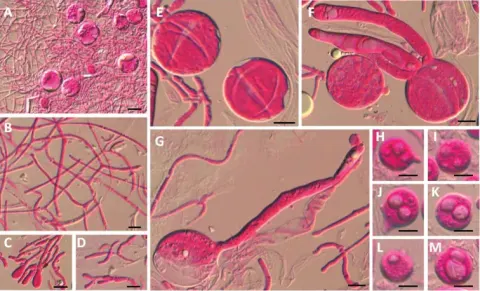
The fruit body has an irregular shape, and usually breaks through the bark of dead branches. It is up to 7.5 cm broad and 2.5 to 5 cm high, rounded to variously lobed or brain-like in appearance. The fruit body is gelatin-like but tough when wet, and hard when dry. The surface is usually smooth, the lobes translucent, deep yellow or bright yellow-orange, fading to pale yellow, rarely unpigmented and white or colorless. The fruit bodies dry to a dark reddish or orange. The spores, viewed in mass, are whitish or pale yellow. The basidia (spore-bearing cells) are ellipsoid to roughly spherical in shape, not or rarely stalked, and typically 15–21 μm wide. They contain two to four septa that divide it into compartments; the septa are most frequently diagonal or vertical. Asexual reproduction in T. mesenterica is carried out through the formation of spores called conidia, which arise from conidiophores—specialized hyphal cells that are morphologically distinct from the somatic hyphae. The conidiophores are densely branched and normally abundant in the hymenium; young specimens may be entirely conidial. The conidia are roughly spherical, ovoid, or ellipsoid, and about 2–3 by 2–2.5 μm. They may be so numerous that young fruit bodies may be covered in a bright yellow, conidial slime. The spores are broadly ellipsoid to oblong, on average 10–16 by 6–9.5 μm; they germinate by germ tube or by yeast-like conidia of identical form to the conidia produced on the conidiophores.

Sebagian uraian ditampilkan dalam bahasa sumber; terjemahannya belum tersedia atau belum lolos pemeriksaan.

Rujukan: [1]

Pengukuran mengikuti objek, spesimen atau kultur, dan metode yang disebutkan sumber. Baca uraian asli untuk konteks lengkap.

02 / Kehidupan

Habitat dan peran ekologis

Tremella mesenterica has a cosmopolitan distribution, having been recorded from North, Central, and South America, Africa, Europe, Asia, and Australia. Fruit bodies are formed during wet periods throughout the year. In British Columbia, Canada, it is sometimes found on maple, poplar, or pine, but is most abundant on red alder. It prefers to grow in habitats ranging from mesic to wet. The fungus grows parasitically on the mycelium of wood-rotting corticioid fungi in the genus Peniophora. Occasionally, T. mesenterica and its host fungus are found fruiting together.

Sebagian uraian ditampilkan dalam bahasa sumber; terjemahannya belum tersedia atau belum lolos pemeriksaan.

Rujukan: [1]

Habitat atau konteks temuan
Informasi belum tersedia pada sumber rilis ini.
Substrat
Informasi belum tersedia pada sumber rilis ini.
Peran atau konteks
Belum dikategorikan pada rilis ini.
Temukan hubungan serupa
03 / Siklus hidup

Reproduksi

The fruit body has an irregular shape, and usually breaks through the bark of dead branches. It is up to 7.5 cm broad and 2.5 to 5 cm high, rounded to variously lobed or brain-like in appearance. The fruit body is gelatin-like but tough when wet, and hard when dry. The surface is usually smooth, the lobes translucent, deep yellow or bright yellow-orange, fading to pale yellow, rarely unpigmented and white or colorless. The fruit bodies dry to a dark reddish or orange. The spores, viewed in mass, are whitish or pale yellow. The basidia (spore-bearing cells) are ellipsoid to roughly spherical in shape, not or rarely stalked, and typically 15–21 μm wide. They contain two to four septa that divide it into compartments; the septa are most frequently diagonal or vertical.

Sebagian uraian ditampilkan dalam bahasa sumber; terjemahannya belum tersedia atau belum lolos pemeriksaan.

Rujukan: [1]

Sinonim menurut acuan taksonomi rilis: Tremella brasiliensis; Tremella lutescens var. alba; Tremella lutescens var. brasiliensis; Tremella mesenterica f. crystallina; Tremella mesenterica var. disciformis; Tremella mesenterica var. lutescens; Tremella mesenteriformis var. lutea
04 / Batas informasi

Catatan identitas dan cakupan

  • Nama diterima mengikuti Catalogue of Life Base2026-09-11; uraian mempertahankan konsep dan nama sumber aslinya.
  • Original geographic, specimen and life-cycle scope retained; source import awaits individual editorial review.
  • Impor dan terjemahan otomatis belum diperiksa editorial per profil. Struktur reproduktif yang disebutkan tidak membuktikan seluruh siklus hidup diketahui.
  • Pengukuran pada uraian mengikuti spesimen, kultur, dan metode sumber; angka tidak diperluas ke semua populasi.

Catatan distribusi dalam narasi mengikuti sumbernya. Dokumentasi spesimen atau foto mengikuti catatan sumber. Bukti wilayah Indonesia dan penilaian konservasi tidak disimpulkan dari gambar.

05 / Dokumentasi

Melihat dengan konteks

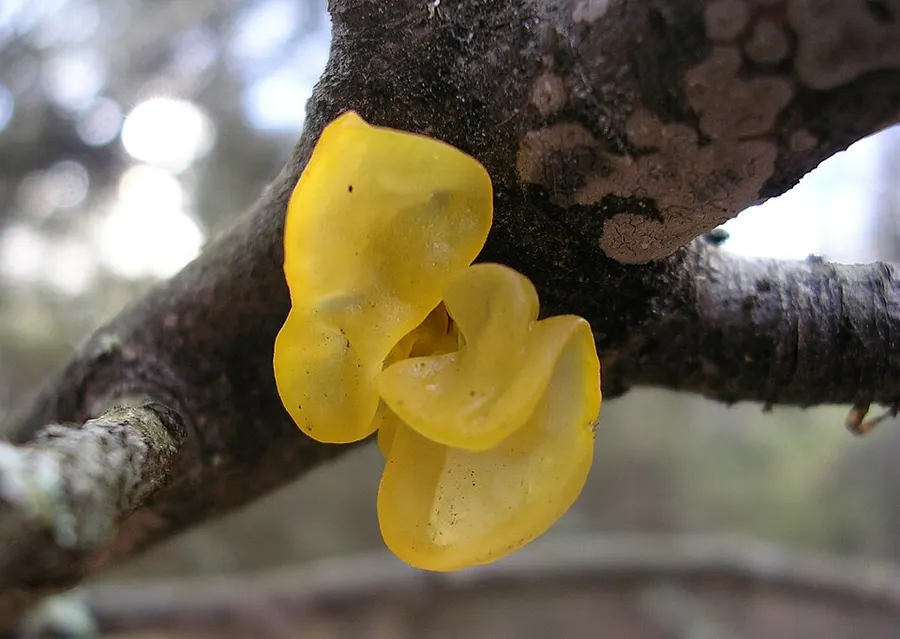
Dokumentasi Tremella mesenterica dari Wikimedia Commons. Tremella mesenterica fungus on the bottom side of a live branch. Take in Rindge, NH. Identifikasi mengikuti record berkas sumber.

Jenis
Fotografi
Kredit
J. Carmichael
Sumber media
Buka entri sumber

Gambar menunjukkan objek menurut identifikasi sumber, bukan verifikasi independen spesimen oleh Fungi. Tidak ada skala baru yang ditambahkan.

06 / Rujukan

Sumber profil

  1. [1] Tremella mesenterica — Wikipedia (en)Bagian sumber: Frozen revision 1342999491
    Tanggal penghimpunan sumber: 2026-10-12
    Teks sumber: CC BY-SA4.0 · Wikipedia contributors
  2. [2] Catalogue of Life Base2026-09-11 — Tremella mesentericaBagian sumber: ColDP NameUsage.tsv ID 9YPH3; accepted species; source 2073
    Tanggal penghimpunan sumber: 2026-10-12
  3. [3] Dokumentasi visual — Tremella mesentericaBagian sumber: Individual media record; identification follows the source, not independent determination
    Tanggal penghimpunan sumber: 2026-10-12
    Media sumber: Public domain · J. Carmichael

Adaptasi teks: CC BY-SA 4.0. Wikipedia contributors — Tremella mesenterica — Wikipedia (en)

Uraian asli dan riwayat sumber

Riwayat atau halaman sumber

Ringkasan sumber

It is most frequently found on both dead but attached and recently fallen branches, especially of angiosperms, as a parasite of wood-decay fungi in the genus Peniophora. It also grows in crevices in bark, appearing during rainy weather. Within a few days after rain it dries into a thin film or shriveled mass capable of reviving after subsequent rain. This fungus occurs widely in deciduous and mixed forests and is widely distributed in temperate and tropical regions, including those of Eurasia, Africa, Australia, and the Americas.

Revisi sumber

Morfologi sumber

The fruit body has an irregular shape, and usually breaks through the bark of dead branches. It is up to 7.5 cm broad and 2.5 to 5 cm high, rounded to variously lobed or brain-like in appearance. The fruit body is gelatin-like but tough when wet, and hard when dry. The surface is usually smooth, the lobes translucent, deep yellow or bright yellow-orange, fading to pale yellow, rarely unpigmented and white or colorless. The fruit bodies dry to a dark reddish or orange. The spores, viewed in mass, are whitish or pale yellow. The basidia (spore-bearing cells) are ellipsoid to roughly spherical in shape, not or rarely stalked, and typically 15–21 μm wide. They contain two to four septa that divide it into compartments; the septa are most frequently diagonal or vertical. Asexual reproduction in T. mesenterica is carried out through the formation of spores called conidia, which arise from conidiophores—specialized hyphal cells that are morphologically distinct from the somatic hyphae. The conidiophores are densely branched and normally abundant in the hymenium; young specimens may be entirely conidial. The conidia are roughly spherical, ovoid, or ellipsoid, and about 2–3 by 2–2.5 μm. They may be so numerous that young fruit bodies may be covered in a bright yellow, conidial slime. The spores are broadly ellipsoid to oblong, on average 10–16 by 6–9.5 μm; they germinate by germ tube or by yeast-like conidia of identical form to the conidia produced on the conidiophores.

Revisi sumber

Ekologi sumber

Tremella mesenterica has a cosmopolitan distribution, having been recorded from North, Central, and South America, Africa, Europe, Asia, and Australia. Fruit bodies are formed during wet periods throughout the year. In British Columbia, Canada, it is sometimes found on maple, poplar, or pine, but is most abundant on red alder. It prefers to grow in habitats ranging from mesic to wet. The fungus grows parasitically on the mycelium of wood-rotting corticioid fungi in the genus Peniophora. Occasionally, T. mesenterica and its host fungus are found fruiting together.

Revisi sumber

Struktur reproduksi sumber

The fruit body has an irregular shape, and usually breaks through the bark of dead branches. It is up to 7.5 cm broad and 2.5 to 5 cm high, rounded to variously lobed or brain-like in appearance. The fruit body is gelatin-like but tough when wet, and hard when dry. The surface is usually smooth, the lobes translucent, deep yellow or bright yellow-orange, fading to pale yellow, rarely unpigmented and white or colorless. The fruit bodies dry to a dark reddish or orange. The spores, viewed in mass, are whitish or pale yellow. The basidia (spore-bearing cells) are ellipsoid to roughly spherical in shape, not or rarely stalked, and typically 15–21 μm wide. They contain two to four septa that divide it into compartments; the septa are most frequently diagonal or vertical.

Revisi sumber

Rujukan halaman ini

Fungi. Tremella mesenterica. Rilis data fungi-2026-10-12-expansion-2. https://fungi-atlas.mgadib.chatgpt.site/jamur/tremella-mesenterica/.

Status: impor sumber; pemeriksaan editorial per profil belum selesai. Untuk klaim biologis, gunakan rujukan pada bagian terkait dan periksa konteks sumber aslinya.