Ciri dan struktur
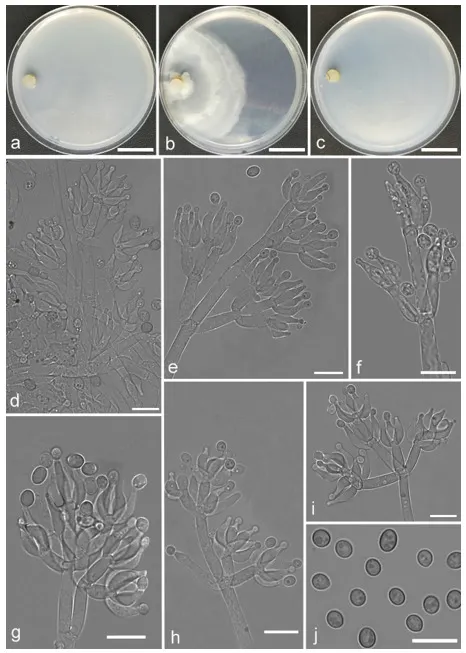
Culture characteristics: Optimum temperature for growth 30 °C. Colony radius on CMD after 72 h: 33 mm at 25 °C, 38 mm at 30 °C, 27 mm at 35 °C, covering the plate after 9 days at 30 °C. Colonies thin, translucent, indistinctly zonate, radial. Aerial hyphae scant, inconspicuous. Pustules minute, firstly white, finally turning downy light-green, surrounded the inoculation plug. A distinct odor noted. No diffusing pigment noted. Colony radius on PDA after 72 h: 36 mm at 25 °C, 42 mm at 30 °C, 35 mm at 35 °C, covering the plate after 7 days at 30 °C. Colonies zonation conspicuous, white to yellowish-white alternately, mycelium dense and radial, forming a continuous white lawn around the center and thinner at the margin. Aerial hyphae abundant, short. Yellow soluble pigments observed. A distinct odor noted. Colony radius on SNA after 72 h: 20 mm at 25 °C, 46 mm at 30 °C, 15 mm at 35 °C, covering the plate after 8 days at 30 °C. Colonies hyaline, mycelium sparse. Aerial hyphae scant, inconspicuous. No diffusing pigment noted, odor indistinct.
Habitat dan peran ekologis
Culture characteristics: Optimum temperature for growth 30 °C. Colony radius on CMD after 72 h: 33 mm at 25 °C, 38 mm at 30 °C, 27 mm at 35 °C, covering the plate after 9 days at 30 °C. Colonies thin, translucent, indistinctly zonate, radial. Aerial hyphae scant, inconspicuous. Pustules minute, firstly white, finally turning downy light-green, surrounded the inoculation plug. A distinct odor noted. No diffusing pigment noted. Colony radius on PDA after 72 h: 36 mm at 25 °C, 42 mm at 30 °C, 35 mm at 35 °C, covering the plate after 7 days at 30 °C. Colonies zonation conspicuous, white to yellowish-white alternately, mycelium dense and radial, forming a continuous white lawn around the center and thinner at the margin. Aerial hyphae abundant, short. Yellow soluble pigments observed. A distinct odor noted. Colony radius on SNA after 72 h: 20 mm at 25 °C, 46 mm at 30 °C, 15 mm at 35 °C, covering the plate after 8 days at 30 °C. Colonies hyaline, mycelium sparse. Aerial hyphae scant, inconspicuous. No diffusing pigment noted, odor indistinct. Notes: T richoderma pluripenicillatum is located in the Longibrachiatum clade and distinguishable by the gliocladium -like conidiophores, which are uncommon in Trichoderma.
- Habitat atau konteks temuan
- kultur yang didokumentasikan
- Substrat
- Informasi belum tersedia pada sumber rilis ini.
- Peran atau konteks
- Belum dikategorikan pada rilis ini.
Reproduksi
Notes: T richoderma pluripenicillatum is located in the Longibrachiatum clade and distinguishable by the gliocladium -like conidiophores, which are uncommon in Trichoderma. Morphologically, T. pluripenicillatum is similar to T. gliocladium Jaklitsch & Voglmayr in the branch patterns of conidiophore and shapes of phialide, but differs in its conidia and colony characteristics: T. pluripenicillatum formed bright yellow pigments on PDA, while T. gliocladium produced orange-brown pigments [ 46 ]. Phylogenetic analyses have shown that T. pluripenicillatum is closely related to T. citrinoviride Bissett with relatively high supports, but the latter has optimal growth at 35 °C on all media, while T. pluripenicillatum grow better at 30 °C.
Catatan identitas dan cakupan
- Nama diterima mengikuti Catalogue of Life Base2026-09-11; uraian mempertahankan konsep dan nama sumber aslinya.
- Preserve original treatment localities, hosts and substrate scope. Materials examined describe documented specimens, not the full global range.
- Impor dan terjemahan otomatis belum diperiksa editorial per profil. Struktur reproduktif yang disebutkan tidak membuktikan seluruh siklus hidup diketahui.
- Pengukuran pada uraian mengikuti spesimen, kultur, dan metode sumber; angka tidak diperluas ke semua populasi.
Catatan distribusi dalam narasi mengikuti sumbernya. Dokumentasi spesimen atau foto mengikuti catatan sumber. Bukti wilayah Indonesia dan penilaian konservasi tidak disimpulkan dari gambar.
Melihat dengan konteks
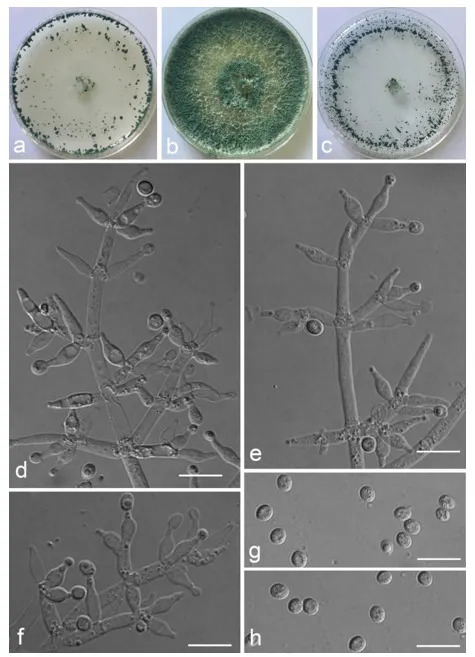
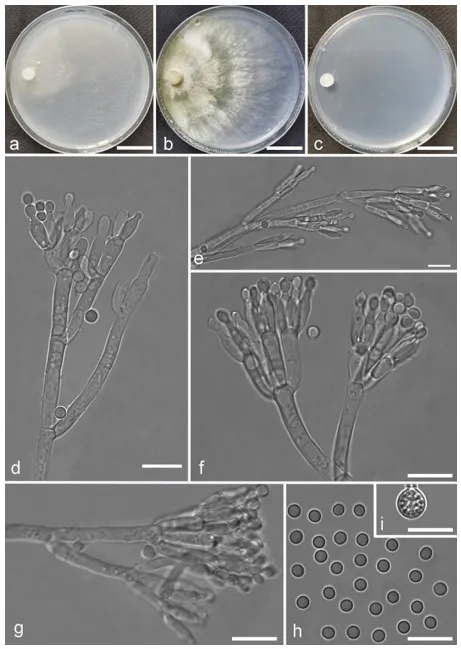
Trichoderma pluripenicillatum (YMF 1.06198). (a – c) Cultures after 7 d at 25 °C (a) on CMD; (b) on PDA; c) on SNA). (d – g) Conidiophores, phialides and conidia formed on SNA. (h) Conidia. (i) Chlamydospores. Scale bars: (a – c) = 2.5 cm, (d – i) = 10 μm.
- Jenis
- Pelat ilmiah
- Kredit
- © 2021 by the authors.
- Lisensi
- CC BY 4.0
- Sumber media
- Buka entri sumber
Sumber profil
- [1] New Species of Trichoderma Isolated as Endophytes and Saprobes from Southwest China — Trichoderma pluripenicillatum
- [2] Catalogue of Life Base2026-09-11 — Trichoderma pluripenicillatum
- [3] Dokumentasi visual — Trichoderma pluripenicillatum
Rujukan halaman ini
Fungi. Trichoderma pluripenicillatum. Rilis data fungi-2026-10-12-expansion-2. https://fungi-atlas.mgadib.chatgpt.site/jamur/trichoderma-pluripenicillatum/.
Status: impor sumber; pemeriksaan editorial per profil belum selesai. Untuk klaim biologis, gunakan rujukan pada bagian terkait dan periksa konteks sumber aslinya.