01 / Morfologi

Ciri dan struktur

Trichoderma reesei adalah jamur mesophilic dan filamen. Ini adalah anamorph dari jamur Hypocrea jecorina. T. reesei dapat memisahkan sejumlah besar enzim selulolit (selulase dan hemicellulase). Microbial cellulases memiliki aplikasi industri dalam konversi selulosa, komponen utama dari biomassa tumbuhan, menjadi glukosa. T. reesei QM6a memiliki lokus tipe kawin MAT1-2. Penemuan jenis kawin yang berlawanan, MAT1-1, dilaporkan di 2009, membuktikan bahwa T. reesei adalah spesies heterothal. After being dianggap tidak seksual sejak penemuan lebih dari 50 tahun yang lalu, reproduksi seksual sekarang dapat diinduksi di T. reesei QM6a yang mengarah pada pembentukan stromata yang dibuahi dan dewasa askospora. T. reesei adalah mikroorganisme komersial dan industri penting karena kemampuannya memproduksi selulase. Industrial enzymes, seperti T. reesei, telah menjadi bagian penting dari pasar global. Pada 2012, ukuran pasar yang diperkirakan untuk enzim industri mencapai hampir 4 miliar dolar AS. Many strains dari T. reesei telah dikembangkan sejak penemuannya, dengan penekanan besar pada peningkatan produksi selulosa. Program perbaikan ini awalnya terdiri dari mutagenesis klasik (berbasis radiasi ionisasi dan berbasis kimia), yang menyebabkan strain yang mampu menghasilkan 20 kali lebih banyak selulase daripada QM6a. Tujuan akhir dalam pembuatan strain hiperselulolit adalah untuk mendapatkan strain katabolit karbon yang terdepresi. Depressi ini akan memungkinkan strain T. reesei untuk menghasilkan cellulase dalam kondisi pertumbuhan apa pun, bahkan dalam kehadiran glukosa. Namun, dengan munculnya alat rekayasa genetik modern seperti penghapusan yang ditargetkan, penargetan yang ditargetkan, dan banyak lagi, generasi baru strain yang disebut "hyperproducers" telah muncul.

Rujukan: [1]

Pengukuran mengikuti objek, spesimen atau kultur, dan metode yang disebutkan sumber. Baca uraian asli untuk konteks lengkap.

02 / Kehidupan

Habitat dan peran ekologis

T. reesei isolate QM6a was originally isolated from the Solomon Islands during World War II because of its degradation of canvas and garments of the US army. All strains yang saat ini digunakan dalam bioteknologi dan penelitian dasar berasal dari isolate ini. Several industrially strain yang berguna telah dikembangkan dan ditandai, misalnya Rut-C30, RL-P37 dan MCG-80. Genom tersebut dilepaskan di 2008. T. reesei memiliki siklus seksual yang ditandai tergantung pada jenis kawin.

Sebagian uraian ditampilkan dalam bahasa sumber; terjemahannya belum tersedia atau belum lolos pemeriksaan.

Rujukan: [1]

Habitat atau konteks temuan
Informasi belum tersedia pada sumber rilis ini.
Substrat
Informasi belum tersedia pada sumber rilis ini.
Peran atau konteks
Belum dikategorikan pada rilis ini.
Temukan hubungan serupa
03 / Siklus hidup

Reproduksi

T. reesei isolate QM6a was originally isolated from the Solomon Islands during World War II because of its degradation of canvas and garments of the US army. All strains yang saat ini digunakan dalam bioteknologi dan penelitian dasar berasal dari isolate ini. Several industrially strain yang berguna telah dikembangkan dan ditandai, misalnya Rut-C30, RL-P37 dan MCG-80. Genom tersebut dilepaskan di 2008. T. reesei memiliki siklus seksual yang ditandai tergantung pada jenis kawin. T. reesei QM6a memiliki lokus tipe kawin MAT1-2. Penemuan jenis kawin yang berlawanan, MAT1-1, dilaporkan di 2009, membuktikan bahwa T. reesei adalah spesies heterothal. After being dianggap tidak seksual sejak penemuan lebih dari 50 tahun yang lalu, reproduksi seksual sekarang dapat diinduksi di T. reesei QM6a yang mengarah pada pembentukan stromata yang dibuahi dan dewasa askospora.

Sebagian uraian ditampilkan dalam bahasa sumber; terjemahannya belum tersedia atau belum lolos pemeriksaan.

Rujukan: [1]

Sinonim menurut acuan taksonomi rilis: Hypocrea jecorina
04 / Batas informasi

Catatan identitas dan cakupan

  • Nama diterima mengikuti Catalogue of Life Base2026-09-11; uraian mempertahankan konsep dan nama sumber aslinya.
  • Original geographic, specimen and life-cycle scope retained; source import awaits individual editorial review.
  • Impor dan terjemahan otomatis belum diperiksa editorial per profil. Struktur reproduktif yang disebutkan tidak membuktikan seluruh siklus hidup diketahui.
  • Pengukuran pada uraian mengikuti spesimen, kultur, dan metode sumber; angka tidak diperluas ke semua populasi.

Catatan distribusi dalam narasi mengikuti sumbernya. Dokumentasi spesimen atau foto mengikuti catatan sumber. Bukti wilayah Indonesia dan penilaian konservasi tidak disimpulkan dari gambar.

05 / Dokumentasi

Melihat dengan konteks

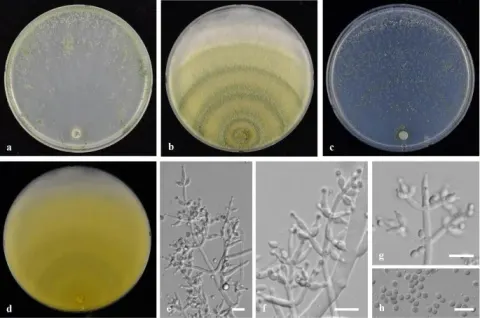
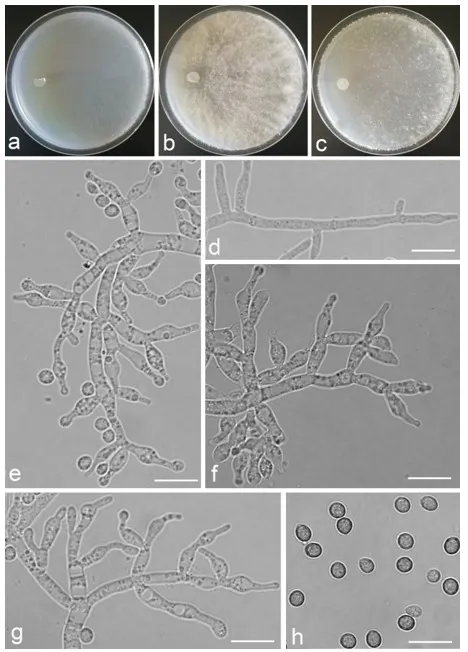
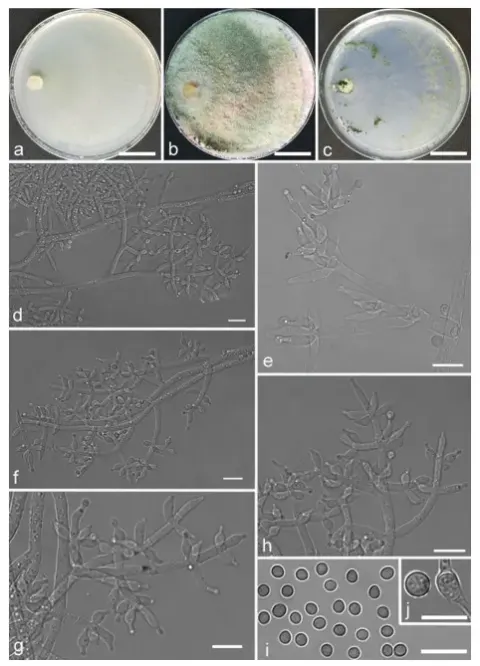
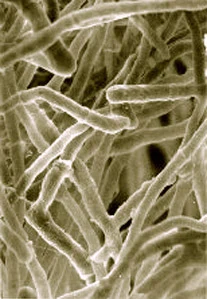
Mikrograf Trichoderma reesei dari US Department of Energy Office of Science. Identitas mengikuti berkas sumber.

Jenis
Fotografi mikroskopis
Kredit
US Department of Energy Office of Science
Sumber media
Buka entri sumber

Gambar menunjukkan objek menurut identifikasi sumber, bukan verifikasi independen spesimen oleh Fungi. Tidak ada skala baru yang ditambahkan.

06 / Rujukan

Sumber profil

  1. [1] Trichoderma reesei — Wikipedia (en)Bagian sumber: Frozen revision 1368148311
    Tanggal penghimpunan sumber: 2026-10-12
    Teks sumber: CC BY-SA4.0 · Wikipedia contributors
  2. [2] Catalogue of Life Base2026-09-11 — Trichoderma reeseiBagian sumber: ColDP NameUsage.tsv ID 58BSB; accepted species; source 2073
    Tanggal penghimpunan sumber: 2026-10-12
  3. [3] Dokumentasi visual — Trichoderma reeseiBagian sumber: Identitas mengikuti sumber dokumentasi; bukan penentuan spesimen independen.
    Tanggal penghimpunan sumber: 2026-10-17
    Media sumber: Public domain · US Department of Energy Office of Science

Adaptasi teks: CC BY-SA 4.0. Wikipedia contributors — Trichoderma reesei — Wikipedia (en)

Uraian asli dan riwayat sumber

Riwayat atau halaman sumber

Ringkasan sumber

Trichoderma reesei is a mesophilic and filamentous fungus. It is an anamorph of the fungus Hypocrea jecorina. T. reesei can secrete large amounts of cellulolytic enzymes (cellulases and hemicellulases). Microbial cellulases have industrial application in the conversion of cellulose, a major component of plant biomass, into glucose. T. reesei isolate QM6a was originally isolated from the Solomon Islands during World War II because of its degradation of canvas and garments of the US army. All strains currently used in biotechnology and basic research were derived from this isolate.

Revisi sumber

Morfologi sumber

Trichoderma reesei is a mesophilic and filamentous fungus. It is an anamorph of the fungus Hypocrea jecorina. T. reesei can secrete large amounts of cellulolytic enzymes (cellulases and hemicellulases). Microbial cellulases have industrial application in the conversion of cellulose, a major component of plant biomass, into glucose. T. reesei QM6a has a MAT1-2 mating type locus. The discovery of the opposite mating type, MAT1-1, was reported in 2009, proving that T. reesei is a heterothallic species. After being regarded as asexual since its discovery more than 50 years ago, sexual reproduction can now be induced in T. reesei QM6a leading to formation of fertilized stromata and mature ascospores. T. reesei is an important commercial and industrial micro-organism due to its cellulase production ability. Industrial enzymes, like T. reesei, have become an essential part of the global market. As of 2012, the estimated market size for industrial enzymes reached almost 4 billion in US dollars. Many strains of T. reesei have been developed since its discovery, with heavy emphasis on increasing cellulase production. These improvement programs originally consisted of classical (ionising-radiation-based and chemical-based) mutagenesis, which led to strains capable of producing 20 times as much cellulase as QM6a. The ultimate aim in the creation of hypercellulolytic strains was to obtain a carbon catabolite derepressed strain. This derepression would allow the T. reesei strain to produce cellulases under any set of growth conditions, even in the presence of glucose. However, with the advent of modern genetic engineering tools such as targeted deletion, targeted knockout, and more, a new generation of strains dubbed "hyperproducers" has emerged.

Revisi sumber

Ekologi sumber

T. reesei isolate QM6a was originally isolated from the Solomon Islands during World War II because of its degradation of canvas and garments of the US army. All strains currently used in biotechnology and basic research were derived from this isolate. Several industrially useful strains have been developed and characterised, e.g. Rut-C30, RL-P37 and MCG-80. The genome was released in 2008. T. reesei has a mating type-dependent characterised sexual cycle.

Revisi sumber

Struktur reproduksi sumber

T. reesei isolate QM6a was originally isolated from the Solomon Islands during World War II because of its degradation of canvas and garments of the US army. All strains currently used in biotechnology and basic research were derived from this isolate. Several industrially useful strains have been developed and characterised, e.g. Rut-C30, RL-P37 and MCG-80. The genome was released in 2008. T. reesei has a mating type-dependent characterised sexual cycle. T. reesei QM6a has a MAT1-2 mating type locus. The discovery of the opposite mating type, MAT1-1, was reported in 2009, proving that T. reesei is a heterothallic species. After being regarded as asexual since its discovery more than 50 years ago, sexual reproduction can now be induced in T. reesei QM6a leading to formation of fertilized stromata and mature ascospores.

Revisi sumber

Rujukan halaman ini

Fungi. Trichoderma reesei. Rilis data fungi-2026-10-12-expansion-2. https://fungi-atlas.mgadib.chatgpt.site/jamur/trichoderma-reesei/.

Status: impor sumber; pemeriksaan editorial per profil belum selesai. Untuk klaim biologis, gunakan rujukan pada bagian terkait dan periksa konteks sumber aslinya.