Ciri dan struktur
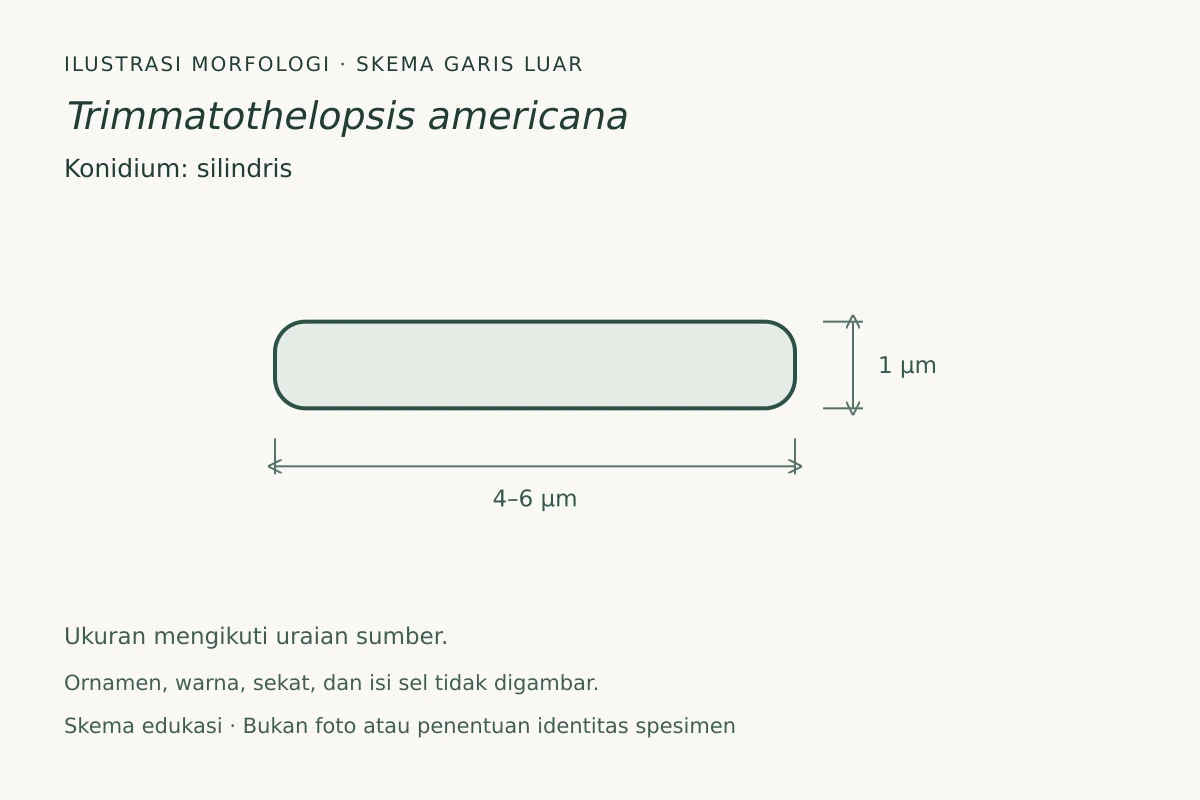
A distinct thallus is usually not apparent. Instead, it is usually noticed as small black apothecia (fruiting bodies) that sit on the rock surface, sometimes scattered and sometimes clustered. Individual apothecia are typically about 0.1–0.5 mm across and dome-shaped; when wet they remain black. At the apex, each apothecium has a tiny, colourless hyaline, concave (to about 0.1 mm wide) bordered by a narrow pale yellowish-brown ring. Apothecia can occasionally become compound, with two to four discs, before splitting into separate apothecia. In cross-section, the apothecial wall is up to about 80 μm (micrometers) thick. The outer layer is (blackened). Inside is a zone of colourless fungal threads (hyphae) with scattered green algal cells. The spore-bearing layer (hymenium) is roughly spherical (), about 150–225 μm high, and turns blue with iodine (I+), later becoming red. The paraphyses (sterile filaments among the asci) are thin and not noticeably widened at their tips. The asci are cylindrical to narrowly club-shaped (clavate) and polysporous (hundreds of spores per ascus), and the ascospores are simple, hyaline, and very narrow (about 3–5 × 0.5–1 μm). No asexual fruiting structures (conidiomata) were observed in the original description. Pycnidia (asexual fruiting bodies) were later reported as rare, with bacilliform conidia about 4–6 × 1 μm (based on a single observed pycnidium). No secondary metabolites have been detected using thin-layer chromatography, and standard spot tests were all negative (K−, C−, KC−, P−, UV−).
Habitat dan peran ekologis
Trimmatothelopsis americana is a saxicolous species of siliceous rocks in humid settings, especially along streams and rivers. The holotype specimen had soil deposits that were interpreted as the result of flooding. Known records are limited to fewer than five localities in the Mid-Atlantic region of eastern North America, from southeastern Pennsylvania and New York north to eastern Massachusetts. The original description documented three sites (two in southeastern Pennsylvania and one in New York). It suggested that it may be naturally rare and confined to riparian rock, or it may have declined after agricultural and urban land-use change. Additional surveys in southeastern Pennsylvania were recommended to clarify its status. It has been recorded on sun-exposed rock surfaces just above the waterline, within a narrow band that floods periodically. This flood-prone band may limit competition from other lichens on the same outcrops. The tiny black apothecia can resemble pycnidia at a glance, so surveys may overlook the species.
- Habitat atau konteks temuan
- Informasi belum tersedia pada sumber rilis ini.
- Substrat
- Informasi belum tersedia pada sumber rilis ini.
- Peran atau konteks
- Pembentuk liken
Reproduksi
In cross-section, the apothecial wall is up to about 80 μm (micrometers) thick. The outer layer is (blackened). Inside is a zone of colourless fungal threads (hyphae) with scattered green algal cells. The spore-bearing layer (hymenium) is roughly spherical (), about 150–225 μm high, and turns blue with iodine (I+), later becoming red. The paraphyses (sterile filaments among the asci) are thin and not noticeably widened at their tips. The asci are cylindrical to narrowly club-shaped (clavate) and polysporous (hundreds of spores per ascus), and the ascospores are simple, hyaline, and very narrow (about 3–5 × 0.5–1 μm). No asexual fruiting structures (conidiomata) were observed in the original description.
Catatan identitas dan cakupan
- Nama diterima mengikuti Catalogue of Life Base2026-09-11; uraian mempertahankan konsep dan nama sumber aslinya.
- Original geographic, specimen and life-cycle scope retained; source import awaits individual editorial review.
- Impor dan terjemahan otomatis belum diperiksa editorial per profil. Struktur reproduktif yang disebutkan tidak membuktikan seluruh siklus hidup diketahui.
- Pengukuran pada uraian mengikuti spesimen, kultur, dan metode sumber; angka tidak diperluas ke semua populasi.
Catatan distribusi dalam narasi mengikuti sumbernya. Dokumentasi spesimen atau foto mengikuti catatan sumber. Bukti wilayah Indonesia dan penilaian konservasi tidak disimpulkan dari gambar.
Melihat dengan konteks
Ilustrasi skematis garis luar konidium Trimmatothelopsis americana, berdasarkan uraian sumber; ukuran yang dilaporkan 4–6 × 1 µm. Proporsi disederhanakan, bukan salinan satu spesimen. Ornamen permukaan, warna, sekat, dan isi sel tidak direkonstruksi. Sumber menyebut konidia berbentuk batang sekitar 4–6 × 1 µm berdasarkan satu piknidium yang diamati. Skema tidak menyatakan seluruh variasi spesies.
- Jenis
- Ilustrasi skematis
- Kredit
- Fungi, ilustrasi orisinal (2026); fakta morfologi berdasarkan Wikipedia contributors
- Lisensi
- CC BY-SA 4.0
- Sumber media
- Buka entri sumber
Sumber profil
- [1] Trimmatothelopsis americana — Wikipedia (en)
- [2] Catalogue of Life Base2026-09-11 — Trimmatothelopsis americana
Rujukan halaman ini
Fungi. Trimmatothelopsis americana. Rilis data fungi-2026-10-12-expansion-2. https://fungi-atlas.mgadib.chatgpt.site/jamur/trimmatothelopsis-americana/.
Status: impor sumber; pemeriksaan editorial per profil belum selesai. Untuk klaim biologis, gunakan rujukan pada bagian terkait dan periksa konteks sumber aslinya.