Ciri dan struktur
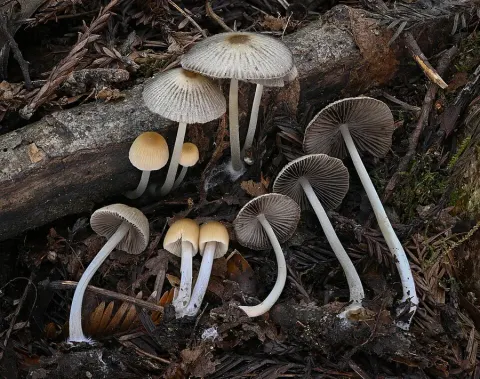
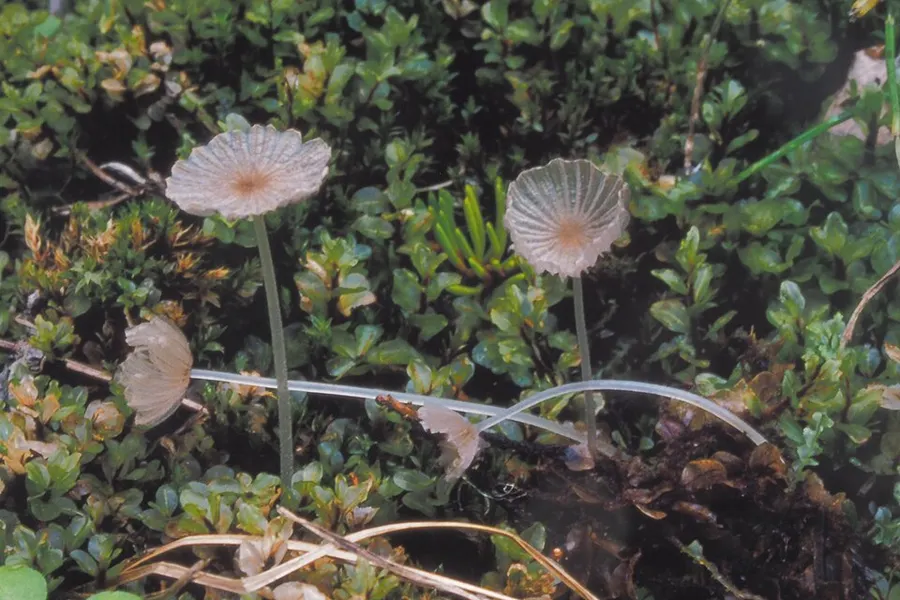
The cap is 0.6 to 1.2 cm tall, and initially sharply conical in shape, but later expands to become bell-shaped (campanulate). The margin of the cap curves upwards as the mushroom ages. The gills are narrow, and spaced close together. They have an adnate attachment to the stipe, and become black in color before dissolving (deliquescing). The stipe is 3 to 5 cm by 0.08 to 0.1 cm thick, hyaline to whitish. Initially it is pruinose (with a very fine whitish powder), but later becomes smooth. The spores are cylindrical and tapering (terete), and tend to vary in size, with dimensions ranging from 11.2 to 15.6 by 6.2–8.3 μm. The spore-bearing cells, the basidia, are all 2-spored.
Habitat dan peran ekologis
This fungus was discovered growing in rich, moist soil. It is known from Denmark and the USA.
- Habitat atau konteks temuan
- Informasi belum tersedia pada sumber rilis ini.
- Substrat
- Informasi belum tersedia pada sumber rilis ini.
- Peran atau konteks
- Belum dikategorikan pada rilis ini.
Reproduksi
The spores are cylindrical and tapering (terete), and tend to vary in size, with dimensions ranging from 11.2 to 15.6 by 6.2–8.3 μm. The spore-bearing cells, the basidia, are all 2-spored.
Catatan identitas dan cakupan
- Nama diterima mengikuti Catalogue of Life Base2026-09-11; uraian mempertahankan konsep dan nama sumber aslinya.
- Original geographic, specimen and life-cycle scope retained; source import awaits individual editorial review.
- Impor dan terjemahan otomatis belum diperiksa editorial per profil. Struktur reproduktif yang disebutkan tidak membuktikan seluruh siklus hidup diketahui.
- Pengukuran pada uraian mengikuti spesimen, kultur, dan metode sumber; angka tidak diperluas ke semua populasi.
Catatan distribusi dalam narasi mengikuti sumbernya. Dokumentasi spesimen atau foto mengikuti catatan sumber. Bukti wilayah Indonesia dan penilaian konservasi tidak disimpulkan dari gambar.
Melihat dengan konteks
Dokumentasi Tulosesus amphithallus dari Wikimedia Commons. Coprinellus amphithallus (M.Lange & A.H.Sm.) Redhead, Vilgalys & Moncalvo collected in Finland Identifikasi mengikuti record berkas sumber.
- Jenis
- Fotografi
- Kredit
- Paavo Höijer
- Lisensi
- CC BY-SA 4.0
- Sumber media
- Buka entri sumber
Sumber profil
- [1] Tulosesus amphithallus — Wikipedia (en)
- [2] Catalogue of Life Base2026-09-11 — Tulosesus amphithallus
- [3] Dokumentasi visual — Tulosesus amphithallus
Rujukan halaman ini
Fungi. Tulosesus amphithallus. Rilis data fungi-2026-10-12-expansion-2. https://fungi-atlas.mgadib.chatgpt.site/jamur/tulosesus-amphithallus/.
Status: impor sumber; pemeriksaan editorial per profil belum selesai. Untuk klaim biologis, gunakan rujukan pada bagian terkait dan periksa konteks sumber aslinya.