01 / Morfologi

Ciri dan struktur

The cap of the fruit bodies is initially egg-shaped, then conical to convex before flattening out, reaching diameters between 1.8 to 4 cm. It has deep narrow grooves reaching almost as far as the center of the cap. The surface color is a pale buff, tawny or cinnamon towards the center, but the color loses intensity when the mushroom is dry. The flesh is whitish, thin, fragile and barely deliquescent (auto-digesting). The gills are initially buff, then turn grayish brown. They are either free from attachment to the stem, or adnexed, meaning only a small portion of the gill is attached. The stem is whitish, very slender, and more or less equal in width throughout its length, or slightly thicker at the base; its dimensions are 7 to 10 cm by 0.2 to 0.4 cm thick. The stem surface of young specimens are pruinose—appearing to be coated with a minute layer of fine white particles; this eventually is sloughed off, leaving a smooth or silky surface. The odor and taste of the fruit bodies are not distinctive. The gills of this species do not autodigest with age, or barely do so; the fruit bodies tend to become more fragile with age. The spore print is dark brown. The spores are smooth, ellipsoid or almond-shaped, with a germ pore; they measure 9–12 by 5–6 μm. The spore-bearing cells, the basidia, are four-spored and tetramorphic (the spores lie on several different levels, and mature at different times). The cheilocystidia (cystidia found on the gill edge) are roughly spherical, 20–35 μm broad, or lageniform (flask-shaped), 36–64 by 10–15 μm, with the apex often rather acute, about 3–5 μm wide.

Sebagian uraian ditampilkan dalam bahasa sumber; terjemahannya belum tersedia atau belum lolos pemeriksaan.

Rujukan: [1]

Pengukuran mengikuti objek, spesimen atau kultur, dan metode yang disebutkan sumber. Baca uraian asli untuk konteks lengkap.

02 / Kehidupan

Habitat dan peran ekologis

Tulosesus impatiens ditemukan di Eropa Utara America and (termasuk Jerman, Polandia, dan Ukraina) termasuk Turki utara. Di Amerika Serikat di Pasifik Northwest region, ia ditemukan di Idaho Oregon and. Fruit bodies grow solitarily, or rarely in small bundles, on forest litter in deciduous forests, especially ones dominated by beech.

Sebagian uraian ditampilkan dalam bahasa sumber; terjemahannya belum tersedia atau belum lolos pemeriksaan.

Rujukan: [1]

Habitat atau konteks temuan
hutan
Substrat
Informasi belum tersedia pada sumber rilis ini.
Peran atau konteks
Belum dikategorikan pada rilis ini.
Temukan hubungan serupa
03 / Siklus hidup

Reproduksi

The spore print is dark brown. The spores are smooth, ellipsoid or almond-shaped, with a germ pore; they measure 9–12 by 5–6 μm. The spore-bearing cells, the basidia, are four-spored and tetramorphic (the spores lie on several different levels, and mature at different times). The cheilocystidia (cystidia found on the gill edge) are roughly spherical, 20–35 μm broad, or lageniform (flask-shaped), 36–64 by 10–15 μm, with the apex often rather acute, about 3–5 μm wide. Pleurocystidia (cystidia found on the gill face) are absent in this species.

Sebagian uraian ditampilkan dalam bahasa sumber; terjemahannya belum tersedia atau belum lolos pemeriksaan.

Rujukan: [1]

Sinonim menurut acuan taksonomi rilis: Agaricus impatiens; Coprinarius impatiens; Coprinellus impatiens; Coprinus impatiens; Psathyrella impatiens; Pseudocoprinus impatiens
04 / Batas informasi

Catatan identitas dan cakupan

  • Nama diterima mengikuti Catalogue of Life Base2026-09-11; uraian mempertahankan konsep dan nama sumber aslinya.
  • Original geographic, specimen and life-cycle scope retained; source import awaits individual editorial review.
  • Impor dan terjemahan otomatis belum diperiksa editorial per profil. Struktur reproduktif yang disebutkan tidak membuktikan seluruh siklus hidup diketahui.
  • Pengukuran pada uraian mengikuti spesimen, kultur, dan metode sumber; angka tidak diperluas ke semua populasi.

Catatan distribusi dalam narasi mengikuti sumbernya. Dokumentasi spesimen atau foto mengikuti catatan sumber. Bukti wilayah Indonesia dan penilaian konservasi tidak disimpulkan dari gambar.

05 / Dokumentasi

Melihat dengan konteks

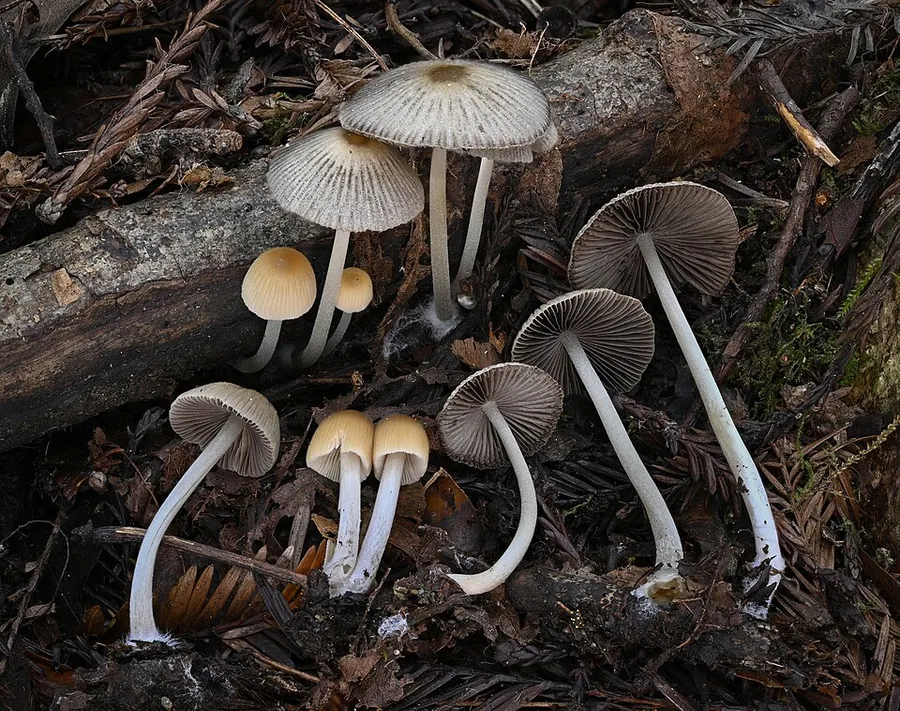
Dokumentasi Tulosesus impatiens dari Wikimedia Commons. Tulosesus impatiens / Coprinellus impatiens from Marin County, California https://mushroomobserver.org/484927 ITS sequence: https://www.ncbi.nlm.nih.gov/nuccore/OM792769 Identifikasi mengikuti record berkas sumber.

Jenis
Fotografi
Kredit
Alan Rockefeller
Sumber media
Buka entri sumber

Gambar menunjukkan objek menurut identifikasi sumber, bukan verifikasi independen spesimen oleh Fungi. Tidak ada skala baru yang ditambahkan.

06 / Rujukan

Sumber profil

  1. [1] Tulosesus impatiens — Wikipedia (en)Bagian sumber: Frozen revision 1346554162
    Tanggal penghimpunan sumber: 2026-10-12
    Teks sumber: CC BY-SA4.0 · Wikipedia contributors
  2. [2] Catalogue of Life Base2026-09-11 — Tulosesus impatiensBagian sumber: ColDP NameUsage.tsv ID 9ZGYC; accepted species; source 2073
    Tanggal penghimpunan sumber: 2026-10-12
  3. [3] Dokumentasi visual — Tulosesus impatiensBagian sumber: Individual media record; identification follows the source, not independent determination
    Tanggal penghimpunan sumber: 2026-10-12
    Media sumber: CC BY-SA 4.0 · Alan Rockefeller

Adaptasi teks: CC BY-SA 4.0. Wikipedia contributors — Tulosesus impatiens — Wikipedia (en)

Uraian asli dan riwayat sumber

Riwayat atau halaman sumber

Ringkasan sumber

Tulosesus impatiens (formerly Coprinellus impatiens) is a species of fungus in the family Psathyrellaceae. First described in 1821, it has been classified variously in the genera Psathyrella, Pseudocoprinus, Coprinarius, and Coprinus, before molecular phylogenetics reaffirmed it as a Coprinellus species in 2001. In 2020, German mycologists Dieter Wächter and Andreas Melzer reclassified many species of the Psathyrellaceae family based on a phylogenetic analysis and the species was renamed Tulosesus impatiens.

Revisi sumber

Morfologi sumber

The cap of the fruit bodies is initially egg-shaped, then conical to convex before flattening out, reaching diameters between 1.8 to 4 cm. It has deep narrow grooves reaching almost as far as the center of the cap. The surface color is a pale buff, tawny or cinnamon towards the center, but the color loses intensity when the mushroom is dry. The flesh is whitish, thin, fragile and barely deliquescent (auto-digesting). The gills are initially buff, then turn grayish brown. They are either free from attachment to the stem, or adnexed, meaning only a small portion of the gill is attached. The stem is whitish, very slender, and more or less equal in width throughout its length, or slightly thicker at the base; its dimensions are 7 to 10 cm by 0.2 to 0.4 cm thick. The stem surface of young specimens are pruinose—appearing to be coated with a minute layer of fine white particles; this eventually is sloughed off, leaving a smooth or silky surface. The odor and taste of the fruit bodies are not distinctive. The gills of this species do not autodigest with age, or barely do so; the fruit bodies tend to become more fragile with age. The spore print is dark brown. The spores are smooth, ellipsoid or almond-shaped, with a germ pore; they measure 9–12 by 5–6 μm. The spore-bearing cells, the basidia, are four-spored and tetramorphic (the spores lie on several different levels, and mature at different times). The cheilocystidia (cystidia found on the gill edge) are roughly spherical, 20–35 μm broad, or lageniform (flask-shaped), 36–64 by 10–15 μm, with the apex often rather acute, about 3–5 μm wide.

Revisi sumber

Ekologi sumber

Tulosesus impatiens is found in North America and Europe (including Germany, Poland, and Ukraine) including northern Turkey. In the Pacific Northwest region of the United States, it is found in Oregon and Idaho. Fruit bodies grow solitarily, or rarely in small bundles, on forest litter in deciduous forests, especially ones dominated by beech.

Revisi sumber

Struktur reproduksi sumber

The spore print is dark brown. The spores are smooth, ellipsoid or almond-shaped, with a germ pore; they measure 9–12 by 5–6 μm. The spore-bearing cells, the basidia, are four-spored and tetramorphic (the spores lie on several different levels, and mature at different times). The cheilocystidia (cystidia found on the gill edge) are roughly spherical, 20–35 μm broad, or lageniform (flask-shaped), 36–64 by 10–15 μm, with the apex often rather acute, about 3–5 μm wide. Pleurocystidia (cystidia found on the gill face) are absent in this species.

Revisi sumber

Rujukan halaman ini

Fungi. Tulosesus impatiens. Rilis data fungi-2026-10-12-expansion-2. https://fungi-atlas.mgadib.chatgpt.site/jamur/tulosesus-impatiens/.

Status: impor sumber; pemeriksaan editorial per profil belum selesai. Untuk klaim biologis, gunakan rujukan pada bagian terkait dan periksa konteks sumber aslinya.