Ciri dan struktur
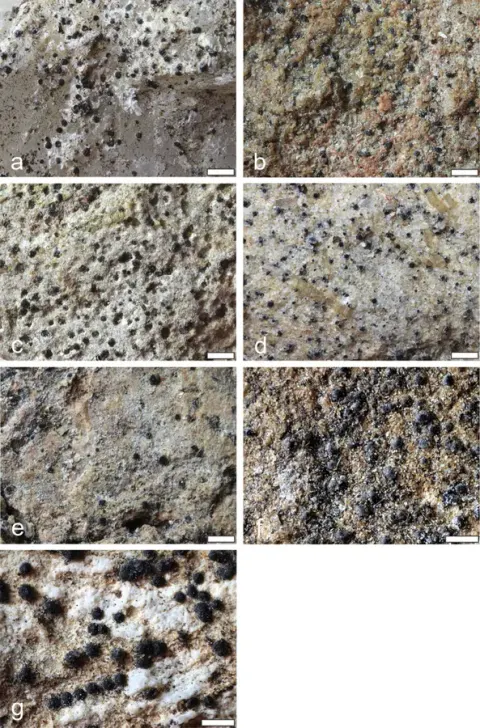
Prothallus absent. Thallus white, grey or pale brown, endolithic, often inconspicuous, rarely thinly epilithic, algal cells 5–9 mm. Perithecia 0.11–0.42 mm, (1/2–)3/4–1-immersed in rock, leaving deep pits in the rock, commonly surrounded by a thallus collar, sometimes covered by a thin thalline layer except for the apex; (30–)60–120 perithecia/cm 2. Ostiole usually inconspicuous, tiny, pale or dark, plane or depressed, ca. 20–40(–50) mm wide, wider ostiolar depression rarely present up to 80 mm wide. Involucrellum absent or apical, rarely covering half of the exciple, 40–60 mm thick. Exciple 0.19–0.42 mm in diam., usually round, but sometimes pear-shaped or at least longer than broad, medium brown (rarely), dark brown or black, ca. (20–)25–43(–60) mm thick, apex sometimes thickened to ca. 40–60 mm thick if the involucrellum is absent. Periphysoids ca. (30–)40–65 × 1–2(–3) mm, branching. Asci 78–102 × 27–39 mm, 8-spored. Ascospores 0-septate, rarely solitary spores 1-septate, (23.6–)27.4–30.5–33.7(–37.3) × (10.4–)12.1–13.4–14.6(–17.1) mm (n = 197), perispore 1–1.5 mm thick.
Habitat dan peran ekologis
The species grows on calcareous rocks and in lime quarries, both on sun-exposed and shady rocks, both in southern and in northern Finland.
- Habitat atau konteks temuan
- Informasi belum tersedia pada sumber rilis ini.
- Substrat
- Informasi belum tersedia pada sumber rilis ini.
- Peran atau konteks
- Pembentuk liken
Reproduksi
Prothallus absent. Thallus white, grey or pale brown, endolithic, often inconspicuous, rarely thinly epilithic, algal cells 5–9 mm. Perithecia 0.11–0.42 mm, (1/2–)3/4–1-immersed in rock, leaving deep pits in the rock, commonly surrounded by a thallus collar, sometimes covered by a thin thalline layer except for the apex; (30–)60–120 perithecia/cm 2. Ostiole usually inconspicuous, tiny, pale or dark, plane or depressed, ca. 20–40(–50) mm wide, wider ostiolar depression rarely present up to 80 mm wide. Involucrellum absent or apical, rarely covering half of the exciple, 40–60 mm thick. Exciple 0.19–0.42 mm in diam., usually round, but sometimes pear-shaped or at least longer than broad, medium brown (rarely), dark brown or black, ca. (20–)25–43(–60) mm thick, apex sometimes thickened to ca. 40–60 mm thick if the involucrellum is absent.
Catatan identitas dan cakupan
- Nama diterima mengikuti Catalogue of Life Base2026-09-11; uraian mempertahankan konsep dan nama sumber aslinya.
- Preserve original treatment localities, hosts and substrate scope. Materials examined describe documented specimens, not the full global range.
- Impor dan terjemahan otomatis belum diperiksa editorial per profil. Struktur reproduktif yang disebutkan tidak membuktikan seluruh siklus hidup diketahui.
- Pengukuran pada uraian mengikuti spesimen, kultur, dan metode sumber; angka tidak diperluas ke semua populasi.
Catatan distribusi dalam narasi mengikuti sumbernya. Dokumentasi spesimen atau foto mengikuti catatan sumber. Bukti wilayah Indonesia dan penilaian konservasi tidak disimpulkan dari gambar.
Melihat dengan konteks
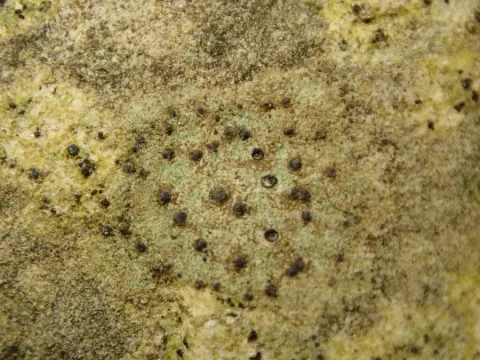
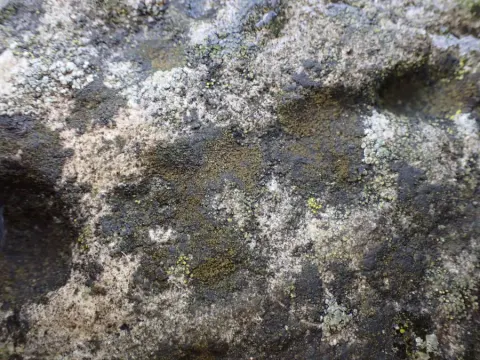
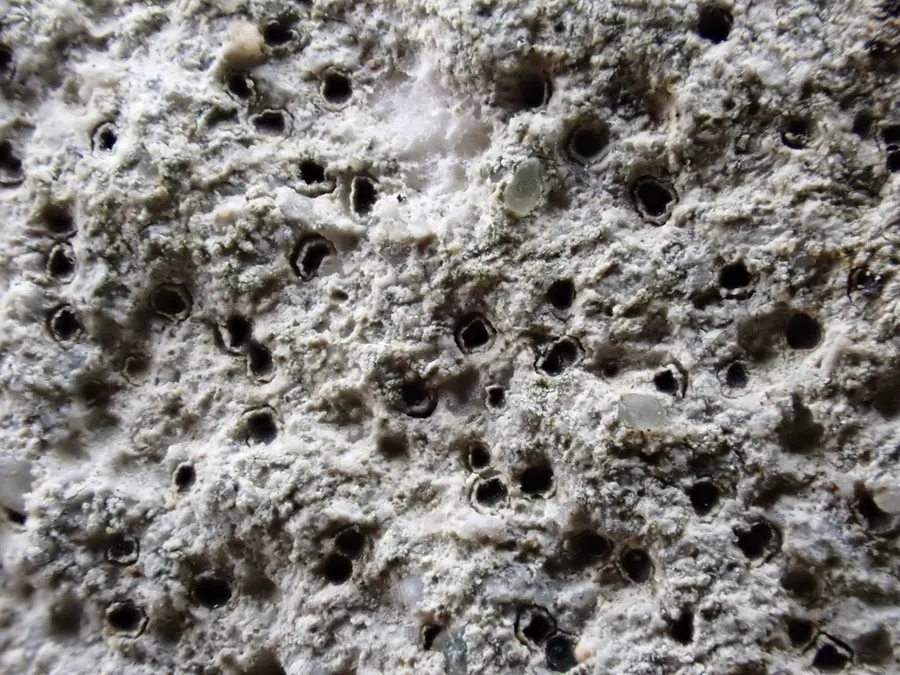
Dokumentasi Verrucaria hochstetteri menurut asosiasi foto pada record takson iNaturalist. Kredit: Jean-Paul Boerekamps. Identitas mengikuti sumber; bukan penentuan spesimen independen.
- Jenis
- Fotografi
- Kredit
- no rights reserved, uploaded by Jean-Paul Boerekamps
- Lisensi
- CC0 1.0
- Sumber media
- Buka entri sumber
Sumber profil
- [1] Taxonomy of Verrucaria species characterised by large spores, perithecia leaving pits in the rock and a pale thin thallus in Finland — Verrucaria foveolata
- [2] Catalogue of Life Base2026-09-11 — Verrucaria hochstetteri
- [3] Dokumentasi visual — Verrucaria hochstetteri
Rujukan halaman ini
Fungi. Verrucaria hochstetteri. Rilis data fungi-2026-10-12-expansion-2. https://fungi-atlas.mgadib.chatgpt.site/jamur/verrucaria-hochstetteri/.
Status: impor sumber; pemeriksaan editorial per profil belum selesai. Untuk klaim biologis, gunakan rujukan pada bagian terkait dan periksa konteks sumber aslinya.