Ciri dan struktur
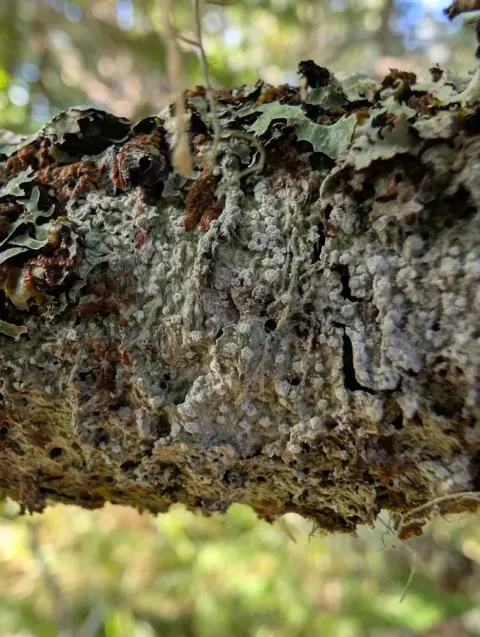
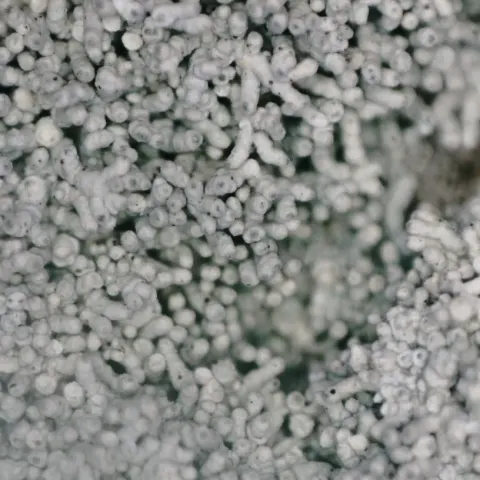
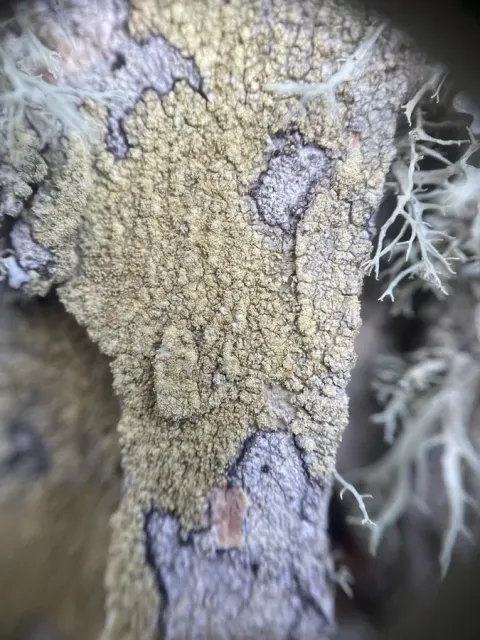
Verseghya thysanophora is pale yellow to greenish in colour, sometimes with blue or grey tones in shaded areas. It has a thin, leprose and sometimes patchy appearance. A visible, white and fibrous prothallus is often present with hyphae arranged in distinct radiating strands. Soralia can be either discrete or form a continuous crust. The lichen has a green algal photobiont () that is 8–12 μm in diameter. , which are the reproductive structures of lichens, are rarely seen but can sometimes be abundant. They are pale yellowish brown to greyish brown in colour, and the margins are raised and distinctly yellow or whitish, which can contrast with the colour of the thallus. Asci contain eight spores and measure up to 90 by 20 μm; they are of the Lecanora-type, with a distinct but lacking an ocular chamber. The lack any septa, and are hyaline and ellipsoid, with dimensions of 11–14 by 6–9 μm. Verseghya thysanophora contains a set of unidentified terpenoids that have been named "thysanophora unknowns." These substances can be detected using thin-layer chromatography, and they appear ice blue under long wavelength UV light after charring. The lichen also contains atranorin, usnic acid, and zeorin; porphyrilic acid is present in about a quarter of collected specimens.
Habitat dan peran ekologis
Verseghya thysanophora is commonly found growing on the trunks of deciduous trees, especially Acer saccharum and Thuja occidentalis, as well as occasionally on shaded siliceous rocks. This lichen is typically found in mature maple forests, and is most often fertile on trees that are located near streams. It is widespread throughout the East Temperate region of North America. In Europe, it has been recorded from Austria, Belarus, Bulgaria, Germany, Poland, and Slovenia. In 2011, it was reported from Jinzhai County, China, and in 2015, in South America, from Santana do Livramento, Brazil.
- Habitat atau konteks temuan
- hutan
- Substrat
- Informasi belum tersedia pada sumber rilis ini.
- Peran atau konteks
- Pembentuk liken
Reproduksi
, which are the reproductive structures of lichens, are rarely seen but can sometimes be abundant. They are pale yellowish brown to greyish brown in colour, and the margins are raised and distinctly yellow or whitish, which can contrast with the colour of the thallus. Asci contain eight spores and measure up to 90 by 20 μm; they are of the Lecanora-type, with a distinct but lacking an ocular chamber. The lack any septa, and are hyaline and ellipsoid, with dimensions of 11–14 by 6–9 μm.
Catatan identitas dan cakupan
- Nama diterima mengikuti Catalogue of Life Base2026-09-11; uraian mempertahankan konsep dan nama sumber aslinya.
- Original geographic, specimen and life-cycle scope retained; source import awaits individual editorial review.
- Impor dan terjemahan otomatis belum diperiksa editorial per profil. Struktur reproduktif yang disebutkan tidak membuktikan seluruh siklus hidup diketahui.
- Pengukuran pada uraian mengikuti spesimen, kultur, dan metode sumber; angka tidak diperluas ke semua populasi.
Catatan distribusi dalam narasi mengikuti sumbernya. Dokumentasi spesimen atau foto mengikuti catatan sumber. Bukti wilayah Indonesia dan penilaian konservasi tidak disimpulkan dari gambar.
Melihat dengan konteks
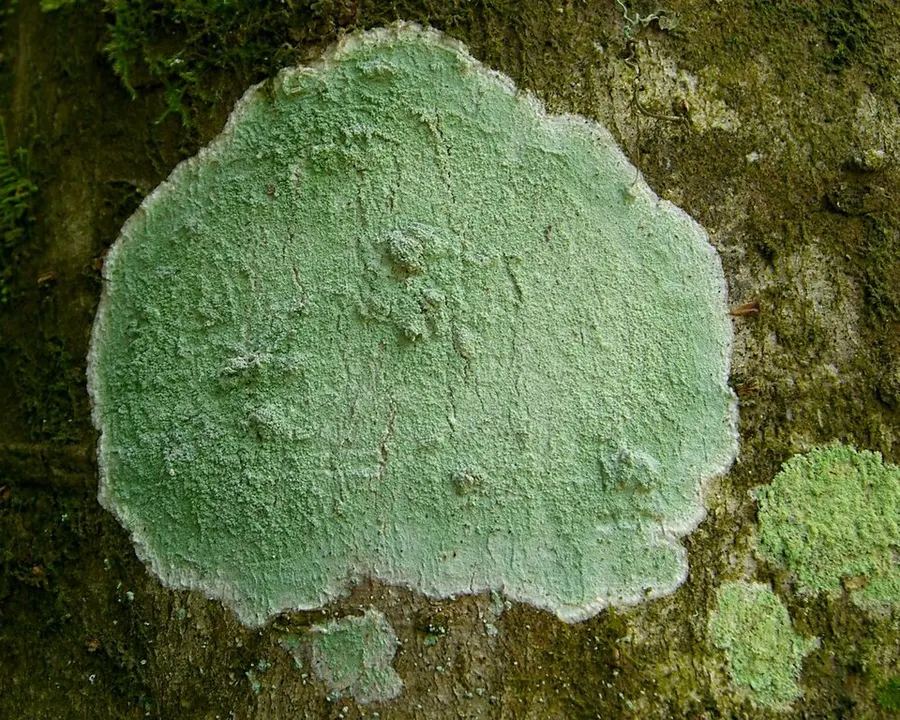
Dokumentasi Verseghya thysanophora dari Wikimedia Commons. Scientific Name: Lecanora thysanophora R. C. Harris Common Name: Mapledust Lichen Certainty: positive ( notes ) Location: Southern Appalachians; Smokies; CabinCove Date: 20060627 Fibrous prothallus is visible if you know what to look for. Identifikasi mengikuti record berkas sumber.
- Jenis
- Fotografi
- Kredit
- Jason Hollinger
- Lisensi
- CC BY 2.0
- Sumber media
- Buka entri sumber
Sumber profil
- [1] Verseghya thysanophora — Wikipedia (en)
- [2] Catalogue of Life Base2026-09-11 — Verseghya thysanophora
- [3] Dokumentasi visual — Verseghya thysanophora
Rujukan halaman ini
Fungi. Verseghya thysanophora. Rilis data fungi-2026-10-12-expansion-2. https://fungi-atlas.mgadib.chatgpt.site/jamur/verseghya-thysanophora/.
Status: impor sumber; pemeriksaan editorial per profil belum selesai. Untuk klaim biologis, gunakan rujukan pada bagian terkait dan periksa konteks sumber aslinya.