Ciri dan struktur
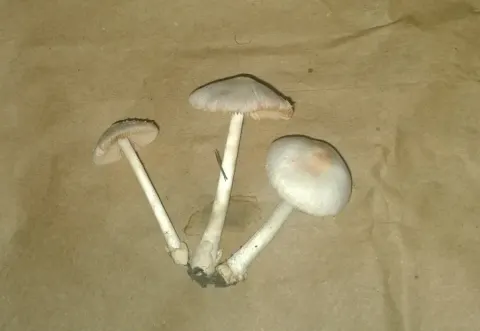
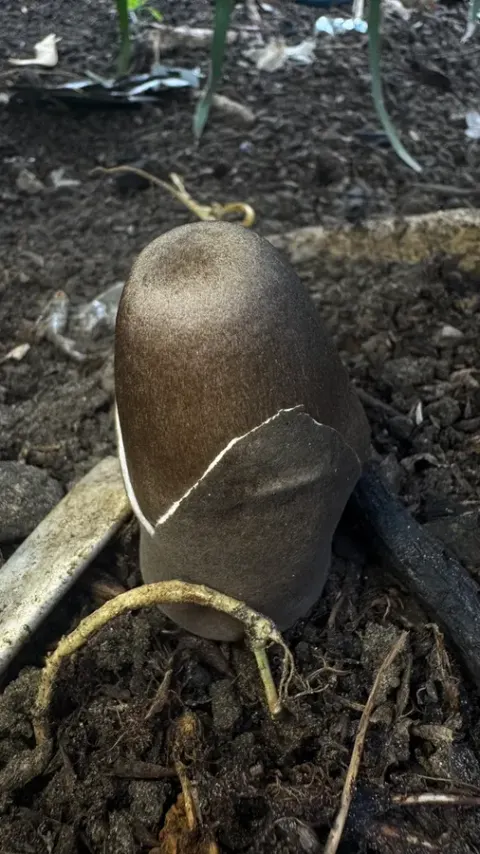
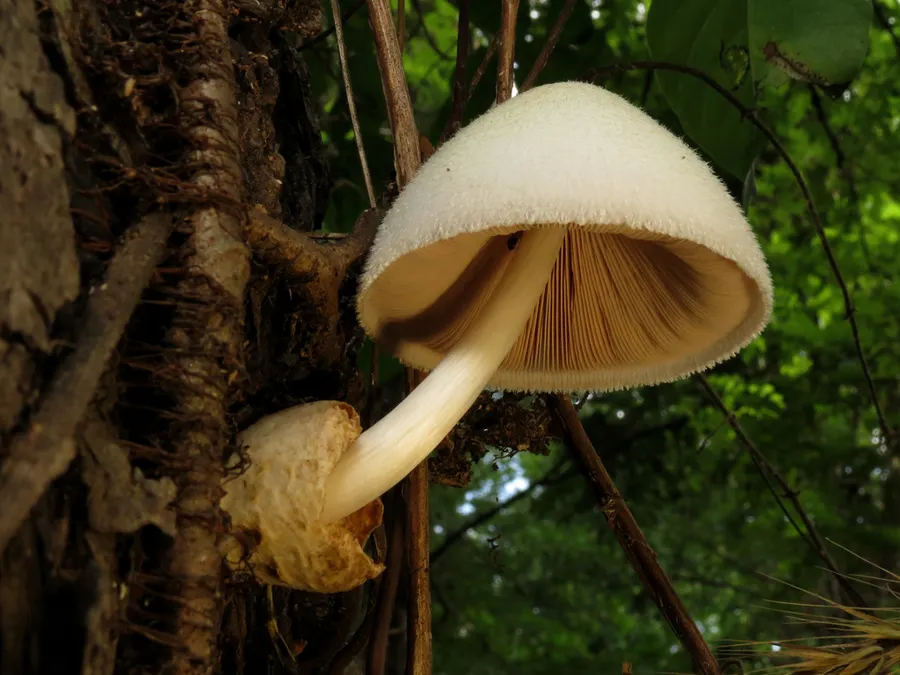
The fruit bodies are initially enclosed by a universal veil. The caps are initially oval, becoming bell-shaped to convex, and sometimes nearly flat in old age; they measure 5–20 cm wide. The cap is white to yellowish, more pale at the margin, dry and covered with silky threads. The flesh is thin, soft, and white, and has an odor resembling raw potatoes. The gills are crowded close together, free from attachment to the stem, and initially white before turning pinkish as the spores mature. The stem is 6–20 cm long and 1–3 cm thick, typically tapered upward or thickened below. It is white, smooth, and often slightly curved. The universal veil is membranous, often areolate (cracked into irregularly shaped blocks) or scaly, and forms a long, saclike volva that wraps around the base of the stem. It is white to yellowish or dingy brown, and often divided into lobes. The variety V. bombycina var. flaviceps is distinguished from the main form by its smaller, bright yellow caps, up to 3.5 cm in diameter, and its dirty-white, scaly volva. Murrill also noted that it developed a "peculiar sickening odor during drying". V. bombycina var. microspora has smaller spores (6–7.5 by 4–5 μm), a yellow cap, and a blotched brown volva. V. bombycina var. palmicola also has a yellow cap and small spores (5.9–7.5 by 4.3–5.4 μm), but can be distinguished from the previous varieties by its distantly spaced gills. Mushrooms produce a spore print with a color ranging from pinkish to salmon. The spores are elliptical, smooth, and measure 6.5–10 by 4.5–6.5 μm. The basidia (spore-bearing cells) are club-shaped, four-spored, and measure 19–43 by 6–11 μm.
Habitat dan peran ekologis
Volvariella bombycina is a saprobic species. China, India, Korea, and Pakistan), North and South America, the Caribbean (Cuba), and Australia. It acquired protected status in Hungary in 2005, making it a legal offense to pick it. Variety microspora is known from Venezuela, while V. bombycina var. palmicola occurs in the Democratic Republic of the Congo.
- Habitat atau konteks temuan
- Informasi belum tersedia pada sumber rilis ini.
- Substrat
- Informasi belum tersedia pada sumber rilis ini.
- Peran atau konteks
- Pengurai
Reproduksi
The fruit bodies are initially enclosed by a universal veil. The caps are initially oval, becoming bell-shaped to convex, and sometimes nearly flat in old age; they measure 5–20 cm wide. The cap is white to yellowish, more pale at the margin, dry and covered with silky threads. The flesh is thin, soft, and white, and has an odor resembling raw potatoes. The gills are crowded close together, free from attachment to the stem, and initially white before turning pinkish as the spores mature. The stem is 6–20 cm long and 1–3 cm thick, typically tapered upward or thickened below. It is white, smooth, and often slightly curved. The universal veil is membranous, often areolate (cracked into irregularly shaped blocks) or scaly, and forms a long, saclike volva that wraps around the base of the stem.
Catatan identitas dan cakupan
- Nama diterima mengikuti Catalogue of Life Base2026-09-11; uraian mempertahankan konsep dan nama sumber aslinya.
- Original geographic, specimen and life-cycle scope retained; source import awaits individual editorial review.
- Impor dan terjemahan otomatis belum diperiksa editorial per profil. Struktur reproduktif yang disebutkan tidak membuktikan seluruh siklus hidup diketahui.
- Pengukuran pada uraian mengikuti spesimen, kultur, dan metode sumber; angka tidak diperluas ke semua populasi.
Catatan distribusi dalam narasi mengikuti sumbernya. Dokumentasi spesimen atau foto mengikuti catatan sumber. Bukti wilayah Indonesia dan penilaian konservasi tidak disimpulkan dari gambar.
Melihat dengan konteks
Dokumentasi Volvariella bombycina menurut asosiasi foto pada record takson iNaturalist. Kredit: Katja Schulz. Identitas mengikuti sumber; bukan penentuan spesimen independen.
- Jenis
- Fotografi
- Kredit
- (c) Katja Schulz, some rights reserved (CC BY)
- Lisensi
- CC BY 4.0
- Sumber media
- Buka entri sumber
Dokumentasi tambahan
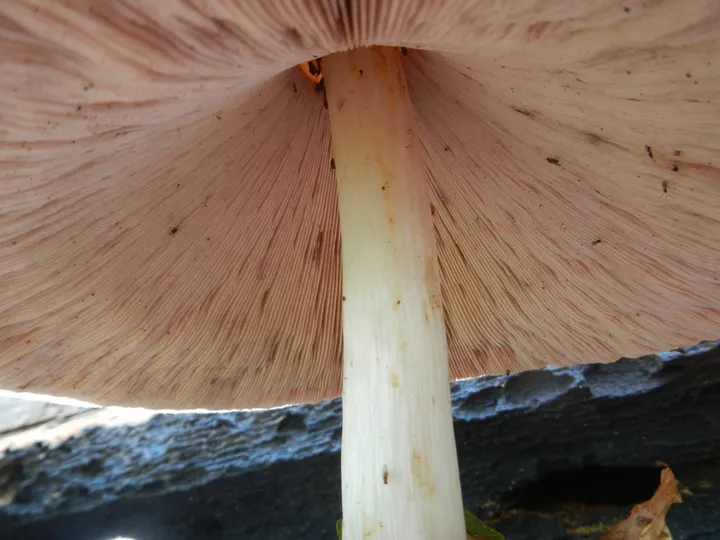
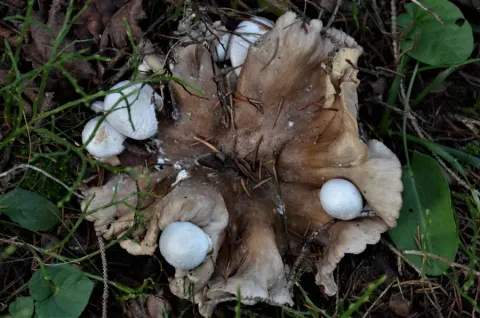
Foto yang diasosiasikan dengan Volvariella bombycina pada iNaturalist. Identifikasi mengikuti sumber; bukan penentuan spesimen independen.
Kredit dan penggunaan
(c) Michael Gras, M.Ed., some rights reserved (CC BY), uploaded by Michael Gras, M.Ed.
Ukuran dan format gambar disesuaikan tanpa pemotongan, retus, atau penambahan skala. Lisensi sumber dipertahankan.
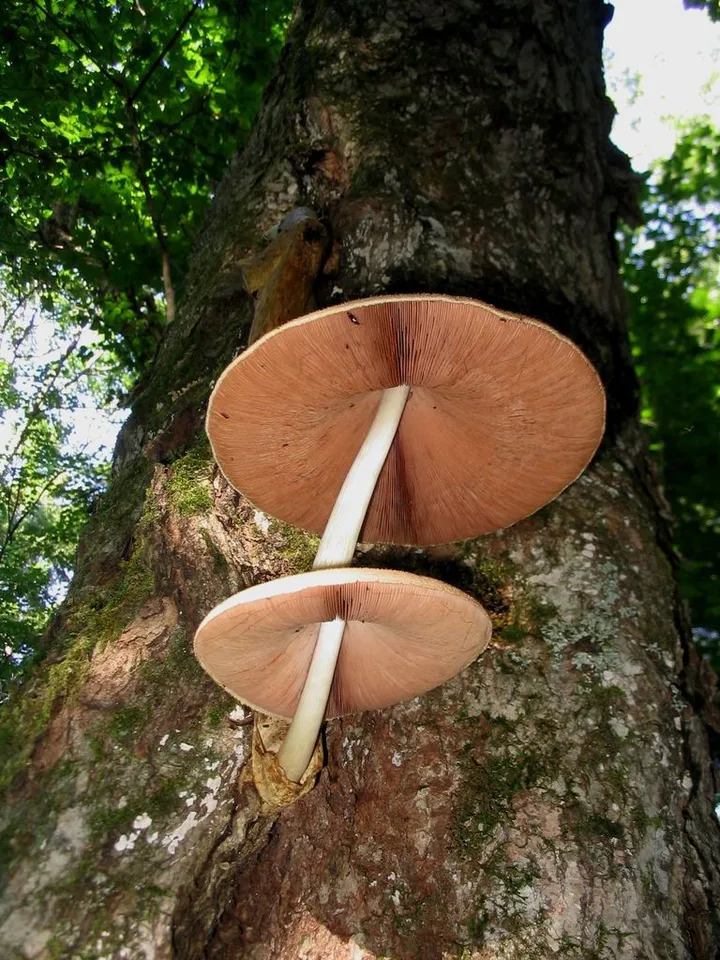
Foto yang diasosiasikan dengan Volvariella bombycina pada iNaturalist. Identifikasi mengikuti sumber; bukan penentuan spesimen independen.
Kredit dan penggunaan
(c) Robbie Sproule, some rights reserved (CC BY)
Ukuran dan format gambar disesuaikan tanpa pemotongan, retus, atau penambahan skala. Lisensi sumber dipertahankan.
Sumber profil
- [1] Volvariella bombycina — Wikipedia (en)
- [2] Catalogue of Life Base2026-09-11 — Volvariella bombycina
- [3] Dokumentasi visual — Volvariella bombycina
- [4] Dokumentasi visual — Volvariella bombycina
- [5] Dokumentasi visual — Volvariella bombycina
Rujukan halaman ini
Fungi. Volvariella bombycina. Rilis data fungi-2026-10-12-expansion-2. https://fungi-atlas.mgadib.chatgpt.site/jamur/volvariella-bombycina/.
Status: impor sumber; pemeriksaan editorial per profil belum selesai. Untuk klaim biologis, gunakan rujukan pada bagian terkait dan periksa konteks sumber aslinya.