Ciri dan struktur
Xanthoparmelia ovealmbornii is a subfruticose lichen (having a somewhat shrub-like growth form) that grows in a loosely spreading to slightly cushion-like manner, reaching up to 5 cm across. The branches are linear and elongated, sometimes slightly swollen at intervals, and form a tangled mass. These branches range from very thin (0.04 cm) at their tips to rarely exceeding 0.4 cm in width in older sections. While mostly flat to slightly convex, the terminal portions can become almost cylindrical. The upper surface is dark brown to black or grayish-black in color, generally smooth with a dull to slightly shiny appearance. The lower surface ranges from tan to pale brown, occasionally becoming as dark as the upper surface near the branch tips. The lichen lacks both soredia and isidia (structures for vegetative reproduction). Rather than having root-like structures (rhizines), it attaches to its through scattered holdfast structures at the tips of some branches. What makes this species particularly distinctive is its internal structure. While most members of the Parmeliaceae have a soft, loosely woven medulla (inner layer), this species has a uniquely dense, cartilage-like medulla. This tissue consists of fungal threads (hyphae) that are tightly packed and arranged parallel to the length of the branches, embedded in a dense matrix. This unusual anatomy appears to be an adaptation to provide mechanical support. Just below the upper surface lies a relatively thin containing the algal partner of the lichen. The species contains norstictic acid as its main secondary metabolite, with small amounts of stictic acid and connorstictic acids also present.
Habitat dan peran ekologis
Xanthoparmelia ovealmbornii is endemic to South Africa, specifically occurring within the Cape Floristic Region. The species is found at high elevations, growing on sandy rock surfaces at altitudes of 2000 m or higher in mountainous areas. The only confirmed locations are from three collections: at Sonklip Peak (in the Ceres–Worcester district), on the plateau between Sonklip and Matroosberg, and at Toverkop in the Swartberg Mountains near Ladismith, where it was found growing at elevations between 1800 – 2100 m. In these locations, it grows specifically on pebbly, sandy rock surfaces. Due to the limited number of specimens collected, a complete understanding of the species' full distribution range and ecological preferences remains uncertain, though its apparent restriction to the Cape Floristic Region suggests it may be another example of the high plant and lichen endemism characteristic of this biodiversity hotspot.
- Habitat atau konteks temuan
- Informasi belum tersedia pada sumber rilis ini.
- Substrat
- Informasi belum tersedia pada sumber rilis ini.
- Peran atau konteks
- Pembentuk liken
Reproduksi
The upper surface is dark brown to black or grayish-black in color, generally smooth with a dull to slightly shiny appearance. The lower surface ranges from tan to pale brown, occasionally becoming as dark as the upper surface near the branch tips. The lichen lacks both soredia and isidia (structures for vegetative reproduction). Rather than having root-like structures (rhizines), it attaches to its through scattered holdfast structures at the tips of some branches. The species contains norstictic acid as its main secondary metabolite, with small amounts of stictic acid and connorstictic acids also present. When tested with chemical spot tests, the medulla is PD+ (yellow-orange) and K+ (yellow turning to orange-red), and C−.
Catatan identitas dan cakupan
- Nama diterima mengikuti Catalogue of Life Base2026-09-11; uraian mempertahankan konsep dan nama sumber aslinya.
- Original geographic, specimen and life-cycle scope retained; source import awaits individual editorial review.
- Impor dan terjemahan otomatis belum diperiksa editorial per profil. Struktur reproduktif yang disebutkan tidak membuktikan seluruh siklus hidup diketahui.
- Pengukuran pada uraian mengikuti spesimen, kultur, dan metode sumber; angka tidak diperluas ke semua populasi.
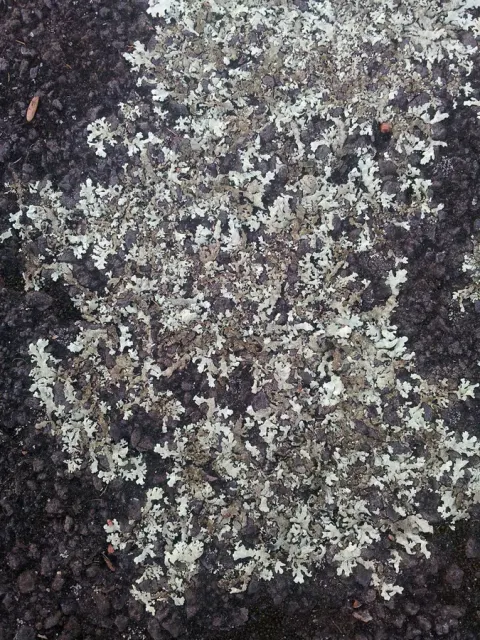
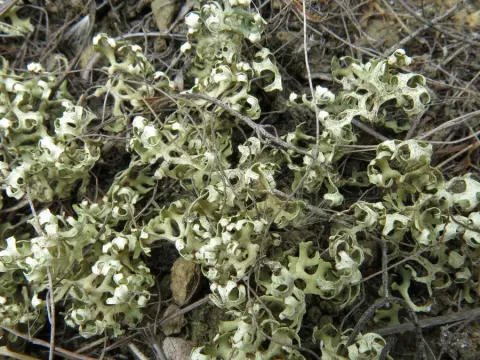
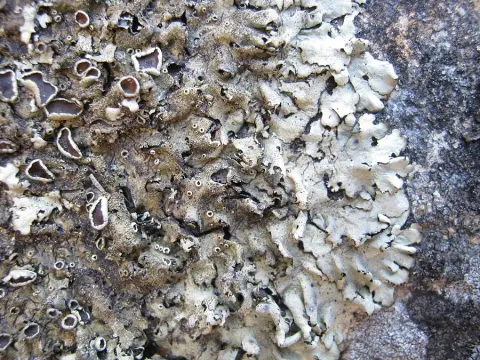
Catatan distribusi dalam narasi mengikuti sumbernya. Dokumentasi spesimen atau foto mengikuti catatan sumber. Bukti wilayah Indonesia dan penilaian konservasi tidak disimpulkan dari gambar.
Melihat dengan konteks
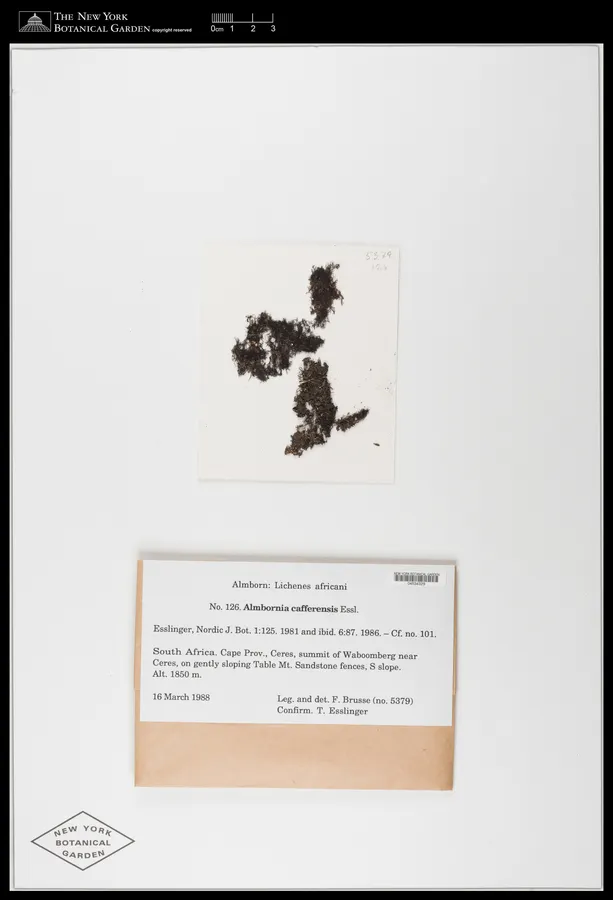
Voucher herbarium Almbornia cafferensis (04534329), The New York Botanical Garden. Identifikasi mengikuti record spesimen sumber. Foto bahan, kemasan, atau label herbarium sebagaimana tersedia pada record institusi; bukan foto lapangan atau penentuan spesimen independen.
- Jenis
- Voucher herbarium
- Kredit
- The New York Botanical Garden
- Lisensi
- CC BY 4.0
- Sumber media
- Buka entri sumber
Sumber profil
- [1] Xanthoparmelia ovealmbornii — Wikipedia (en)
- [2] Catalogue of Life Base2026-09-11 — Xanthoparmelia ovealmbornii
- [3] Dokumentasi visual — Almbornia cafferensis
Rujukan halaman ini
Fungi. Xanthoparmelia ovealmbornii. Rilis data fungi-2026-10-12-expansion-2. https://fungi-atlas.mgadib.chatgpt.site/jamur/xanthoparmelia-ovealmbornii/.
Status: impor sumber; pemeriksaan editorial per profil belum selesai. Untuk klaim biologis, gunakan rujukan pada bagian terkait dan periksa konteks sumber aslinya.