Ciri dan struktur
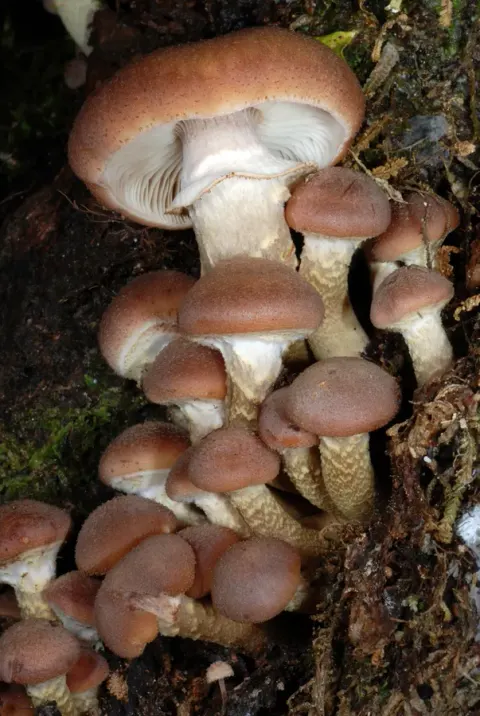
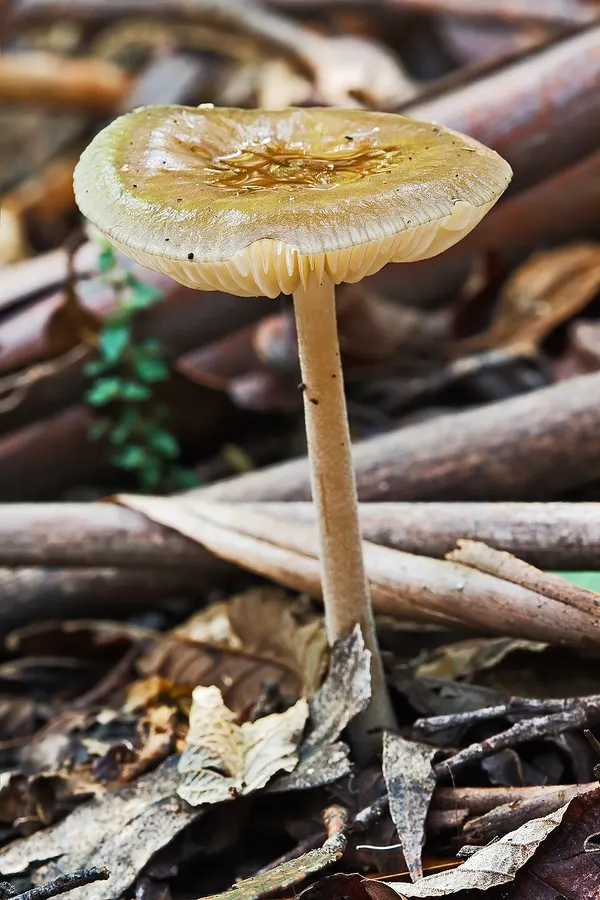
The cap is 5 to 8 cm in diameter, and brownish in color. The cap surface is moist, somewhat sticky, with conspicuous striations (grooves) at the margin. The gills have an adnate attachment to the stipe, are whitish in color, changing to buff in maturity, sometimes with a tinge of pink in older specimens. The whitish stipe is 8 to 11 cm by 0.7 to 1.0 cm thick, covered with small particles (furfuraceous) or small hairs (tomentose); the stipe bruises to a gray-tan color. Like other Xerula species, X. australis has a characteristic root-like rhizomorph that extends down in the soil, usually attached to rotting wood under the fruitbody. The spore print is white. The spores are ellipsoid, smooth, and hyaline, with dimensions of 12–16 to 8–11 μm.
Habitat dan peran ekologis
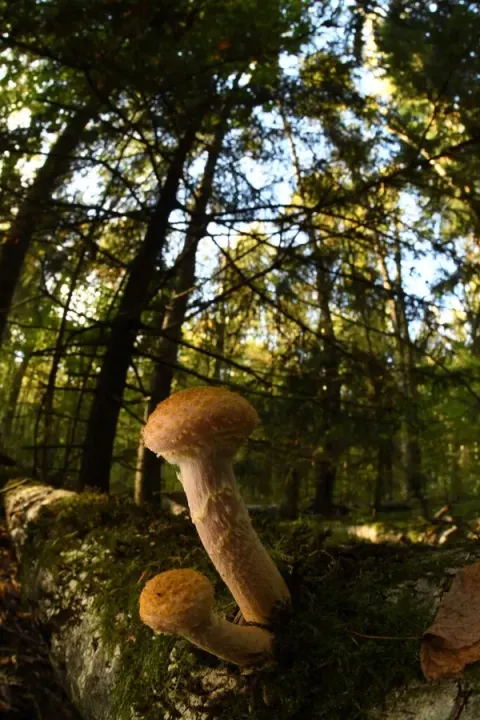
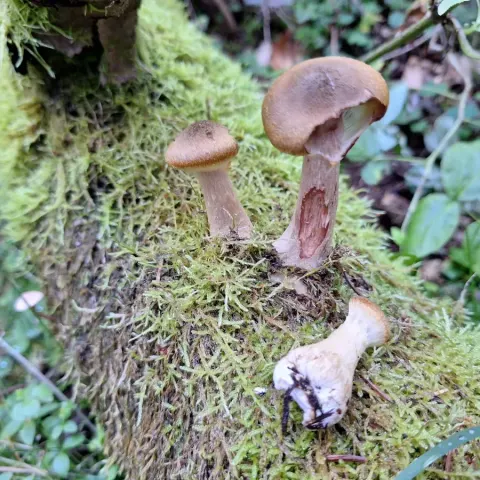
Xerula australis has been recorded growing singly or in groups on sandy soil in Southern Australia. Smith (2005) notes that in the Bunya Mountains of south-east Queensland, the fungus may be found fruiting in large groups on dead roots in the rainforest, but it is also associated with eucalypt forests and woodland.
- Habitat atau konteks temuan
- Informasi belum tersedia pada sumber rilis ini.
- Substrat
- Informasi belum tersedia pada sumber rilis ini.
- Peran atau konteks
- Belum dikategorikan pada rilis ini.
Reproduksi
The cap is 5 to 8 cm in diameter, and brownish in color. The cap surface is moist, somewhat sticky, with conspicuous striations (grooves) at the margin. The gills have an adnate attachment to the stipe, are whitish in color, changing to buff in maturity, sometimes with a tinge of pink in older specimens. The whitish stipe is 8 to 11 cm by 0.7 to 1.0 cm thick, covered with small particles (furfuraceous) or small hairs (tomentose); the stipe bruises to a gray-tan color. Like other Xerula species, X. australis has a characteristic root-like rhizomorph that extends down in the soil, usually attached to rotting wood under the fruitbody. The spore print is white. The spores are ellipsoid, smooth, and hyaline, with dimensions of 12–16 to 8–11 μm.
Catatan identitas dan cakupan
- Nama diterima mengikuti Catalogue of Life Base2026-09-11; uraian mempertahankan konsep dan nama sumber aslinya.
- Original geographic, specimen and life-cycle scope retained; source import awaits individual editorial review.
- Impor dan terjemahan otomatis belum diperiksa editorial per profil. Struktur reproduktif yang disebutkan tidak membuktikan seluruh siklus hidup diketahui.
- Pengukuran pada uraian mengikuti spesimen, kultur, dan metode sumber; angka tidak diperluas ke semua populasi.
Catatan distribusi dalam narasi mengikuti sumbernya. Dokumentasi spesimen atau foto mengikuti catatan sumber. Bukti wilayah Indonesia dan penilaian konservasi tidak disimpulkan dari gambar.
Melihat dengan konteks
Dokumentasi Xerula australis dari Wikimedia Commons. Xerula australis, Wielangta Forest, Tasmania Camera data Camera Canon EOS 400D Lens Tamron EF 180mm f3.5 1:1 Macro Flash Umbrella Right Focal length 180 mm Aperture f/11 Exposure time 1/2 s Sensivity ISO 100 Identifikasi mengikuti record berkas sumber.
- Jenis
- Fotografi
- Kredit
- JJ Harrison ( https://www.jjharrison.com.au/ )
- Lisensi
- CC BY-SA 3.0
- Sumber media
- Buka entri sumber
Sumber profil
- [1] Xerula australis — Wikipedia (en)
- [2] Catalogue of Life Base2026-09-11 — Xerula australis
- [3] Dokumentasi visual — Xerula australis
Rujukan halaman ini
Fungi. Xerula australis. Rilis data fungi-2026-10-12-expansion-2. https://fungi-atlas.mgadib.chatgpt.site/jamur/xerula-australis/.
Status: impor sumber; pemeriksaan editorial per profil belum selesai. Untuk klaim biologis, gunakan rujukan pada bagian terkait dan periksa konteks sumber aslinya.