Ciri dan struktur
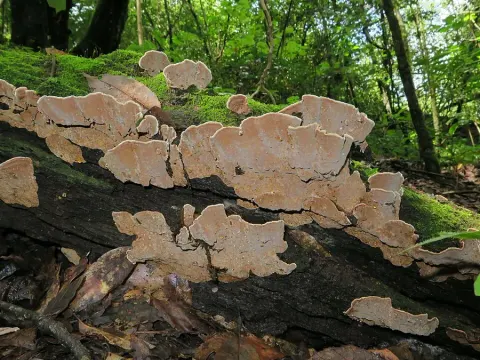
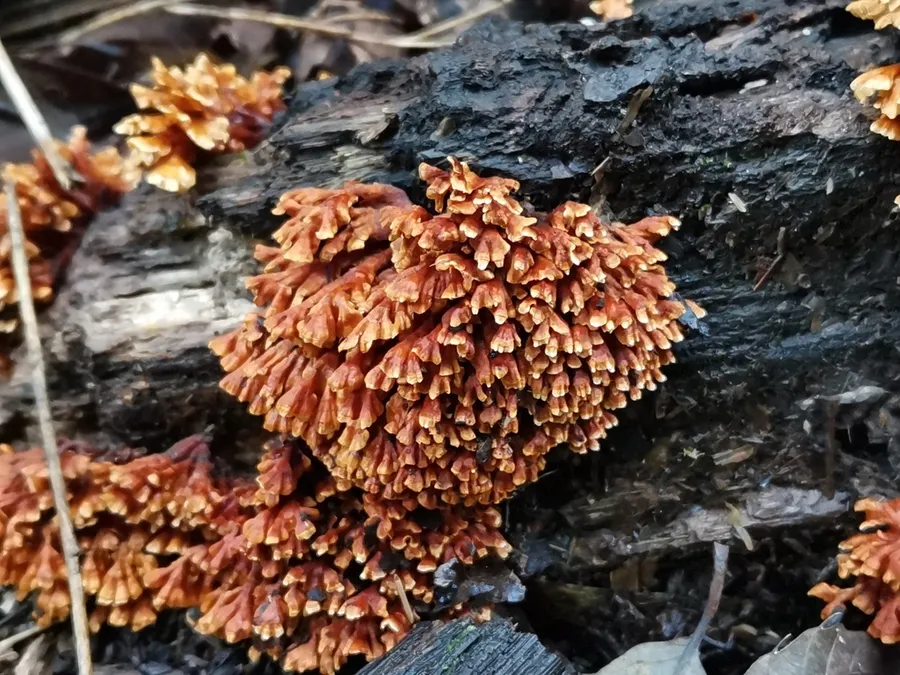
Hymenophore annual, coriaceous, pileate, sessile. Pilei effused-reflexed, sometimes umbonate, imbricate, 2-8 mm radius, 5-30 mm wide; pileus surface cinnamon or vandyke-brown, fibrillose, hairs imbricate, arranged in concentric light and dark brown zones, sometimes radially striate, often complicate and radiately sulcate; margin acute, slightly inturned, lobed, concolorous or lighter; hymenial surface even, bay or tan, often with a greyish tint. Context tan, to 160 µm thick, of densely arranged parallel hyphae, cortex yellow-brown, of compact intertwined partly cemented hyphae, abhymenial hairs to 5 µm diameter, walls 1-1.5 µm thick, generative hyphae 3-3.5 µm diameter, walls 0.5-1 µm thick, without clamp connections. Acanthophyses clavate, to 5 µm diameter, projecting, bearing upon the upper third numerous crowded, hyaline, digitate processes 1-2 µm long. Conducting hyphae arising in the upper part of the context and traversing the hymenial layer, slightly inflated at distal ends, granular contents discoloured. Hymenial layer to 35 µm deep, a close palisade of basidia, paraphyses, acanthophyses, and conducting hyphae. Basidia subclavate, 16-20 x 4-4.5 µm, bearing 4 spores; sterigmata erect, slender, to 4 µm long. Paraphyses subclavate, 12-16 x 3-3.5 µm. Spores obovate or pip-shaped, 5-7 x 4-5 µm, walls smooth, hyaline, 0.1 µm thick.
Habitat dan peran ekologis
DISTRIBUTION: Philippine Islands, Japan, Australia. >HABITAT: Bark or decorticated wood of dead branches.
- Habitat atau konteks temuan
- Informasi belum tersedia pada sumber rilis ini.
- Substrat
- Informasi belum tersedia pada sumber rilis ini.
- Peran atau konteks
- Belum dikategorikan pada rilis ini.
Reproduksi
Hymenophore annual, coriaceous, pileate, sessile. Pilei effused-reflexed, sometimes umbonate, imbricate, 2-8 mm radius, 5-30 mm wide; pileus surface cinnamon or vandyke-brown, fibrillose, hairs imbricate, arranged in concentric light and dark brown zones, sometimes radially striate, often complicate and radiately sulcate; margin acute, slightly inturned, lobed, concolorous or lighter; hymenial surface even, bay or tan, often with a greyish tint. Context tan, to 160 µm thick, of densely arranged parallel hyphae, cortex yellow-brown, of compact intertwined partly cemented hyphae, abhymenial hairs to 5 µm diameter, walls 1-1.5 µm thick, generative hyphae 3-3.5 µm diameter, walls 0.5-1 µm thick, without clamp connections.
Catatan identitas dan cakupan
- Nama diterima mengikuti Catalogue of Life Base2026-09-11; uraian mempertahankan konsep dan nama sumber aslinya.
- Historical description as cited by BiotaNZ. Preserve explicit New Zealand/locality, host and specimen qualifiers. Distribution is the cited source scope, not a current global range.
- Impor dan terjemahan otomatis belum diperiksa editorial per profil. Struktur reproduktif yang disebutkan tidak membuktikan seluruh siklus hidup diketahui.
- Pengukuran pada uraian mengikuti spesimen, kultur, dan metode sumber; angka tidak diperluas ke semua populasi.
Catatan distribusi dalam narasi mengikuti sumbernya. Dokumentasi spesimen atau foto mengikuti catatan sumber. Bukti wilayah Indonesia dan penilaian konservasi tidak disimpulkan dari gambar.
Melihat dengan konteks
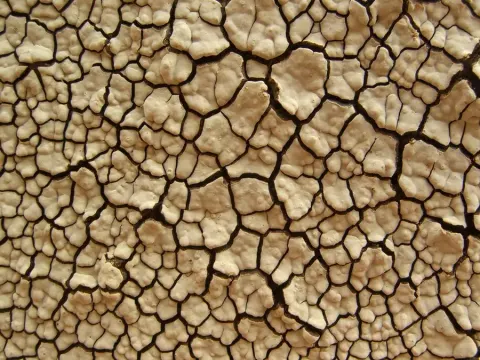
Dokumentasi Xylobolus spectabilis menurut asosiasi foto pada record takson iNaturalist. Kredit: harum.koh. Identitas mengikuti sumber; bukan penentuan spesimen independen.
- Jenis
- Fotografi
- Kredit
- (c) harum.koh, some rights reserved (CC BY-SA), uploaded by harum.koh
- Lisensi
- CC BY-SA 4.0
- Sumber media
- Buka entri sumber
Sumber profil
- [1] Cunningham, G.H. 1963: The Thelephoraceae of Australia and New Zealand. New Zealand Department of Scientific and Industrial Research, Bulletin. 145. — Stereum spectabile
- [2] Catalogue of Life Base2026-09-11 — Xylobolus spectabilis
- [3] Dokumentasi visual — Xylobolus spectabilis
Rujukan halaman ini
Fungi. Xylobolus spectabilis. Rilis data fungi-2026-10-12-expansion-2. https://fungi-atlas.mgadib.chatgpt.site/jamur/xylobolus-spectabilis/.
Status: impor sumber; pemeriksaan editorial per profil belum selesai. Untuk klaim biologis, gunakan rujukan pada bagian terkait dan periksa konteks sumber aslinya.