01 / Morfologi

Ciri dan struktur

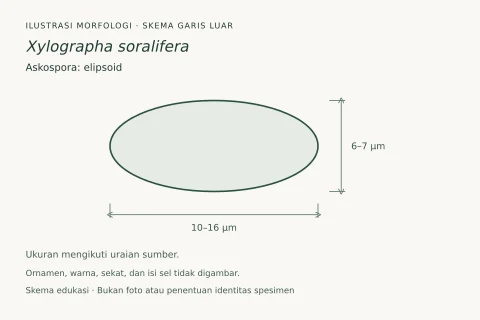
The species forms dark, concave fruiting bodies (ascomata) with a thick, wavy () margin. Individual ascomata are angular to oval (ellipsoid) and are typically strongly pinched at the base. Under the microscope, the outer rim () lacks crystals and has weakly birefringent cell walls, the spore-bearing layer (hymenium) is hemiamyloid (partly staining with iodine), and each ascus contains eight colourless (hyaline) ascospores that are oval and only rarely show a cross-wall (septate). Asexual fruiting structures (conidiomata) have been observed rarely; when present, they produce curved, thread-like conidia (asexual spores). The lichen's algal partner is a green, rounded alga (), and small algae-containing granules () occur scattered between the ascomata rather than immediately next to them. Confriesiic acid is the only reported secondary metabolite in the lichen.

Sebagian uraian ditampilkan dalam bahasa sumber; terjemahannya belum tersedia atau belum lolos pemeriksaan.

Rujukan: [1]

Pengukuran mengikuti objek, spesimen atau kultur, dan metode yang disebutkan sumber. Baca uraian asli untuk konteks lengkap.

02 / Kehidupan

Habitat dan peran ekologis

The type collection was made in British Columbia, Canada, where the lichen was found growing on a log of western red cedar (Thuja plicata) in a waterfall spray zone at low elevation. Sequenced specimens reported in the same study indicate that the species is known from western North America, including Canada (British Columbia) and the United States (Alaska and Oregon). Comparative genomic analysis found that Xylographa bjoerkii encodes a range of carbohydrate-degrading enzymes and sugar transporters, including genes associated with cellulose breakdown. Two candidate cellulase genes from the species were expressed in E. coli and were active on cellulose and beta-glucan in laboratory assays, supporting the idea that the fungus may be able to obtain some carbon from decaying wood in addition to sugars supplied by its algal partner.

Sebagian uraian ditampilkan dalam bahasa sumber; terjemahannya belum tersedia atau belum lolos pemeriksaan.

Rujukan: [1]

Habitat atau konteks temuan
Informasi belum tersedia pada sumber rilis ini.
Substrat
Informasi belum tersedia pada sumber rilis ini.
Peran atau konteks
Pembentuk liken
Temukan hubungan serupa
03 / Siklus hidup

Reproduksi

The species forms dark, concave fruiting bodies (ascomata) with a thick, wavy () margin. Individual ascomata are angular to oval (ellipsoid) and are typically strongly pinched at the base. Under the microscope, the outer rim () lacks crystals and has weakly birefringent cell walls, the spore-bearing layer (hymenium) is hemiamyloid (partly staining with iodine), and each ascus contains eight colourless (hyaline) ascospores that are oval and only rarely show a cross-wall (septate). Asexual fruiting structures (conidiomata) have been observed rarely; when present, they produce curved, thread-like conidia (asexual spores). The lichen's algal partner is a green, rounded alga (), and small algae-containing granules () occur scattered between the ascomata rather than immediately next to them.

Sebagian uraian ditampilkan dalam bahasa sumber; terjemahannya belum tersedia atau belum lolos pemeriksaan.

Rujukan: [1]

04 / Batas informasi

Catatan identitas dan cakupan

  • Nama diterima mengikuti Catalogue of Life Base2026-09-11; uraian mempertahankan konsep dan nama sumber aslinya.
  • Original geographic, specimen and life-cycle scope retained; source import awaits individual editorial review.
  • Impor dan terjemahan otomatis belum diperiksa editorial per profil. Struktur reproduktif yang disebutkan tidak membuktikan seluruh siklus hidup diketahui.
  • Pengukuran pada uraian mengikuti spesimen, kultur, dan metode sumber; angka tidak diperluas ke semua populasi.

Catatan distribusi dalam narasi mengikuti sumbernya. Dokumentasi spesimen atau foto mengikuti catatan sumber. Bukti wilayah Indonesia dan penilaian konservasi tidak disimpulkan dari gambar.

05 / Dokumentasi

Melihat dengan konteks

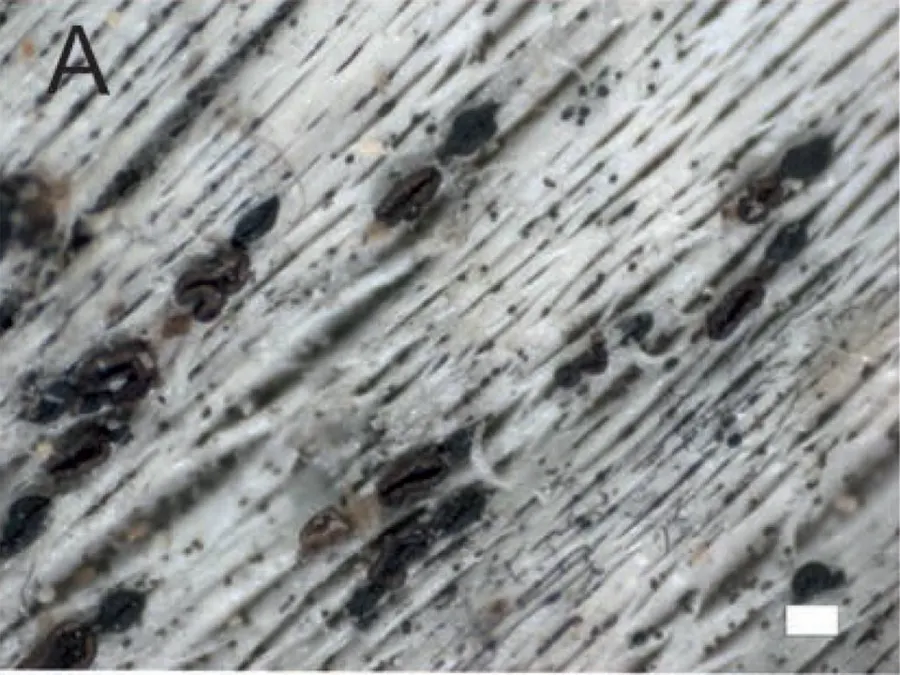
Dokumentasi Xylographa bjoerkii dari Wikimedia Commons. The wood-dwelling lichen Xylographa bjoerkii , showing the arrangement of ascomata and goniocysts on bare wood; scale: 0.2 mm. Specimen from British Columbia, Canada Identifikasi mengikuti record berkas sumber.

Jenis
Fotografi
Kredit
Unknown author Unknown author
Sumber media
Buka entri sumber

Gambar menunjukkan objek menurut identifikasi sumber, bukan verifikasi independen spesimen oleh Fungi. Tidak ada skala baru yang ditambahkan.

06 / Rujukan

Sumber profil

  1. [1] Xylographa bjoerkii — Wikipedia (en)Bagian sumber: Frozen revision 1341040550
    Tanggal penghimpunan sumber: 2026-10-12
    Teks sumber: CC BY-SA4.0 · Wikipedia contributors
  2. [2] Catalogue of Life Base2026-09-11 — Xylographa bjoerkiiBagian sumber: ColDP NameUsage.tsv ID 5CLCZ; accepted species; source 2073
    Tanggal penghimpunan sumber: 2026-10-12
  3. [3] Dokumentasi visual — Xylographa bjoerkiiBagian sumber: Individual media record; identification follows the source, not independent determination
    Tanggal penghimpunan sumber: 2026-10-12
    Media sumber: CC BY-SA 4.0 · Unknown author Unknown author

Adaptasi teks: CC BY-SA 4.0. Wikipedia contributors — Xylographa bjoerkii — Wikipedia (en)

Uraian asli dan riwayat sumber

Riwayat atau halaman sumber

Ringkasan sumber

Xylographa bjoerkii is a species of lichen-forming fungus in the family Xylographaceae. It is a wood-dwelling lichen that grows on decaying logs in humid, low-elevation forests of western North America, from British Columbia south to Oregon. The species was described in 2014 and is recognised by its dark, concave fruiting bodies and reduced thallus.

Revisi sumber

Morfologi sumber

The species forms dark, concave fruiting bodies (ascomata) with a thick, wavy () margin. Individual ascomata are angular to oval (ellipsoid) and are typically strongly pinched at the base. Under the microscope, the outer rim () lacks crystals and has weakly birefringent cell walls, the spore-bearing layer (hymenium) is hemiamyloid (partly staining with iodine), and each ascus contains eight colourless (hyaline) ascospores that are oval and only rarely show a cross-wall (septate). Asexual fruiting structures (conidiomata) have been observed rarely; when present, they produce curved, thread-like conidia (asexual spores). The lichen's algal partner is a green, rounded alga (), and small algae-containing granules () occur scattered between the ascomata rather than immediately next to them. Confriesiic acid is the only reported secondary metabolite in the lichen.

Revisi sumber

Ekologi sumber

The type collection was made in British Columbia, Canada, where the lichen was found growing on a log of western red cedar (Thuja plicata) in a waterfall spray zone at low elevation. Sequenced specimens reported in the same study indicate that the species is known from western North America, including Canada (British Columbia) and the United States (Alaska and Oregon). Comparative genomic analysis found that Xylographa bjoerkii encodes a range of carbohydrate-degrading enzymes and sugar transporters, including genes associated with cellulose breakdown. Two candidate cellulase genes from the species were expressed in E. coli and were active on cellulose and beta-glucan in laboratory assays, supporting the idea that the fungus may be able to obtain some carbon from decaying wood in addition to sugars supplied by its algal partner.

Revisi sumber

Struktur reproduksi sumber

The species forms dark, concave fruiting bodies (ascomata) with a thick, wavy () margin. Individual ascomata are angular to oval (ellipsoid) and are typically strongly pinched at the base. Under the microscope, the outer rim () lacks crystals and has weakly birefringent cell walls, the spore-bearing layer (hymenium) is hemiamyloid (partly staining with iodine), and each ascus contains eight colourless (hyaline) ascospores that are oval and only rarely show a cross-wall (septate). Asexual fruiting structures (conidiomata) have been observed rarely; when present, they produce curved, thread-like conidia (asexual spores). The lichen's algal partner is a green, rounded alga (), and small algae-containing granules () occur scattered between the ascomata rather than immediately next to them.

Revisi sumber

Rujukan halaman ini

Fungi. Xylographa bjoerkii. Rilis data fungi-2026-10-12-expansion-2. https://fungi-atlas.mgadib.chatgpt.site/jamur/xylographa-bjoerkii/.

Status: impor sumber; pemeriksaan editorial per profil belum selesai. Untuk klaim biologis, gunakan rujukan pada bagian terkait dan periksa konteks sumber aslinya.