Ciri dan struktur
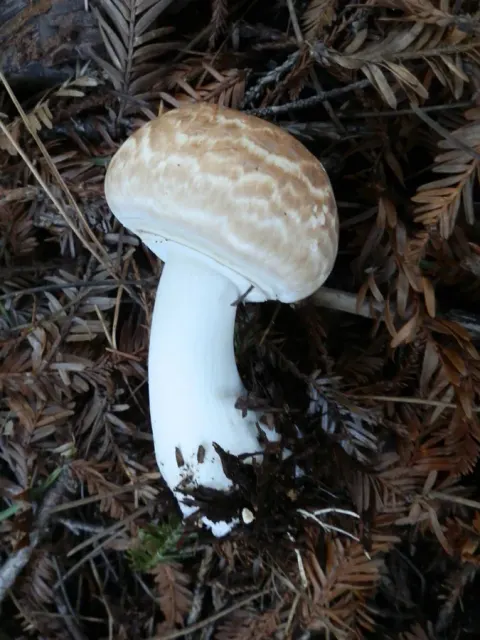
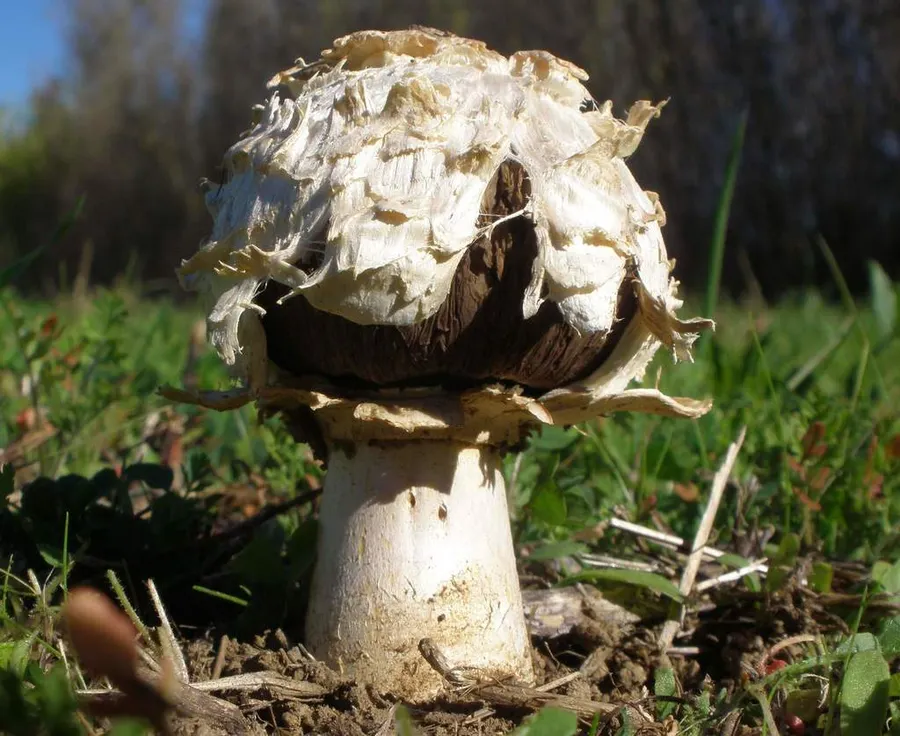
The fruit body can grow up to 5 to 18 cm in height. Fresh specimens are usually white, but will age to a pale tan; dried fruit bodies are light gray or tan mixed with some yellow. initially conic, later becoming convex to broadly convex as it matures. The cap is composed of three distinct tissue layers: an outer volval layer, a middle cuticular layer (cutis), and an inner (tramal) layer which supports the gleba. The surface of the cap is white with yellow-brown to brown-tipped raised small scales; these scales result from the breakup of the volva and the cutis. Initially, the caps are covered by a peridium—an outer covering layer of tissue. After the fruit body matures and begins to dry out, the lower part of the peridium starts to rip, usually starting from small longitudinal slits near where the peridium attaches to the top of the stem. However, the pattern of tearing is variable; in some instances, the slits may appear higher up on the peridium, in others, the peridium rips more irregularly. The peridium may also rip in such a way that it appears as if there is a ring at the top of the stem. The torn peridium exposes the internal gleba. The gleba is divided into wavy plates or lamellae, some of which are fused together to form irregular chambers. The gleba is a drab brown to blackish-brown color, and it becomes tough and brittle as it dries out. The flesh is firm when young, white, and will stain light to bright yellow when it is bruised. The stem is cylindrical, 4 to 15 cm long and 2 to 4 cm thick. It is shaped like a narrow club, and the base may reach widths up to 4.5 cm.
Habitat dan peran ekologis
Like other Agaricus species, A. deserticola adalah saprobik ⁇ makan dari mati atau materi organik yang membusuk. The fruit bodies are found growing singly to sometimes more numerous, at low elevations, and typically in sandy soil. Habitat biasa spesies ini termasuk lahan kering, scrub sage pesisir, dan ekosistem gurun. Ia juga tumbuh di rumput dan ladang. Jarak jamur ini terbatas pada barat daya dan barat Amerika Utara, di mana ia berbuah sepanjang tahun, biasanya selama atau setelah cuaca dingin dan basah. Zeller gives rentang yang mencakup sebagai perbatasan timurnya Texas tengah, dan membentang ke barat ke San Diego County, California, dan utara ke Josephine County, Oregon. Jamur ini biasa di San Francisco Bay area sebelum pembangunan lahan mengurangi habitat favoritnya. A. deserticola telah dikumpulkan di beberapa negara bagian di barat laut Meksiko, termasuk Sonora, Chihuahua, dan Baja California.
- Habitat atau konteks temuan
- Informasi belum tersedia pada sumber rilis ini.
- Substrat
- Informasi belum tersedia pada sumber rilis ini.
- Peran atau konteks
- Pengurai
Reproduksi
In deposit, such as with a spore print, the spores appear almost black, tinged with purple. The spores are spherical in shape or nearly so, smooth, thick-walled, and lack a germ pore. They are nonamyloid (not absorbing iodine when stained with Melzer's reagent), black-brown, and have dimensions of 4.5–7.5 by 5.5–6.5 μm. There is a prominent scar where the spore was once attached to the basidium (the spore-bearing cell) through the sterigma. The basidia are broadly club-shaped, and mostly four-spored, with long, slender sterigmata. Unlike other Agaricus species, the spores of A. deserticola are not shot off, but are instead dispersed when they sift out of the dried, mature fruit bodies after the peridium breaks open.
Catatan identitas dan cakupan
- Nama diterima mengikuti Catalogue of Life Base2026-09-11; uraian mempertahankan konsep dan nama sumber aslinya.
- Original geographic, specimen and life-cycle scope retained; source import awaits individual editorial review.
- Impor dan terjemahan otomatis belum diperiksa editorial per profil. Struktur reproduktif yang disebutkan tidak membuktikan seluruh siklus hidup diketahui.
- Pengukuran pada uraian mengikuti spesimen, kultur, dan metode sumber; angka tidak diperluas ke semua populasi.
Catatan distribusi dalam narasi mengikuti sumbernya. Dokumentasi spesimen atau foto mengikuti catatan sumber. Bukti wilayah Indonesia dan penilaian konservasi tidak disimpulkan dari gambar.
Melihat dengan konteks
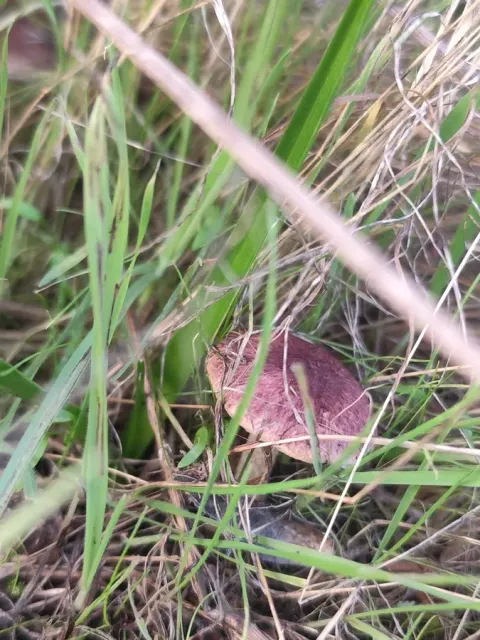
Dokumentasi Agaricus deserticola menurut asosiasi foto pada record takson iNaturalist. Kredit: MushroomObserverUser|1=160|2=Phalluscybe (phonehenge). Identitas mengikuti sumber; bukan penentuan spesimen independen.
- Jenis
- Fotografi
- Kredit
- (c) MushroomObserverUser|1=160|2=Phalluscybe (phonehenge), some rights reserved (CC BY-SA)
- Lisensi
- CC BY-SA 4.0
- Sumber media
- Buka entri sumber
Dokumentasi tambahan
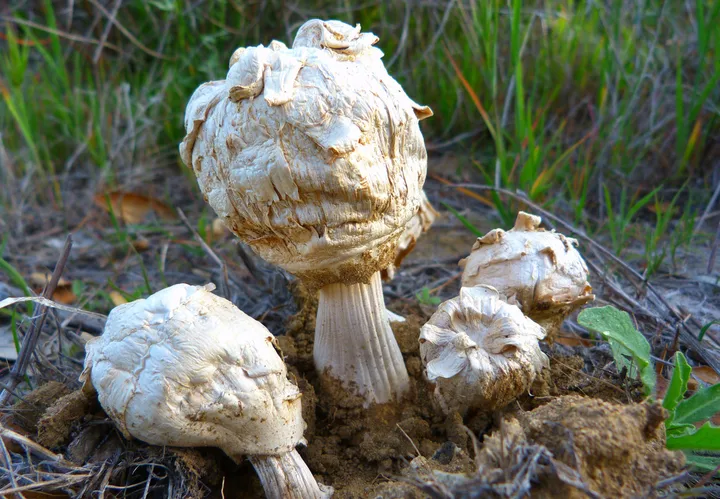
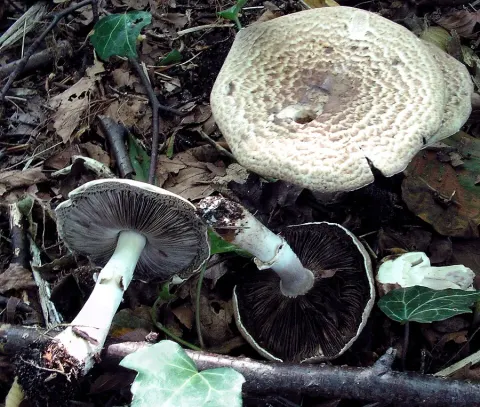
Foto yang diasosiasikan dengan Agaricus deserticola pada iNaturalist. Identifikasi mengikuti sumber; bukan penentuan spesimen independen.
Kredit dan penggunaan
(c) Zack Abbey, some rights reserved (CC BY), uploaded by Zack Abbey
Ukuran dan format gambar disesuaikan tanpa pemotongan, retus, atau penambahan skala. Lisensi sumber dipertahankan.
Sumber profil
- [1] Agaricus deserticola — Wikipedia (en)
- [2] Catalogue of Life Base2026-09-11 — Agaricus deserticola
- [3] Dokumentasi visual — Agaricus deserticola
- [4] Dokumentasi visual — Agaricus deserticola
Rujukan halaman ini
Fungi. Agaricus deserticola. Rilis data fungi-2026-10-12-expansion-2. https://fungi-atlas.mgadib.chatgpt.site/jamur/agaricus-deserticola/.
Status: impor sumber; pemeriksaan editorial per profil belum selesai. Untuk klaim biologis, gunakan rujukan pada bagian terkait dan periksa konteks sumber aslinya.