01 / Morfologi

Ciri dan struktur

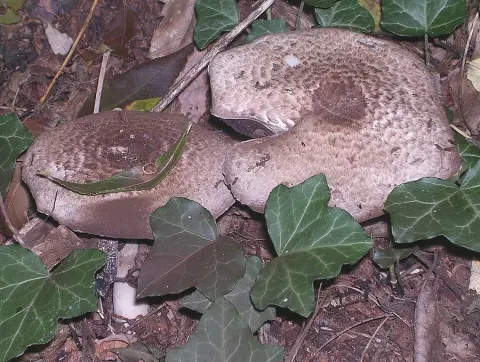
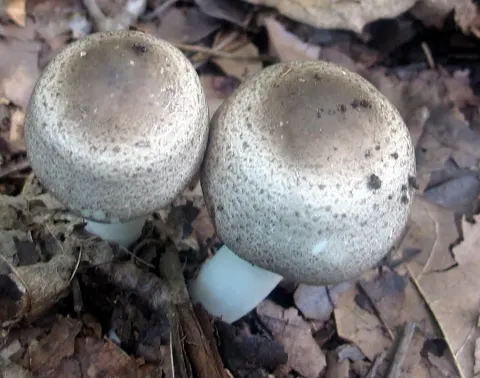
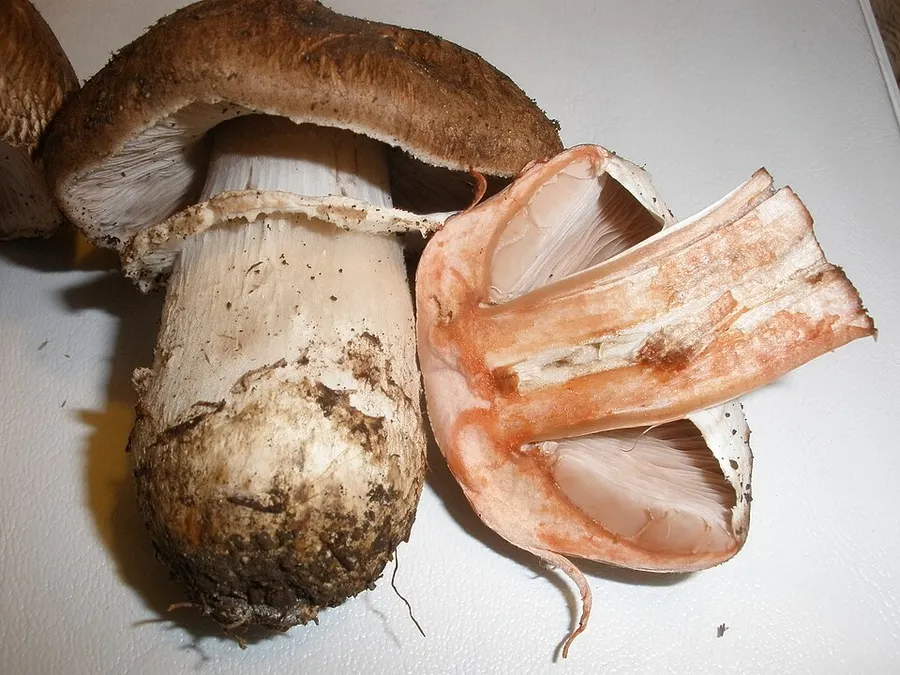
The cap is 5–19 cm in diameter and initially almost hemispherical in shape, transforming to broadly convex and finally to flattened or with edges upturned in age. The cap surface is dry, with fibrils when young, but later the fibrils form large, dark brown appressed squamules (2–9 mm long by 2–5 mm broad). The cap color may be various shades of brown depending on the maturity of the specimen. The cap flesh is typically 1–3 cm thick, firm, white, and stains deep red 20–30 seconds after injury or bruising. The odor immediately after cutting is mild, faintly spicy, but after several minutes can be described as fruity. The gills are free in attachment, closely spaced, 5–15 mm broad, and marginate. The light-cinnamon color in young specimens turns to a dark blackish brown in age after the spores develop. Bruised gills stain a vinaceous (wine-colored) red. The stipe is usually 8–18 cm long by 2.5–4 cm thick with a bulbous shape. The interior is hollow, with the internal cavity being between 5 and 9 mm thick. The stipe context somewhat fibrous and white in color, except for the basal section which is yellowish. Bruising or cutting results in a red stain after a minute. The surface of the stipe is barely striate above the annulus, and smooth below except for fragments of the universal veil. During development the veils rupture and form an upper veil (partial veil), which initially hangs from the edge of the cap, and a lower veil. As the partial veil disintegrates, it often leaves fragments 2–3 mm in size attached to the margin. The spores are roughly elliptical in shape, 7–8.5 by 5.5–6.5 μm.

Sebagian uraian ditampilkan dalam bahasa sumber; terjemahannya belum tersedia atau belum lolos pemeriksaan.

Rujukan: [1]

Pengukuran mengikuti objek, spesimen atau kultur, dan metode yang disebutkan sumber. Baca uraian asli untuk konteks lengkap.

02 / Kehidupan

Habitat dan peran ekologis

Agaricus pattersoniae dikaitkan dengan pohon Hesperocyparis macrocarpa (Monterey cypress) yang berbuah secara individual atau dalam kelompok. Richard Kerrigan noted bahwa tampaknya terbatas pada pohon matang (umur 40+ tahun) yang terletak di daerah pesisir California, meskipun Alexander H. Smith mentions bahwa itu juga telah ditemukan di Great Lakes regions. Spesies ini telah diusulkan untuk dimasukkan ke dalam bagian IUCN Red List of Threatened Species as dari Global Fungal Red List Initiative. Ancaman utama termasuk kerusakan habitat, kekeringan, dan penurunan pohon sipres karena kanker sipres dari infeksi oleh Seiridium cardinale. Pohon sapres telah dihapus dari lokasi jenis.

Rujukan: [1]

Habitat atau konteks temuan
Informasi belum tersedia pada sumber rilis ini.
Substrat
Informasi belum tersedia pada sumber rilis ini.
Peran atau konteks
Belum dikategorikan pada rilis ini.
Temukan hubungan serupa
03 / Siklus hidup

Reproduksi

The gills are free in attachment, closely spaced, 5–15 mm broad, and marginate. The light-cinnamon color in young specimens turns to a dark blackish brown in age after the spores develop. Bruised gills stain a vinaceous (wine-colored) red. The spores are roughly elliptical in shape, 7–8.5 by 5.5–6.5 μm. The basidia, which may be 1–, 2–, 3–, or 4–spored (although usually 4–spored during active sporulation), are 26–34 by 7–11 μm, cylinder- to club-shaped, with sterigmata that are 2–3 μm long. The cheilocystidia are 12–32 by 6–15 μm in size, almost cylindrical or club-shaped, and may appear clumped or continuous.

Sebagian uraian ditampilkan dalam bahasa sumber; terjemahannya belum tersedia atau belum lolos pemeriksaan.

Rujukan: [1]

04 / Batas informasi

Catatan identitas dan cakupan

  • Nama diterima mengikuti Catalogue of Life Base2026-09-11; uraian mempertahankan konsep dan nama sumber aslinya.
  • Original geographic, specimen and life-cycle scope retained; source import awaits individual editorial review.
  • Impor dan terjemahan otomatis belum diperiksa editorial per profil. Struktur reproduktif yang disebutkan tidak membuktikan seluruh siklus hidup diketahui.
  • Pengukuran pada uraian mengikuti spesimen, kultur, dan metode sumber; angka tidak diperluas ke semua populasi.

Catatan distribusi dalam narasi mengikuti sumbernya. Dokumentasi spesimen atau foto mengikuti catatan sumber. Bukti wilayah Indonesia dan penilaian konservasi tidak disimpulkan dari gambar.

05 / Dokumentasi

Melihat dengan konteks

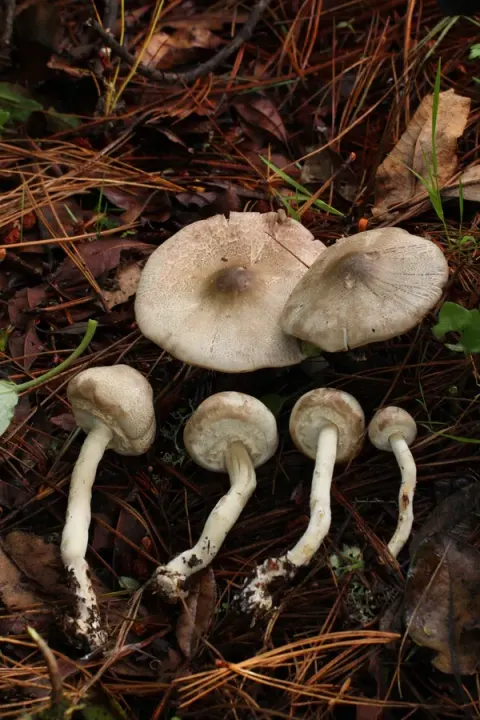
Dokumentasi Agaricus pattersoniae dari Wikimedia Commons. Fruit bodies of the mushroom Agaricus pattersoniae Peck. Photographed in San Simeon, California, USA. Identifikasi mengikuti record berkas sumber.

Jenis
Fotografi
Kredit
J-Dar
Sumber media
Buka entri sumber

Gambar menunjukkan objek menurut identifikasi sumber, bukan verifikasi independen spesimen oleh Fungi. Tidak ada skala baru yang ditambahkan.

06 / Rujukan

Sumber profil

  1. [1] Agaricus pattersoniae — Wikipedia (en)Bagian sumber: Frozen revision 1347453620
    Tanggal penghimpunan sumber: 2026-10-12
    Teks sumber: CC BY-SA4.0 · Wikipedia contributors
  2. [2] Catalogue of Life Base2026-09-11 — Agaricus pattersoniaeBagian sumber: ColDP NameUsage.tsv ID 65P2D; accepted species; source 2073
    Tanggal penghimpunan sumber: 2026-10-12
  3. [3] Dokumentasi visual — Agaricus pattersoniaeBagian sumber: Individual media record; identification follows the source, not independent determination
    Tanggal penghimpunan sumber: 2026-10-12
    Media sumber: CC BY-SA 3.0 · J-Dar

Adaptasi teks: CC BY-SA 4.0. Wikipedia contributors — Agaricus pattersoniae — Wikipedia (en)

Uraian asli dan riwayat sumber

Riwayat atau halaman sumber

Ringkasan sumber

The cap is 5–19 cm in diameter and initially almost hemispherical in shape, transforming to broadly convex and finally to flattened or with edges upturned in age. The cap surface is dry, with fibrils when young, but later the fibrils form large, dark brown appressed squamules (2–9 mm long by 2–5 mm broad). The cap color may be various shades of brown depending on the maturity of the specimen. The cap flesh is typically 1–3 cm thick, firm, white, and stains deep red 20–30 seconds after injury or bruising.

Revisi sumber

Morfologi sumber

The cap is 5–19 cm in diameter and initially almost hemispherical in shape, transforming to broadly convex and finally to flattened or with edges upturned in age. The cap surface is dry, with fibrils when young, but later the fibrils form large, dark brown appressed squamules (2–9 mm long by 2–5 mm broad). The cap color may be various shades of brown depending on the maturity of the specimen. The cap flesh is typically 1–3 cm thick, firm, white, and stains deep red 20–30 seconds after injury or bruising. The odor immediately after cutting is mild, faintly spicy, but after several minutes can be described as fruity. The gills are free in attachment, closely spaced, 5–15 mm broad, and marginate. The light-cinnamon color in young specimens turns to a dark blackish brown in age after the spores develop. Bruised gills stain a vinaceous (wine-colored) red. The stipe is usually 8–18 cm long by 2.5–4 cm thick with a bulbous shape. The interior is hollow, with the internal cavity being between 5 and 9 mm thick. The stipe context somewhat fibrous and white in color, except for the basal section which is yellowish. Bruising or cutting results in a red stain after a minute. The surface of the stipe is barely striate above the annulus, and smooth below except for fragments of the universal veil. During development the veils rupture and form an upper veil (partial veil), which initially hangs from the edge of the cap, and a lower veil. As the partial veil disintegrates, it often leaves fragments 2–3 mm in size attached to the margin. The spores are roughly elliptical in shape, 7–8.5 by 5.5–6.5 μm.

Revisi sumber

Ekologi sumber

Agaricus pattersoniae is associated with Hesperocyparis macrocarpa (Monterey cypress) trees, fruiting singly or in groups. Richard Kerrigan noted that it seems to be restricted to mature trees (age 40+ years) located in the coastal counties of California, although Alexander H. Smith mentions that it has also been found in the Great Lakes regions. The species has been proposed for inclusion in the IUCN Red List of Threatened Species as part of the Global Fungal Red List Initiative. Its main threats include habitat destruction, drought, and decline of cypress trees due to cypress canker from infection by Seiridium cardinale. The cypress trees have been removed from the type locality.

Revisi sumber

Struktur reproduksi sumber

The gills are free in attachment, closely spaced, 5–15 mm broad, and marginate. The light-cinnamon color in young specimens turns to a dark blackish brown in age after the spores develop. Bruised gills stain a vinaceous (wine-colored) red. The spores are roughly elliptical in shape, 7–8.5 by 5.5–6.5 μm. The basidia, which may be 1–, 2–, 3–, or 4–spored (although usually 4–spored during active sporulation), are 26–34 by 7–11 μm, cylinder- to club-shaped, with sterigmata that are 2–3 μm long. The cheilocystidia are 12–32 by 6–15 μm in size, almost cylindrical or club-shaped, and may appear clumped or continuous.

Revisi sumber

Rujukan halaman ini

Fungi. Agaricus pattersoniae. Rilis data fungi-2026-10-12-expansion-2. https://fungi-atlas.mgadib.chatgpt.site/jamur/agaricus-pattersoniae/.

Status: impor sumber; pemeriksaan editorial per profil belum selesai. Untuk klaim biologis, gunakan rujukan pada bagian terkait dan periksa konteks sumber aslinya.