01 / Morfologi

Ciri dan struktur

Alternaria dianthi reproduces asexually, forming row-like spores off of hyphae. Spores are formed on blisters on the host as well as within the mycelium. The thin, globular spores are spread through water. The spores of A. dianthi germinate optimally around 24 °C (75 °F), and cannot germinate below 4 °C (40 °F) or above 32 °C (90 °F).

Sebagian uraian ditampilkan dalam bahasa sumber; terjemahannya belum tersedia atau belum lolos pemeriksaan.

Rujukan: [1]

Pengukuran mengikuti objek, spesimen atau kultur, dan metode yang disebutkan sumber. Baca uraian asli untuk konteks lengkap.

02 / Kehidupan

Habitat dan peran ekologis

This pathogen has been found in carnation and other Dianthus cultures worldwide, including in India, the United States, the Canary Islands, and Egypt. Fourteen gene urutan Alternaria dianthi telah dipublikasikan pada April 11, 2014 Alternaria dianthi pertama kali tercatat dalam literatur ilmiah oleh F.L. Stevens and J.G. Hall in 1909, dari toko bunga di Amerika Serikat. Jamur, bersama dengan anggota lain dari genus Alternaria, secara efektif dikendalikan oleh fungicide komersial mancozeb, serta dithiocarbamates, chlorothalonil, dan iprodione. Meskipun A. dianthi telah ditemukan di berbagai jenis liar dan komersial Dianthus plants di seluruh dunia, belum ada penelitian tentang dampak ekonomi atau kerugian akibat penyakit ini yang diterbitkan.

Sebagian uraian ditampilkan dalam bahasa sumber; terjemahannya belum tersedia atau belum lolos pemeriksaan.

Rujukan: [1]

Habitat atau konteks temuan
kultur yang didokumentasikan
Substrat
Informasi belum tersedia pada sumber rilis ini.
Peran atau konteks
Belum dikategorikan pada rilis ini.
Temukan hubungan serupa
03 / Siklus hidup

Reproduksi

Alternaria dianthi reproduces asexually, forming row-like spores off of hyphae. Spores are formed on blisters on the host as well as within the mycelium. The thin, globular spores are spread through water. The spores of A. dianthi germinate optimally around 24 °C (75 °F), and cannot germinate below 4 °C (40 °F) or above 32 °C (90 °F).

Sebagian uraian ditampilkan dalam bahasa sumber; terjemahannya belum tersedia atau belum lolos pemeriksaan.

Rujukan: [1]

04 / Batas informasi

Catatan identitas dan cakupan

  • Nama diterima mengikuti Catalogue of Life Base2026-09-11; uraian mempertahankan konsep dan nama sumber aslinya.
  • Original geographic, specimen and life-cycle scope retained; source import awaits individual editorial review.
  • Impor dan terjemahan otomatis belum diperiksa editorial per profil. Struktur reproduktif yang disebutkan tidak membuktikan seluruh siklus hidup diketahui.
  • Pengukuran pada uraian mengikuti spesimen, kultur, dan metode sumber; angka tidak diperluas ke semua populasi.

Catatan distribusi dalam narasi mengikuti sumbernya. Dokumentasi spesimen atau foto mengikuti catatan sumber. Bukti wilayah Indonesia dan penilaian konservasi tidak disimpulkan dari gambar.

05 / Dokumentasi

Melihat dengan konteks

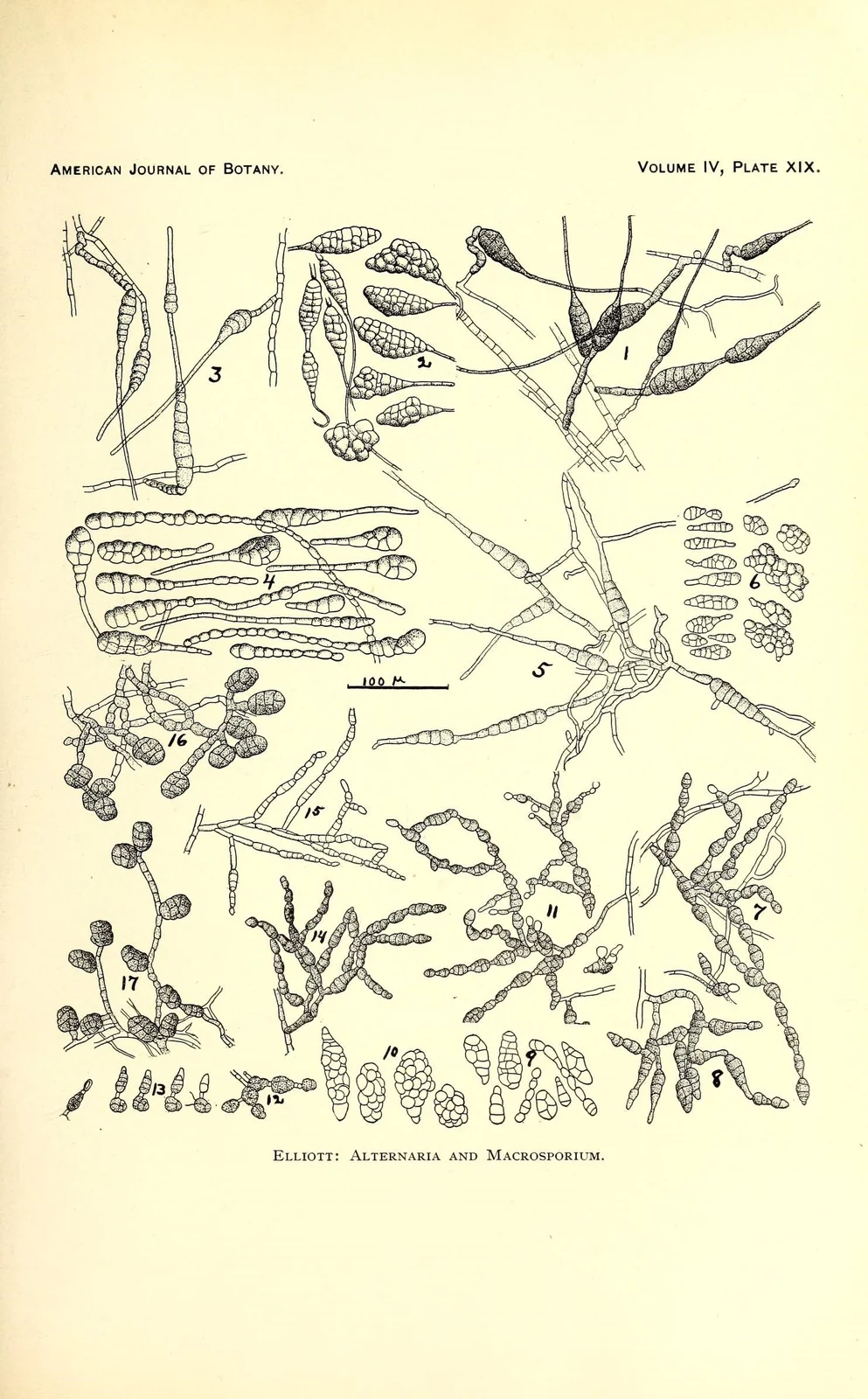
Pelat XIX dari American Journal of Botany (1917). Gambar 8–10 menunjukkan Alternaria dianthi; panel lain menampilkan takson berbeda. Penentuan panel mengikuti legenda sumber.

Jenis
Ilustrasi
Kredit
Biodiversity Heritage Library; Elliott (1917)
Sumber media
Buka entri sumber

Gambar menunjukkan objek menurut identifikasi sumber, bukan verifikasi independen spesimen oleh Fungi. Tidak ada skala baru yang ditambahkan.

06 / Rujukan

Sumber profil

  1. [1] Alternaria dianthi — Wikipedia (en)Bagian sumber: Frozen revision 1194825458
    Tanggal penghimpunan sumber: 2026-10-12
    Teks sumber: CC BY-SA4.0 · Wikipedia contributors
  2. [2] Catalogue of Life Base2026-09-11 — Alternaria dianthiBagian sumber: ColDP NameUsage.tsv ID C9T5; accepted species; source 2073
    Tanggal penghimpunan sumber: 2026-10-12
  3. [3] Dokumentasi visual — Alternaria dianthiBagian sumber: Identitas mengikuti sumber dokumentasi; bukan penentuan spesimen independen.
    Tanggal penghimpunan sumber: 2026-10-17
    Media sumber: Public domain · Biodiversity Heritage Library; Elliott (1917)

Adaptasi teks: CC BY-SA 4.0. Wikipedia contributors — Alternaria dianthi — Wikipedia (en)

Uraian asli dan riwayat sumber

Riwayat atau halaman sumber

Ringkasan sumber

Alternaria dianthi reproduces asexually, forming row-like spores off of hyphae. Spores are formed on blisters on the host as well as within the mycelium. The thin, globular spores are spread through water. The spores of A. dianthi germinate optimally around 24 °C (75 °F), and cannot germinate below 4 °C (40 °F) or above 32 °C (90 °F).

Revisi sumber

Morfologi sumber

Alternaria dianthi reproduces asexually, forming row-like spores off of hyphae. Spores are formed on blisters on the host as well as within the mycelium. The thin, globular spores are spread through water. The spores of A. dianthi germinate optimally around 24 °C (75 °F), and cannot germinate below 4 °C (40 °F) or above 32 °C (90 °F).

Revisi sumber

Ekologi sumber

This pathogen has been found in carnation and other Dianthus cultures worldwide, including in India, the United States, the Canary Islands, and Egypt. Fourteen gene sequences of Alternaria dianthi have been published as of April 11, 2014 Alternaria dianthi was first recorded in the scientific literature by F.L. Stevens and J.G. Hall in 1909, from florists in the United States. The fungus, along with other members of the genus Alternaria, is effectively controlled by the commercial fungicide mancozeb, as well as dithiocarbamates, chlorothalonil, and iprodione. Although A. dianthi has been found in wild and commercial varieties of Dianthus plants worldwide, no studies of the economic impacts or losses due to the disease have been published.

Revisi sumber

Struktur reproduksi sumber

Alternaria dianthi reproduces asexually, forming row-like spores off of hyphae. Spores are formed on blisters on the host as well as within the mycelium. The thin, globular spores are spread through water. The spores of A. dianthi germinate optimally around 24 °C (75 °F), and cannot germinate below 4 °C (40 °F) or above 32 °C (90 °F).

Revisi sumber

Rujukan halaman ini

Fungi. Alternaria dianthi. Rilis data fungi-2026-10-12-expansion-2. https://fungi-atlas.mgadib.chatgpt.site/jamur/alternaria-dianthi/.

Status: impor sumber; pemeriksaan editorial per profil belum selesai. Untuk klaim biologis, gunakan rujukan pada bagian terkait dan periksa konteks sumber aslinya.