Ciri dan struktur
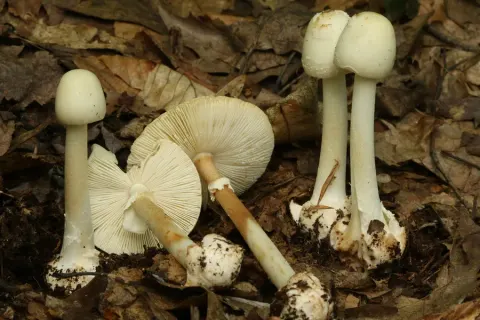
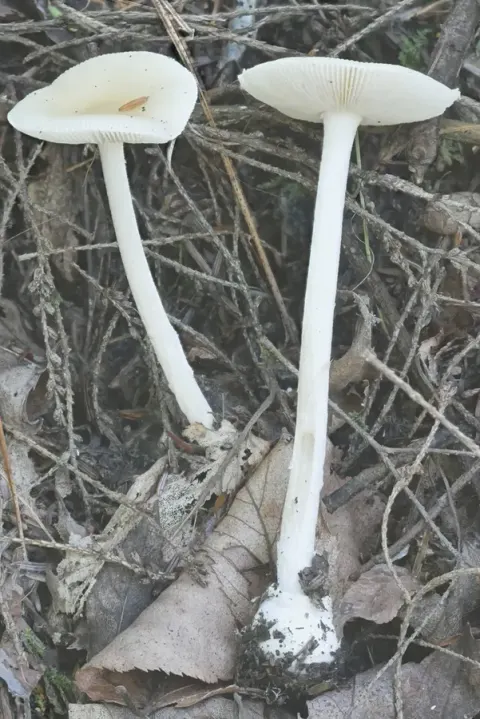
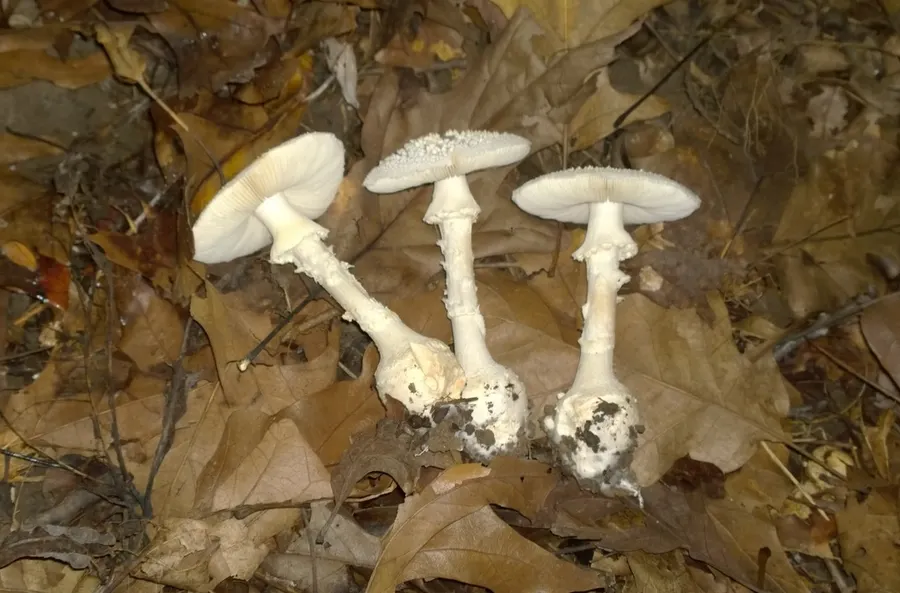
As with most mushrooms, the bulk of A. abrupta lies beneath the ground as an aggregation of fungal cells called hyphae; under appropriate environmental conditions, the visible reproductive structure (fruit body) is formed. The cap has a diameter of 4 to 10 cm, and has a broadly convex shape when young, but eventually flattens. It is white, smooth (glabrous), solid (that is, not hollow internally), and has an abruptly bulbous base with the shape of a flattened sphere; it may develop longitudinal splits on the sides. The base is often attached to a copious white mycelium—a visual reminder that the bulk of the organism lies unseen below the surface. The ring is membranous, and persistent—not weathering away with time; the ring may be attached to the stem with white fibers. The mushroom has no distinct odor. When collected in deposit, such as with a spore print, the spores appear white. Viewed with a microscope, the spores are broadly elliptical or roughly spherical, smooth, thin-walled, and have dimensions of 6.5–9.5 by 5.5 by 8.5 μm. Spores are amyloid (meaning they take up iodine when stained with Melzer's reagent) The basidia (spore-bearing cells on the edges of gills) are four-spored and measure 30–50 by 4–11 μm. The bases of the basidia have clamp connections—short branches connecting one cell to the previous cell to allow passage of the products of nuclear division. The cap cuticle comprises a layer of densely interwoven, sightly gelatinized, filamentous hyphae that are 3–8 μm in diameter. The stem tissue is made of sparse, thin, longitudinally oriented hyphae measuring 294 by 39 μm.
Habitat dan peran ekologis
Jamur ini telah digambarkan sebagai umum di Amerika Serikat Tenggara; frekuensi yang munculnya tubuh buah tergantung pada beberapa faktor, seperti musim, lokasi, suhu, dan curah hujan. Like most lain Amanita species, A. abrupta dianggap membentuk hubungan mikoriza dengan pohon. This is a mutually beneficial relationship where the hyphae of the fungus grow around the roots of trees, enabling the fungus to receive moisture, protection and nutritive byproducts of the tree, and affording the tree greater access to soil nutrients. Kuo also menyebutkan hubungan mikoriza dengan kayu keras dan konifer,
- Habitat atau konteks temuan
- Informasi belum tersedia pada sumber rilis ini.
- Substrat
- Informasi belum tersedia pada sumber rilis ini.
- Peran atau konteks
- Mitra tumbuhan
Reproduksi
As with most mushrooms, the bulk of A. abrupta lies beneath the ground as an aggregation of fungal cells called hyphae; under appropriate environmental conditions, the visible reproductive structure (fruit body) is formed. The cap has a diameter of 4 to 10 cm, and has a broadly convex shape when young, but eventually flattens. It is white, smooth (glabrous), solid (that is, not hollow internally), and has an abruptly bulbous base with the shape of a flattened sphere; it may develop longitudinal splits on the sides. The base is often attached to a copious white mycelium—a visual reminder that the bulk of the organism lies unseen below the surface. The ring is membranous, and persistent—not weathering away with time; the ring may be attached to the stem with white fibers.
Catatan identitas dan cakupan
- Nama diterima mengikuti Catalogue of Life Base2026-09-11; uraian mempertahankan konsep dan nama sumber aslinya.
- Original geographic, specimen and life-cycle scope retained; source import awaits individual editorial review.
- Impor dan terjemahan otomatis belum diperiksa editorial per profil. Struktur reproduktif yang disebutkan tidak membuktikan seluruh siklus hidup diketahui.
- Pengukuran pada uraian mengikuti spesimen, kultur, dan metode sumber; angka tidak diperluas ke semua populasi.
Catatan distribusi dalam narasi mengikuti sumbernya. Dokumentasi spesimen atau foto mengikuti catatan sumber. Bukti wilayah Indonesia dan penilaian konservasi tidak disimpulkan dari gambar.
Melihat dengan konteks
Dokumentasi Amanita abrupta menurut asosiasi foto pada record takson iNaturalist. Kredit: Django Grootmyers. Identitas mengikuti sumber; bukan penentuan spesimen independen.
- Jenis
- Fotografi
- Kredit
- (c) Django Grootmyers, some rights reserved (CC BY-SA), uploaded by Django Grootmyers
- Lisensi
- CC BY-SA 4.0
- Sumber media
- Buka entri sumber
Dokumentasi tambahan
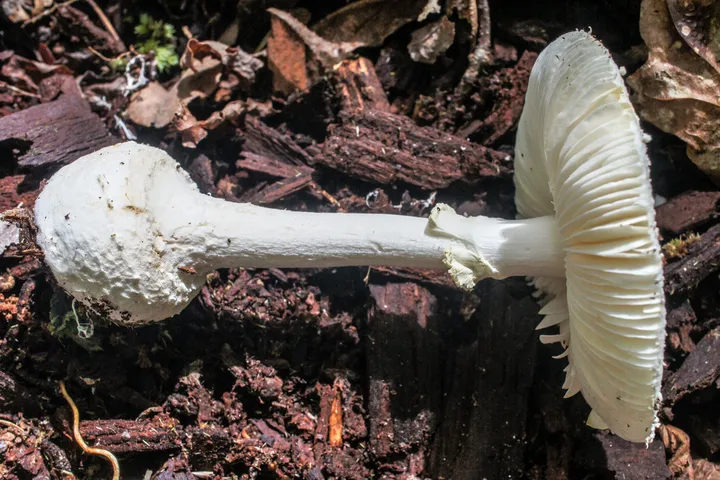
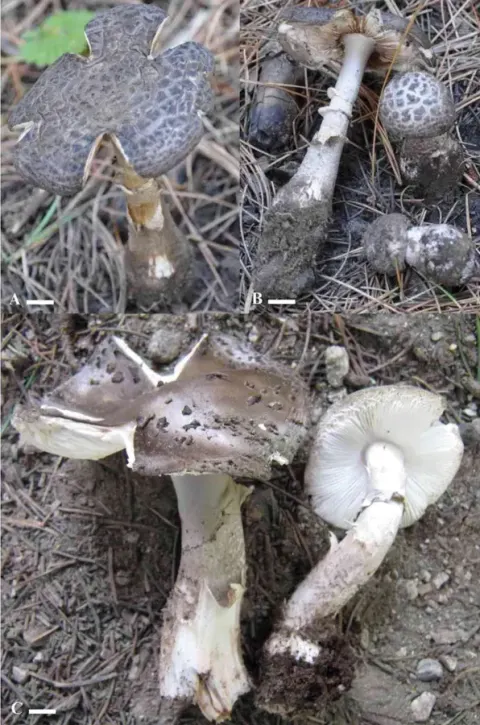
Foto yang diasosiasikan dengan Amanita abrupta pada iNaturalist. Identifikasi mengikuti sumber; bukan penentuan spesimen independen.
Kredit dan penggunaan
(c) Bill Sheehan, some rights reserved (CC BY-SA), uploaded by Bill Sheehan
Ukuran dan format gambar disesuaikan tanpa pemotongan, retus, atau penambahan skala. Lisensi sumber dipertahankan.
Sumber profil
- [1] Amanita abrupta — Wikipedia (en)
- [2] Catalogue of Life Base2026-09-11 — Amanita abrupta
- [3] Dokumentasi visual — Amanita abrupta
- [4] Dokumentasi visual — Amanita abrupta
Rujukan halaman ini
Fungi. Amanita abrupta. Rilis data fungi-2026-10-12-expansion-2. https://fungi-atlas.mgadib.chatgpt.site/jamur/amanita-abrupta/.
Status: impor sumber; pemeriksaan editorial per profil belum selesai. Untuk klaim biologis, gunakan rujukan pada bagian terkait dan periksa konteks sumber aslinya.