01 / Morfologi

Ciri dan struktur

Like all Amanita species, the bulk of the organism lies beneath the ground as a symbiotic partner to certain species of trees. The fruit body of the fungus is a reproductive structure that appears when appropriate environmental conditions of moisture, temperature, and nutrient availability are met. The cap of A. regalis is 10 to 25 cm broad, and, depending on the stage of its development, can range in shape from spherical to convex to somewhat flattened. The color is yellowish brown, and it is densely covered with yellowish to light ochraceous scabby warts, which are arranged in almost regular concentric rings. The rings are a remnant of the volva left behind during expansion of the young fruit body. The cap is fleshy and when mature has grooves on the margin, which can extend 1.5 to 2 cm. The cap cuticle may be separated from the cap by peeling, to almost the center. The gills are crowded close together, free from attachment to the stem, and white with a creamy yellow tinge. The edges of the gills are floccose, meaning they have tufts of soft wooly hairs—another volval remnant. The stem of a mature individual is typically between 10 and 20 cm long and 1.5 to 2 cm wide, and spreads at the base into a bulb ornamented with 2–4 rings of small squamulose, lemon or ochre-yellow warts. The entire stem and ring are not pure white but have a faint yellowish tinge. The flesh is whitish, faintly yellowish in the stem, and golden yellow under the cuticle of the cap. It does not change color in air, and has an insignificant taste and smell. The spores are broadly ellipsoid to roughly spherical, hyaline (translucent), smooth, and have dimensions of 9–12 by 7–8 μm.

Sebagian uraian ditampilkan dalam bahasa sumber; terjemahannya belum tersedia atau belum lolos pemeriksaan.

Rujukan: [1]

Pengukuran mengikuti objek, spesimen atau kultur, dan metode yang disebutkan sumber. Baca uraian asli untuk konteks lengkap.

02 / Kehidupan

Habitat dan peran ekologis

A. regalis lebih umum di Eropa utara daripada selatan, dan belum dilaporkan dari Eropa selatan dan barat. Selain umum di Scandinavian countries, telah dikumpulkan di Jerman, Hongaria, Latvia, Rusia, Slowakia, dan Korea. Di Amerika Utara, distribusiannya terbatas di Alaska, di mana biasanya ditemukan di atas garis pohon. It is a rare species typically found growing on the ground in mountainous forests, both deciduous and coniferous. Ini adalah jamur mikoriza, dan ada dalam hubungan simbiosis dengan spesies pohon tertentu. Sistem benang halus di bawah tanah, mycelium, membungkus akar pohon dan memasok mineral yang dibutuhkan, elemen jejak dan air dari tanah, sementara pohon, pada gilirannya, memasok jamur dengan makanan dari persediaan sendiri, yang dihasilkannya melalui fotosintesis. A. regalis telah terbukti secara eksperimental untuk membentuk mikorhiza dengan birch, Scots pine, Mountain pine, dan Norway spruce. Fruit bodies telah dilaporkan tumbuh di cincin peri.

Sebagian uraian ditampilkan dalam bahasa sumber; terjemahannya belum tersedia atau belum lolos pemeriksaan.

Rujukan: [1]

Habitat atau konteks temuan
hutan
Substrat
tanah
Peran atau konteks
Mitra tumbuhan
Temukan hubungan serupa
03 / Siklus hidup

Reproduksi

Like all Amanita species, the bulk of the organism lies beneath the ground as a symbiotic partner to certain species of trees. The fruit body of the fungus is a reproductive structure that appears when appropriate environmental conditions of moisture, temperature, and nutrient availability are met. The cap of A. regalis is 10 to 25 cm broad, and, depending on the stage of its development, can range in shape from spherical to convex to somewhat flattened. The color is yellowish brown, and it is densely covered with yellowish to light ochraceous scabby warts, which are arranged in almost regular concentric rings. The rings are a remnant of the volva left behind during expansion of the young fruit body.

Sebagian uraian ditampilkan dalam bahasa sumber; terjemahannya belum tersedia atau belum lolos pemeriksaan.

Rujukan: [1]

Sinonim menurut acuan taksonomi rilis: Agaricus muscarius regalis; Agaricus muscarius var. umbrinus; Amanita emilii; Amanita muscaria f. regalis; Amanita muscaria var. regalis; Amanita muscaria var. umbrina; Amanita regalis f. umbrina; Amanita umbrina; Amanitaria muscaria var. regalis
04 / Batas informasi

Catatan identitas dan cakupan

  • Nama diterima mengikuti Catalogue of Life Base2026-09-11; uraian mempertahankan konsep dan nama sumber aslinya.
  • Original geographic, specimen and life-cycle scope retained; source import awaits individual editorial review.
  • Impor dan terjemahan otomatis belum diperiksa editorial per profil. Struktur reproduktif yang disebutkan tidak membuktikan seluruh siklus hidup diketahui.
  • Pengukuran pada uraian mengikuti spesimen, kultur, dan metode sumber; angka tidak diperluas ke semua populasi.

Catatan distribusi dalam narasi mengikuti sumbernya. Dokumentasi spesimen atau foto mengikuti catatan sumber. Bukti wilayah Indonesia dan penilaian konservasi tidak disimpulkan dari gambar.

05 / Dokumentasi

Melihat dengan konteks

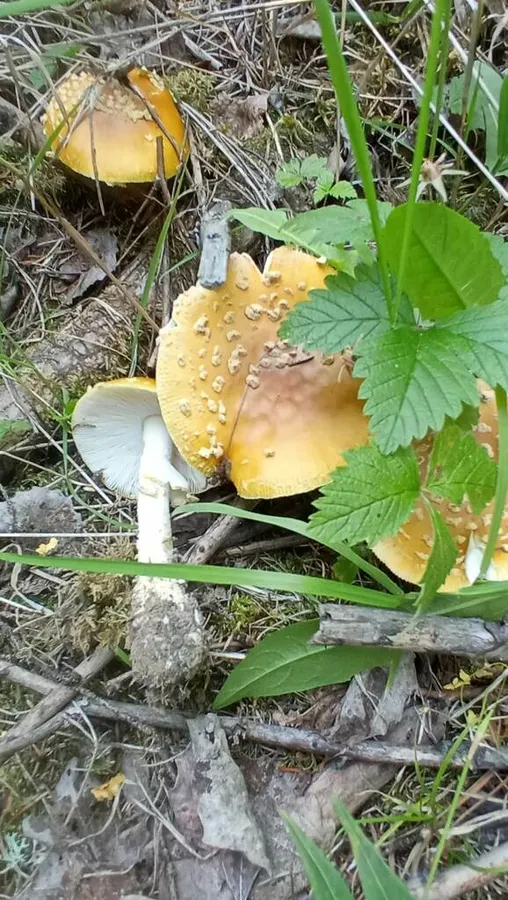
Dokumentasi Amanita regalis menurut asosiasi foto pada record takson iNaturalist. Kredit: Tatiana Strus. Identitas mengikuti sumber; bukan penentuan spesimen independen.

Jenis
Fotografi
Kredit
(c) Tatiana Strus, some rights reserved (CC BY), uploaded by Tatiana Strus
Lisensi
CC BY 4.0
Sumber media
Buka entri sumber

Gambar menunjukkan objek menurut identifikasi sumber, bukan verifikasi independen spesimen oleh Fungi. Tidak ada skala baru yang ditambahkan.

06 / Rujukan

Sumber profil

  1. [1] Amanita regalis — Wikipedia (en)Bagian sumber: Frozen revision 1355157178
    Tanggal penghimpunan sumber: 2026-10-12
    Teks sumber: CC BY-SA4.0 · Wikipedia contributors
  2. [2] Catalogue of Life Base2026-09-11 — Amanita regalisBagian sumber: ColDP NameUsage.tsv ID 5TYQV; accepted species; source 2073
    Tanggal penghimpunan sumber: 2026-10-12
  3. [3] Dokumentasi visual — Amanita regalisBagian sumber: Individual media record; identification follows the source, not independent determination
    Tanggal penghimpunan sumber: 2026-10-12
    Media sumber: CC BY 4.0 · (c) Tatiana Strus, some rights reserved (CC BY), uploaded by Tatiana Strus

Adaptasi teks: CC BY-SA 4.0. Wikipedia contributors — Amanita regalis — Wikipedia (en)

Uraian asli dan riwayat sumber

Riwayat atau halaman sumber

Ringkasan sumber

Amanita regalis, commonly known as the royal fly agaric or the king of Sweden Amanita, is a species of fungus in the family Amanitaceae. A. regalis has a scabby liver-brown cap and a stem which is yellow-ochre at the base, with patches or rings of patches. The fruit bodies somewhat resemble the smaller A. muscaria (fly agaric), which it was formerly regarded as a variety of. A. regalis is common in Scandinavia and also found in eastern and northern Europe. Its North American distribution is restricted to Alaska.

Revisi sumber

Morfologi sumber

Like all Amanita species, the bulk of the organism lies beneath the ground as a symbiotic partner to certain species of trees. The fruit body of the fungus is a reproductive structure that appears when appropriate environmental conditions of moisture, temperature, and nutrient availability are met. The cap of A. regalis is 10 to 25 cm broad, and, depending on the stage of its development, can range in shape from spherical to convex to somewhat flattened. The color is yellowish brown, and it is densely covered with yellowish to light ochraceous scabby warts, which are arranged in almost regular concentric rings. The rings are a remnant of the volva left behind during expansion of the young fruit body. The cap is fleshy and when mature has grooves on the margin, which can extend 1.5 to 2 cm. The cap cuticle may be separated from the cap by peeling, to almost the center. The gills are crowded close together, free from attachment to the stem, and white with a creamy yellow tinge. The edges of the gills are floccose, meaning they have tufts of soft wooly hairs—another volval remnant. The stem of a mature individual is typically between 10 and 20 cm long and 1.5 to 2 cm wide, and spreads at the base into a bulb ornamented with 2–4 rings of small squamulose, lemon or ochre-yellow warts. The entire stem and ring are not pure white but have a faint yellowish tinge. The flesh is whitish, faintly yellowish in the stem, and golden yellow under the cuticle of the cap. It does not change color in air, and has an insignificant taste and smell. The spores are broadly ellipsoid to roughly spherical, hyaline (translucent), smooth, and have dimensions of 9–12 by 7–8 μm.

Revisi sumber

Ekologi sumber

A. regalis is more common in northern than south Europe, and it has not been reported from south and west Europe. In addition to being common in Scandinavian countries, it has been collected in Germany, Hungary, Latvia, Russia, Slovakia, and Korea. In North America, its distribution is restricted to Alaska, where it is usually found above the tree line. It is a rare species typically found growing on the ground in mountainous forests, both deciduous and coniferous. It is a mycorrhizal fungus, and exists in a symbiotic relationship with certain tree species. The system of fine below-ground threads, the mycelium, envelopes the roots of the trees and supplies them with needed minerals, trace elements and water from the soil, while the tree, in turn, supplies the fungus with food from its own supply, which it produces through photosynthesis. A. regalis has been shown experimentally to form mycorrhiza with birch, Scots pine, Mountain pine, and Norway spruce. Fruit bodies have been reported to grow in fairy rings.

Revisi sumber

Struktur reproduksi sumber

Like all Amanita species, the bulk of the organism lies beneath the ground as a symbiotic partner to certain species of trees. The fruit body of the fungus is a reproductive structure that appears when appropriate environmental conditions of moisture, temperature, and nutrient availability are met. The cap of A. regalis is 10 to 25 cm broad, and, depending on the stage of its development, can range in shape from spherical to convex to somewhat flattened. The color is yellowish brown, and it is densely covered with yellowish to light ochraceous scabby warts, which are arranged in almost regular concentric rings. The rings are a remnant of the volva left behind during expansion of the young fruit body.

Revisi sumber

Rujukan halaman ini

Fungi. Amanita regalis. Rilis data fungi-2026-10-12-expansion-2. https://fungi-atlas.mgadib.chatgpt.site/jamur/amanita-regalis/.

Status: impor sumber; pemeriksaan editorial per profil belum selesai. Untuk klaim biologis, gunakan rujukan pada bagian terkait dan periksa konteks sumber aslinya.