Ciri dan struktur
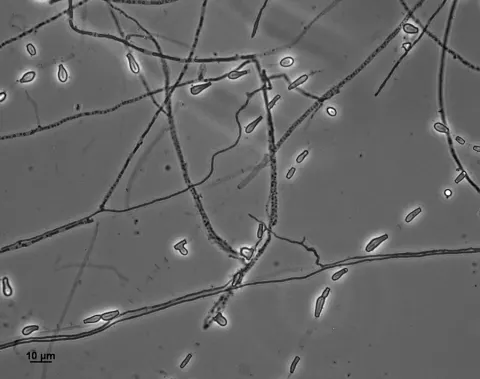
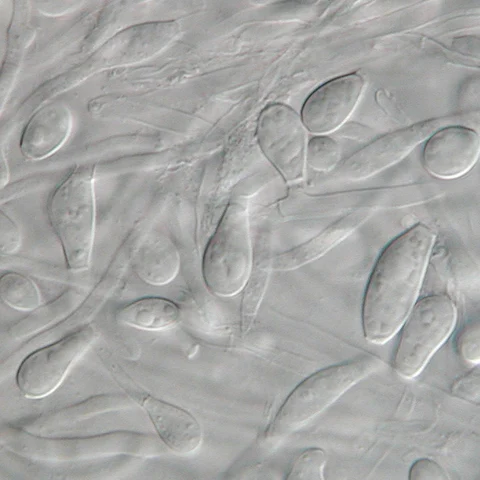
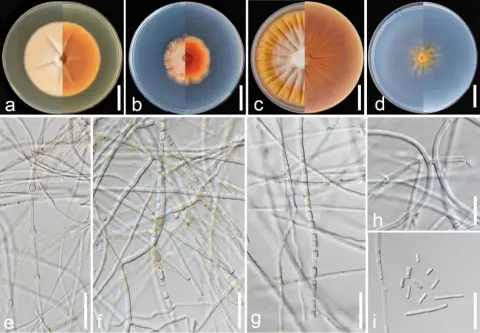
The sexual form of this fungus produces white spherical dispersed ascomata (cleistothecia), which turn brown as the ascocarps (126-883 μm in diameter) mature. The asci containing 8 ascospores are oval, and around 10-12×7-8 μm in dimension. The spherical, white spores have web-like texture on the surface and are 4-5 μm in diameter. Compared to Amauroascus pseudoreticulatus-patellis which is closely related and has a similar appearance, A. kuehnii has shallower pits on the surface of the spores. Surrounding the ascomata are the peridial hyphae, which appear thin-walled, yellow to pale brown, and septate. In occasion, pigment granules cause the presence of Brown spots. In the asexual state, A. kuehnii colonies first appear white, with a raised bump in the centre. Arthroconidia formed from smooth, straight, branched pale white hyphae, are around 2.8-8.4×2-4 μm in dimension. The fungus grows rapidly in culture. On PDA, colonies are white, sparse and delicate. Reverse of the colonies appears pink with occasional black patches. Cleistothecia appear as white tufts at the periphery of the colony and form a yellow crust, which soon spread throughout the colony. On Sabouraud agar, colonies also appears white, sparse and delicate, whereas reverse appears dull red. Cleistothecia change from white to yellow to light brown over time. On CER under 21-25 °C, white or pale yellow cottony colonies form and turn granular in older portions. Reverse of the colonies appears uncoloured. On dilute salt acidic medium (DSA) under 25-28 °C, colonies appear yellow to brown with brown spots adjacent to the hairs.
Habitat dan peran ekologis
A. kuehnii is a rare fungus found in North America and Mexico, with a few reports from Europe. Due to the limited available isolates, conclusion of its habitat cannot be drawn. Although it was mostly discovered in lizard or bat dung and keratinous soil, strains have been isolated from keratinous surfaces of animals such as fowl and deer horns. None of the species in Amauroascus is known to be a pathogen of animals, and no strains have been isolated from humans.
- Habitat atau konteks temuan
- Informasi belum tersedia pada sumber rilis ini.
- Substrat
- Informasi belum tersedia pada sumber rilis ini.
- Peran atau konteks
- Belum dikategorikan pada rilis ini.
Reproduksi
The sexual form of this fungus produces white spherical dispersed ascomata (cleistothecia), which turn brown as the ascocarps (126-883 μm in diameter) mature. The asci containing 8 ascospores are oval, and around 10-12×7-8 μm in dimension. The spherical, white spores have web-like texture on the surface and are 4-5 μm in diameter. Compared to Amauroascus pseudoreticulatus-patellis which is closely related and has a similar appearance, A. kuehnii has shallower pits on the surface of the spores. Surrounding the ascomata are the peridial hyphae, which appear thin-walled, yellow to pale brown, and septate. In occasion, pigment granules cause the presence of Brown spots. In the asexual state, A. kuehnii colonies first appear white, with a raised bump in the centre.
Catatan identitas dan cakupan
- Nama diterima mengikuti Catalogue of Life Base2026-09-11; uraian mempertahankan konsep dan nama sumber aslinya.
- Original geographic, specimen and life-cycle scope retained; source import awaits individual editorial review.
- Impor dan terjemahan otomatis belum diperiksa editorial per profil. Struktur reproduktif yang disebutkan tidak membuktikan seluruh siklus hidup diketahui.
- Pengukuran pada uraian mengikuti spesimen, kultur, dan metode sumber; angka tidak diperluas ke semua populasi.
Catatan distribusi dalam narasi mengikuti sumbernya. Dokumentasi spesimen atau foto mengikuti catatan sumber. Bukti wilayah Indonesia dan penilaian konservasi tidak disimpulkan dari gambar.
Melihat dengan konteks
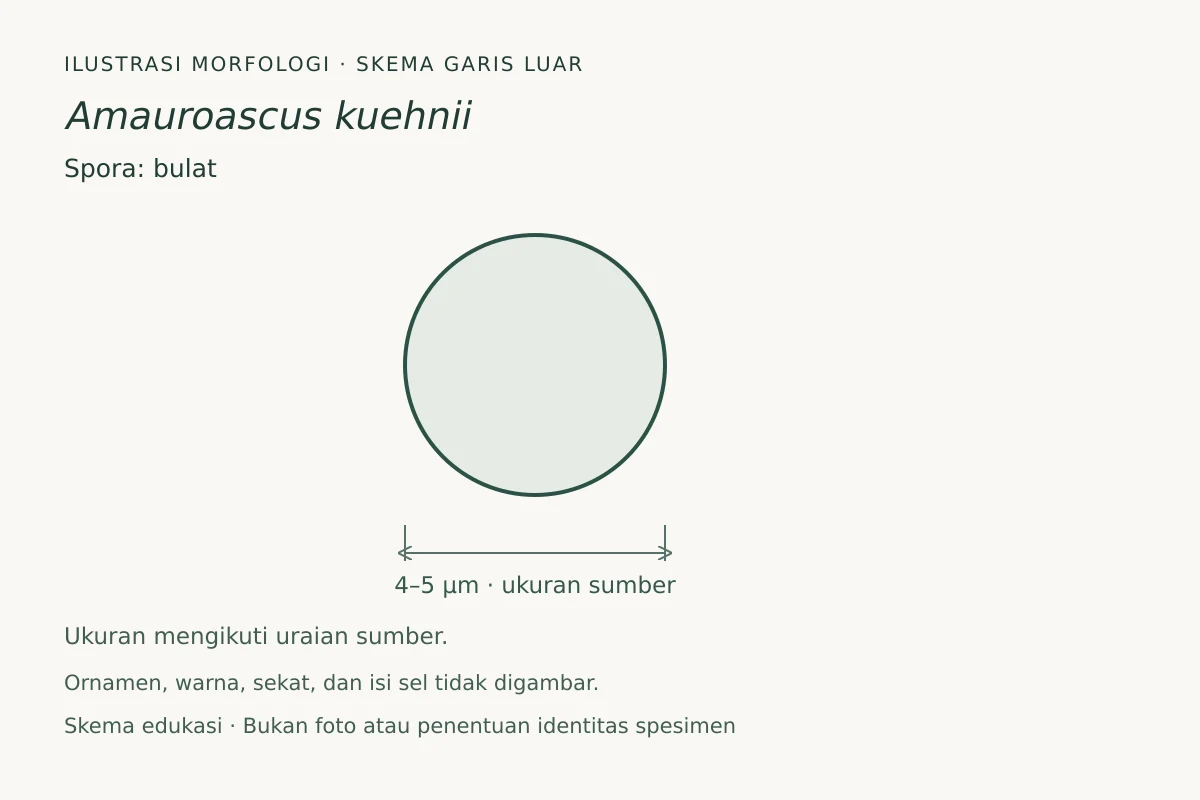
Ilustrasi skematis garis luar spora Amauroascus kuehnii, berdasarkan uraian sumber; ukuran yang dilaporkan 4–5 µm. Proporsi disederhanakan, bukan salinan satu spesimen. Ornamen permukaan, warna, sekat, dan isi sel tidak direkonstruksi. Spora bulat berdiameter 4–5 µm. Tekstur seperti jala dan lekukan permukaan tidak digambar. Ornamen, warna, sekat, dan isi sel tidak digambar. Skema edukasi, bukan alat identifikasi.
- Jenis
- Ilustrasi skematis
- Kredit
- Fungi, ilustrasi orisinal (2026); fakta morfologi berdasarkan Wikipedia contributors
- Lisensi
- CC BY-SA 4.0
- Sumber media
- Buka entri sumber
Sumber profil
Rujukan halaman ini
Fungi. Amauroascus kuehnii. Rilis data fungi-2026-10-12-expansion-2. https://fungi-atlas.mgadib.chatgpt.site/jamur/amauroascus-kuehnii/.
Status: impor sumber; pemeriksaan editorial per profil belum selesai. Untuk klaim biologis, gunakan rujukan pada bagian terkait dan periksa konteks sumber aslinya.