Ciri dan struktur
Ampelomyces quisqualis is a mycoparasite of powdery mildews. It overwinters or survives in the absence of a suitable host as pycnidia. Raindrops cause conidia to be expelled from ripe pycnidia and these may splash onto nearby powdery mildew. Infection is favoured by humid conditions and temperatures in the range 20 to 30 °C and may occur within 24 hours. Hyphae, conidiophores and immature cleistothecia can all be infected, the mycoparasite entering through the cell walls, and the previously transparent tissues turning milky-white. The infection spreads through the mildew colony for seven to ten days, after which time pycnidia begin to form. Their formation is complete in two to four days, when infected cells die, swelling considerably and turning brownish. Raindrops cause the release of conidia from the mature pycnidia which can cause secondary infections. There may be several generations of the mycoparasite during the growing season.
Habitat dan peran ekologis
Ampelomyces quisqualis telah terbukti menyerang lebih dari 64 spesies jamur bubuk di genus Brasiliomyces, Erysiphe, Phyllactinia, dan Podosphaera. Powdery mildews dalam keluarga Erysiphaceae are luas dan beragam. Bubuk ini terjadi di setiap benua bar Antarctica and telah tercatat pada lebih dari 1000 spesies tumbuhan.
- Habitat atau konteks temuan
- Informasi belum tersedia pada sumber rilis ini.
- Substrat
- Informasi belum tersedia pada sumber rilis ini.
- Peran atau konteks
- Belum dikategorikan pada rilis ini.
Reproduksi
Ampelomyces quisqualis is a mycoparasite of powdery mildews. It overwinters or survives in the absence of a suitable host as pycnidia. Raindrops cause conidia to be expelled from ripe pycnidia and these may splash onto nearby powdery mildew. Infection is favoured by humid conditions and temperatures in the range 20 to 30 °C and may occur within 24 hours. Hyphae, conidiophores and immature cleistothecia can all be infected, the mycoparasite entering through the cell walls, and the previously transparent tissues turning milky-white. The infection spreads through the mildew colony for seven to ten days, after which time pycnidia begin to form. Their formation is complete in two to four days, when infected cells die, swelling considerably and turning brownish.
Catatan identitas dan cakupan
- Nama diterima mengikuti Catalogue of Life Base2026-09-11; uraian mempertahankan konsep dan nama sumber aslinya.
- Original geographic, specimen and life-cycle scope retained; source import awaits individual editorial review.
- Impor dan terjemahan otomatis belum diperiksa editorial per profil. Struktur reproduktif yang disebutkan tidak membuktikan seluruh siklus hidup diketahui.
- Pengukuran pada uraian mengikuti spesimen, kultur, dan metode sumber; angka tidak diperluas ke semua populasi.
Catatan distribusi dalam narasi mengikuti sumbernya. Dokumentasi spesimen atau foto mengikuti catatan sumber. Bukti wilayah Indonesia dan penilaian konservasi tidak disimpulkan dari gambar.
Melihat dengan konteks
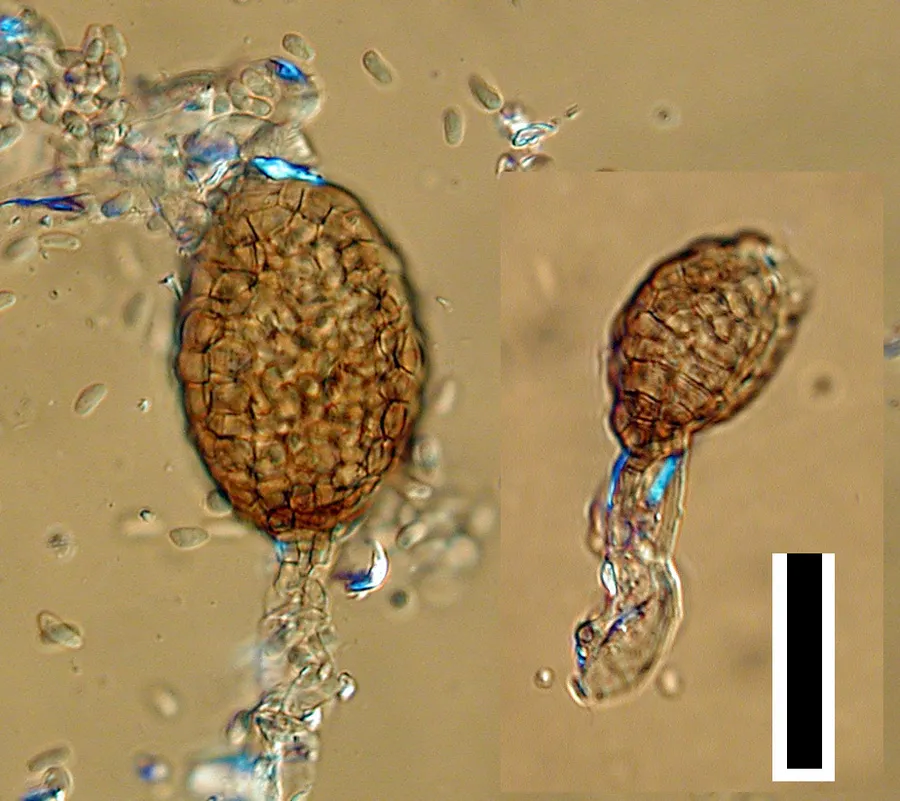
Dokumentasi Ampelomyces quisqualis menurut asosiasi foto pada record takson iNaturalist. Kredit: Jerry Cooper. Identitas mengikuti sumber; bukan penentuan spesimen independen.
- Jenis
- Fotografi
- Kredit
- (c) Jerry Cooper, some rights reserved (CC BY), uploaded by Jerry Cooper
- Lisensi
- CC BY 4.0
- Sumber media
- Buka entri sumber
Dokumentasi tambahan
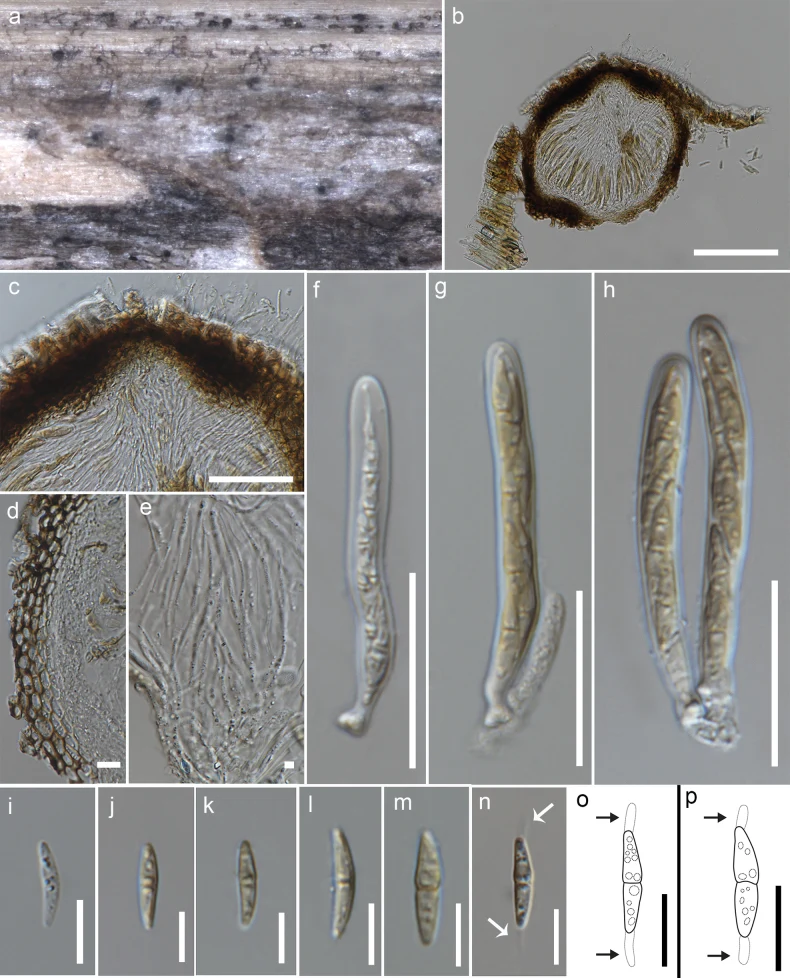
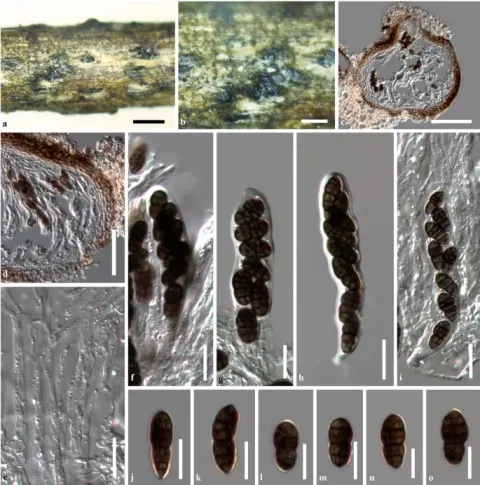
Ampelomyces quisqualis (MFLU 23-0142) a ascomata on host substrate b vertical section of an ascoma c section of an ostiole d peridium e pseudoparaphyses f–h asci i–m ascospores n–p hyaline appendages at both ends of ascospores (shown by arrows). Scale bars: 100 µm (b); 50 µm (c); 10 µm (d, i–p,); 3 µm (e); 30 µm (f–h).
Kredit dan penggunaan
Digvijayini Bundhun, E. B. Gareth Jones, Ruvishika S. Jayawardena, Erio Camporesi, Dhanushka N. Wanasinghe, Indunil C. Senanayake, Vinodhini Thiyagaraja, Kevin D. Hyde
Ukuran dan format gambar disesuaikan tanpa pemotongan, retus, atau penambahan skala. Lisensi sumber dipertahankan.
Sumber profil
- [1] Ampelomyces quisqualis — Wikipedia (en)
- [2] Catalogue of Life Base2026-09-11 — Ampelomyces quisqualis
- [3] Dokumentasi visual — Ampelomyces quisqualis
- [4] Dokumentasi visual — Ampelomyces quisqualis
Rujukan halaman ini
Fungi. Ampelomyces quisqualis. Rilis data fungi-2026-10-12-expansion-2. https://fungi-atlas.mgadib.chatgpt.site/jamur/ampelomyces-quisqualis/.
Status: impor sumber; pemeriksaan editorial per profil belum selesai. Untuk klaim biologis, gunakan rujukan pada bagian terkait dan periksa konteks sumber aslinya.