01 / Morfologi

Ciri dan struktur

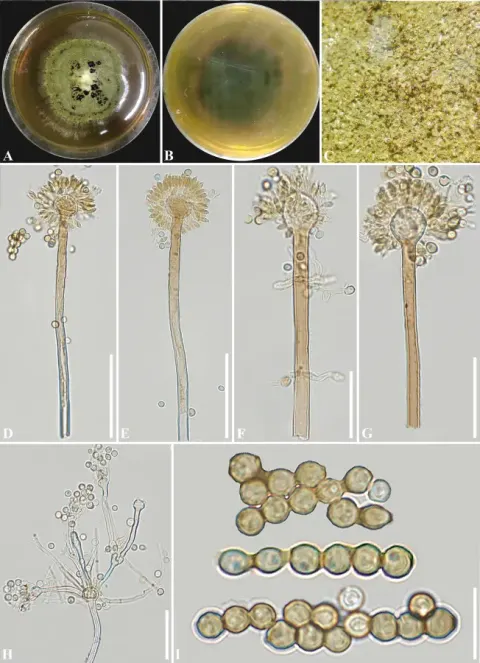
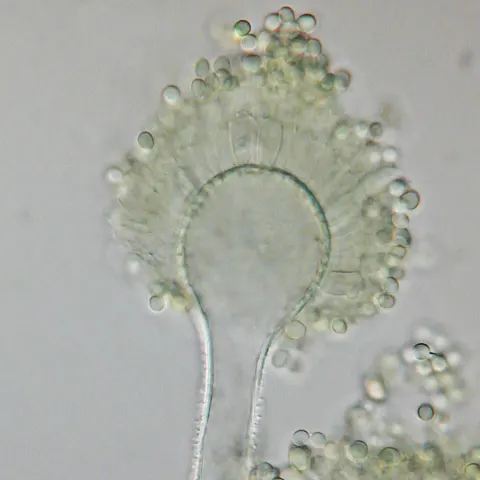
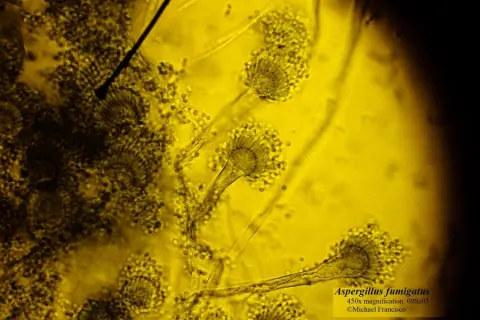
Aspergillus alabamensis produces slow growing colonies that are wooly and white becoming yellow-brown to cinnamon-brown in colour with the onset of asexual sporulation. Conidiophores are colourless and smooth with densely columnar conidial heads 30–50 μm in diameter and 150–500 μm in length. The vesicles are subglobose with a diameter of 10–16 μm. The metulae attached to the vesicles are closely packed, measuring 5.5–7.5 μm long by 1.5–2.0 μm wide. Phialides attached to the apices of the metulae are 5.0–7.0 μm long by 2.0–2.5 μm wide. The conidia arising from the tips of the phialides are slightly elliptical and smooth-walled reaching a diameter of 1.8–2.4 μm. While Aspergillus alabamensis can grow between 25–50 °C, its optimal growth temperature is 37 °C. A. alabamensis can grow in vitro on a range of growth media including potato flake agar, carnation leaf agar, Czapek's yeast autolysate agar, and malt extract agar. This species is able to utilize glucose and sucrose as sources of carbon. A. alabamensis has been cultivated on both Czapek yeast extract agar (CYA) plates and Malt Extract Agar Oxoid (MEAOX) plates. The growth morphology of the colonies can be seen in the pictures below. Aspergillus_alabamensis_cya.png|Aspergillus alabamensis growing on CYA plate Aspergillus_alabamensis_meaox.png|Aspergillus alabamensis growing on MEAOX plate

Sebagian uraian ditampilkan dalam bahasa sumber; terjemahannya belum tersedia atau belum lolos pemeriksaan.

Rujukan: [1]

Pengukuran mengikuti objek, spesimen atau kultur, dan metode yang disebutkan sumber. Baca uraian asli untuk konteks lengkap.

02 / Kehidupan

Habitat dan peran ekologis

Similar to most species of Aspergillus, the spores of A. alabamensis are readily dispersed through the air and carried across long distances in the wind. A. alabamensis, is ubiquitous, having been found in South America, North America and Europe. It shares similarities in both habitat and ecology with its sister species, A. terreus. Both are common found in soil, waste and compost. Aspergillus alabamensis is able to grow at water activities as low as those tolerated by A. terreus (e.g., aW = 0.78). Unlike closely related Aspergilli, A. alabamensis is uncommon in soil, occurring mainly in plant debris where its presence has been suggested to be exclusive of Aspergillus niger (a common saprotroph), suggesting that A. alabamensis may be a natural antagonist of the latter.

Sebagian uraian ditampilkan dalam bahasa sumber; terjemahannya belum tersedia atau belum lolos pemeriksaan.

Rujukan: [1]

Habitat atau konteks temuan
Informasi belum tersedia pada sumber rilis ini.
Substrat
tanah
Peran atau konteks
Pengurai
Temukan hubungan serupa
03 / Siklus hidup

Reproduksi

Aspergillus alabamensis produces slow growing colonies that are wooly and white becoming yellow-brown to cinnamon-brown in colour with the onset of asexual sporulation. Conidiophores are colourless and smooth with densely columnar conidial heads 30–50 μm in diameter and 150–500 μm in length. The vesicles are subglobose with a diameter of 10–16 μm. The metulae attached to the vesicles are closely packed, measuring 5.5–7.5 μm long by 1.5–2.0 μm wide. Phialides attached to the apices of the metulae are 5.0–7.0 μm long by 2.0–2.5 μm wide. The conidia arising from the tips of the phialides are slightly elliptical and smooth-walled reaching a diameter of 1.8–2.4 μm. While Aspergillus alabamensis can grow between 25–50 °C, its optimal growth temperature is 37 °C.

Sebagian uraian ditampilkan dalam bahasa sumber; terjemahannya belum tersedia atau belum lolos pemeriksaan.

Rujukan: [1]

04 / Batas informasi

Catatan identitas dan cakupan

  • Nama diterima mengikuti Catalogue of Life Base2026-09-11; uraian mempertahankan konsep dan nama sumber aslinya.
  • Original geographic, specimen and life-cycle scope retained; source import awaits individual editorial review.
  • Impor dan terjemahan otomatis belum diperiksa editorial per profil. Struktur reproduktif yang disebutkan tidak membuktikan seluruh siklus hidup diketahui.
  • Pengukuran pada uraian mengikuti spesimen, kultur, dan metode sumber; angka tidak diperluas ke semua populasi.

Catatan distribusi dalam narasi mengikuti sumbernya. Dokumentasi spesimen atau foto mengikuti catatan sumber. Bukti wilayah Indonesia dan penilaian konservasi tidak disimpulkan dari gambar.

05 / Dokumentasi

Melihat dengan konteks

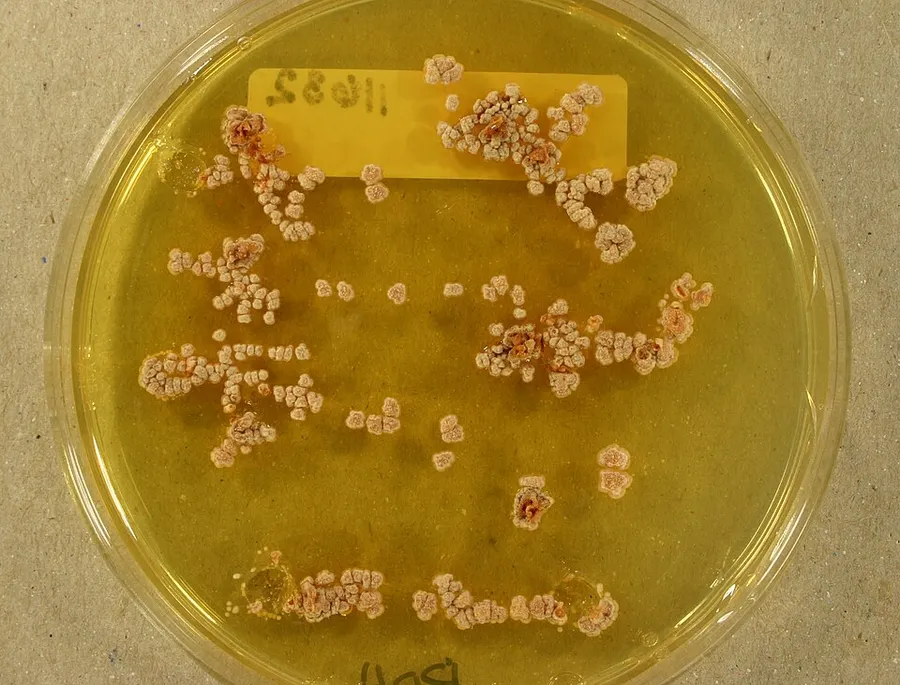
Dokumentasi Aspergillus alabamensis dari Wikimedia Commons. Aspergillus alabamensis UAMH 11632 colony on potato dextrose agar incubated at 30 °C for 21 days Identifikasi mengikuti record berkas sumber.

Jenis
Fotografi
Kredit
Medmyco
Sumber media
Buka entri sumber

Gambar menunjukkan objek menurut identifikasi sumber, bukan verifikasi independen spesimen oleh Fungi. Tidak ada skala baru yang ditambahkan.

06 / Rujukan

Sumber profil

  1. [1] Aspergillus alabamensis — Wikipedia (en)Bagian sumber: Frozen revision 1365306288
    Tanggal penghimpunan sumber: 2026-10-12
    Teks sumber: CC BY-SA4.0 · Wikipedia contributors
  2. [2] Catalogue of Life Base2026-09-11 — Aspergillus alabamensisBagian sumber: ColDP NameUsage.tsv ID HBV5; accepted species; source 2073
    Tanggal penghimpunan sumber: 2026-10-12
  3. [3] Dokumentasi visual — Aspergillus alabamensisBagian sumber: Individual media record; identification follows the source, not independent determination
    Tanggal penghimpunan sumber: 2026-10-12
    Media sumber: CC BY-SA 4.0 · Medmyco

Adaptasi teks: CC BY-SA 4.0. Wikipedia contributors — Aspergillus alabamensis — Wikipedia (en)

Uraian asli dan riwayat sumber

Riwayat atau halaman sumber

Ringkasan sumber

Aspergillus alabamensis produces slow growing colonies that are wooly and white becoming yellow-brown to cinnamon-brown in colour with the onset of asexual sporulation. Conidiophores are colourless and smooth with densely columnar conidial heads 30–50 μm in diameter and 150–500 μm in length. The vesicles are subglobose with a diameter of 10–16 μm. The metulae attached to the vesicles are closely packed, measuring 5.5–7.5 μm long by 1.5–2.0 μm wide. Phialides attached to the apices of the metulae are 5.0–7.0 μm long by 2.0–2.5 μm wide.

Revisi sumber

Morfologi sumber

Aspergillus alabamensis produces slow growing colonies that are wooly and white becoming yellow-brown to cinnamon-brown in colour with the onset of asexual sporulation. Conidiophores are colourless and smooth with densely columnar conidial heads 30–50 μm in diameter and 150–500 μm in length. The vesicles are subglobose with a diameter of 10–16 μm. The metulae attached to the vesicles are closely packed, measuring 5.5–7.5 μm long by 1.5–2.0 μm wide. Phialides attached to the apices of the metulae are 5.0–7.0 μm long by 2.0–2.5 μm wide. The conidia arising from the tips of the phialides are slightly elliptical and smooth-walled reaching a diameter of 1.8–2.4 μm. While Aspergillus alabamensis can grow between 25–50 °C, its optimal growth temperature is 37 °C. A. alabamensis can grow in vitro on a range of growth media including potato flake agar, carnation leaf agar, Czapek's yeast autolysate agar, and malt extract agar. This species is able to utilize glucose and sucrose as sources of carbon. A. alabamensis has been cultivated on both Czapek yeast extract agar (CYA) plates and Malt Extract Agar Oxoid (MEAOX) plates. The growth morphology of the colonies can be seen in the pictures below. Aspergillus_alabamensis_cya.png|Aspergillus alabamensis growing on CYA plate Aspergillus_alabamensis_meaox.png|Aspergillus alabamensis growing on MEAOX plate

Revisi sumber

Ekologi sumber

Similar to most species of Aspergillus, the spores of A. alabamensis are readily dispersed through the air and carried across long distances in the wind. A. alabamensis, is ubiquitous, having been found in South America, North America and Europe. It shares similarities in both habitat and ecology with its sister species, A. terreus. Both are common found in soil, waste and compost. Aspergillus alabamensis is able to grow at water activities as low as those tolerated by A. terreus (e.g., aW = 0.78). Unlike closely related Aspergilli, A. alabamensis is uncommon in soil, occurring mainly in plant debris where its presence has been suggested to be exclusive of Aspergillus niger (a common saprotroph), suggesting that A. alabamensis may be a natural antagonist of the latter.

Revisi sumber

Struktur reproduksi sumber

Aspergillus alabamensis produces slow growing colonies that are wooly and white becoming yellow-brown to cinnamon-brown in colour with the onset of asexual sporulation. Conidiophores are colourless and smooth with densely columnar conidial heads 30–50 μm in diameter and 150–500 μm in length. The vesicles are subglobose with a diameter of 10–16 μm. The metulae attached to the vesicles are closely packed, measuring 5.5–7.5 μm long by 1.5–2.0 μm wide. Phialides attached to the apices of the metulae are 5.0–7.0 μm long by 2.0–2.5 μm wide. The conidia arising from the tips of the phialides are slightly elliptical and smooth-walled reaching a diameter of 1.8–2.4 μm. While Aspergillus alabamensis can grow between 25–50 °C, its optimal growth temperature is 37 °C.

Revisi sumber

Rujukan halaman ini

Fungi. Aspergillus alabamensis. Rilis data fungi-2026-10-12-expansion-2. https://fungi-atlas.mgadib.chatgpt.site/jamur/aspergillus-alabamensis/.

Status: impor sumber; pemeriksaan editorial per profil belum selesai. Untuk klaim biologis, gunakan rujukan pada bagian terkait dan periksa konteks sumber aslinya.