01 / Morfologi

Ciri dan struktur

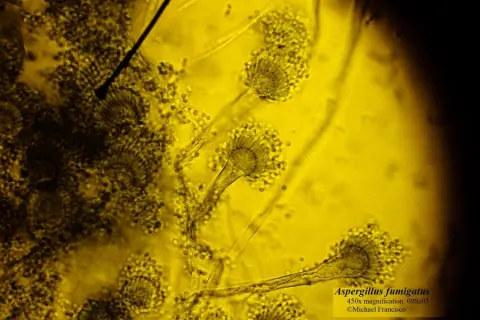
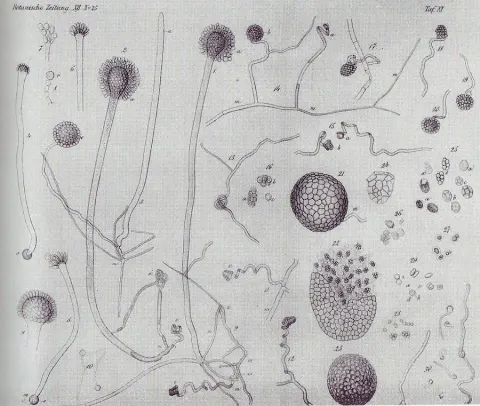
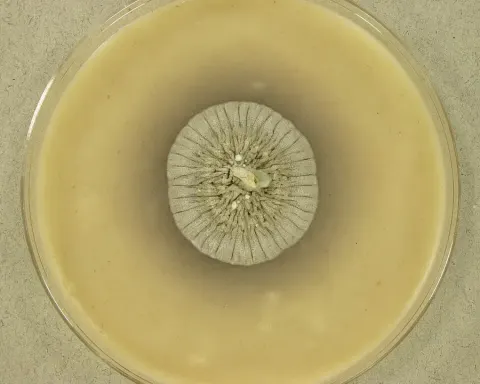
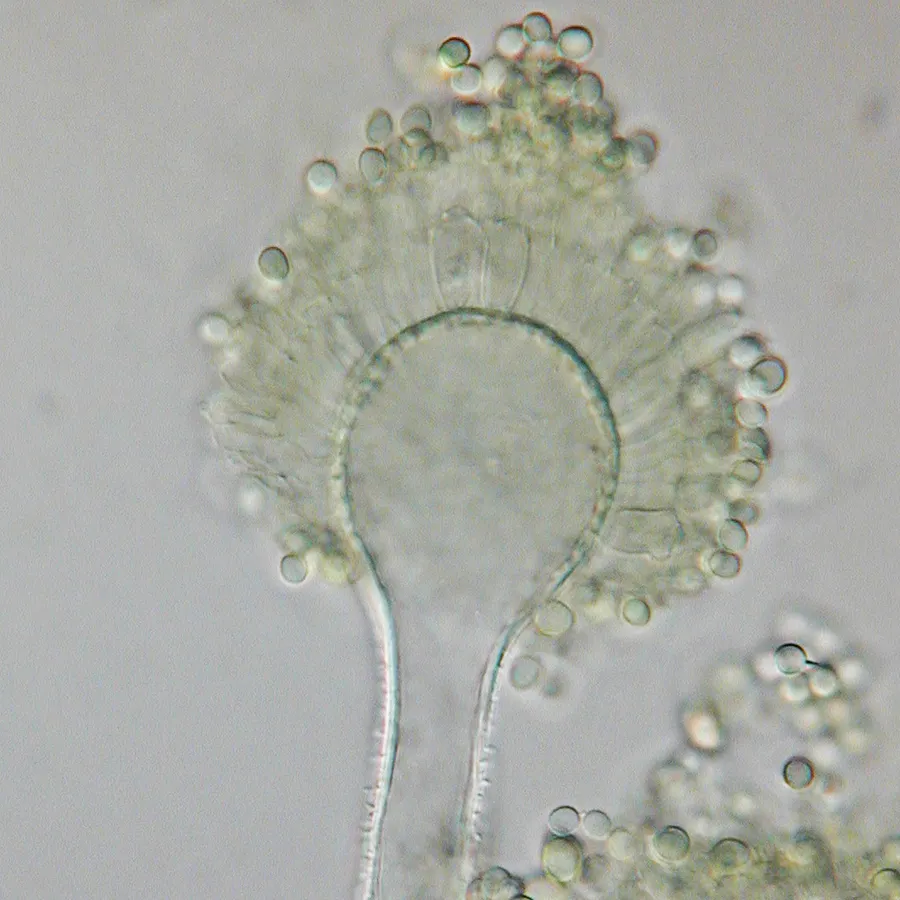
Aspergillus flavus colonies are commonly powdery masses of yellowish-green spores on the upper surface and reddish-gold on the lower surface. In both grains and legumes, infection is minimized to small areas, and discoloration and dullness of affected areas is often seen. Growth is rapid and colonies appear powdery in texture. Hyphal growth usually occurs by thread-like branching and produces mycelia. Hyphae are septate and hyaline. Once established, the mycelium secretes degradative enzymes or proteins which can break down complex nutrients (food). Individual hyphae strands are not typically seen by the unaided eye; however, conidia producing thick mycelial mats are often seen. The conidiospores are asexual spores produced by A. flavus during reproduction. The conidiophores of A. flavus are rough and colorless. Phialides are both uniseriate (arranged in one row) and biseriate. Sexual reproduction occurs between sexually compatible strains belonging to different vegetative compatibility groups. Aspergillus flavus is complex in its morphology and can be classified into two groups based on the size of sclerotia produced. Group I consists of L strains with sclerotia greater than 400 μm in diameter. Group II consists of S strains with sclerotia less than 400 μm in diameter. Both L and S strains can produce the two most common aflatoxins (B1 and B2). Unique to the S strains is the production of aflatoxin G1 and G2 which typically are not produced by A. flavus.

Sebagian uraian ditampilkan dalam bahasa sumber; terjemahannya belum tersedia atau belum lolos pemeriksaan.

Rujukan: [1]

Pengukuran mengikuti objek, spesimen atau kultur, dan metode yang disebutkan sumber. Baca uraian asli untuk konteks lengkap.

02 / Kehidupan

Habitat dan peran ekologis

Aspergillus flavus is a saprotrophic and pathogenic fungus with a cosmopolitan distribution. It is best known for its colonization of cereal grains, legumes, and tree nuts. Postharvest rot typically develops during harvest, storage, and/or transit. Its specific name flavus derives from the Latin meaning yellow, a reference to the frequently observed colour of the spores. A. flavus infections can occur while hosts are still in the field (preharvest), but often show no symptoms (dormancy) until postharvest storage or transport. A. flavus is also an opportunistic human and animal pathogen, causing aspergillosis in immunocompromised individuals.

Sebagian uraian ditampilkan dalam bahasa sumber; terjemahannya belum tersedia atau belum lolos pemeriksaan.

Rujukan: [1]

Habitat atau konteks temuan
Informasi belum tersedia pada sumber rilis ini.
Substrat
Informasi belum tersedia pada sumber rilis ini.
Peran atau konteks
Pengurai
Temukan hubungan serupa
03 / Siklus hidup

Reproduksi

Aspergillus flavus colonies are commonly powdery masses of yellowish-green spores on the upper surface and reddish-gold on the lower surface. In both grains and legumes, infection is minimized to small areas, and discoloration and dullness of affected areas is often seen. Growth is rapid and colonies appear powdery in texture. Hyphal growth usually occurs by thread-like branching and produces mycelia. Hyphae are septate and hyaline. Once established, the mycelium secretes degradative enzymes or proteins which can break down complex nutrients (food). Individual hyphae strands are not typically seen by the unaided eye; however, conidia producing thick mycelial mats are often seen. The conidiospores are asexual spores produced by A. flavus during reproduction.

Sebagian uraian ditampilkan dalam bahasa sumber; terjemahannya belum tersedia atau belum lolos pemeriksaan.

Rujukan: [1]

Sinonim menurut acuan taksonomi rilis: Aspergillus effusus; Aspergillus fasciculatus; Aspergillus flavus f. fulvus; Aspergillus flavus f. maydis; Aspergillus flavus var. microviridicitrinus; Aspergillus flavus var. oryzae; Aspergillus flavus var. parvisclerotigenus; Aspergillus humus; Aspergillus luteus; Aspergillus microviridicitrinus; Aspergillus oryzae; Aspergillus oryzae var. basidiferus; Aspergillus oryzae var. brunneus; Aspergillus oryzae var. effusus; Aspergillus oryzae var. pseudoflavus; Aspergillus oryzae var. viridis; Aspergillus oryzae var. wehmeri; Aspergillus parvisclerotigenus; Aspergillus pseudoflavus; Aspergillus variabilis; Aspergillus wehmeri; Eurotium oryzae; Monilia flava; Petromyces flavus; Pyrobolus oryzae; Sterigmatocystis lutea; Sterigmatocystis pseudoflava; Sterigmatocystis variabilis
04 / Batas informasi

Catatan identitas dan cakupan

  • Nama diterima mengikuti Catalogue of Life Base2026-09-11; uraian mempertahankan konsep dan nama sumber aslinya.
  • Original geographic, specimen and life-cycle scope retained; source import awaits individual editorial review.
  • Impor dan terjemahan otomatis belum diperiksa editorial per profil. Struktur reproduktif yang disebutkan tidak membuktikan seluruh siklus hidup diketahui.
  • Pengukuran pada uraian mengikuti spesimen, kultur, dan metode sumber; angka tidak diperluas ke semua populasi.

Catatan distribusi dalam narasi mengikuti sumbernya. Dokumentasi spesimen atau foto mengikuti catatan sumber. Bukti wilayah Indonesia dan penilaian konservasi tidak disimpulkan dari gambar.

05 / Dokumentasi

Melihat dengan konteks

Dokumentasi Aspergillus flavus menurut asosiasi foto pada record takson iNaturalist. Kredit: Medmyco. Identitas mengikuti sumber; bukan penentuan spesimen independen.

Jenis
Fotografi
Kredit
(c) Medmyco, some rights reserved (CC BY-SA)
Sumber media
Buka entri sumber

Gambar menunjukkan objek menurut identifikasi sumber, bukan verifikasi independen spesimen oleh Fungi. Tidak ada skala baru yang ditambahkan.

06 / Rujukan

Sumber profil

  1. [1] Aspergillus flavus — Wikipedia (en)Bagian sumber: Frozen revision 1361602336
    Tanggal penghimpunan sumber: 2026-10-12
    Teks sumber: CC BY-SA4.0 · Wikipedia contributors
  2. [2] Catalogue of Life Base2026-09-11 — Aspergillus flavusBagian sumber: ColDP NameUsage.tsv ID HC2X; accepted species; source 2073
    Tanggal penghimpunan sumber: 2026-10-12
  3. [3] Dokumentasi visual — Aspergillus flavusBagian sumber: Individual media record; identification follows the source, not independent determination
    Tanggal penghimpunan sumber: 2026-10-12
    Media sumber: CC BY-SA 4.0 · (c) Medmyco, some rights reserved (CC BY-SA)

Adaptasi teks: CC BY-SA 4.0. Wikipedia contributors — Aspergillus flavus — Wikipedia (en)

Uraian asli dan riwayat sumber

Riwayat atau halaman sumber

Ringkasan sumber

Aspergillus flavus is a saprotrophic and pathogenic fungus with a cosmopolitan distribution. It is best known for its colonization of cereal grains, legumes, and tree nuts. Postharvest rot typically develops during harvest, storage, and/or transit. Its specific name flavus derives from the Latin meaning yellow, a reference to the frequently observed colour of the spores. A. flavus infections can occur while hosts are still in the field (preharvest), but often show no symptoms (dormancy) until postharvest storage or transport.

Revisi sumber

Morfologi sumber

Aspergillus flavus colonies are commonly powdery masses of yellowish-green spores on the upper surface and reddish-gold on the lower surface. In both grains and legumes, infection is minimized to small areas, and discoloration and dullness of affected areas is often seen. Growth is rapid and colonies appear powdery in texture. Hyphal growth usually occurs by thread-like branching and produces mycelia. Hyphae are septate and hyaline. Once established, the mycelium secretes degradative enzymes or proteins which can break down complex nutrients (food). Individual hyphae strands are not typically seen by the unaided eye; however, conidia producing thick mycelial mats are often seen. The conidiospores are asexual spores produced by A. flavus during reproduction. The conidiophores of A. flavus are rough and colorless. Phialides are both uniseriate (arranged in one row) and biseriate. Sexual reproduction occurs between sexually compatible strains belonging to different vegetative compatibility groups. Aspergillus flavus is complex in its morphology and can be classified into two groups based on the size of sclerotia produced. Group I consists of L strains with sclerotia greater than 400 μm in diameter. Group II consists of S strains with sclerotia less than 400 μm in diameter. Both L and S strains can produce the two most common aflatoxins (B1 and B2). Unique to the S strains is the production of aflatoxin G1 and G2 which typically are not produced by A. flavus.

Revisi sumber

Ekologi sumber

Aspergillus flavus is a saprotrophic and pathogenic fungus with a cosmopolitan distribution. It is best known for its colonization of cereal grains, legumes, and tree nuts. Postharvest rot typically develops during harvest, storage, and/or transit. Its specific name flavus derives from the Latin meaning yellow, a reference to the frequently observed colour of the spores. A. flavus infections can occur while hosts are still in the field (preharvest), but often show no symptoms (dormancy) until postharvest storage or transport. A. flavus is also an opportunistic human and animal pathogen, causing aspergillosis in immunocompromised individuals.

Revisi sumber

Struktur reproduksi sumber

Aspergillus flavus colonies are commonly powdery masses of yellowish-green spores on the upper surface and reddish-gold on the lower surface. In both grains and legumes, infection is minimized to small areas, and discoloration and dullness of affected areas is often seen. Growth is rapid and colonies appear powdery in texture. Hyphal growth usually occurs by thread-like branching and produces mycelia. Hyphae are septate and hyaline. Once established, the mycelium secretes degradative enzymes or proteins which can break down complex nutrients (food). Individual hyphae strands are not typically seen by the unaided eye; however, conidia producing thick mycelial mats are often seen. The conidiospores are asexual spores produced by A. flavus during reproduction.

Revisi sumber

Rujukan halaman ini

Fungi. Aspergillus flavus. Rilis data fungi-2026-10-12-expansion-2. https://fungi-atlas.mgadib.chatgpt.site/jamur/aspergillus-flavus/.

Status: impor sumber; pemeriksaan editorial per profil belum selesai. Untuk klaim biologis, gunakan rujukan pada bagian terkait dan periksa konteks sumber aslinya.