01 / Morfologi

Ciri dan struktur

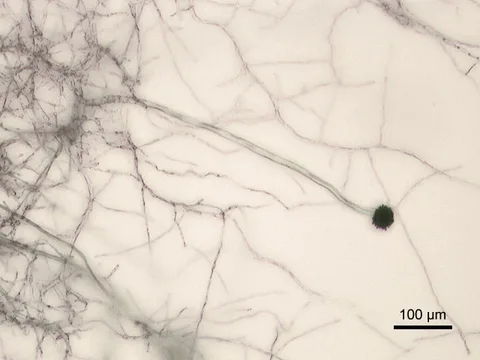
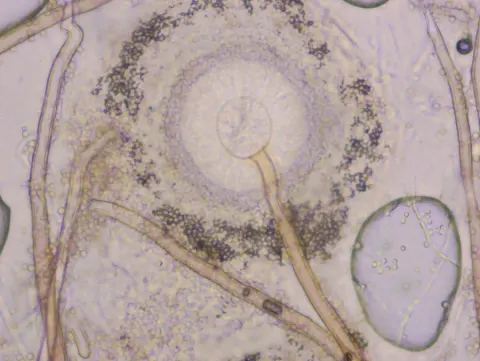
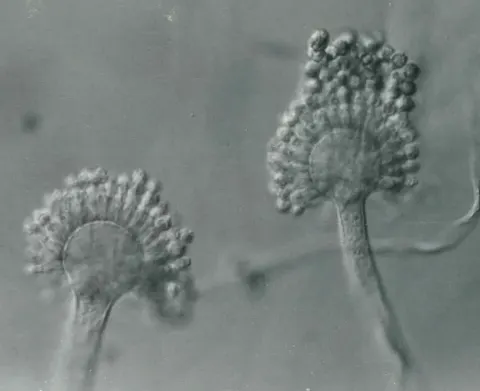
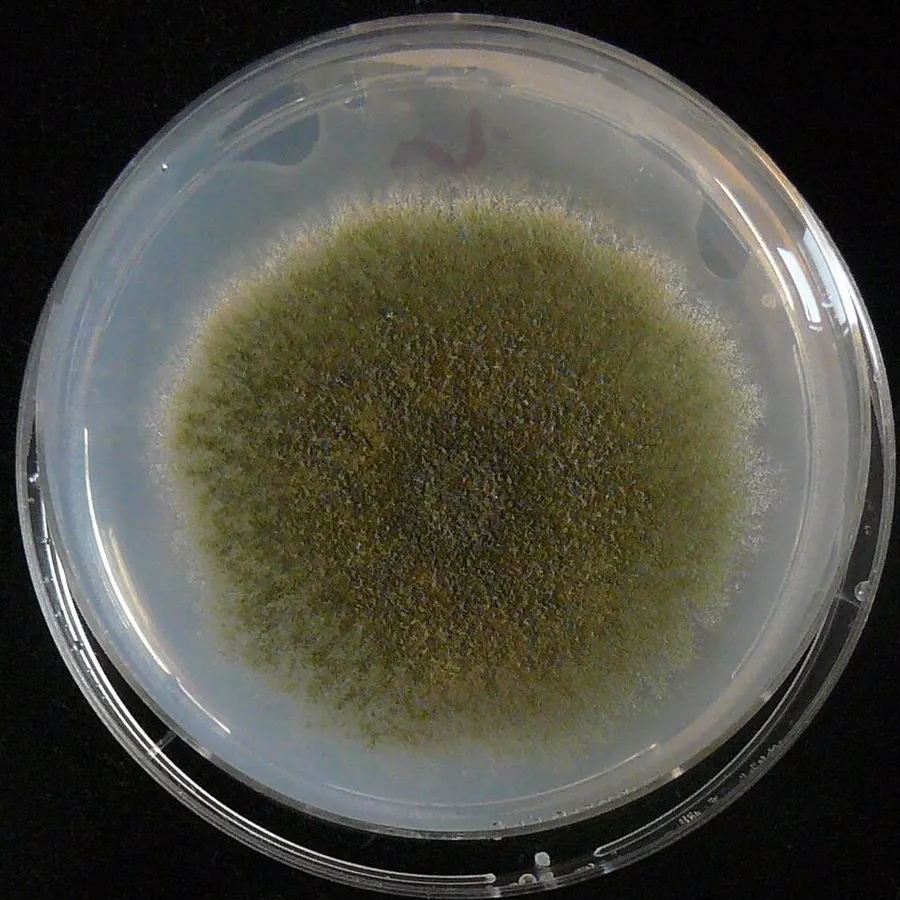
Aspergillus nidulans (also called Emericella nidulans when referring to its sexual form, or teleomorph) is one of many species of filamentous fungi in the phylum Ascomycota. It has been an important research organism for studying eukaryotic cell biology for over 50 years, being used to study a wide range of subjects including recombination, DNA repair, mutation, cell cycle control, tubulin, chromatin, nucleokinesis, pathogenesis, metabolism, and experimental evolution. It is one of the few species in its genus able to form sexual spores through meiosis, allowing crossing of strains in the laboratory. A. nidulans is a homothallic fungus, meaning it is able to self-fertilize and form fruiting bodies in the absence of a mating partner. It has septate hyphae with a woolly colony texture and white mycelia. The green colour of wild-type colonies is due to pigmentation of the spores, while mutations in the pigmentation pathway can produce other spore colours. Sexual reproduction occurs in two fundamentally different ways. This is by outcrossing (heterothallic sex), in which two distinct individuals contribute nuclei, or by homothallic sex or self-fertilization (selfing) in which both nuclei are derived from the same individual. Selfing in A. nidulans involves activation of the same mating pathways characteristic of sex in outcrossing species, i.e. self-fertilization does not bypass required pathways for outcrossing sex but instead requires activation of these pathways within a single individual. Fusion of haploid nuclei occurs within reproductive structures termed cleistothecia, in which the diploid zygote undergoes meiotic divisions to yield haploid ascospores.

Sebagian uraian ditampilkan dalam bahasa sumber; terjemahannya belum tersedia atau belum lolos pemeriksaan.

Rujukan: [1]

Pengukuran mengikuti objek, spesimen atau kultur, dan metode yang disebutkan sumber. Baca uraian asli untuk konteks lengkap.

02 / Kehidupan

Habitat dan peran ekologis

Występuje na całym świecie, szczególnie na rozkładających się szczątkach roślinnych.

Sebagian uraian ditampilkan dalam bahasa sumber; terjemahannya belum tersedia atau belum lolos pemeriksaan.

Rujukan: [2]

Habitat atau konteks temuan
Informasi belum tersedia pada sumber rilis ini.
Substrat
Informasi belum tersedia pada sumber rilis ini.
Peran atau konteks
Belum dikategorikan pada rilis ini.
Temukan hubungan serupa
03 / Siklus hidup

Reproduksi

Aspergillus nidulans (also called Emericella nidulans when referring to its sexual form, or teleomorph) is one of many species of filamentous fungi in the phylum Ascomycota. It has been an important research organism for studying eukaryotic cell biology for over 50 years, being used to study a wide range of subjects including recombination, DNA repair, mutation, cell cycle control, tubulin, chromatin, nucleokinesis, pathogenesis, metabolism, and experimental evolution. It is one of the few species in its genus able to form sexual spores through meiosis, allowing crossing of strains in the laboratory. A. nidulans is a homothallic fungus, meaning it is able to self-fertilize and form fruiting bodies in the absence of a mating partner.

Sebagian uraian ditampilkan dalam bahasa sumber; terjemahannya belum tersedia atau belum lolos pemeriksaan.

Rujukan: [1]

Sinonim menurut acuan taksonomi rilis: Aspergillus heterothallicus; Aspergillus nidulans mut. fertilion; Aspergillus nidulans var. acristatus; Aspergillus nidulans var. cesarii; Aspergillus nidulans var. dentatus; Aspergillus nidulans var. fertilior; Aspergillus nidulans var. imminutus; Aspergillus nidulans var. nicollei; Aspergillus nidulellus; Diplostephanus nidulans; Diplostephanus nidulans var. nicollei; Emericella acristata; Emericella dentata; Emericella heterothallica; Emericella nidulans; Emericella nidulans var. acristata; Emericella nidulans var. dentata; Emericella nidulans var. echinulata; Sterigmatocystis nidulans; Sterigmatocystis nidulans var. nicollei
04 / Batas informasi

Catatan identitas dan cakupan

  • Nama diterima mengikuti Catalogue of Life Base2026-09-11; uraian mempertahankan konsep dan nama sumber aslinya.
  • Uraian digabungkan dari sumber spesies yang sama; lingkup geografis, bahan, dan kultur setiap sumber dipertahankan. Original geographic, specimen and life-cycle scope retained; source import awaits individual editorial review. Original geographic, specimen and life-cycle scope retained; source import awaits individual editorial review.
  • Impor dan terjemahan otomatis belum diperiksa editorial per profil. Struktur reproduktif yang disebutkan tidak membuktikan seluruh siklus hidup diketahui.
  • Pengukuran pada uraian mengikuti spesimen, kultur, dan metode sumber; angka tidak diperluas ke semua populasi.

Catatan distribusi dalam narasi mengikuti sumbernya. Dokumentasi spesimen atau foto mengikuti catatan sumber. Bukti wilayah Indonesia dan penilaian konservasi tidak disimpulkan dari gambar.

05 / Dokumentasi

Melihat dengan konteks

Dokumentasi Aspergillus nidulans dari Wikimedia Commons. Aspergillus nidulans wild-type phenotype growing on a Petri dish Identifikasi mengikuti record berkas sumber.

Jenis
Fotografi
Kredit
222fjb . The original uploader was 222fjb at English Wikipedia . — 222fjb at English Wikipedia
Sumber media
Buka entri sumber

Gambar menunjukkan objek menurut identifikasi sumber, bukan verifikasi independen spesimen oleh Fungi. Tidak ada skala baru yang ditambahkan.

06 / Rujukan

Sumber profil

  1. [1] Aspergillus nidulans — Wikipedia (en)Bagian sumber: Frozen revision 1376155836
    Tanggal penghimpunan sumber: 2026-10-12
    Teks sumber: CC BY-SA4.0 · Wikipedia contributors
  2. [2] Aspergillus nidulans — Wikipedia (pl)Bagian sumber: Frozen revision 74724449
    Tanggal penghimpunan sumber: 2026-10-12
    Teks sumber: CC BY-SA3.0 · Autorzy i redaktorzy Wikipedii
  3. [3] Catalogue of Life Base2026-09-11 — Aspergillus nidulansBagian sumber: ColDP NameUsage.tsv ID HC7X; accepted species; source 2073
    Tanggal penghimpunan sumber: 2026-10-12
  4. [4] Dokumentasi visual — Aspergillus nidulansBagian sumber: Individual media record; identification follows the source, not independent determination
    Tanggal penghimpunan sumber: 2026-10-12
    Media sumber: CC BY-SA 3.0 · 222fjb . The original uploader was 222fjb at English Wikipedia . — 222fjb at English Wikipedia

Adaptasi teks: CC BY-SA 4.0. Wikipedia contributors — Aspergillus nidulans — Wikipedia (en); Autorzy i redaktorzy Wikipedii — Aspergillus nidulans — Wikipedia (pl)

Uraian asli dan riwayat sumber

Riwayat atau halaman sumber

Ringkasan sumber

Aspergillus nidulans (also called Emericella nidulans when referring to its sexual form, or teleomorph) is one of many species of filamentous fungi in the phylum Ascomycota. It has been an important research organism for studying eukaryotic cell biology for over 50 years, being used to study a wide range of subjects including recombination, DNA repair, mutation, cell cycle control, tubulin, chromatin, nucleokinesis, pathogenesis, metabolism, and experimental evolution. It is one of the few species in its genus able to form sexual spores through meiosis, allowing crossing of strains in the laboratory.

Revisi sumber

Morfologi sumber

Aspergillus nidulans (also called Emericella nidulans when referring to its sexual form, or teleomorph) is one of many species of filamentous fungi in the phylum Ascomycota. It has been an important research organism for studying eukaryotic cell biology for over 50 years, being used to study a wide range of subjects including recombination, DNA repair, mutation, cell cycle control, tubulin, chromatin, nucleokinesis, pathogenesis, metabolism, and experimental evolution. It is one of the few species in its genus able to form sexual spores through meiosis, allowing crossing of strains in the laboratory. A. nidulans is a homothallic fungus, meaning it is able to self-fertilize and form fruiting bodies in the absence of a mating partner. It has septate hyphae with a woolly colony texture and white mycelia. The green colour of wild-type colonies is due to pigmentation of the spores, while mutations in the pigmentation pathway can produce other spore colours. Sexual reproduction occurs in two fundamentally different ways. This is by outcrossing (heterothallic sex), in which two distinct individuals contribute nuclei, or by homothallic sex or self-fertilization (selfing) in which both nuclei are derived from the same individual. Selfing in A. nidulans involves activation of the same mating pathways characteristic of sex in outcrossing species, i.e. self-fertilization does not bypass required pathways for outcrossing sex but instead requires activation of these pathways within a single individual. Fusion of haploid nuclei occurs within reproductive structures termed cleistothecia, in which the diploid zygote undergoes meiotic divisions to yield haploid ascospores.

Revisi sumber

Ekologi sumber

Występuje na całym świecie, szczególnie na rozkładających się szczątkach roślinnych.

Revisi sumber

Struktur reproduksi sumber

Aspergillus nidulans (also called Emericella nidulans when referring to its sexual form, or teleomorph) is one of many species of filamentous fungi in the phylum Ascomycota. It has been an important research organism for studying eukaryotic cell biology for over 50 years, being used to study a wide range of subjects including recombination, DNA repair, mutation, cell cycle control, tubulin, chromatin, nucleokinesis, pathogenesis, metabolism, and experimental evolution. It is one of the few species in its genus able to form sexual spores through meiosis, allowing crossing of strains in the laboratory. A. nidulans is a homothallic fungus, meaning it is able to self-fertilize and form fruiting bodies in the absence of a mating partner.

Revisi sumber

Rujukan halaman ini

Fungi. Aspergillus nidulans. Rilis data fungi-2026-10-12-expansion-2. https://fungi-atlas.mgadib.chatgpt.site/jamur/aspergillus-nidulans/.

Status: impor sumber; pemeriksaan editorial per profil belum selesai. Untuk klaim biologis, gunakan rujukan pada bagian terkait dan periksa konteks sumber aslinya.