Ciri dan struktur
Fructifications soft-waxy to fleshy, resupinate, thin, effused, indeterminate, often tuberculate, forming linear areas to 15cm long, pruinose, greyish-white to greyish-cream when fresh, drying to a pallid grey, pruinose, reticulate or occasionally crustose film; margins concolorous, adnate. In section 50-90 ^ thick, consisting of basal layer and hymenium. Basal layer to 20 p. thick, composed of indistinct, gelatinised, agglutinated, hyaline hyphae, clamp connections present. Hymenium composed of gloeocystidia and basidia, dikaryophyses absent; gloeocystidia abundant, cylindrical, subfusiform or subclavate, occasionally with globose heads to 13 µm diam., arising from basal hyphae or base of fertile hyphae, at first hyaline, contents becoming pallid yellow, granular, 20-38.5 x 4.5-8 µm; probasidia obovate to pyriform, with basal clamp connections, formed in terminal groups on erect, fertile hyphae, 11-14.5-(17) x 6.5-10 µm becoming 2-celled by longitudinal septa or longitudinally cruciate-septate; sterigmata subulate, 5-10.5 µm long; old basidia collapsing, forming an involucre around axis of fertile hyphae. Basidiospores globose to subglobose, hyaline, prominently and symmetrically apiculate, smooth to finely roughened or echinulate, 5.8-8.5-(10) µm diam. Germination not observed.
Habitat dan peran ekologis
On dead (1) Dysoxylon spectabile, Auckland, Titirangi, 24.X.1966, 6.I.l967, R. F. R. McN., 25368, 25595; (2) Leptospermum ericoides, Henderson Valley, Sharp's Bush, 20.II.1966, R. F. R. McN., 25024: Titirangi, 11.XII.l966, R. F. R. and R. J. McN., 25514; 3.III.l966, 11.XII.l966, 6.I.l967, R. F. R. McN., 25042, 25525, 25596; Auckland Domain, 7.III.l966, R. F. R. McN., 25060; (3) L. scoparium, Waitakere Dam, 9.II.l966, R. F. R. McN., 24992; (4) Nothofagus fusca Nelson, Maruia, 23.III.l966, R. F. R. McN., 25294; (5) unknown hosts, Anawhata, Titirangi, 30.XI.l966, 7.II.l967, R. F. R. McN., 25449, 25621. The presence of gloeocystidia with yellowish-brown, granular contents indicates that Sebacina caesio-cinerea belongs in sect. Bourdotia. Opinions are almost equally divided as to whether Bourdotia merits sectional or generic status. In a comprehensive study of Bourdotia, Wells (1959) accorded it generic rank and recognised 11 species. The genus was distinguished by the presence of gloeocystidia with yellow or brownish granular contents, method of basidium formation, and structure of the fructification; three characters previously employed by Rogers (1933) to define Bourdotia as a subgenus of Sebacina.
- Habitat atau konteks temuan
- Informasi belum tersedia pada sumber rilis ini.
- Substrat
- Informasi belum tersedia pada sumber rilis ini.
- Peran atau konteks
- Belum dikategorikan pada rilis ini.
Reproduksi
Fructifications soft-waxy to fleshy, resupinate, thin, effused, indeterminate, often tuberculate, forming linear areas to 15cm long, pruinose, greyish-white to greyish-cream when fresh, drying to a pallid grey, pruinose, reticulate or occasionally crustose film; margins concolorous, adnate. In section 50-90 ^ thick, consisting of basal layer and hymenium. Basal layer to 20 p. thick, composed of indistinct, gelatinised, agglutinated, hyaline hyphae, clamp connections present. Hymenium composed of gloeocystidia and basidia, dikaryophyses absent; gloeocystidia abundant, cylindrical, subfusiform or subclavate, occasionally with globose heads to 13 µm diam., arising from basal hyphae or base of fertile hyphae, at first hyaline, contents becoming pallid yellow, granular, 20-38.5 x 4.5-8 µm; probasidia obovate to pyriform, with basal clamp connections, formed in terminal groups on erect, fertile hyphae, 11-14.5-(17) x 6.5-10 µm becoming 2-celled by longitudinal septa or longitudinally cruciate-septate; sterigmata subulate, 5-10.5 µm long; old basidia collapsing, forming an involucre around axis of fertile hyphae.
Catatan identitas dan cakupan
- Nama diterima mengikuti Catalogue of Life Base2026-09-11; uraian mempertahankan konsep dan nama sumber aslinya.
- Historical description as cited by BiotaNZ. Preserve explicit New Zealand/locality, host and specimen qualifiers. Distribution is the cited source scope, not a current global range.
- Impor dan terjemahan otomatis belum diperiksa editorial per profil. Struktur reproduktif yang disebutkan tidak membuktikan seluruh siklus hidup diketahui.
- Pengukuran pada uraian mengikuti spesimen, kultur, dan metode sumber; angka tidak diperluas ke semua populasi.
Catatan distribusi dalam narasi mengikuti sumbernya. Dokumentasi spesimen atau foto mengikuti catatan sumber. Bukti wilayah Indonesia dan penilaian konservasi tidak disimpulkan dari gambar.
Melihat dengan konteks
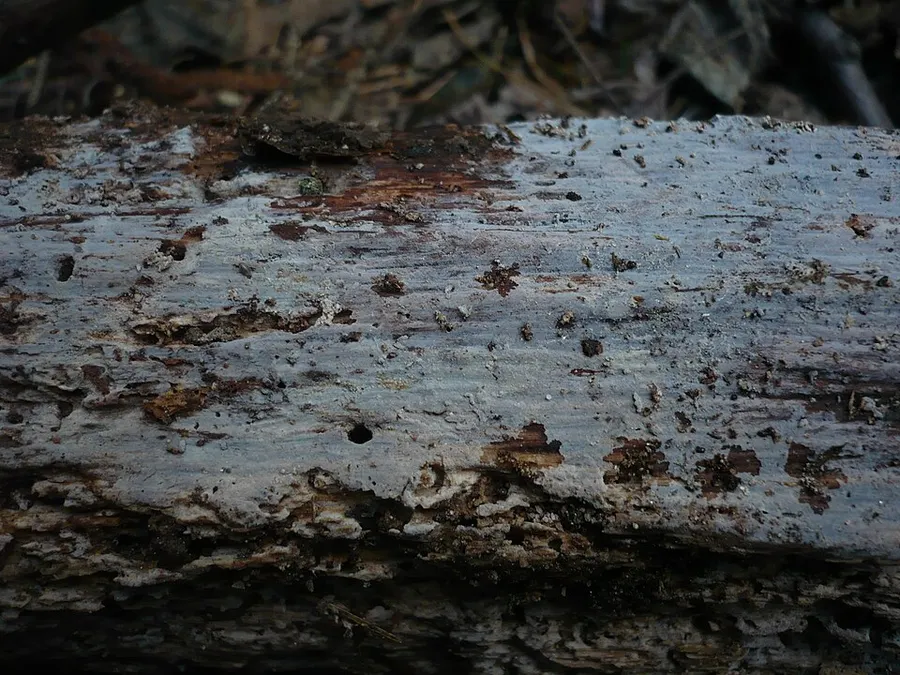
Dokumentasi Basidiodendron caesiocinereum dari Wikimedia Commons. The crust fungus Basidiodendron caesiocinereum (Höhnel&Litschauer) Luck-Allen. Photographed in Kaltwasserbach, Sauerbrunn, Bezirk Mattersburg, Burgenland, Austria. Identifikasi mengikuti record berkas sumber.
- Jenis
- Fotografi
- Kredit
- Gerhard Koller (Gerhard)
- Lisensi
- CC BY-SA 3.0
- Sumber media
- Buka entri sumber
Sumber profil
- [1] McNabb, R.F.R. 1969: New Zealand Tremellales - III. New Zealand Journal of Botany 7(3): 241-261. — Sebacina caesiocinerea
- [2] Catalogue of Life Base2026-09-11 — Basidiodendron caesiocinereum
- [3] Dokumentasi visual — Basidiodendron caesiocinereum
Rujukan halaman ini
Fungi. Basidiodendron caesiocinereum. Rilis data fungi-2026-10-12-expansion-2. https://fungi-atlas.mgadib.chatgpt.site/jamur/basidiodendron-caesiocinereum/.
Status: impor sumber; pemeriksaan editorial per profil belum selesai. Untuk klaim biologis, gunakan rujukan pada bagian terkait dan periksa konteks sumber aslinya.