01 / Morfologi

Ciri dan struktur

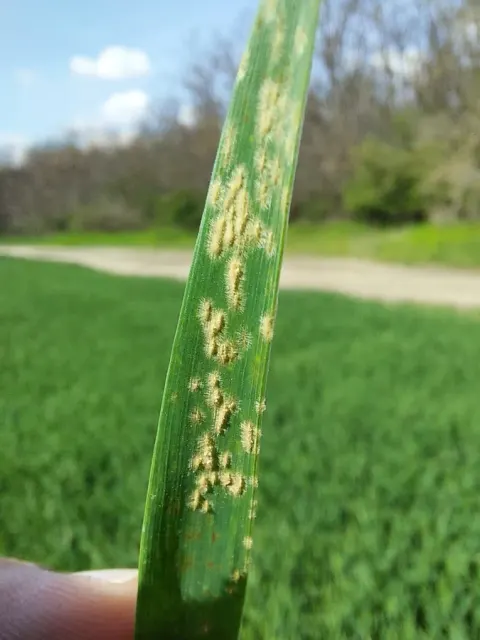
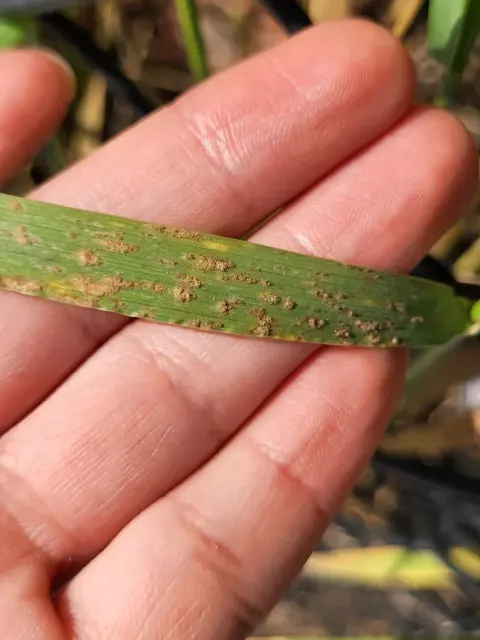
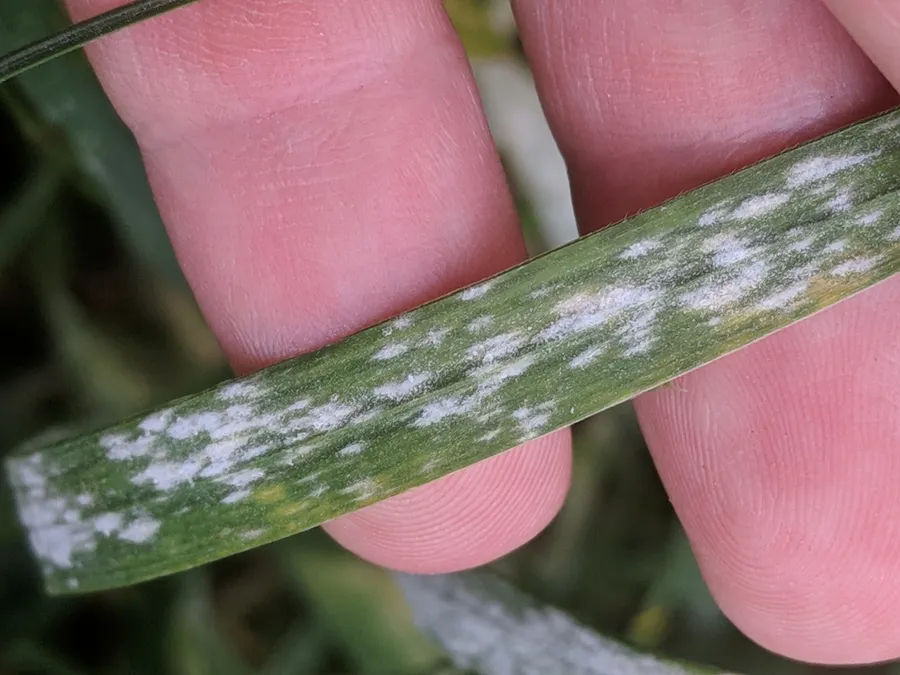
The fungus forms thick white mycelial growth on the leaves of its hosts, which remains white with age. As with most Erysiphaceae, Blumeria bromi-cathartici is highly host-specific, only being known from a single species, Bromus catharticus. Another species of powdery mildew, Blumeria bulbigera, can be found on other species of Bromus. Other genera of grasses host other Blumeria species, many of which are likely undescribed. Blumeria bromi-cathartici can be found worldwide, wherever its host species are found, although it has yet to be observed in Australia or New Zealand. The primary mycelium is in thick patches, remaining whitish, or becoming slightly pigmented yellowish. The hyphal appressoria are described as nipple-shaped, occurring singly. Conidiophores are usually near or next to one septum, and are erect, single or in pairs, with a swollen foot-cell characteristic of the genus. Conidiophores form catenate conidia. Conidia are oblong and occasionally lemon-shaped. Chasmothecia including appendages and ascospores were not observed by M. Liu et al.

Sebagian uraian ditampilkan dalam bahasa sumber; terjemahannya belum tersedia atau belum lolos pemeriksaan.

Rujukan: [1]

Pengukuran mengikuti objek, spesimen atau kultur, dan metode yang disebutkan sumber. Baca uraian asli untuk konteks lengkap.

02 / Kehidupan

Habitat dan peran ekologis

The fungus forms thick white mycelial growth on the leaves of its hosts, which remains white with age. As with most Erysiphaceae, Blumeria bromi-cathartici is highly host-specific, only being known from a single species, Bromus catharticus. Another species of powdery mildew, Blumeria bulbigera, can be found on other species of Bromus. Other genera of grasses host other Blumeria species, many of which are likely undescribed. Blumeria bromi-cathartici can be found worldwide, wherever its host species are found, although it has yet to be observed in Australia or New Zealand.

Sebagian uraian ditampilkan dalam bahasa sumber; terjemahannya belum tersedia atau belum lolos pemeriksaan.

Rujukan: [1]

Habitat atau konteks temuan
Informasi belum tersedia pada sumber rilis ini.
Substrat
Informasi belum tersedia pada sumber rilis ini.
Peran atau konteks
Belum dikategorikan pada rilis ini.
Temukan hubungan serupa
03 / Siklus hidup

Reproduksi

The primary mycelium is in thick patches, remaining whitish, or becoming slightly pigmented yellowish. The hyphal appressoria are described as nipple-shaped, occurring singly. Conidiophores are usually near or next to one septum, and are erect, single or in pairs, with a swollen foot-cell characteristic of the genus. Conidiophores form catenate conidia. Conidia are oblong and occasionally lemon-shaped. Chasmothecia including appendages and ascospores were not observed by M. Liu et al.

Sebagian uraian ditampilkan dalam bahasa sumber; terjemahannya belum tersedia atau belum lolos pemeriksaan.

Rujukan: [1]

04 / Batas informasi

Catatan identitas dan cakupan

  • Nama diterima mengikuti Catalogue of Life Base2026-09-11; uraian mempertahankan konsep dan nama sumber aslinya.
  • Original geographic, specimen and life-cycle scope retained; source import awaits individual editorial review.
  • Impor dan terjemahan otomatis belum diperiksa editorial per profil. Struktur reproduktif yang disebutkan tidak membuktikan seluruh siklus hidup diketahui.
  • Pengukuran pada uraian mengikuti spesimen, kultur, dan metode sumber; angka tidak diperluas ke semua populasi.

Catatan distribusi dalam narasi mengikuti sumbernya. Dokumentasi spesimen atau foto mengikuti catatan sumber. Bukti wilayah Indonesia dan penilaian konservasi tidak disimpulkan dari gambar.

05 / Dokumentasi

Melihat dengan konteks

Dokumentasi Blumeria bromi-cathartici menurut asosiasi foto pada record takson iNaturalist. Kredit: Eric Knight. Identitas mengikuti sumber; bukan penentuan spesimen independen.

Jenis
Fotografi
Kredit
(c) Eric Knight, some rights reserved (CC BY), uploaded by Eric Knight
Lisensi
CC BY 4.0
Sumber media
Buka entri sumber

Gambar menunjukkan objek menurut identifikasi sumber, bukan verifikasi independen spesimen oleh Fungi. Tidak ada skala baru yang ditambahkan.

06 / Rujukan

Sumber profil

  1. [1] Blumeria bromi-cathartici — Wikipedia (en)Bagian sumber: Frozen revision 1372651016
    Tanggal penghimpunan sumber: 2026-10-12
    Teks sumber: CC BY-SA4.0 · Wikipedia contributors
  2. [2] Catalogue of Life Base2026-09-11 — Blumeria bromi-catharticiBagian sumber: ColDP NameUsage.tsv ID 9YZJB; accepted species; source 2073
    Tanggal penghimpunan sumber: 2026-10-12
  3. [3] Dokumentasi visual — Blumeria bromi-catharticiBagian sumber: Individual media record; identification follows the source, not independent determination
    Tanggal penghimpunan sumber: 2026-10-12
    Media sumber: CC BY 4.0 · (c) Eric Knight, some rights reserved (CC BY), uploaded by Eric Knight

Adaptasi teks: CC BY-SA 4.0. Wikipedia contributors — Blumeria bromi-cathartici — Wikipedia (en)

Uraian asli dan riwayat sumber

Riwayat atau halaman sumber

Ringkasan sumber

The fungus forms thick white mycelial growth on the leaves of its hosts, which remains white with age. As with most Erysiphaceae, Blumeria bromi-cathartici is highly host-specific, only being known from a single species, Bromus catharticus. Another species of powdery mildew, Blumeria bulbigera, can be found on other species of Bromus. Other genera of grasses host other Blumeria species, many of which are likely undescribed. Blumeria bromi-cathartici can be found worldwide, wherever its host species are found, although it has yet to be observed in Australia or New Zealand.

Revisi sumber

Morfologi sumber

The fungus forms thick white mycelial growth on the leaves of its hosts, which remains white with age. As with most Erysiphaceae, Blumeria bromi-cathartici is highly host-specific, only being known from a single species, Bromus catharticus. Another species of powdery mildew, Blumeria bulbigera, can be found on other species of Bromus. Other genera of grasses host other Blumeria species, many of which are likely undescribed. Blumeria bromi-cathartici can be found worldwide, wherever its host species are found, although it has yet to be observed in Australia or New Zealand. The primary mycelium is in thick patches, remaining whitish, or becoming slightly pigmented yellowish. The hyphal appressoria are described as nipple-shaped, occurring singly. Conidiophores are usually near or next to one septum, and are erect, single or in pairs, with a swollen foot-cell characteristic of the genus. Conidiophores form catenate conidia. Conidia are oblong and occasionally lemon-shaped. Chasmothecia including appendages and ascospores were not observed by M. Liu et al.

Revisi sumber

Ekologi sumber

The fungus forms thick white mycelial growth on the leaves of its hosts, which remains white with age. As with most Erysiphaceae, Blumeria bromi-cathartici is highly host-specific, only being known from a single species, Bromus catharticus. Another species of powdery mildew, Blumeria bulbigera, can be found on other species of Bromus. Other genera of grasses host other Blumeria species, many of which are likely undescribed. Blumeria bromi-cathartici can be found worldwide, wherever its host species are found, although it has yet to be observed in Australia or New Zealand.

Revisi sumber

Struktur reproduksi sumber

The primary mycelium is in thick patches, remaining whitish, or becoming slightly pigmented yellowish. The hyphal appressoria are described as nipple-shaped, occurring singly. Conidiophores are usually near or next to one septum, and are erect, single or in pairs, with a swollen foot-cell characteristic of the genus. Conidiophores form catenate conidia. Conidia are oblong and occasionally lemon-shaped. Chasmothecia including appendages and ascospores were not observed by M. Liu et al.

Revisi sumber

Rujukan halaman ini

Fungi. Blumeria bromi-cathartici. Rilis data fungi-2026-10-12-expansion-2. https://fungi-atlas.mgadib.chatgpt.site/jamur/blumeria-bromi-cathartici/.

Status: impor sumber; pemeriksaan editorial per profil belum selesai. Untuk klaim biologis, gunakan rujukan pada bagian terkait dan periksa konteks sumber aslinya.