Ciri dan struktur
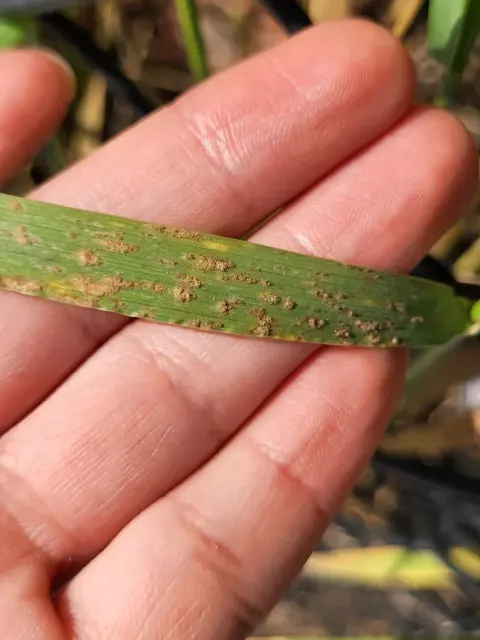
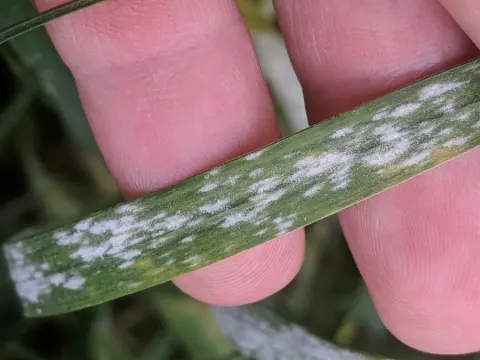
The fungus forms thick white mycelial growth on the leaves of its hosts. With time, the mycelium often turns to tan brown. When present, the chasmothecia are often densely packed. This species reportedly thrives in cool, humid climates and proliferates in cloudy weather conditions. As with most Erysiphaceae, Blumeria graminis is fairly host-specific, although it still has a large host range compared to many members of the family. Blumeria graminis can be found infecting Aegilops, Brachypodium, Dasypyrum, Elymus (including Hystrix), Hordeum, Milium, Phleum, Secale, and Triticum. However, many of these genera more commonly host other species of Blumeria (such as Hordeum with Blumeria hordei). Blumeria graminis can be found on all continents bar Antarctica and in any habitats where its host species can be found. All Erysiphaceae are obligate biotrophs which require a living host to survive, and Blumeria graminis is no exception. The primary mycelium is first white, becoming pigmented. The secondary mycelium is dense, appearing woolly to felt-like. It occurs on the leaf in patches, often around chasmothecia. The original colour of mycelium is dingy greyish white to grey, which turns tan-coloured with age. The hyphal appressoria are described as nipple-shaped, occasionally lobe-shaped, occurring either singly or opposite in pairs. Conidiophores have a swollen foot-cell characteristic of the genus. The chasmothecia (fruiting bodies) are surrounded by bristle-like secondary hyphae. Chasmothecial appendages are found in the lower half, and are simple and myceloid. The peridium of the chasmothecia is obscure and irregularly polygonal.
Habitat dan peran ekologis
The fungus forms thick white mycelial growth on the leaves of its hosts. With time, the mycelium often turns to tan brown. When present, the chasmothecia are often densely packed. This species reportedly thrives in cool, humid climates and proliferates in cloudy weather conditions. As with most Erysiphaceae, Blumeria graminis is fairly host-specific, although it still has a large host range compared to many members of the family. Blumeria graminis can be found infecting Aegilops, Brachypodium, Dasypyrum, Elymus (including Hystrix), Hordeum, Milium, Phleum, Secale, and Triticum. However, many of these genera more commonly host other species of Blumeria (such as Hordeum with Blumeria hordei). Blumeria graminis can be found on all continents bar Antarctica and in any habitats where its host species can be found. All Erysiphaceae are obligate biotrophs which require a living host to survive, and Blumeria graminis is no exception. The primary mycelium is first white, becoming pigmented. The secondary mycelium is dense, appearing woolly to felt-like. It occurs on the leaf in patches, often around chasmothecia. The original colour of mycelium is dingy greyish white to grey, which turns tan-coloured with age.
- Habitat atau konteks temuan
- Informasi belum tersedia pada sumber rilis ini.
- Substrat
- Informasi belum tersedia pada sumber rilis ini.
- Peran atau konteks
- Belum dikategorikan pada rilis ini.
Reproduksi
The primary mycelium is first white, becoming pigmented. The secondary mycelium is dense, appearing woolly to felt-like. It occurs on the leaf in patches, often around chasmothecia. The original colour of mycelium is dingy greyish white to grey, which turns tan-coloured with age. The hyphal appressoria are described as nipple-shaped, occasionally lobe-shaped, occurring either singly or opposite in pairs. Conidiophores have a swollen foot-cell characteristic of the genus. The chasmothecia (fruiting bodies) are surrounded by bristle-like secondary hyphae. Chasmothecial appendages are found in the lower half, and are simple and myceloid. The peridium of the chasmothecia is obscure and irregularly polygonal.
Catatan identitas dan cakupan
- Nama diterima mengikuti Catalogue of Life Base2026-09-11; uraian mempertahankan konsep dan nama sumber aslinya.
- Original geographic, specimen and life-cycle scope retained; source import awaits individual editorial review.
- Impor dan terjemahan otomatis belum diperiksa editorial per profil. Struktur reproduktif yang disebutkan tidak membuktikan seluruh siklus hidup diketahui.
- Pengukuran pada uraian mengikuti spesimen, kultur, dan metode sumber; angka tidak diperluas ke semua populasi.
Catatan distribusi dalam narasi mengikuti sumbernya. Dokumentasi spesimen atau foto mengikuti catatan sumber. Bukti wilayah Indonesia dan penilaian konservasi tidak disimpulkan dari gambar.
Melihat dengan konteks
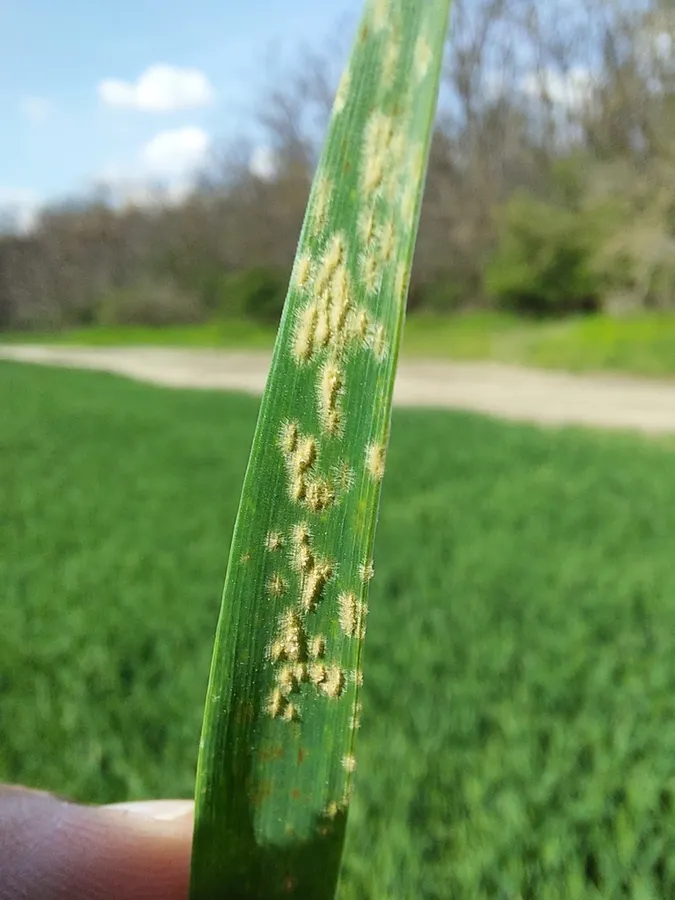
Dokumentasi Blumeria graminis menurut asosiasi foto pada record takson iNaturalist. Kredit: Dávid Horváth. Identitas mengikuti sumber; bukan penentuan spesimen independen.
- Jenis
- Fotografi
- Kredit
- (c) Dávid Horváth, some rights reserved (CC BY), uploaded by Dávid Horváth
- Lisensi
- CC BY 4.0
- Sumber media
- Buka entri sumber
Sumber profil
- [1] Blumeria graminis — Wikipedia (en)
- [2] Catalogue of Life Base2026-09-11 — Blumeria graminis
- [3] Dokumentasi visual — Blumeria graminis
Rujukan halaman ini
Fungi. Blumeria graminis. Rilis data fungi-2026-10-12-expansion-2. https://fungi-atlas.mgadib.chatgpt.site/jamur/blumeria-graminis/.
Status: impor sumber; pemeriksaan editorial per profil belum selesai. Untuk klaim biologis, gunakan rujukan pada bagian terkait dan periksa konteks sumber aslinya.