Ciri dan struktur
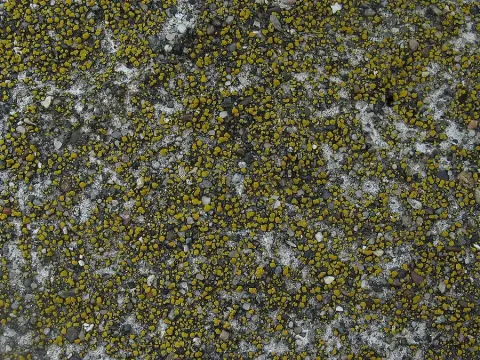
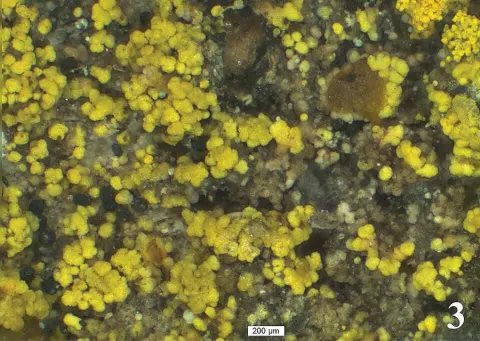
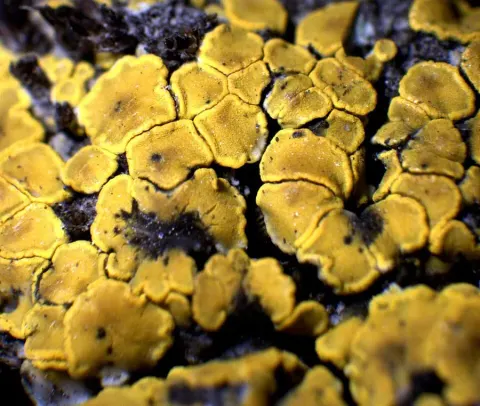
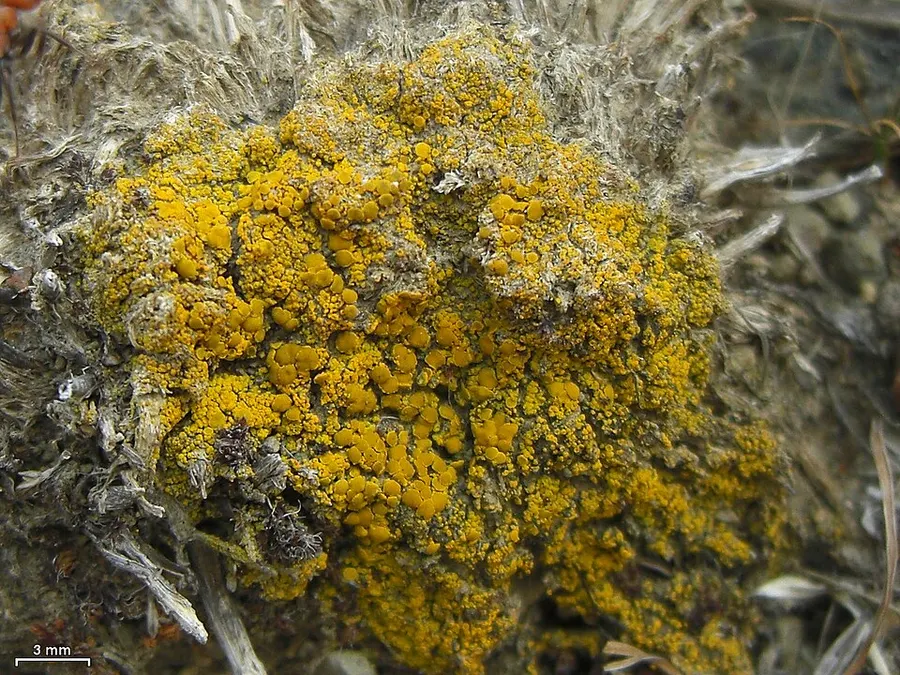
The lichen has an orange to yellow, granular thallus, with the granules (measuring 0.1–0.35 mm) scattered to crowded, and often obscured by the apothecia. The apothecia are lecanorine, and typically measure 0.3–0.6 mm with a flat to convex disc. The ascospores are usually narrowly ellipsoid, although there is some variability in shape; their dimensions are usually in the range 13.0–19.0 by 4.5–6.0 μm. Secondary chemicals found in Candelariella aggregata include calycin, pulvic acid lactone, vulpinic acid, and rhizocarpic acid. The last compound had not previously been reported to occur in genus Candelariella.
Habitat dan peran ekologis
The original range of the species included the Rocky Mountains and the Cascade Range, where it grows above the tree line in alpine tundra on mosses and plant debris, and steppe-like habitats in the Interior Basin at elevations greater than 1500 m. Since its original publication, the species has been recorded from Mongolia and Switzerland. Lichenochora arctica is a lichenicolous fungus that has been recorded growing on Candelariella aggregata in Mongolia.
- Habitat atau konteks temuan
- Informasi belum tersedia pada sumber rilis ini.
- Substrat
- Informasi belum tersedia pada sumber rilis ini.
- Peran atau konteks
- Pembentuk liken
Reproduksi
The lichen has an orange to yellow, granular thallus, with the granules (measuring 0.1–0.35 mm) scattered to crowded, and often obscured by the apothecia. The apothecia are lecanorine, and typically measure 0.3–0.6 mm with a flat to convex disc. The ascospores are usually narrowly ellipsoid, although there is some variability in shape; their dimensions are usually in the range 13.0–19.0 by 4.5–6.0 μm. Secondary chemicals found in Candelariella aggregata include calycin, pulvic acid lactone, vulpinic acid, and rhizocarpic acid. The last compound had not previously been reported to occur in genus Candelariella.
Catatan identitas dan cakupan
- Nama diterima mengikuti Catalogue of Life Base2026-09-11; uraian mempertahankan konsep dan nama sumber aslinya.
- Original geographic, specimen and life-cycle scope retained; source import awaits individual editorial review.
- Impor dan terjemahan otomatis belum diperiksa editorial per profil. Struktur reproduktif yang disebutkan tidak membuktikan seluruh siklus hidup diketahui.
- Pengukuran pada uraian mengikuti spesimen, kultur, dan metode sumber; angka tidak diperluas ke semua populasi.
Catatan distribusi dalam narasi mengikuti sumbernya. Dokumentasi spesimen atau foto mengikuti catatan sumber. Bukti wilayah Indonesia dan penilaian konservasi tidak disimpulkan dari gambar.
Melihat dengan konteks
Dokumentasi Candelariella aggregata dari Wikimedia Commons. Humboldt Range, Nevada, 4 May 2015. Identifikasi mengikuti record berkas sumber.
- Jenis
- Fotografi
- Kredit
- Jason Hollinger
- Lisensi
- CC BY 2.0
- Sumber media
- Buka entri sumber
Sumber profil
- [1] Candelariella aggregata — Wikipedia (en)
- [2] Catalogue of Life Base2026-09-11 — Candelariella aggregata
- [3] Dokumentasi visual — Candelariella aggregata
Rujukan halaman ini
Fungi. Candelariella aggregata. Rilis data fungi-2026-10-12-expansion-2. https://fungi-atlas.mgadib.chatgpt.site/jamur/candelariella-aggregata/.
Status: impor sumber; pemeriksaan editorial per profil belum selesai. Untuk klaim biologis, gunakan rujukan pada bagian terkait dan periksa konteks sumber aslinya.