Ciri dan struktur
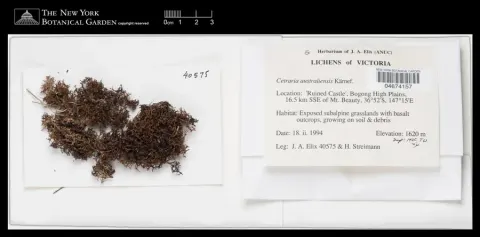
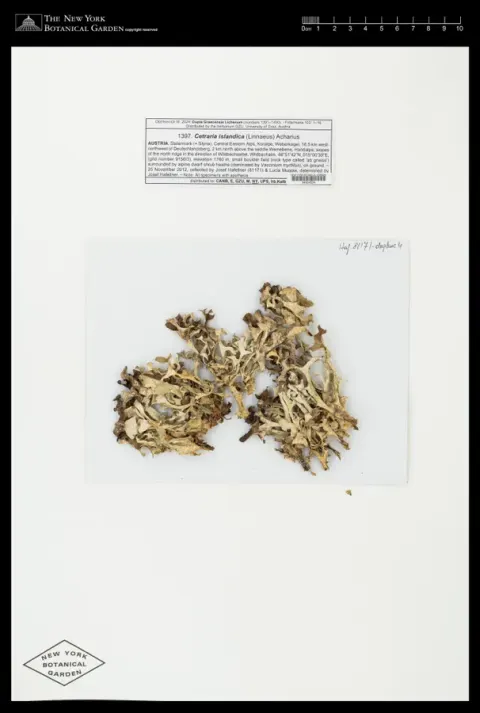
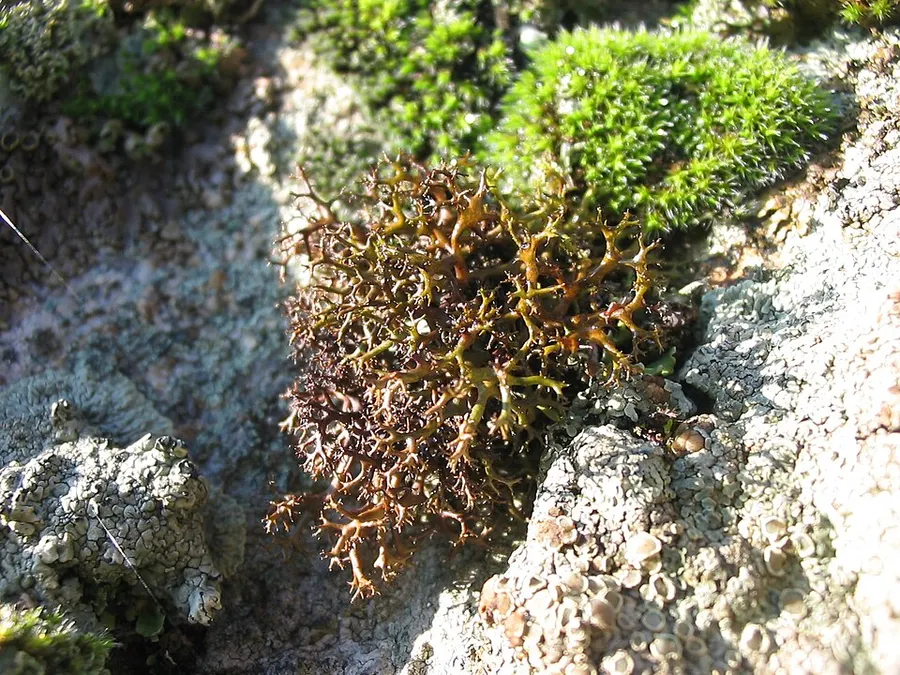
The thalli of Cetraria aculeata form shrubby tufts of up to 1–5 cm height, main branches are from 1 to 4 mm wide, terminal branches up to 1 mm wide, chemical spot tests K and P both negative. The species is found fertile, and seems to propagate mainly by thallus fragmentation. Despite the apparent lack of ascospores, which can be dispersed across long distances, C. aculeata has a very wide distribution. It is frequent in open polar and boreal environments from the maritime Antarctic to the high Arctic. At intermediate latitudes it is mostly found in high mountain ecosystems, as well as its distributional range also extends into forest gaps, woodland and steppe ecosystems, or coastal and riparian sand deposits of the Mediterranean and temperate zones. Although Cetraria aculeata is widespread globally, some isolated tropical mountain populations appear to be at local or national risk of extinction, including those in East Africa and South America. A 2013 review of phylogeographic studies suggested that Cetraria aculeata evolved in the Northern Hemisphere and later spread into the Southern Hemisphere during the Pleistocene. The same review noted that Antarctic populations have very low genetic diversity, consistent with southward colonization followed by little ongoing genetic exchange with northern populations.
Habitat dan peran ekologis
Cetraria aculeata is a known host to several lichenicolous fungus species, including Lichenopeltella cetrariicola, Acremonium lichenicola, Clypeococcum cetrariae, Didymocyrtis cladoniicola, Didymocyrtis trassii, Endococcus parmeliarum, Lichenoconium eroden, Eonema pyriforme, Katherinomyces cetrariae, Sphaerellothecium aculeatae, and Taeniolella rolfii. A molecular study found that Cetraria aculeata associates with a single phylogenetic lineage of the green algal species Trebouxia jamesii. Temperate populations consistently contained a distinct photobiont lineage, and the authors suggested that an earlier switch in algal partners may have helped the species colonize both temperate and polar habitats. A later review likewise linked the species' broad environmental range to variation in its algal partners, concluding that photobiont switching probably broadened its ecological niche and was followed by genetic isolation among geographically separated populations. In addition to its fungal and algal partners, Cetraria aculeata harbours characteristic communities of associated Alphaproteobacteria. A study of populations from Antarctica, Iceland, Germany, and Spain found that these communities were dominated by Acetobacteraceae and were less diverse in polar than in temperate populations.
- Habitat atau konteks temuan
- Informasi belum tersedia pada sumber rilis ini.
- Substrat
- Informasi belum tersedia pada sumber rilis ini.
- Peran atau konteks
- Pembentuk liken
Reproduksi
The thalli of Cetraria aculeata form shrubby tufts of up to 1–5 cm height, main branches are from 1 to 4 mm wide, terminal branches up to 1 mm wide, chemical spot tests K and P both negative. The species is found fertile, and seems to propagate mainly by thallus fragmentation. Despite the apparent lack of ascospores, which can be dispersed across long distances, C. aculeata has a very wide distribution. It is frequent in open polar and boreal environments from the maritime Antarctic to the high Arctic. At intermediate latitudes it is mostly found in high mountain ecosystems, as well as its distributional range also extends into forest gaps, woodland and steppe ecosystems, or coastal and riparian sand deposits of the Mediterranean and temperate zones.
Catatan identitas dan cakupan
- Nama diterima mengikuti Catalogue of Life Base2026-09-11; uraian mempertahankan konsep dan nama sumber aslinya.
- Original geographic, specimen and life-cycle scope retained; source import awaits individual editorial review.
- Impor dan terjemahan otomatis belum diperiksa editorial per profil. Struktur reproduktif yang disebutkan tidak membuktikan seluruh siklus hidup diketahui.
- Pengukuran pada uraian mengikuti spesimen, kultur, dan metode sumber; angka tidak diperluas ke semua populasi.
Catatan distribusi dalam narasi mengikuti sumbernya. Dokumentasi spesimen atau foto mengikuti catatan sumber. Bukti wilayah Indonesia dan penilaian konservasi tidak disimpulkan dari gambar.
Melihat dengan konteks
Dokumentasi Cetraria aculeata dari Wikimedia Commons. Fotografía realizada por Pablo Alberto Salguero Quiles a un ejemplar de 5cm. de altura de Cetraria aculeata en la zona centro de la Península Ibérica. Valle del río Lozoya, Madrid. España. Identifikasi mengikuti record berkas sumber.
- Jenis
- Fotografi
- Kredit
- Alberto Salguero
- Lisensi
- CC BY-SA 3.0
- Sumber media
- Buka entri sumber
Sumber profil
- [1] Cetraria aculeata — Wikipedia (en)
- [2] Catalogue of Life Base2026-09-11 — Cetraria aculeata
- [3] Dokumentasi visual — Cetraria aculeata
Rujukan halaman ini
Fungi. Cetraria aculeata. Rilis data fungi-2026-10-12-expansion-2. https://fungi-atlas.mgadib.chatgpt.site/jamur/cetraria-aculeata/.
Status: impor sumber; pemeriksaan editorial per profil belum selesai. Untuk klaim biologis, gunakan rujukan pada bagian terkait dan periksa konteks sumber aslinya.