Ciri dan struktur
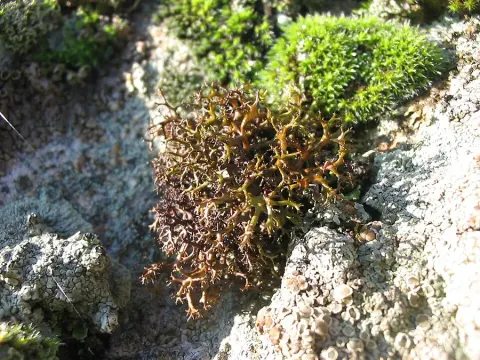
Cetraria australiensis features a fruticose (shrub-like) thallus that is , meaning it lies flat but may rise slightly. It is essentially unattached and forms loose clumps that can spread up to a metre wide. The thallus varies in colour from pale to dark chestnut-brown or even black-brown. The comprising the thallus are flattened and can be up to 2 mm wide, often plane or slightly grooved (), and are richly branched in a forked () manner, creating an entangled appearance. The structure is , having distinct upper and lower surfaces, with the lower surface typically a bit paler. The lobe tips (apices) are truncate, and the margins and tips have spine-like projections up to 0.5 mm long. The surface can be glossy to and is generally smooth. Occasional pseudocyphellae, which are small, white, pore-like structures, appear strictly along the margins. Apothecia (fruiting bodies) have not been observed in this species. The conidia, a type of asexual spore, are about 6 by 1 μm in size. In terms of chemistry, Cetraria australiensis contains lichesterinic and protolichensterinic acids, with all standard spot tests returning negative results.
Habitat dan peran ekologis
Cetraria australiensis is highly localised in Tasmania, primarily found at high elevations on the Central Plateau Conservation Area and occasionally recorded in the Ben Lomond area in the North-East. This species is also present in alpine regions of southeastern Australia's mainland. It typically forms extensive, loose mats on the ground within heathland and bolster moor habitats, often intermixed with species of Cladia and Cladonia. The lichen has been severely affected by alpine fires, such as those in the Lake MacKenzie area in 2016. In many locations, its distribution is relict, confined to small, surviving patches of coniferous microshrubbery.
- Habitat atau konteks temuan
- Informasi belum tersedia pada sumber rilis ini.
- Substrat
- tanah
- Peran atau konteks
- Pembentuk liken
Reproduksi
Occasional pseudocyphellae, which are small, white, pore-like structures, appear strictly along the margins. Apothecia (fruiting bodies) have not been observed in this species. The conidia, a type of asexual spore, are about 6 by 1 μm in size.
Catatan identitas dan cakupan
- Nama diterima mengikuti Catalogue of Life Base2026-09-11; uraian mempertahankan konsep dan nama sumber aslinya.
- Original geographic, specimen and life-cycle scope retained; source import awaits individual editorial review.
- Impor dan terjemahan otomatis belum diperiksa editorial per profil. Struktur reproduktif yang disebutkan tidak membuktikan seluruh siklus hidup diketahui.
- Pengukuran pada uraian mengikuti spesimen, kultur, dan metode sumber; angka tidak diperluas ke semua populasi.
Catatan distribusi dalam narasi mengikuti sumbernya. Dokumentasi spesimen atau foto mengikuti catatan sumber. Bukti wilayah Indonesia dan penilaian konservasi tidak disimpulkan dari gambar.
Melihat dengan konteks
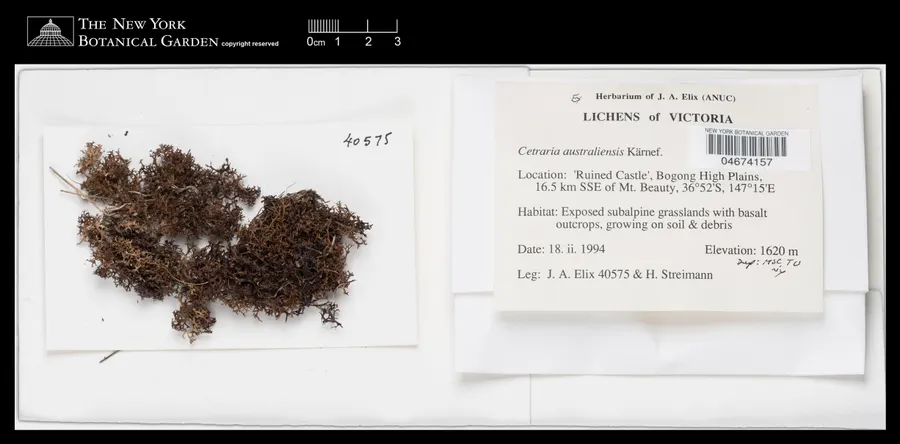
Voucher herbarium Cetraria australiensis (04674157), The New York Botanical Garden. Identifikasi mengikuti record spesimen sumber. Foto bahan, kemasan, atau label herbarium sebagaimana tersedia pada record institusi; bukan foto lapangan atau penentuan spesimen independen.
- Jenis
- Voucher herbarium
- Kredit
- The New York Botanical Garden
- Lisensi
- CC BY 4.0
- Sumber media
- Buka entri sumber
Sumber profil
- [1] Cetraria australiensis — Wikipedia (en)
- [2] Catalogue of Life Base2026-09-11 — Cetraria australiensis
- [3] Dokumentasi visual — Cetraria australiensis
Rujukan halaman ini
Fungi. Cetraria australiensis. Rilis data fungi-2026-10-12-expansion-2. https://fungi-atlas.mgadib.chatgpt.site/jamur/cetraria-australiensis/.
Status: impor sumber; pemeriksaan editorial per profil belum selesai. Untuk klaim biologis, gunakan rujukan pada bagian terkait dan periksa konteks sumber aslinya.