Ciri dan struktur
Chaetomium globosum is a well-known mesophilic member of the mold family Chaetomiaceae. It is a saprophytic fungus that primarily resides on plants, soil, straw, and dung. Endophytic C. globosum assists in cellulose decomposition of plant cells. They are found in habitats ranging from forest plants to mountain soils across various biomes. C. globosum colonies can also be found indoors and on wooden products. Like most Chaetomium species, C. globosum decomposes plant cells using hyphal cellulase activity. Even though they are known to cause soft rot rather than brown rot, C. globosum plant decomposition leaves behind lignin residues. They can decay a variety of wood types such as aspen and pine and even change the colour of paper and books. The cellulase activity of C. globosum functions best at temperatures ranging from 25-32 degrees Celsius and is stimulated by nitrogen and biotin. Cellulase is inhibited by ethyl malonate. Like many fungal species, C. globosum obtains their energy from carbon sources such as glucose, mannitol and fructose. Fructose is usually digested outside the hyphae using fructokinase activity, whereas glucose enters the cell undigested for cellular metabolism. Even though glucose is the most preferred carbon source, C. globosum mycelium growth occurs at a higher rate when treated with acetate rather than glucose. Carbohydrates can also be stored within the fungus as glycogen and trehalose energy reserves. Homothallic C.globosum sexual sporulation produces flat lemon-shaped ascospores within clavate ascomata. The appearance of C.globosum fruiting bodies are similar to the pycnidia of the genus Pyrenochaeta.
Habitat dan peran ekologis
Chaetomium globosum is a well-known mesophilic member of the mold family Chaetomiaceae. It is a saprophytic fungus that primarily resides on plants, soil, straw, and dung. Endophytic C. globosum assists in cellulose decomposition of plant cells. They are found in habitats ranging from forest plants to mountain soils across various biomes. C. globosum colonies can also be found indoors and on wooden products.
- Habitat atau konteks temuan
- hutan
- Substrat
- Informasi belum tersedia pada sumber rilis ini.
- Peran atau konteks
- Belum dikategorikan pada rilis ini.
Reproduksi
Homothallic C.globosum sexual sporulation produces flat lemon-shaped ascospores within clavate ascomata. The appearance of C.globosum fruiting bodies are similar to the pycnidia of the genus Pyrenochaeta. The ascomata optimally fructify at temperatures ranging from 18-20 degrees Celsius and develop asci with 8 ascospores each. Additional conditions such as neutral pH, mild levels of carbon dioxide, the presence of calcium ions, and soluble sugar media also assist in the development of fruiting bodies. The soluble sugar media consists of glucose, maltose, sucrose, and cellulose. Sporulation preferably occurs in the dark and at high temperatures around 26 degrees Celsius. The presence of cellulose is also crucial for sporulation.
Catatan identitas dan cakupan
- Nama diterima mengikuti Catalogue of Life Base2026-09-11; uraian mempertahankan konsep dan nama sumber aslinya.
- Original geographic, specimen and life-cycle scope retained; source import awaits individual editorial review.
- Impor dan terjemahan otomatis belum diperiksa editorial per profil. Struktur reproduktif yang disebutkan tidak membuktikan seluruh siklus hidup diketahui.
- Pengukuran pada uraian mengikuti spesimen, kultur, dan metode sumber; angka tidak diperluas ke semua populasi.
Catatan distribusi dalam narasi mengikuti sumbernya. Dokumentasi spesimen atau foto mengikuti catatan sumber. Bukti wilayah Indonesia dan penilaian konservasi tidak disimpulkan dari gambar.
Melihat dengan konteks
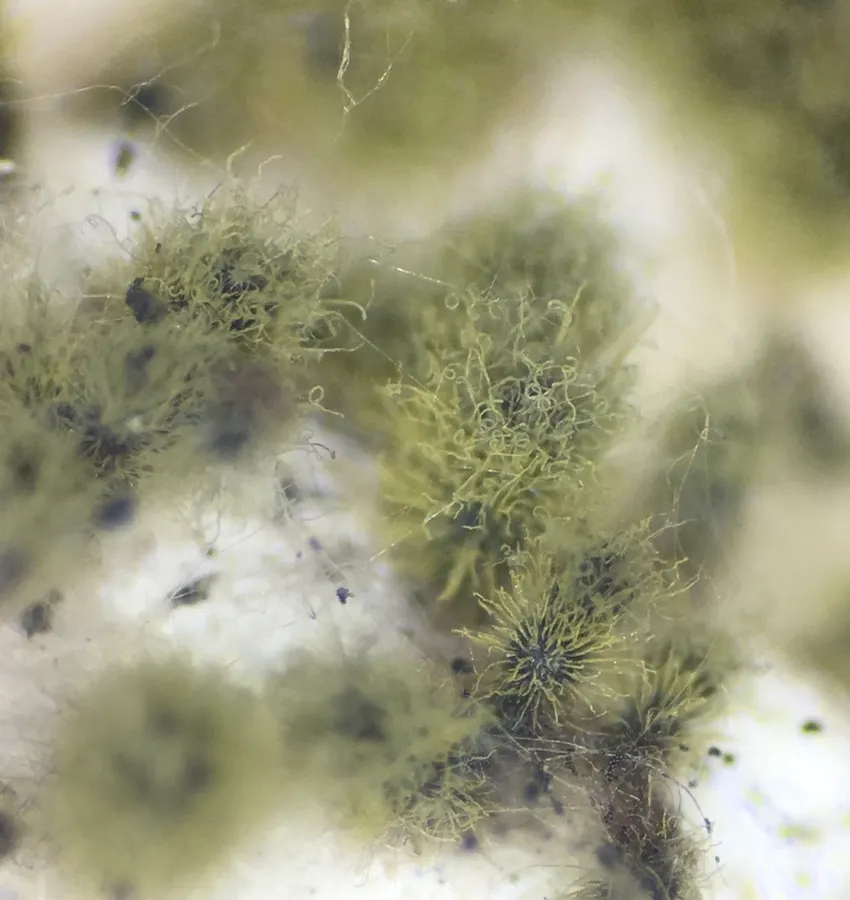
Dokumentasi Chaetomium globosum menurut asosiasi foto pada record takson iNaturalist. Kredit: Sigrid Jakob. Identitas mengikuti sumber; bukan penentuan spesimen independen.
- Jenis
- Fotografi
- Kredit
- no rights reserved, uploaded by Sigrid Jakob
- Lisensi
- CC0 1.0
- Sumber media
- Buka entri sumber
Dokumentasi tambahan
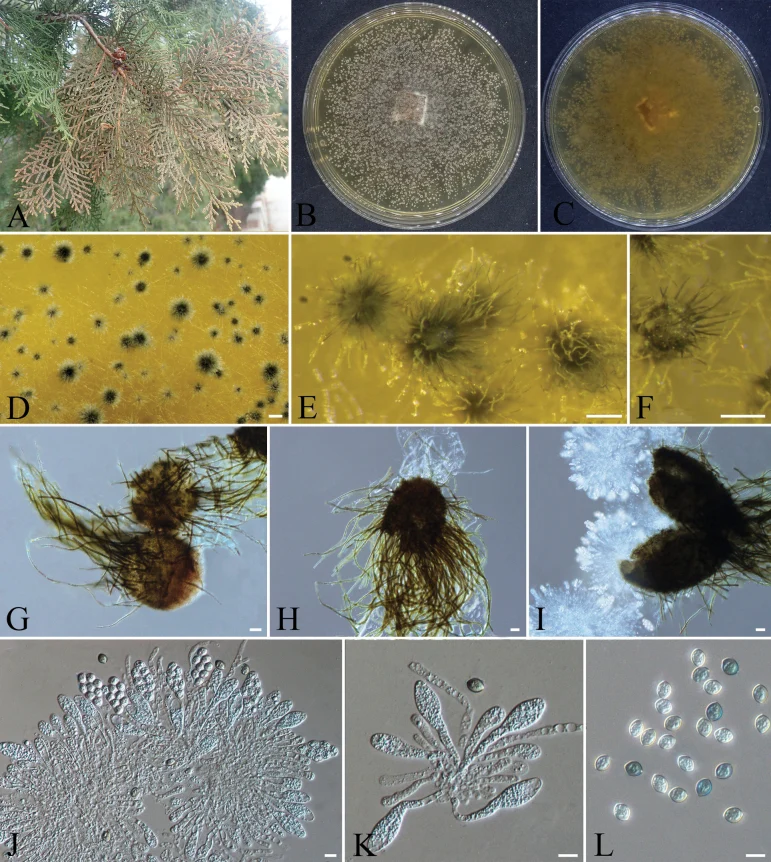
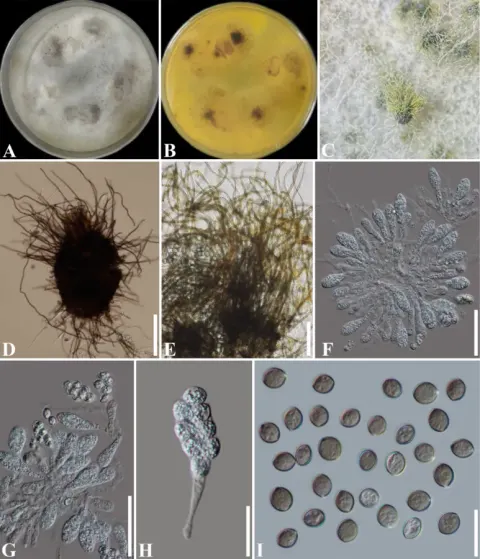
Chaetomium globosum (CFCC 72642). A. Diseased scale leaves habit of Platycladus orientalis; B, C. Colony surface and reverse on PDA; D–F. Ascomata on PDA medium; G–I. Ascomata; J, K. Asci; L. Ascospores. Scale bars: 200 µm (D–F); 10 µm (G–L).
Kredit dan penggunaan
Zixian Bi, Yingying Wu, Shuji Li, Chengming Tian
Ukuran dan format gambar disesuaikan tanpa pemotongan, retus, atau penambahan skala. Lisensi sumber dipertahankan.
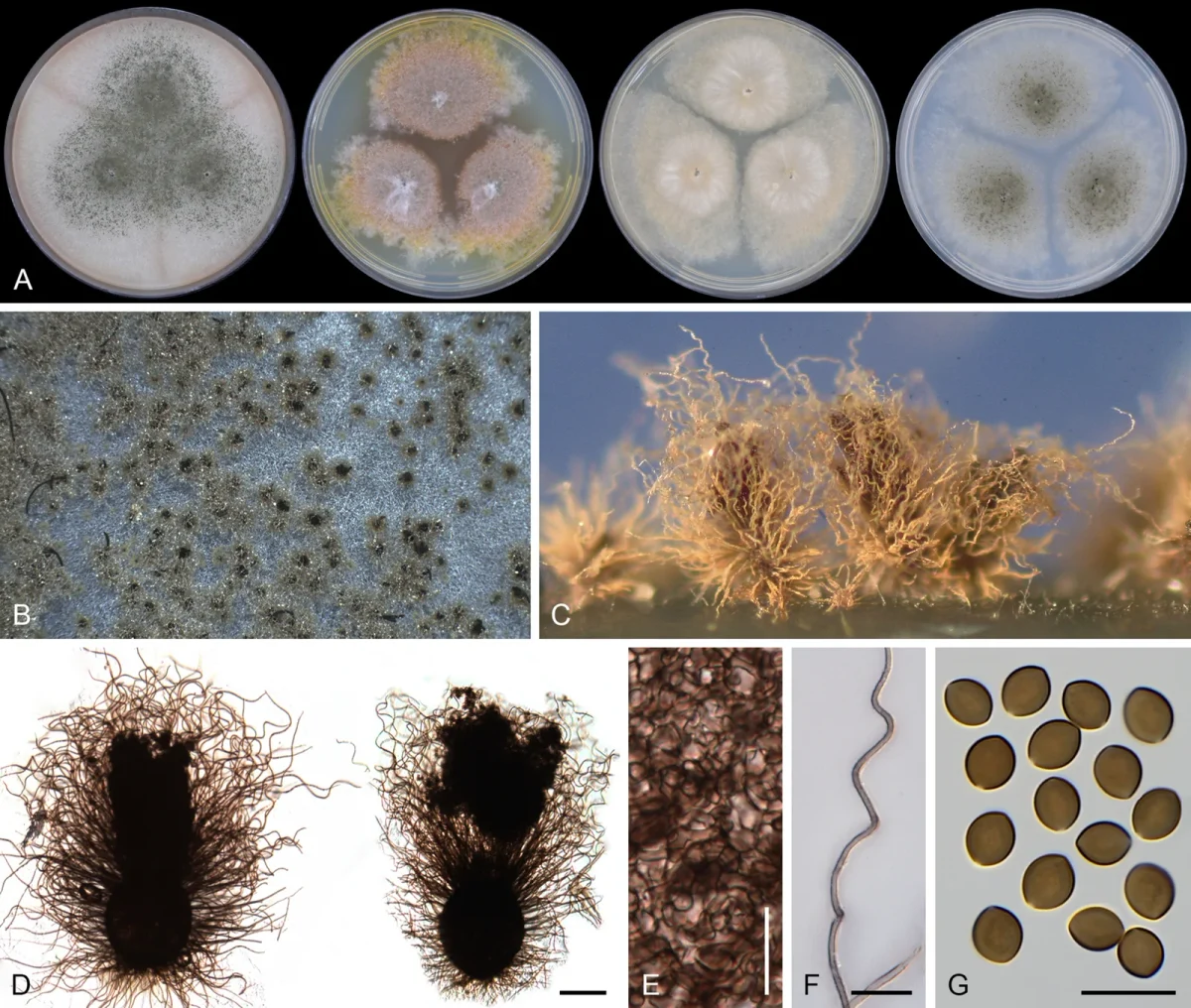
Chaetomium globosum COAD 3732. A. Colonies on OA, CMA, MEA and PCA from left to right after 7 days at 25 °C in the dark; B. Top view of mature ascomata on OA; C. Side view of mature ascomata; D. Ascomata; E. Surface of ascomatal wall; F. Terminal ascomatal hair; G. Ascospores. Scale bars: 100 μm (D); 20 μm (E, F); 10 μm (G).
Kredit dan penggunaan
Danilo Oliveira Ramos, Pedro Thiago Santos Nogueira, Thiago Oliveira Condé, Jaciara dos Santos Santana, Olinto Liparini Pereira
Ukuran dan format gambar disesuaikan tanpa pemotongan, retus, atau penambahan skala. Lisensi sumber dipertahankan.
Sumber profil
- [1] Chaetomium globosum — Wikipedia (en)
- [2] Catalogue of Life Base2026-09-11 — Chaetomium globosum
- [3] Dokumentasi visual — Chaetomium globosum
- [4] Dokumentasi visual — Chaetomium globosum
- [5] Dokumentasi visual — Chaetomium globosum
Rujukan halaman ini
Fungi. Chaetomium globosum. Rilis data fungi-2026-10-12-expansion-2. https://fungi-atlas.mgadib.chatgpt.site/jamur/chaetomium-globosum/.
Status: impor sumber; pemeriksaan editorial per profil belum selesai. Untuk klaim biologis, gunakan rujukan pada bagian terkait dan periksa konteks sumber aslinya.