Ciri dan struktur
Hymenophore annual, membranous, pileate, sessile. Pilei effused-reflexed or flabelliform, solitary or more usually laterally connate and imbricate, sometimes with a broad resupinate base and reflexed margins, occasionally resupinate, 3-10 mm radius, 3-15 mm wide, when connate forming linear areas to 20 cm long; pileus surface coarsely tomentose, concentrically sulcate and zoned, usually straw colour or tan, sometimes dingy grey, occasionally with denuded zones; margin thinning out, concolorous, entire, inturned; hymenial surface even, sometimes scantily rugulose, ochre, pallid plum or purple, occasionally creviced when old. Context white, 0.3-0.5 mm thick, a dense layer of radiately arranged parallel hyphae with a loosely intertwined zone beneath the hymenium containing vesicles, and a coloured cortex from which arise the abhymenial hairs; skeletal hyphae 3.5-4 µm diameter, walls 0.5-1 µm thick; generative hyphae 2.5-3 µm diameter, walls 0.2 µm thick, with clamp connections. Vesicles developing in a zone beneath the hymenial layer, arising from generative hyphae, pyriform, 12-18 µm diameter, carried on stout pedicels. Hymenial layer to 50 µm deep, a dense palisade of basidia, paraphyses, and sometimes paraphysate hyphae. Basidia subclavate, 16-24 x 5-6 µm, bearing 4 spores; sterigmata slender, erect, to 6 µm long. Paraphyses subelavate, 12-18 x 4-5 µm. Cystidioid hyphae absent. Paraphysate hyphae cylindrical, to 5 µm diameter, projecting to 35 µm. Spores elliptical, or with one side slightly flattened, obliquely apiculate, 5.5-8 x 2.5-3.5 µm, walls smooth, hyaline, 0.2 µm thick.
Habitat dan peran ekologis
Readily recognised by the zone of pyriform vesicles beneath the hymenial layer, coarsely tomentose small pilei, often connate and imbricate, dimitic hyphal system with clamp connections in the generative hyphae, and small elliptical, obliquely apiculate spores. Vesicles are readily seen in growing specimens, but in old material collapse and lose their contents or disappear, then leaving cavities in the context. Occasional vesicles are flexuous-cylindrical, traverse the hymenial layer, and simulate gloeocystidia. A coloured cortex is present beneath abhymenial hairs, as in S. hirsutum, but cystidioid hyphae are wanting. Paraphysate hyphae are present in some collections, absent from others, so are without specific significance. The hyphal system is dimitic. Skeletal hyphae, although of about the same diameter as generative, differ in that walls are thicker, septa scanty, and clamp connections wanting. Commonly some shade of purple, the hymenium often exhibits other colours, such as ochre, pallid plum, or grey. In some plants the context, and especially the hymenial layer, appears zoned, the condition probably representing periods of seasonal growth. S. purpureum induces a silver leaf disease of many cultivated fruits, in New Zealand being common on apples, apricots, cherries, gooseberries, peaches, pears, plums, and raspberries.
- Habitat atau konteks temuan
- Informasi belum tersedia pada sumber rilis ini.
- Substrat
- Informasi belum tersedia pada sumber rilis ini.
- Peran atau konteks
- Belum dikategorikan pada rilis ini.
Reproduksi
Hymenophore annual, membranous, pileate, sessile. Pilei effused-reflexed or flabelliform, solitary or more usually laterally connate and imbricate, sometimes with a broad resupinate base and reflexed margins, occasionally resupinate, 3-10 mm radius, 3-15 mm wide, when connate forming linear areas to 20 cm long; pileus surface coarsely tomentose, concentrically sulcate and zoned, usually straw colour or tan, sometimes dingy grey, occasionally with denuded zones; margin thinning out, concolorous, entire, inturned; hymenial surface even, sometimes scantily rugulose, ochre, pallid plum or purple, occasionally creviced when old. Context white, 0.3-0.5 mm thick, a dense layer of radiately arranged parallel hyphae with a loosely intertwined zone beneath the hymenium containing vesicles, and a coloured cortex from which arise the abhymenial hairs; skeletal hyphae 3.5-4 µm diameter, walls 0.5-1 µm thick; generative hyphae 2.5-3 µm diameter, walls 0.2 µm thick, with clamp connections.
Catatan identitas dan cakupan
- Nama diterima mengikuti Catalogue of Life Base2026-09-11; uraian mempertahankan konsep dan nama sumber aslinya.
- Historical description as cited by BiotaNZ. Preserve explicit New Zealand/locality, host and specimen qualifiers. Distribution is the cited source scope, not a current global range.
- Impor dan terjemahan otomatis belum diperiksa editorial per profil. Struktur reproduktif yang disebutkan tidak membuktikan seluruh siklus hidup diketahui.
- Pengukuran pada uraian mengikuti spesimen, kultur, dan metode sumber; angka tidak diperluas ke semua populasi.
Catatan distribusi dalam narasi mengikuti sumbernya. Dokumentasi spesimen atau foto mengikuti catatan sumber. Bukti wilayah Indonesia dan penilaian konservasi tidak disimpulkan dari gambar.
Melihat dengan konteks
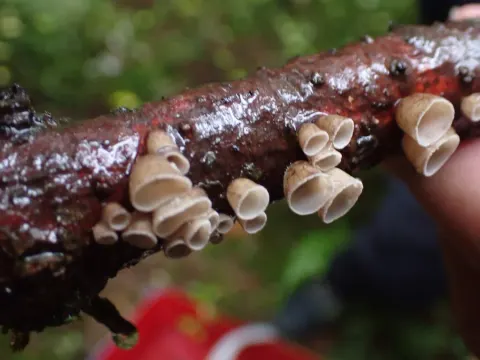
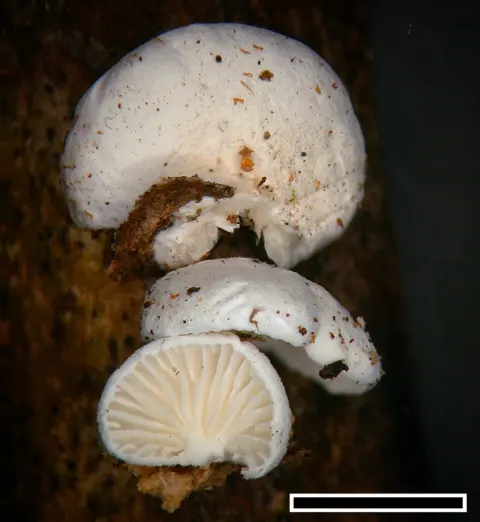
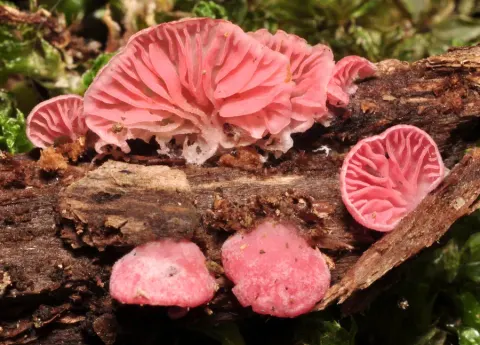
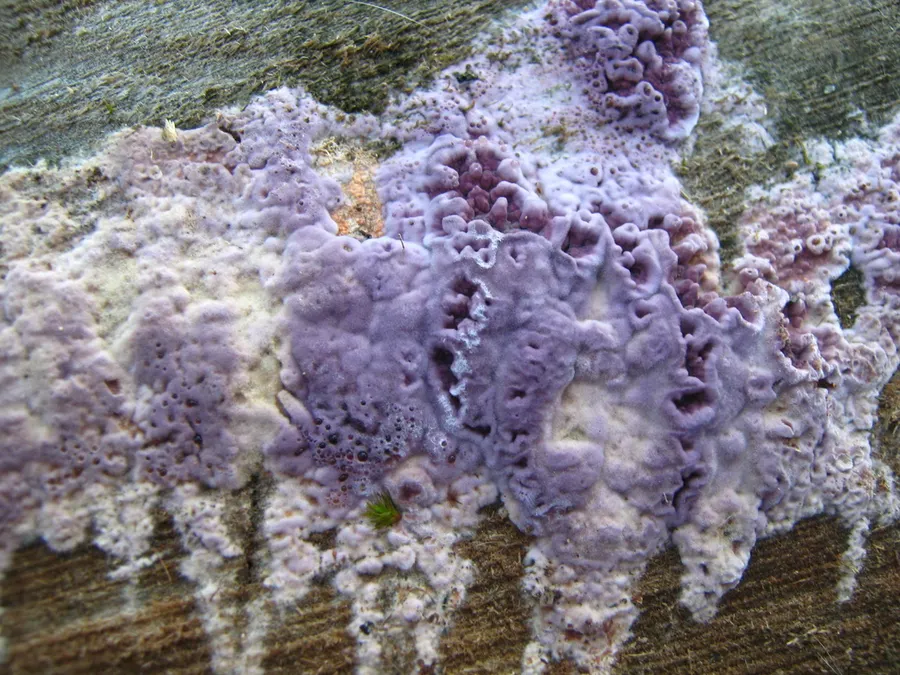
Dokumentasi Chondrostereum purpureum menurut asosiasi foto pada record takson iNaturalist. Kredit: GLJIVARSKO DRUSTVO NIS. Identitas mengikuti sumber; bukan penentuan spesimen independen.
- Jenis
- Fotografi
- Kredit
- (c) GLJIVARSKO DRUSTVO NIS, some rights reserved (CC BY)
- Lisensi
- CC BY 4.0
- Sumber media
- Buka entri sumber
Dokumentasi tambahan
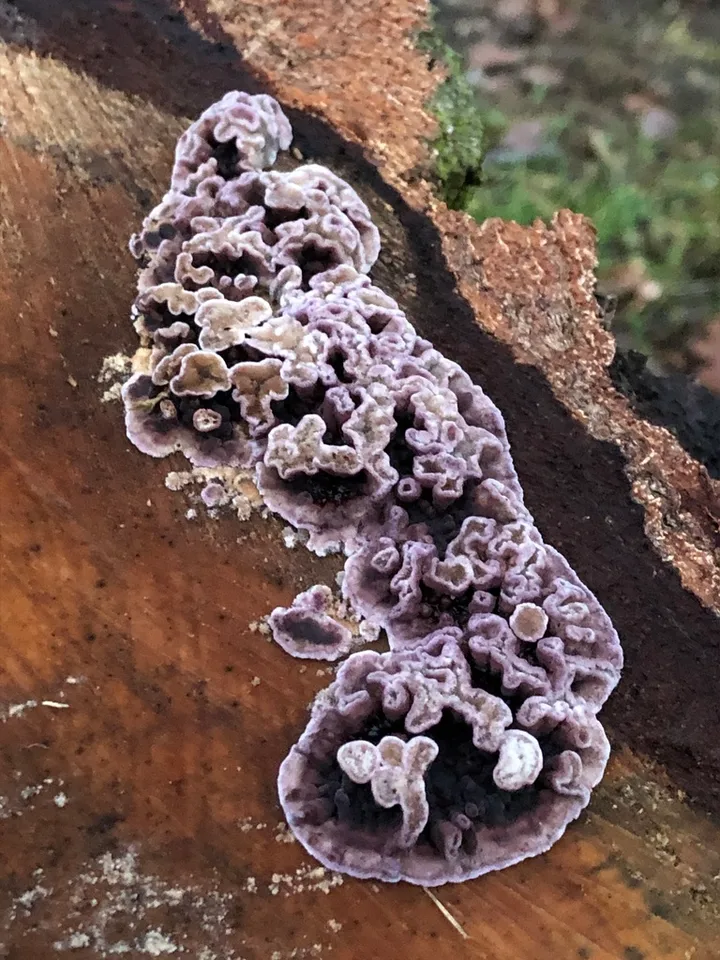
Foto yang diasosiasikan dengan Chondrostereum purpureum pada iNaturalist. Identifikasi mengikuti sumber; bukan penentuan spesimen independen.
Kredit dan penggunaan
(c) mister_bumble, some rights reserved (CC BY), uploaded by mister_bumble
Ukuran dan format gambar disesuaikan tanpa pemotongan, retus, atau penambahan skala. Lisensi sumber dipertahankan.
Sumber profil
- [1] Cunningham, G.H. 1963: The Thelephoraceae of Australia and New Zealand. New Zealand Department of Scientific and Industrial Research, Bulletin. 145. — Stereum purpureum
- [2] Catalogue of Life Base2026-09-11 — Chondrostereum purpureum
- [3] Dokumentasi visual — Chondrostereum purpureum
- [4] Dokumentasi visual — Chondrostereum purpureum
Rujukan halaman ini
Fungi. Chondrostereum purpureum. Rilis data fungi-2026-10-12-expansion-2. https://fungi-atlas.mgadib.chatgpt.site/jamur/chondrostereum-purpureum/.
Status: impor sumber; pemeriksaan editorial per profil belum selesai. Untuk klaim biologis, gunakan rujukan pada bagian terkait dan periksa konteks sumber aslinya.