01 / Morfologi

Ciri dan struktur

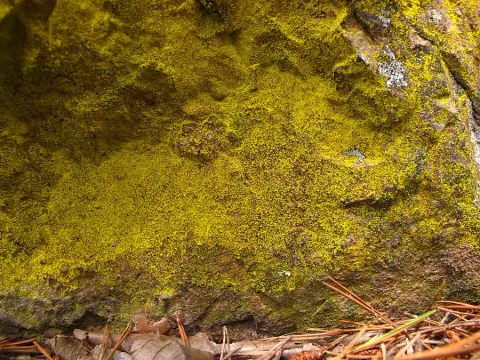
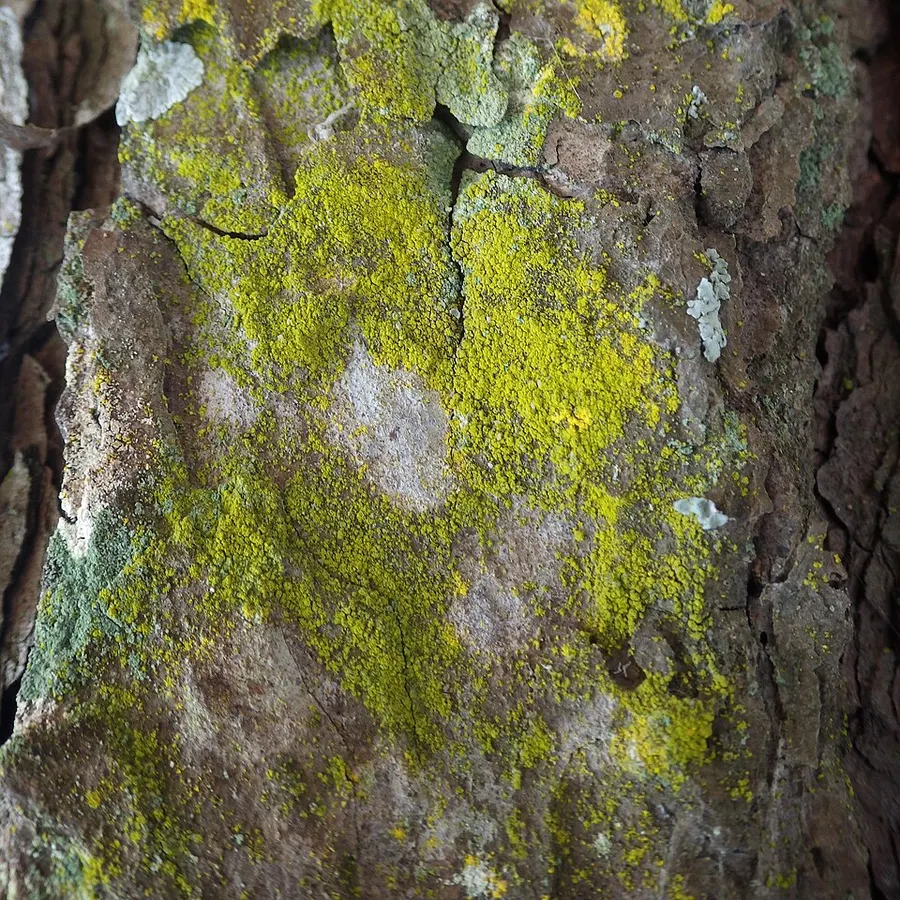
Chrysothrix flavovirens forms a superficial, powdery crust (thallus) that spreads over the substrate in continuous, often extensive patches. The surface is composed of minute, more-or-less evenly sized soredia—loose granules that contain both fungal and algal partners—measuring roughly 20–25 μm in diameter. When the granules are densely packed the thallus can become relatively thick and may crack as it ages; when thin it retains a smoother appearance. Its dull yellow-green colour is typical of the genus. A —an outer margin of purely fungal tissue—is usually indistinct, so the lichen often blends imperceptibly into the surrounding bark or wood. Sexual fruit bodies (apothecia) are uncommon. When present they occur singly or in small numbers, generally on weathered wood rather than on living bark. Each apothecium is tiny, seldom exceeding 0.3 mm across, and tends to lie flat against the surface. The disc margin is frequently masked by overgrowing soredia, giving the fruit body a blurred outline. Internal anatomy mirrors that of the closely related C. chrysophthalma, though C. flavovirens contains fewer crystalline granules within the hymenium. Routine spot tests aid identification. The thallus gives negative reactions with C, K, and Pd, but fluoresces orange under long-wave ultraviolet light (UV+). Applying K and then observing under UV—either on a wet or dried sample—produces a bright yellow glow, a reaction characteristic of rhizocarpic acid, which is the principal secondary metabolite detected in this species. Together, the granular yellow-green crust, scarcity of apothecia, and distinctive chemical profile distinguish C. flavovirens from other members of Chrysothrix.

Sebagian uraian ditampilkan dalam bahasa sumber; terjemahannya belum tersedia atau belum lolos pemeriksaan.

Rujukan: [1]

Pengukuran mengikuti objek, spesimen atau kultur, dan metode yang disebutkan sumber. Baca uraian asli untuk konteks lengkap.

02 / Kehidupan

Habitat dan peran ekologis

The lichen is widespread in Europe, and has also been recorded from Japan and North America. In the Atlantic and Mediterranean biogeographic regions of Portugal, it prefers to grow on the acidic bark of coastal conifer trees.

Sebagian uraian ditampilkan dalam bahasa sumber; terjemahannya belum tersedia atau belum lolos pemeriksaan.

Rujukan: [1]

Habitat atau konteks temuan
Informasi belum tersedia pada sumber rilis ini.
Substrat
Informasi belum tersedia pada sumber rilis ini.
Peran atau konteks
Pembentuk liken
Temukan hubungan serupa
03 / Siklus hidup

Reproduksi

Chrysothrix flavovirens forms a superficial, powdery crust (thallus) that spreads over the substrate in continuous, often extensive patches. The surface is composed of minute, more-or-less evenly sized soredia—loose granules that contain both fungal and algal partners—measuring roughly 20–25 μm in diameter. When the granules are densely packed the thallus can become relatively thick and may crack as it ages; when thin it retains a smoother appearance. Its dull yellow-green colour is typical of the genus. A —an outer margin of purely fungal tissue—is usually indistinct, so the lichen often blends imperceptibly into the surrounding bark or wood. Sexual fruit bodies (apothecia) are uncommon. When present they occur singly or in small numbers, generally on weathered wood rather than on living bark.

Sebagian uraian ditampilkan dalam bahasa sumber; terjemahannya belum tersedia atau belum lolos pemeriksaan.

Rujukan: [1]

04 / Batas informasi

Catatan identitas dan cakupan

  • Nama diterima mengikuti Catalogue of Life Base2026-09-11; uraian mempertahankan konsep dan nama sumber aslinya.
  • Original geographic, specimen and life-cycle scope retained; source import awaits individual editorial review.
  • Impor dan terjemahan otomatis belum diperiksa editorial per profil. Struktur reproduktif yang disebutkan tidak membuktikan seluruh siklus hidup diketahui.
  • Pengukuran pada uraian mengikuti spesimen, kultur, dan metode sumber; angka tidak diperluas ke semua populasi.

Catatan distribusi dalam narasi mengikuti sumbernya. Dokumentasi spesimen atau foto mengikuti catatan sumber. Bukti wilayah Indonesia dan penilaian konservasi tidak disimpulkan dari gambar.

05 / Dokumentasi

Melihat dengan konteks

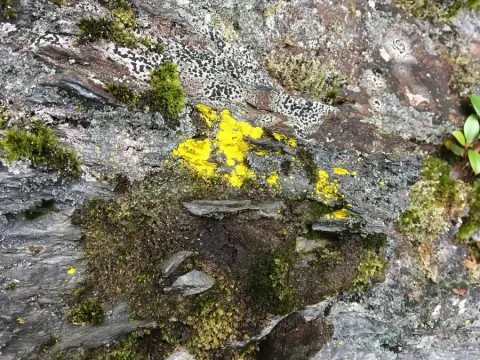
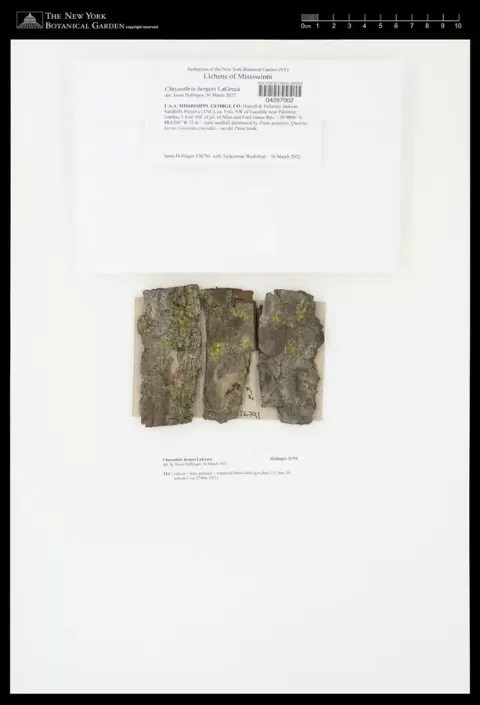
Dokumentasi Chrysothrix flavovirens dari Wikimedia Commons. The lichen Chrysothrix flavovirens growing on the bark of a pine tree in Parque de Monsanto, Lisboa, Portugal. Identifikasi mengikuti record berkas sumber.

Jenis
Fotografi
Kredit
zaca
Sumber media
Buka entri sumber

Gambar menunjukkan objek menurut identifikasi sumber, bukan verifikasi independen spesimen oleh Fungi. Tidak ada skala baru yang ditambahkan.

06 / Rujukan

Sumber profil

  1. [1] Chrysothrix flavovirens — Wikipedia (en)Bagian sumber: Frozen revision 1299420096
    Tanggal penghimpunan sumber: 2026-10-12
    Teks sumber: CC BY-SA4.0 · Wikipedia contributors
  2. [2] Catalogue of Life Base2026-09-11 — Chrysothrix flavovirensBagian sumber: ColDP NameUsage.tsv ID V2DH; accepted species; source 2073
    Tanggal penghimpunan sumber: 2026-10-12
  3. [3] Dokumentasi visual — Chrysothrix flavovirensBagian sumber: Individual media record; identification follows the source, not independent determination
    Tanggal penghimpunan sumber: 2026-10-12
    Media sumber: CC BY-SA 3.0 · zaca

Adaptasi teks: CC BY-SA 4.0. Wikipedia contributors — Chrysothrix flavovirens — Wikipedia (en)

Uraian asli dan riwayat sumber

Riwayat atau halaman sumber

Ringkasan sumber

Chrysothrix flavovirens is a species of crustose and corticolous (bark-dwelling) lichen in the family Chrysotrichaceae. It has a pale greenish-yellow thallus that contains rhizocarpic acid. This lichen forms powdery, granular crusts that spread extensively over tree bark and rarely produces fruiting bodies, instead reproducing mainly through tiny dust-like particles (soredia). Originally described from Norway in 1994, it is now known to be widespread across Europe and has also been found in Japan and North America, where it fluoresces orange under ultraviolet light due to its distinctive chemical composition.

Revisi sumber

Morfologi sumber

Chrysothrix flavovirens forms a superficial, powdery crust (thallus) that spreads over the substrate in continuous, often extensive patches. The surface is composed of minute, more-or-less evenly sized soredia—loose granules that contain both fungal and algal partners—measuring roughly 20–25 μm in diameter. When the granules are densely packed the thallus can become relatively thick and may crack as it ages; when thin it retains a smoother appearance. Its dull yellow-green colour is typical of the genus. A —an outer margin of purely fungal tissue—is usually indistinct, so the lichen often blends imperceptibly into the surrounding bark or wood. Sexual fruit bodies (apothecia) are uncommon. When present they occur singly or in small numbers, generally on weathered wood rather than on living bark. Each apothecium is tiny, seldom exceeding 0.3 mm across, and tends to lie flat against the surface. The disc margin is frequently masked by overgrowing soredia, giving the fruit body a blurred outline. Internal anatomy mirrors that of the closely related C. chrysophthalma, though C. flavovirens contains fewer crystalline granules within the hymenium. Routine spot tests aid identification. The thallus gives negative reactions with C, K, and Pd, but fluoresces orange under long-wave ultraviolet light (UV+). Applying K and then observing under UV—either on a wet or dried sample—produces a bright yellow glow, a reaction characteristic of rhizocarpic acid, which is the principal secondary metabolite detected in this species. Together, the granular yellow-green crust, scarcity of apothecia, and distinctive chemical profile distinguish C. flavovirens from other members of Chrysothrix.

Revisi sumber

Ekologi sumber

The lichen is widespread in Europe, and has also been recorded from Japan and North America. In the Atlantic and Mediterranean biogeographic regions of Portugal, it prefers to grow on the acidic bark of coastal conifer trees.

Revisi sumber

Struktur reproduksi sumber

Chrysothrix flavovirens forms a superficial, powdery crust (thallus) that spreads over the substrate in continuous, often extensive patches. The surface is composed of minute, more-or-less evenly sized soredia—loose granules that contain both fungal and algal partners—measuring roughly 20–25 μm in diameter. When the granules are densely packed the thallus can become relatively thick and may crack as it ages; when thin it retains a smoother appearance. Its dull yellow-green colour is typical of the genus. A —an outer margin of purely fungal tissue—is usually indistinct, so the lichen often blends imperceptibly into the surrounding bark or wood. Sexual fruit bodies (apothecia) are uncommon. When present they occur singly or in small numbers, generally on weathered wood rather than on living bark.

Revisi sumber

Rujukan halaman ini

Fungi. Chrysothrix flavovirens. Rilis data fungi-2026-10-12-expansion-2. https://fungi-atlas.mgadib.chatgpt.site/jamur/chrysothrix-flavovirens/.

Status: impor sumber; pemeriksaan editorial per profil belum selesai. Untuk klaim biologis, gunakan rujukan pada bagian terkait dan periksa konteks sumber aslinya.