01 / Morfologi

Ciri dan struktur

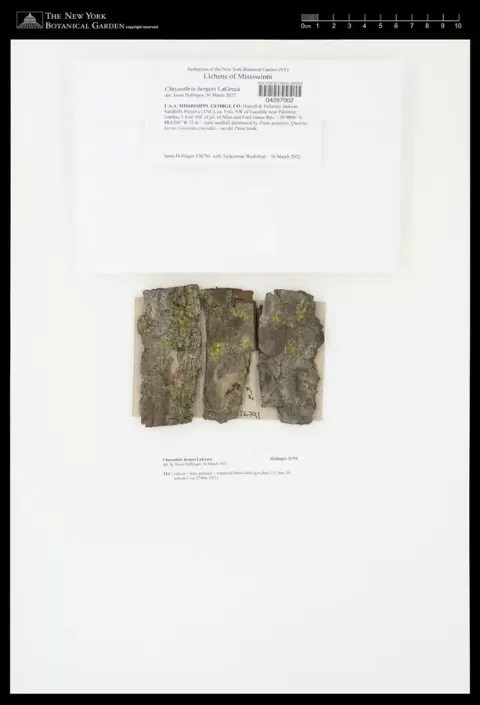
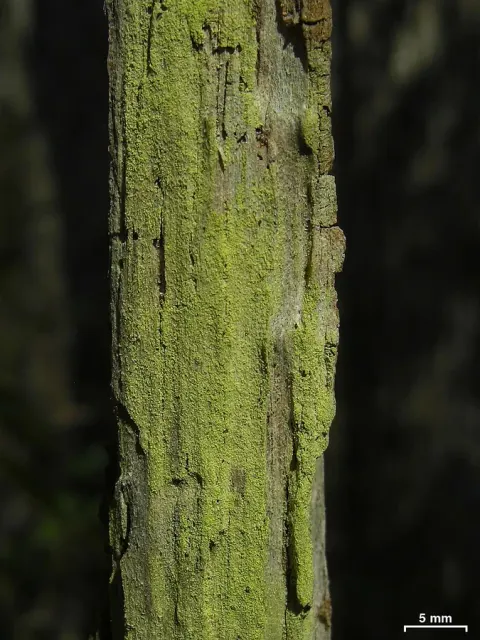
Chrysothrix insulizans has a crustose, leprose thallus that is thin to moderately thick and brightly colored. The unstratified and adherent thallus forms small, round or irregular soralium-like colonies, which can expand into larger continuous patches. The are and spherical, with diameters between 20 and 50 μm. Both and , typical reproductive structures in lichens, are not observed in this species. The lichen's is , measuring between 9–14 μm across. On a chemical level, it tests positive for calycin and possibly leprapinic acid. Chrysothrix galapagoana, found in the Galapagos Islands, is somewhat similar to Chrysothrix insulizans, and also produces calycin. It is distinguished by its larger granules (typically 170–250 μm in diameter), the presence of a distinctly pseudo-areolate thallus, and the lack of an unidentified secondary substance. Chrysothrix bergeri is lookalike with similar secondary chemistry and distribution, but it is distinguished from C. insulizans by its continuous thallus and corticolous substrate preference.

Sebagian uraian ditampilkan dalam bahasa sumber; terjemahannya belum tersedia atau belum lolos pemeriksaan.

Rujukan: [1]

Pengukuran mengikuti objek, spesimen atau kultur, dan metode yang disebutkan sumber. Baca uraian asli untuk konteks lengkap.

02 / Kehidupan

Habitat dan peran ekologis

Chrysothrix insulizans can be found primarily on non-calcareous rocks, in both shaded and exposed situations. It is most prevalent in the southeastern United States and the Ozarks region. The species is frequently collected from sandstone, but can also be found on rhyolite, granite, and cherty dolomites. While initially thought to only inhabit rocks, some specimens have been found on bark, indicating broader substrate preferences than originally assumed. These findings, especially those from Maine and Michigan, suggest there may be another distinct taxon related to Chrysothrix insulizans, which could require molecular methods for definitive classification.

Sebagian uraian ditampilkan dalam bahasa sumber; terjemahannya belum tersedia atau belum lolos pemeriksaan.

Rujukan: [1]

Habitat atau konteks temuan
Informasi belum tersedia pada sumber rilis ini.
Substrat
kulit kayu
Peran atau konteks
Pembentuk liken
Temukan hubungan serupa
03 / Siklus hidup

Reproduksi

Chrysothrix insulizans has a crustose, leprose thallus that is thin to moderately thick and brightly colored. The unstratified and adherent thallus forms small, round or irregular soralium-like colonies, which can expand into larger continuous patches. The are and spherical, with diameters between 20 and 50 μm. Both and , typical reproductive structures in lichens, are not observed in this species. The lichen's is , measuring between 9–14 μm across. On a chemical level, it tests positive for calycin and possibly leprapinic acid.

Sebagian uraian ditampilkan dalam bahasa sumber; terjemahannya belum tersedia atau belum lolos pemeriksaan.

Rujukan: [1]

04 / Batas informasi

Catatan identitas dan cakupan

  • Nama diterima mengikuti Catalogue of Life Base2026-09-11; uraian mempertahankan konsep dan nama sumber aslinya.
  • Original geographic, specimen and life-cycle scope retained; source import awaits individual editorial review.
  • Impor dan terjemahan otomatis belum diperiksa editorial per profil. Struktur reproduktif yang disebutkan tidak membuktikan seluruh siklus hidup diketahui.
  • Pengukuran pada uraian mengikuti spesimen, kultur, dan metode sumber; angka tidak diperluas ke semua populasi.

Catatan distribusi dalam narasi mengikuti sumbernya. Dokumentasi spesimen atau foto mengikuti catatan sumber. Bukti wilayah Indonesia dan penilaian konservasi tidak disimpulkan dari gambar.

05 / Dokumentasi

Melihat dengan konteks

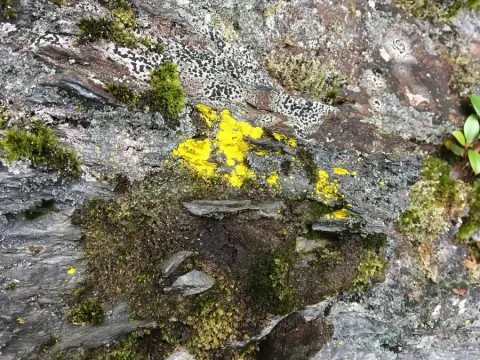
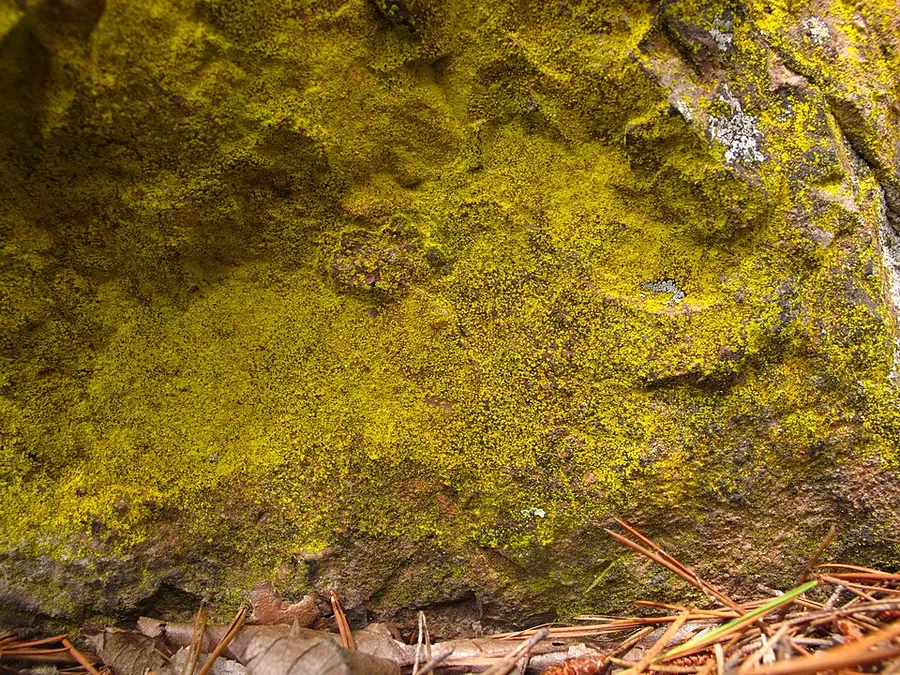
Dokumentasi Chrysothrix insulizans dari Wikimedia Commons. The leprose lichen Chrysothrix insulizans R.C.Harris & Ladd, photographed in Lower Rock Creek, Fredericktown, Missouri, USA. Identifikasi mengikuti record berkas sumber.

Jenis
Fotografi
Kredit
Patrick Harvey (pg_harvey)
Sumber media
Buka entri sumber

Gambar menunjukkan objek menurut identifikasi sumber, bukan verifikasi independen spesimen oleh Fungi. Tidak ada skala baru yang ditambahkan.

06 / Rujukan

Sumber profil

  1. [1] Chrysothrix insulizans — Wikipedia (en)Bagian sumber: Frozen revision 1322021317
    Tanggal penghimpunan sumber: 2026-10-12
    Teks sumber: CC BY-SA4.0 · Wikipedia contributors
  2. [2] Catalogue of Life Base2026-09-11 — Chrysothrix insulizansBagian sumber: ColDP NameUsage.tsv ID V2DL; accepted species; source 2073
    Tanggal penghimpunan sumber: 2026-10-12
  3. [3] Dokumentasi visual — Chrysothrix insulizansBagian sumber: Individual media record; identification follows the source, not independent determination
    Tanggal penghimpunan sumber: 2026-10-12
    Media sumber: CC BY-SA 3.0 · Patrick Harvey (pg_harvey)

Adaptasi teks: CC BY-SA 4.0. Wikipedia contributors — Chrysothrix insulizans — Wikipedia (en)

Uraian asli dan riwayat sumber

Riwayat atau halaman sumber

Ringkasan sumber

Chrysothrix insulizans is a species of leprose lichen in the family Chrysotrichaceae. It is a distinctive species of lichen characterized by its bright yellow-green to yellow-orange coloring and unique growth patterns. Most collections have been found growing on rocks, although a few have been recorded growing on bark.

Revisi sumber

Morfologi sumber

Chrysothrix insulizans has a crustose, leprose thallus that is thin to moderately thick and brightly colored. The unstratified and adherent thallus forms small, round or irregular soralium-like colonies, which can expand into larger continuous patches. The are and spherical, with diameters between 20 and 50 μm. Both and , typical reproductive structures in lichens, are not observed in this species. The lichen's is , measuring between 9–14 μm across. On a chemical level, it tests positive for calycin and possibly leprapinic acid. Chrysothrix galapagoana, found in the Galapagos Islands, is somewhat similar to Chrysothrix insulizans, and also produces calycin. It is distinguished by its larger granules (typically 170–250 μm in diameter), the presence of a distinctly pseudo-areolate thallus, and the lack of an unidentified secondary substance. Chrysothrix bergeri is lookalike with similar secondary chemistry and distribution, but it is distinguished from C. insulizans by its continuous thallus and corticolous substrate preference.

Revisi sumber

Ekologi sumber

Chrysothrix insulizans can be found primarily on non-calcareous rocks, in both shaded and exposed situations. It is most prevalent in the southeastern United States and the Ozarks region. The species is frequently collected from sandstone, but can also be found on rhyolite, granite, and cherty dolomites. While initially thought to only inhabit rocks, some specimens have been found on bark, indicating broader substrate preferences than originally assumed. These findings, especially those from Maine and Michigan, suggest there may be another distinct taxon related to Chrysothrix insulizans, which could require molecular methods for definitive classification.

Revisi sumber

Struktur reproduksi sumber

Chrysothrix insulizans has a crustose, leprose thallus that is thin to moderately thick and brightly colored. The unstratified and adherent thallus forms small, round or irregular soralium-like colonies, which can expand into larger continuous patches. The are and spherical, with diameters between 20 and 50 μm. Both and , typical reproductive structures in lichens, are not observed in this species. The lichen's is , measuring between 9–14 μm across. On a chemical level, it tests positive for calycin and possibly leprapinic acid.

Revisi sumber

Rujukan halaman ini

Fungi. Chrysothrix insulizans. Rilis data fungi-2026-10-12-expansion-2. https://fungi-atlas.mgadib.chatgpt.site/jamur/chrysothrix-insulizans/.

Status: impor sumber; pemeriksaan editorial per profil belum selesai. Untuk klaim biologis, gunakan rujukan pada bagian terkait dan periksa konteks sumber aslinya.