01 / Morfologi

Ciri dan struktur

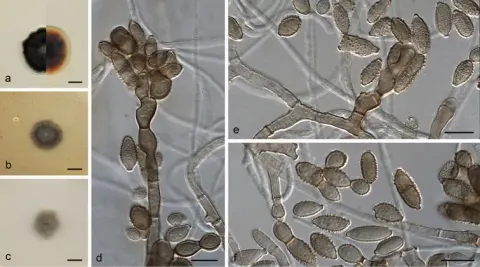
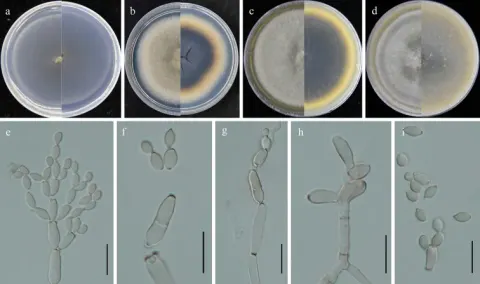
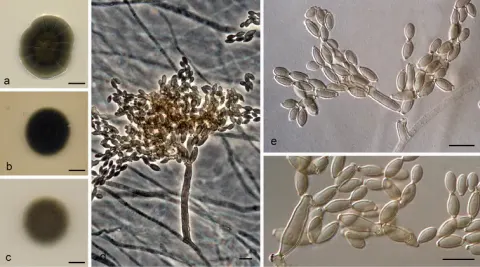
The hyphae of Cladosporium sphaerospermum are thick walled, septate, and olivaceous-brown in colour. Colonies of the fungus are velvety in texture and flattened (i.e., rarely raised, fluffy, or radially furrowed). C. sphaerospermum conidiophores are branched, septate, and dark, up to 150–300 μm long and 3.5–4.0 μm wide. The structure of the conidiophores are tree-like, a prominent feature of the genus Cladosporium. Unlike other related species, the conidiophores of this species lack swollen nodes at the branching points. Conidia of this species are characteristically globose to ellipsoid with a diameter of 3.4–4.0 μm. The conidia are formed in branching chains in which the youngest conidium is situated at the top. Cladosporium sphaerospermum also produces ramoconidia 6–14 × 3.5–4.0 μm in length and this feature can be used as a method of distinguishing between similar species. Ramoconidia are conidia found at the branching points joining multiple spore chains and can be recognized by one end having a single attachment scar and the other end having two or more attachment scars. Cladosporium sphaerospermum is also a psychrophilic fungus, known to grow at temperatures as low as -5 C with an upper limit of 35 C and no growth at 37 C. The optimal temperature this fungus grows under is 25 C. This fungus is xerotolerant as it can thrive in environments with low water activity caused by high salinity (halotolerant) or other dissolved solutes. This fungus has been observed to grow in as low as 0.815 aw (water activity) in vitro.

Sebagian uraian ditampilkan dalam bahasa sumber; terjemahannya belum tersedia atau belum lolos pemeriksaan.

Rujukan: [1]

Pengukuran mengikuti objek, spesimen atau kultur, dan metode yang disebutkan sumber. Baca uraian asli untuk konteks lengkap.

02 / Kehidupan

Habitat dan peran ekologis

Cladosporium sphaerospermum is a cosmopolitan fungus that inhabits city buildings and the environment and because of its airborne nature it can move rapidly between locations, though the extent of this is lacking in research. It is found in hypersaline environments in Mediterranean and tropical climates, as well as soil and plant environments in temperate climates. The indoor presence of this fungus can signify there is a condensation problem within the building such as on bathroom walls and in kitchens. Cladosporium sphaerospermum has also been shown to inhabit paint films on walls and other surfaces as well as old paintings. This fungus is also able to grow on gypsum-based material with and without paint and wallpaper. Plant materials that are affected include citrus leaves and various other decaying plant leaves, on the stems of herbaceous and woody plants, on fruits and vegetables. The fungus has also been reported from wheat-based bakery items.

Sebagian uraian ditampilkan dalam bahasa sumber; terjemahannya belum tersedia atau belum lolos pemeriksaan.

Rujukan: [1]

Habitat atau konteks temuan
Informasi belum tersedia pada sumber rilis ini.
Substrat
Informasi belum tersedia pada sumber rilis ini.
Peran atau konteks
Belum dikategorikan pada rilis ini.
Temukan hubungan serupa
03 / Siklus hidup

Reproduksi

The hyphae of Cladosporium sphaerospermum are thick walled, septate, and olivaceous-brown in colour. Colonies of the fungus are velvety in texture and flattened (i.e., rarely raised, fluffy, or radially furrowed). C. sphaerospermum conidiophores are branched, septate, and dark, up to 150–300 μm long and 3.5–4.0 μm wide. The structure of the conidiophores are tree-like, a prominent feature of the genus Cladosporium. Unlike other related species, the conidiophores of this species lack swollen nodes at the branching points. Conidia of this species are characteristically globose to ellipsoid with a diameter of 3.4–4.0 μm. The conidia are formed in branching chains in which the youngest conidium is situated at the top.

Sebagian uraian ditampilkan dalam bahasa sumber; terjemahannya belum tersedia atau belum lolos pemeriksaan.

Rujukan: [1]

04 / Batas informasi

Catatan identitas dan cakupan

  • Nama diterima mengikuti Catalogue of Life Base2026-09-11; uraian mempertahankan konsep dan nama sumber aslinya.
  • Original geographic, specimen and life-cycle scope retained; source import awaits individual editorial review.
  • Impor dan terjemahan otomatis belum diperiksa editorial per profil. Struktur reproduktif yang disebutkan tidak membuktikan seluruh siklus hidup diketahui.
  • Pengukuran pada uraian mengikuti spesimen, kultur, dan metode sumber; angka tidak diperluas ke semua populasi.

Catatan distribusi dalam narasi mengikuti sumbernya. Dokumentasi spesimen atau foto mengikuti catatan sumber. Bukti wilayah Indonesia dan penilaian konservasi tidak disimpulkan dari gambar.

05 / Dokumentasi

Melihat dengan konteks

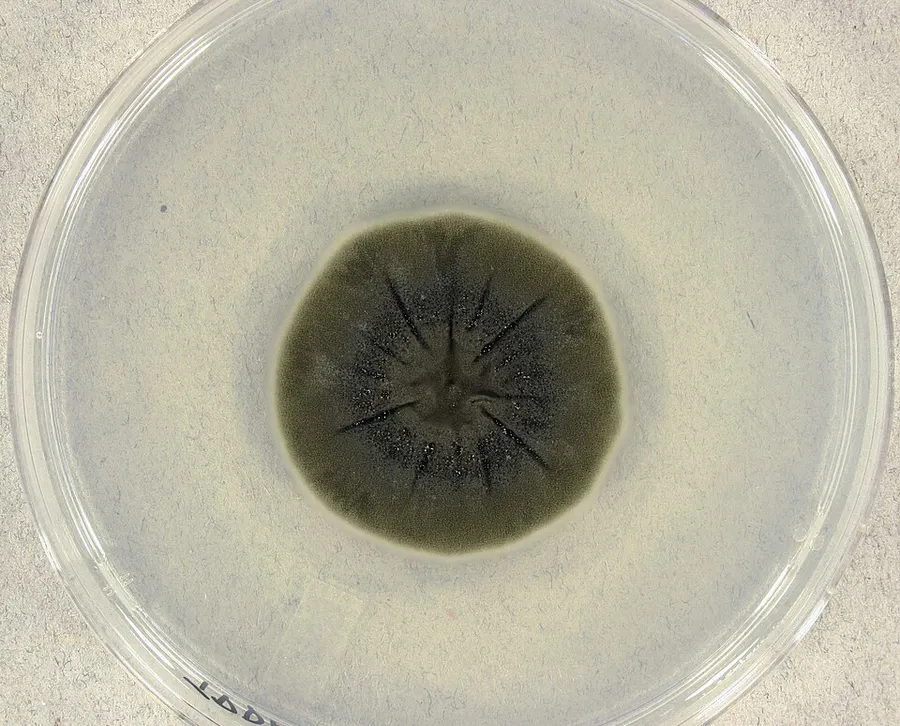
Dokumentasi Cladosporium sphaerospermum dari Wikimedia Commons. Cladosporium sphaerospermum (UAMH 4745) on potato dextrose agar after incubation for 14 days at 25°C. Identifikasi mengikuti record berkas sumber.

Jenis
Fotografi
Kredit
Medmyco
Sumber media
Buka entri sumber

Gambar menunjukkan objek menurut identifikasi sumber, bukan verifikasi independen spesimen oleh Fungi. Tidak ada skala baru yang ditambahkan.

06 / Rujukan

Sumber profil

  1. [1] Cladosporium sphaerospermum — Wikipedia (en)Bagian sumber: Frozen revision 1377179738
    Tanggal penghimpunan sumber: 2026-10-12
    Teks sumber: CC BY-SA4.0 · Wikipedia contributors
  2. [2] Catalogue of Life Base2026-09-11 — Cladosporium sphaerospermumBagian sumber: ColDP NameUsage.tsv ID VQBM; accepted species; source 2073
    Tanggal penghimpunan sumber: 2026-10-12
  3. [3] Dokumentasi visual — Cladosporium sphaerospermumBagian sumber: Individual media record; identification follows the source, not independent determination
    Tanggal penghimpunan sumber: 2026-10-12
    Media sumber: CC BY-SA 4.0 · Medmyco

Adaptasi teks: CC BY-SA 4.0. Wikipedia contributors — Cladosporium sphaerospermum — Wikipedia (en)

Uraian asli dan riwayat sumber

Riwayat atau halaman sumber

Ringkasan sumber

Cladosporium sphaerospermum is a radiotrophic fungus belonging to the genus Cladosporium and was described in 1882 by Albert Julius Otto Penzig from the decaying leaves and branches of Citrus. It is a dematiaceous (darkly-pigmented) fungus characterized by slow growth and largely asexual reproduction. Cladosporium sphaerospermum consists of a complex of poorly morphologically differentiated "cryptic" species that share many physiological and ecological attributes. In older literature, all of these sibling species were classified as C. sphaerospermum despite their unique nature.

Revisi sumber

Morfologi sumber

The hyphae of Cladosporium sphaerospermum are thick walled, septate, and olivaceous-brown in colour. Colonies of the fungus are velvety in texture and flattened (i.e., rarely raised, fluffy, or radially furrowed). C. sphaerospermum conidiophores are branched, septate, and dark, up to 150–300 μm long and 3.5–4.0 μm wide. The structure of the conidiophores are tree-like, a prominent feature of the genus Cladosporium. Unlike other related species, the conidiophores of this species lack swollen nodes at the branching points. Conidia of this species are characteristically globose to ellipsoid with a diameter of 3.4–4.0 μm. The conidia are formed in branching chains in which the youngest conidium is situated at the top. Cladosporium sphaerospermum also produces ramoconidia 6–14 × 3.5–4.0 μm in length and this feature can be used as a method of distinguishing between similar species. Ramoconidia are conidia found at the branching points joining multiple spore chains and can be recognized by one end having a single attachment scar and the other end having two or more attachment scars. Cladosporium sphaerospermum is also a psychrophilic fungus, known to grow at temperatures as low as -5 C with an upper limit of 35 C and no growth at 37 C. The optimal temperature this fungus grows under is 25 C. This fungus is xerotolerant as it can thrive in environments with low water activity caused by high salinity (halotolerant) or other dissolved solutes. This fungus has been observed to grow in as low as 0.815 aw (water activity) in vitro.

Revisi sumber

Ekologi sumber

Cladosporium sphaerospermum is a cosmopolitan fungus that inhabits city buildings and the environment and because of its airborne nature it can move rapidly between locations, though the extent of this is lacking in research. It is found in hypersaline environments in Mediterranean and tropical climates, as well as soil and plant environments in temperate climates. The indoor presence of this fungus can signify there is a condensation problem within the building such as on bathroom walls and in kitchens. Cladosporium sphaerospermum has also been shown to inhabit paint films on walls and other surfaces as well as old paintings. This fungus is also able to grow on gypsum-based material with and without paint and wallpaper. Plant materials that are affected include citrus leaves and various other decaying plant leaves, on the stems of herbaceous and woody plants, on fruits and vegetables. The fungus has also been reported from wheat-based bakery items.

Revisi sumber

Struktur reproduksi sumber

The hyphae of Cladosporium sphaerospermum are thick walled, septate, and olivaceous-brown in colour. Colonies of the fungus are velvety in texture and flattened (i.e., rarely raised, fluffy, or radially furrowed). C. sphaerospermum conidiophores are branched, septate, and dark, up to 150–300 μm long and 3.5–4.0 μm wide. The structure of the conidiophores are tree-like, a prominent feature of the genus Cladosporium. Unlike other related species, the conidiophores of this species lack swollen nodes at the branching points. Conidia of this species are characteristically globose to ellipsoid with a diameter of 3.4–4.0 μm. The conidia are formed in branching chains in which the youngest conidium is situated at the top.

Revisi sumber

Rujukan halaman ini

Fungi. Cladosporium sphaerospermum. Rilis data fungi-2026-10-12-expansion-2. https://fungi-atlas.mgadib.chatgpt.site/jamur/cladosporium-sphaerospermum/.

Status: impor sumber; pemeriksaan editorial per profil belum selesai. Untuk klaim biologis, gunakan rujukan pada bagian terkait dan periksa konteks sumber aslinya.