Ciri dan struktur
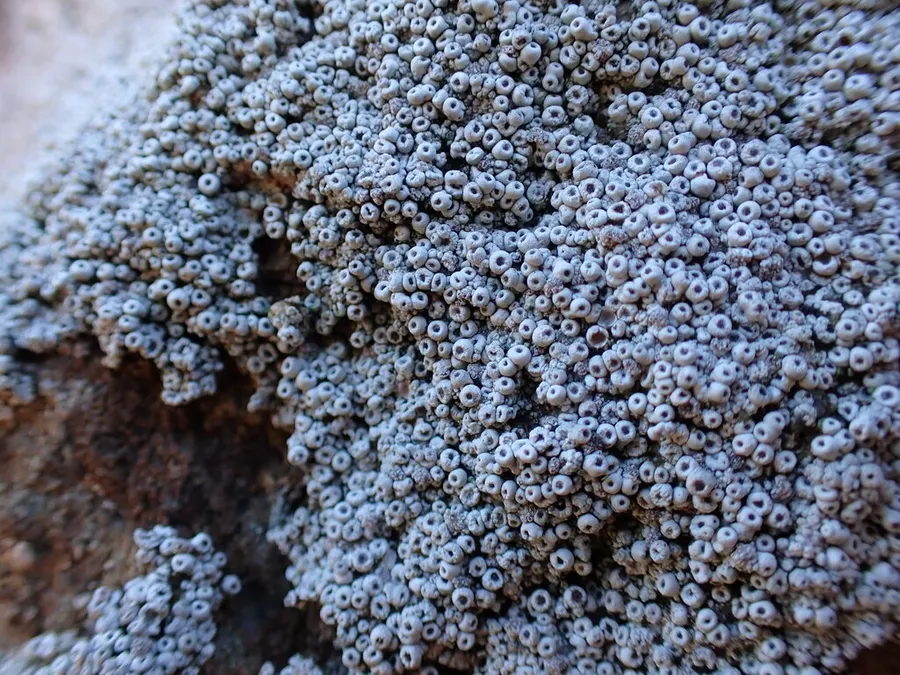
The thallus (the main body of the lichen) is thick, rough and crusty, taking on the appearance of dry, cracked mud. It is white to pinkish or yellowish-gray in colour, and porous to allow for gas exchange. From a distance, C. maritimum can be seen on the rocks as a white line just above the surface of the water. The outer surface of C.maritimum is scattered with hemispherical nitrogen-fixing structures (cephalodia) that are pinkish to brownish–grey in colour.
Habitat dan peran ekologis
Coccotrema maritimum ditemukan di tepi atas batuan pesisir, tepat di atas zona semprotan garam. They can memanjang sampai 700m di atas garis pantai, dan jarang ditemukan di permukaan vertikal batuan yang sangat terpapar. Coccotrema maritimum berlayang hanya ke permukaan batuan. Coccotrema maritimum memiliki rentang yang sangat terbatas; mereka hanya terlihat di pantai British Columbia, Kanada. They are berlimpah di Haida Gwaii, terletak sekitar 80 km di benua British Columbia, utara Pulau Vancouver.
- Habitat atau konteks temuan
- Informasi belum tersedia pada sumber rilis ini.
- Substrat
- Informasi belum tersedia pada sumber rilis ini.
- Peran atau konteks
- Pembentuk liken
Reproduksi
As in other lichens, Coccotrema species can reproduce sexually by generating tiny spores. Six to eight spores can be found per ascus (a sac where spores develop). Asci are arranged in two rows with thin, smooth walls; they are initially colourless but become red-brown with age. The asci are stored in the hymenial cavity which is often slightly depressed with a pink or orange tint. Paraphyses (microscopic structures) are long, unbranched, and slender, and can be found lining pores in the hymenial cavity through which spores escape. Coccotrema maritimum lack soredia and isidia (vegetative, or sexual reproductive structures); however, they do possess pycnidia. Pycnidia are located along the summits of long wart-like projections on the surface of the lichen, and are pale red-brown fruiting bodies lined with non-motile spores.
Catatan identitas dan cakupan
- Nama diterima mengikuti Catalogue of Life Base2026-09-11; uraian mempertahankan konsep dan nama sumber aslinya.
- Original geographic, specimen and life-cycle scope retained; source import awaits individual editorial review.
- Impor dan terjemahan otomatis belum diperiksa editorial per profil. Struktur reproduktif yang disebutkan tidak membuktikan seluruh siklus hidup diketahui.
- Pengukuran pada uraian mengikuti spesimen, kultur, dan metode sumber; angka tidak diperluas ke semua populasi.
Catatan distribusi dalam narasi mengikuti sumbernya. Dokumentasi spesimen atau foto mengikuti catatan sumber. Bukti wilayah Indonesia dan penilaian konservasi tidak disimpulkan dari gambar.
Melihat dengan konteks
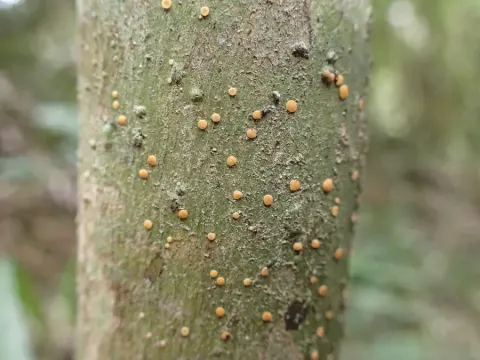
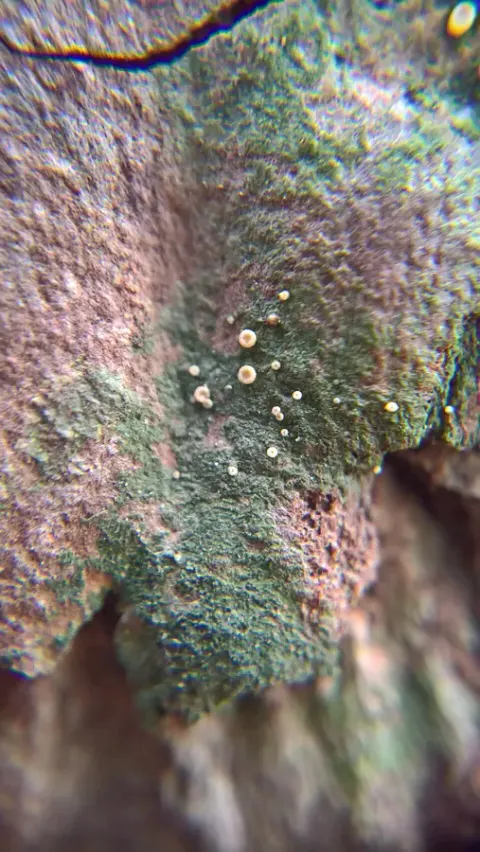
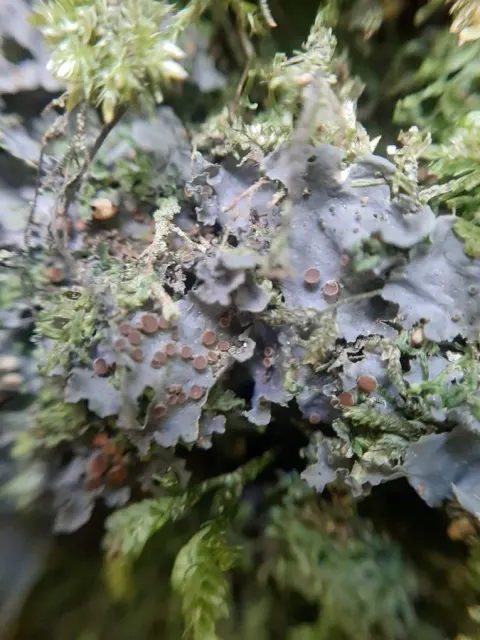
Dokumentasi Coccotrema maritimum menurut asosiasi foto pada record takson iNaturalist. Kredit: Fotografer tidak dicantumkan. Sumber observasi iNaturalist; pengunggah: Randal. Identitas mengikuti sumber; bukan penentuan spesimen independen.
- Jenis
- Fotografi
- Kredit
- Fotografer tidak dicantumkan. Sumber observasi iNaturalist; pengunggah: Randal
- Lisensi
- CC0 1.0
- Sumber media
- Buka entri sumber
Sumber profil
- [1] Coccotrema maritimum — Wikipedia (en)
- [2] Catalogue of Life Base2026-09-11 — Coccotrema maritimum
- [3] Dokumentasi visual — Coccotrema maritimum
Rujukan halaman ini
Fungi. Coccotrema maritimum. Rilis data fungi-2026-10-12-expansion-2. https://fungi-atlas.mgadib.chatgpt.site/jamur/coccotrema-maritimum/.
Status: impor sumber; pemeriksaan editorial per profil belum selesai. Untuk klaim biologis, gunakan rujukan pada bagian terkait dan periksa konteks sumber aslinya.