01 / Morfologi

Ciri dan struktur

Mature caps are convex, usually grooved at the rolled-in margins, and typically reach diameters between 10 – 20 cm. The surface color of the cap is chestnut or chocolate-brown with violet-copper tint. It has a light covering of surface fibrils and veil remnants that may appear as if pressed against the surface, or like small scales. The gills are whitish with an amethyst tint then later creamy clay- to rust-colored. They are crowded closely together, and have edges that are usually wavy and scalloped. The stem is 10 – 15 cm long and 3 – 5 cm thick, solid, and thickened at the base in an emarginate bulb that is roughly club-shaped to ventricose. The stem surface is covered with silky fibrils, and is whitish-violet when very young, later losing the violet tones. The surface becomes fibrillosely floccose or whitish at the base and violet at the top, later becoming covered with the violet to whitish silky cortina (a cobwebby partial veil). The flesh is thick, whitish, and has a mild taste and no odor. The mushroom is considered a good edible species. The spore print is ochre-rust colored. The spores are fusiformly lemon-shaped, densely covered with small "warts", and measure 15–17 by 8–10 μm. The edges of the gills have cystidiate hairs 4–6 μm wide, protruding 20-40 μm, and degenerate sterile basidia 10–11 μm wide protruding 10–12 μm. The typical basidia measure 30–35 by 12–13 μm.

Sebagian uraian ditampilkan dalam bahasa sumber; terjemahannya belum tersedia atau belum lolos pemeriksaan.

Rujukan: [1]

Pengukuran mengikuti objek, spesimen atau kultur, dan metode yang disebutkan sumber. Baca uraian asli untuk konteks lengkap.

02 / Kehidupan

Habitat dan peran ekologis

The fruit bodies of the fungus grow in deciduous forests, mainly on calcareous soils. It is common in western Europe, particularly England and France. Ini adalah salah satu dari jamur 35 untuk mendapatkan perlindungan hukum di Hungary in 2005, sehingga merupakan pelanggaran denda untuk memilihnya.

Sebagian uraian ditampilkan dalam bahasa sumber; terjemahannya belum tersedia atau belum lolos pemeriksaan.

Rujukan: [1]

Habitat atau konteks temuan
hutan
Substrat
Informasi belum tersedia pada sumber rilis ini.
Peran atau konteks
Belum dikategorikan pada rilis ini.
Temukan hubungan serupa
03 / Siklus hidup

Reproduksi

The spore print is ochre-rust colored. The spores are fusiformly lemon-shaped, densely covered with small "warts", and measure 15–17 by 8–10 μm. The edges of the gills have cystidiate hairs 4–6 μm wide, protruding 20-40 μm, and degenerate sterile basidia 10–11 μm wide protruding 10–12 μm. The typical basidia measure 30–35 by 12–13 μm.

Sebagian uraian ditampilkan dalam bahasa sumber; terjemahannya belum tersedia atau belum lolos pemeriksaan.

Rujukan: [1]

Sinonim menurut acuan taksonomi rilis: Agaricus praestans; Cortinarius berkeleyi; Cortinarius torvus var. berkeleyi; Gomphos berkeleyi; Phlegmacium berkeleyi; Phlegmacium pelmatosporum; Phlegmacium praestans
04 / Batas informasi

Catatan identitas dan cakupan

  • Nama diterima mengikuti Catalogue of Life Base2026-09-11; uraian mempertahankan konsep dan nama sumber aslinya.
  • Original geographic, specimen and life-cycle scope retained; source import awaits individual editorial review.
  • Impor dan terjemahan otomatis belum diperiksa editorial per profil. Struktur reproduktif yang disebutkan tidak membuktikan seluruh siklus hidup diketahui.
  • Pengukuran pada uraian mengikuti spesimen, kultur, dan metode sumber; angka tidak diperluas ke semua populasi.

Catatan distribusi dalam narasi mengikuti sumbernya. Dokumentasi spesimen atau foto mengikuti catatan sumber. Bukti wilayah Indonesia dan penilaian konservasi tidak disimpulkan dari gambar.

05 / Dokumentasi

Melihat dengan konteks

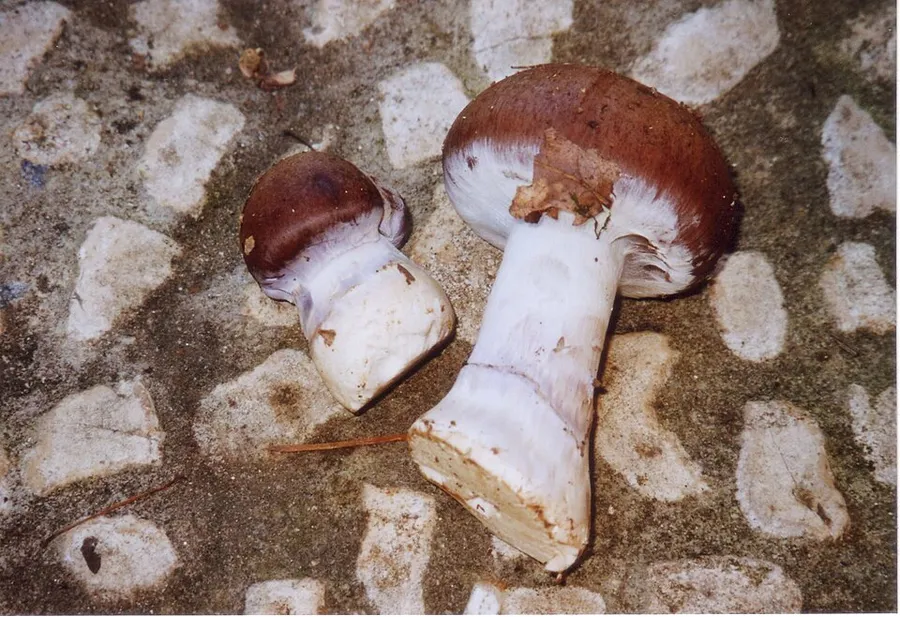
Dokumentasi Cortinarius praestans dari Wikimedia Commons. Cortinarius praestans in Javerlhac-et-la-Chapelle-Saint-Robert , Goliath Webcap in Javerlhac-et-la-Chapelle-Saint-Robert, northern Dordogne, France Identifikasi mengikuti record berkas sumber.

Jenis
Fotografi
Kredit
Traumrune
Sumber media
Buka entri sumber

Gambar menunjukkan objek menurut identifikasi sumber, bukan verifikasi independen spesimen oleh Fungi. Tidak ada skala baru yang ditambahkan.

06 / Rujukan

Sumber profil

  1. [1] Cortinarius praestans — Wikipedia (en)Bagian sumber: Frozen revision 1379488860
    Tanggal penghimpunan sumber: 2026-10-12
    Teks sumber: CC BY-SA4.0 · Wikipedia contributors
  2. [2] Catalogue of Life Base2026-09-11 — Cortinarius praestansBagian sumber: ColDP NameUsage.tsv ID YM2H; accepted species; source 2073
    Tanggal penghimpunan sumber: 2026-10-12
  3. [3] Dokumentasi visual — Cortinarius praestansBagian sumber: Individual media record; identification follows the source, not independent determination
    Tanggal penghimpunan sumber: 2026-10-12
    Media sumber: CC BY-SA 3.0 · Traumrune

Adaptasi teks: CC BY-SA 4.0. Wikipedia contributors — Cortinarius praestans — Wikipedia (en)

Uraian asli dan riwayat sumber

Riwayat atau halaman sumber

Ringkasan sumber

Cortinarius praestans, also known as the goliath webcap, is a basidiomycete mushroom of the genus Cortinarius. The mushroom has orangish-yellow caps that reach up to 20 cm in diameter, and thick club-shaped stipes up to 15 cm long. The edible mushroom is found in Europe.

Revisi sumber

Morfologi sumber

Mature caps are convex, usually grooved at the rolled-in margins, and typically reach diameters between 10 – 20 cm. The surface color of the cap is chestnut or chocolate-brown with violet-copper tint. It has a light covering of surface fibrils and veil remnants that may appear as if pressed against the surface, or like small scales. The gills are whitish with an amethyst tint then later creamy clay- to rust-colored. They are crowded closely together, and have edges that are usually wavy and scalloped. The stem is 10 – 15 cm long and 3 – 5 cm thick, solid, and thickened at the base in an emarginate bulb that is roughly club-shaped to ventricose. The stem surface is covered with silky fibrils, and is whitish-violet when very young, later losing the violet tones. The surface becomes fibrillosely floccose or whitish at the base and violet at the top, later becoming covered with the violet to whitish silky cortina (a cobwebby partial veil). The flesh is thick, whitish, and has a mild taste and no odor. The mushroom is considered a good edible species. The spore print is ochre-rust colored. The spores are fusiformly lemon-shaped, densely covered with small "warts", and measure 15–17 by 8–10 μm. The edges of the gills have cystidiate hairs 4–6 μm wide, protruding 20-40 μm, and degenerate sterile basidia 10–11 μm wide protruding 10–12 μm. The typical basidia measure 30–35 by 12–13 μm.

Revisi sumber

Ekologi sumber

The fruit bodies of the fungus grow in deciduous forests, mainly on calcareous soils. It is common in western Europe, particularly England and France. It was one of 35 mushrooms to gain legal protection in Hungary in 2005, making it a fineable offense to pick them.

Revisi sumber

Struktur reproduksi sumber

The spore print is ochre-rust colored. The spores are fusiformly lemon-shaped, densely covered with small "warts", and measure 15–17 by 8–10 μm. The edges of the gills have cystidiate hairs 4–6 μm wide, protruding 20-40 μm, and degenerate sterile basidia 10–11 μm wide protruding 10–12 μm. The typical basidia measure 30–35 by 12–13 μm.

Revisi sumber

Rujukan halaman ini

Fungi. Cortinarius praestans. Rilis data fungi-2026-10-12-expansion-2. https://fungi-atlas.mgadib.chatgpt.site/jamur/cortinarius-praestans/.

Status: impor sumber; pemeriksaan editorial per profil belum selesai. Untuk klaim biologis, gunakan rujukan pada bagian terkait dan periksa konteks sumber aslinya.