Ciri dan struktur
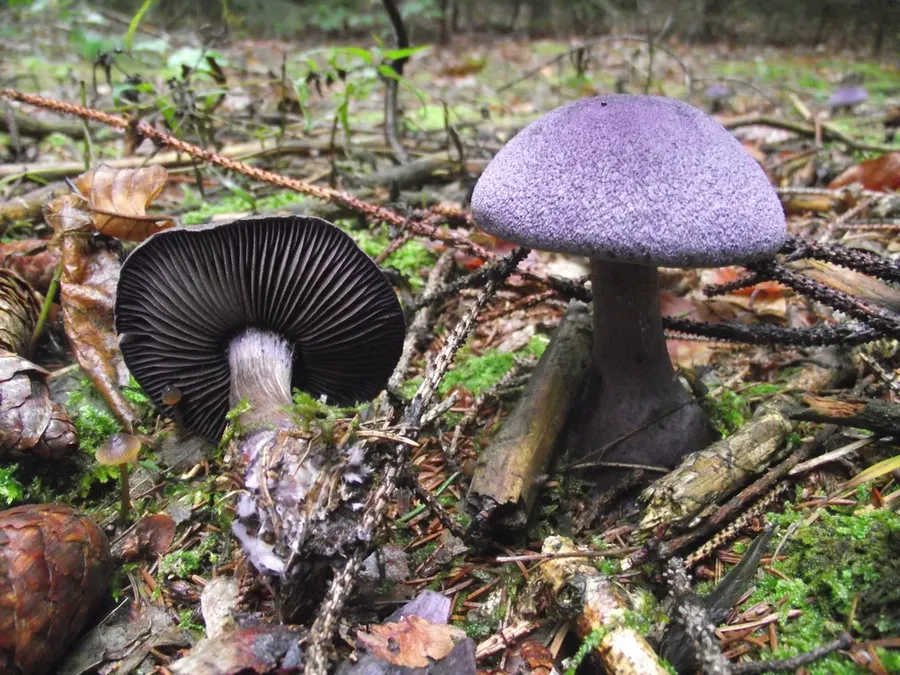
Cortinarius violaceus has a convex (becoming broadly convex, umbonate or flat) Due to its swollen, bulbous nature, the base of the stipe can sometimes be as wide as 4 cm. The stipe is a similar colour to the cap, and covered in wool-like fibrils; purple mycelium can be present at the base. Younger specimens feature a veil, but this vanishes quickly. The flesh is violet, but darker below the pileipellis and in the stipe. The flesh has a mild taste, indistinctly reminiscent of cedar wood, with a slight, pleasant smell, also reminiscent of cedar wood. The gills are dark violet, changing to a purplish-brown with age. They have an adnate connection to the stipe, and can be very dark in older specimens. The mushroom stains red when in contact with potassium hydroxide (KOH). Fruit bodies identified as C. v. hercynicus are less robust than those of the nominate subspecies. The spore print is rust-coloured, while the spores themselves measure 12 to 15 μm by 7 to 8.5 μm. They are rough, from elliptical to almond-shaped, and covered in medium-sized warts. The spores are wider in C. v. hercynicus. The species is the only one in the genus to have cystidia on both the faces and the edges of the gills. A large number of cystidia are present, and, individually, they measure between 60 and 100 μm by between 12 and 25 μm. They are flask-shaped, with somewhat purple contents.
Habitat dan peran ekologis
Cortinarius violaceus ditemukan di seluruh Amerika Utara, Europe and Asia. Although widespread, tidak umum di mana pun di Eropa, dan terdaftar sebagai terancam punah di Kepulauan Inggris. Cortinarius violaceus adalah komponen langka dari daerah subartik di barat Greenland. In Europe, it grows in deciduous woodland during autumn, especially among oak, birch and beech, but is also found on occasion with conifers. Kadang-kadang juga dikenal dari daerah panas tanpa pohon, di mana ia dikaitkan dengan bracken. Spesies ini lebih menyukai tanah asam. Cortinarius violaceus membentuk mikoriza asosiasi dengan beberapa spesies pohon. Dalam hubungan simbiosis ini, jamur memperoleh karbon dari tanaman dan memasoknya dengan mineral yang bermanfaat. Di Nordic countries, tuan rumah termasuk birch putih (Betula pubescens), birch perak (B. pendula), European aspen (Populus tremula) dan jarang European beech (Fagus sylvatica). No records of association with oak (Quercus) are known from this region. Brandrud reported bahwa apa yang dia uraikan sebagai spp. hercynicus tumbuh dengan Picea abies, umumnya di tanah yang lebih alkali dan bersama dengan lumut dari genus Hylocomium and Pleurozium, dan, di daerah lembab, besar shaggy-mus (Rhytidiadelphus triquetrus), serta semak-semak keluarga buttercup Hepatica nobilis.
- Habitat atau konteks temuan
- hutan
- Substrat
- Informasi belum tersedia pada sumber rilis ini.
- Peran atau konteks
- Mitra tumbuhan
Reproduksi
The spore print is rust-coloured, while the spores themselves measure 12 to 15 μm by 7 to 8.5 μm. They are rough, from elliptical to almond-shaped, and covered in medium-sized warts. The spores are wider in C. v. hercynicus. The species is the only one in the genus to have cystidia on both the faces and the edges of the gills. A large number of cystidia are present, and, individually, they measure between 60 and 100 μm by between 12 and 25 μm. They are flask-shaped, with somewhat purple contents.
Catatan identitas dan cakupan
- Nama diterima mengikuti Catalogue of Life Base2026-09-11; uraian mempertahankan konsep dan nama sumber aslinya.
- Original geographic, specimen and life-cycle scope retained; source import awaits individual editorial review.
- Impor dan terjemahan otomatis belum diperiksa editorial per profil. Struktur reproduktif yang disebutkan tidak membuktikan seluruh siklus hidup diketahui.
- Pengukuran pada uraian mengikuti spesimen, kultur, dan metode sumber; angka tidak diperluas ke semua populasi.
Catatan distribusi dalam narasi mengikuti sumbernya. Dokumentasi spesimen atau foto mengikuti catatan sumber. Bukti wilayah Indonesia dan penilaian konservasi tidak disimpulkan dari gambar.
Melihat dengan konteks
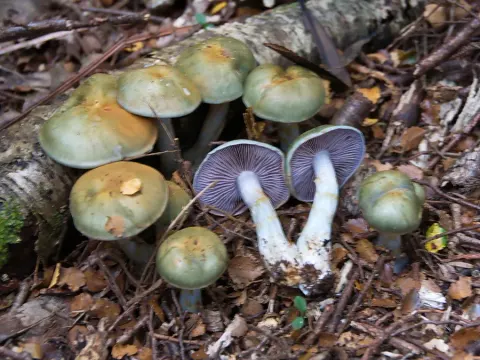
Dokumentasi Cortinarius violaceus menurut asosiasi foto pada record takson iNaturalist. Kredit: Davide Puddu. Identitas mengikuti sumber; bukan penentuan spesimen independen.
- Jenis
- Fotografi
- Kredit
- (c) Davide Puddu, some rights reserved (CC BY), uploaded by Davide Puddu
- Lisensi
- CC BY 4.0
- Sumber media
- Buka entri sumber
Dokumentasi tambahan
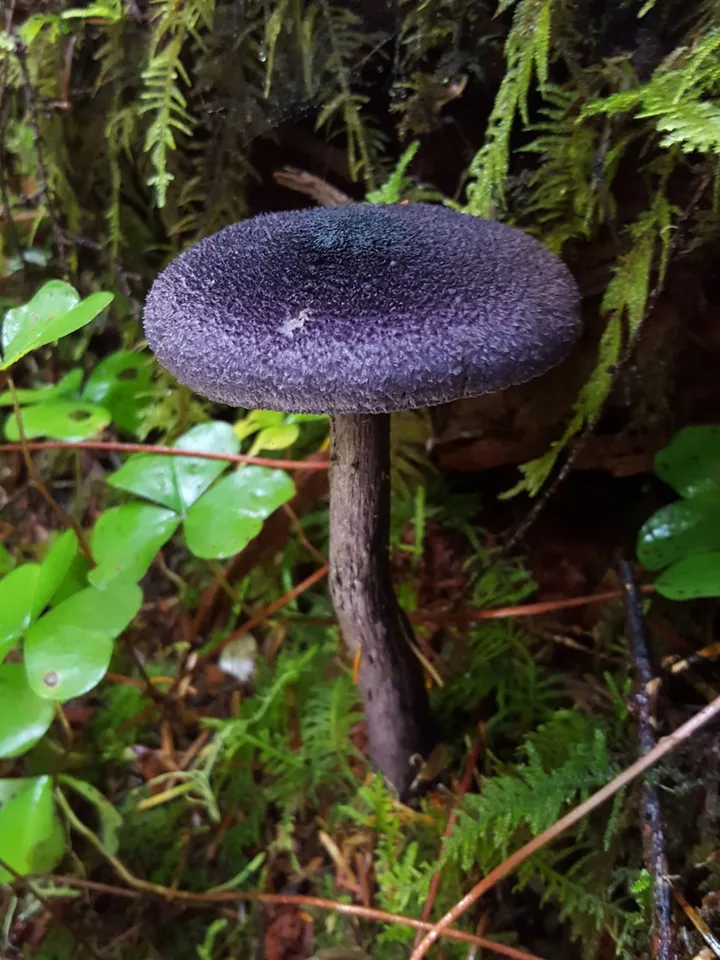
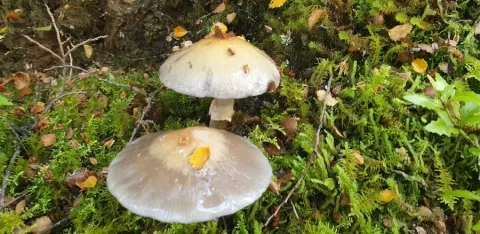
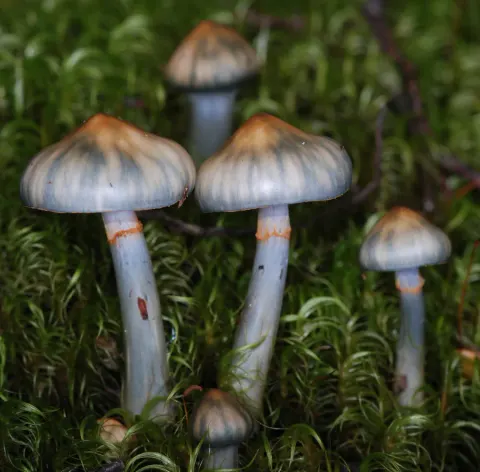
Foto yang diasosiasikan dengan Cortinarius violaceus pada iNaturalist. Identifikasi mengikuti sumber; bukan penentuan spesimen independen.
Kredit dan penggunaan
(c) Alex Abair, some rights reserved (CC BY), uploaded by Alex Abair
Ukuran dan format gambar disesuaikan tanpa pemotongan, retus, atau penambahan skala. Lisensi sumber dipertahankan.
Sumber profil
- [1] Cortinarius violaceus — Wikipedia (en)
- [2] Catalogue of Life Base2026-09-11 — Cortinarius violaceus
- [3] Dokumentasi visual — Cortinarius violaceus
- [4] Dokumentasi visual — Cortinarius violaceus
Rujukan halaman ini
Fungi. Cortinarius violaceus. Rilis data fungi-2026-10-12-expansion-2. https://fungi-atlas.mgadib.chatgpt.site/jamur/cortinarius-violaceus/.
Status: impor sumber; pemeriksaan editorial per profil belum selesai. Untuk klaim biologis, gunakan rujukan pada bagian terkait dan periksa konteks sumber aslinya.