Ciri dan struktur
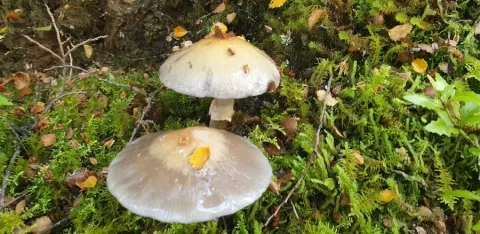
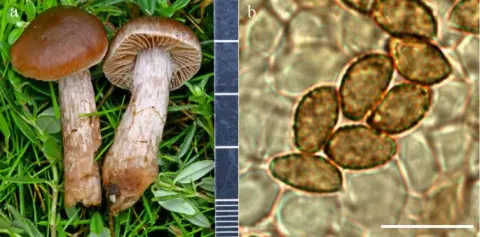
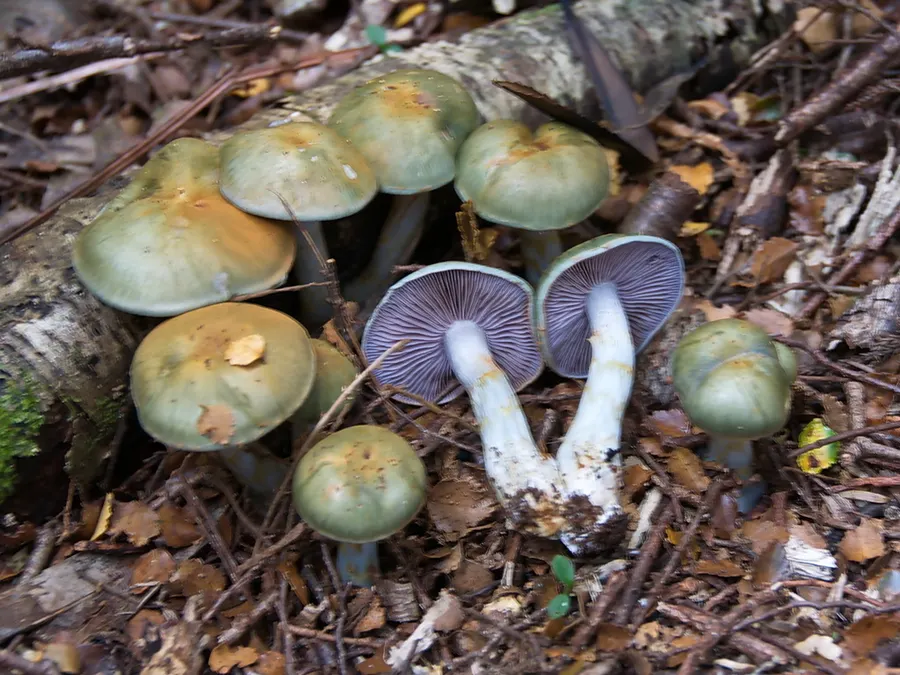
The pileus of Cortinarius viridipileatus ranges from 30–80 mm in diameter, initially hemispherical, becoming convex to almost plane, distinctly dark green to olive-green, occasionally with yellow-brown patches, even with pale mottling. The surface is glutinous when fresh, becoming smooth to slightly fibrillose as it dries, paler green, incurved, entire margin. The context is white, occasionally with a green hue. The lamellae are adnate to emarginate, crowded, initially mauve to lilac, becoming rusty brown as the spores mature. The stipe is 35–90 mm tall and 10–15 mm wide, slender, fibrillose, cylindrical to slightly clavate, base often bulbous, white to very pale purple, may have universal veil remnants near the apex. The cortina is yellow-brown. Spore print is rust-brown. The basidiospores are globular to subglobose, verrucose (warted). The cap surface tissue reacts to the application of the chemical solution KOH, with no reaction elsewhere.
Habitat dan peran ekologis
Cortinarius viridipileatus is ectomycorrhizal with Nothofagus (southern beech) species and can also be found on the southern beech forest floor under a mix of Nothofagus and Kunzea species during the autumn months. The distribution is limited to New Zealand in the central North Island and the upper north, lower south of the South Island.
- Habitat atau konteks temuan
- hutan
- Substrat
- Informasi belum tersedia pada sumber rilis ini.
- Peran atau konteks
- Mitra tumbuhan
Reproduksi
The pileus of Cortinarius viridipileatus ranges from 30–80 mm in diameter, initially hemispherical, becoming convex to almost plane, distinctly dark green to olive-green, occasionally with yellow-brown patches, even with pale mottling. The surface is glutinous when fresh, becoming smooth to slightly fibrillose as it dries, paler green, incurved, entire margin. The context is white, occasionally with a green hue. The lamellae are adnate to emarginate, crowded, initially mauve to lilac, becoming rusty brown as the spores mature. The stipe is 35–90 mm tall and 10–15 mm wide, slender, fibrillose, cylindrical to slightly clavate, base often bulbous, white to very pale purple, may have universal veil remnants near the apex.
Catatan identitas dan cakupan
- Nama diterima mengikuti Catalogue of Life Base2026-09-11; uraian mempertahankan konsep dan nama sumber aslinya.
- Original geographic, specimen and life-cycle scope retained; source import awaits individual editorial review.
- Impor dan terjemahan otomatis belum diperiksa editorial per profil. Struktur reproduktif yang disebutkan tidak membuktikan seluruh siklus hidup diketahui.
- Pengukuran pada uraian mengikuti spesimen, kultur, dan metode sumber; angka tidak diperluas ke semua populasi.
Catatan distribusi dalam narasi mengikuti sumbernya. Dokumentasi spesimen atau foto mengikuti catatan sumber. Bukti wilayah Indonesia dan penilaian konservasi tidak disimpulkan dari gambar.
Melihat dengan konteks
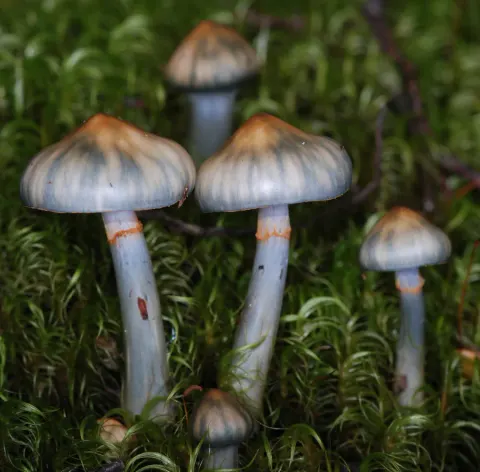
Dokumentasi Cortinarius viridipileatus menurut asosiasi foto pada record takson iNaturalist. Kredit: David Orlovich. Identitas mengikuti sumber; bukan penentuan spesimen independen.
- Jenis
- Fotografi
- Kredit
- (c) David Orlovich, some rights reserved (CC BY), uploaded by David Orlovich
- Lisensi
- CC BY 4.0
- Sumber media
- Buka entri sumber
Dokumentasi tambahan
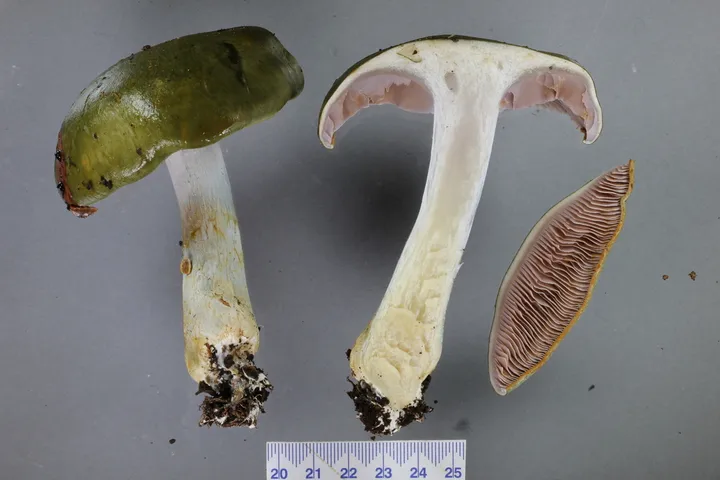
Foto yang diasosiasikan dengan Cortinarius viridipileatus pada iNaturalist. Identifikasi mengikuti sumber; bukan penentuan spesimen independen.
Kredit dan penggunaan
(c) David Orlovich, some rights reserved (CC BY), uploaded by David Orlovich
Ukuran dan format gambar disesuaikan tanpa pemotongan, retus, atau penambahan skala. Lisensi sumber dipertahankan.
Sumber profil
- [1] Cortinarius viridipileatus — Wikipedia (en)
- [2] Catalogue of Life Base2026-09-11 — Cortinarius viridipileatus
- [3] Dokumentasi visual — Cortinarius viridipileatus
- [4] Dokumentasi visual — Cortinarius viridipileatus
Rujukan halaman ini
Fungi. Cortinarius viridipileatus. Rilis data fungi-2026-10-12-expansion-2. https://fungi-atlas.mgadib.chatgpt.site/jamur/cortinarius-viridipileatus/.
Status: impor sumber; pemeriksaan editorial per profil belum selesai. Untuk klaim biologis, gunakan rujukan pada bagian terkait dan periksa konteks sumber aslinya.